
The easiest fireplace upgrade in Galveston County: no gas line, no chimney.
With winter lows averaging 49°F and only 889 heating degree days a year, most Galveston County homes want ambiance and supplemental warmth, not a furnace substitute. Find the right electric unit and connect with a trusted local dealer.
Every Project Starts From One of These Five Situations
In a climate this mild, electric is often the smartest fireplace.
Galveston County's climate zone (2A) means real cold is rare—winter lows average 49°F and the county logs fewer than 900 heating degree days a year, a fraction of what a place like Duluth, MN sees in a single hard month. From the pier-and-beam homes of Galveston Island's East End Historic District to newer slab construction in League City, Friendswood, and Texas City, most homes here don't need a fireplace to survive winter. They want one for the look, the glow on a rare 40-degree night, and a focal point that doesn't require a chimney cutting through a hurricane-rated roof.
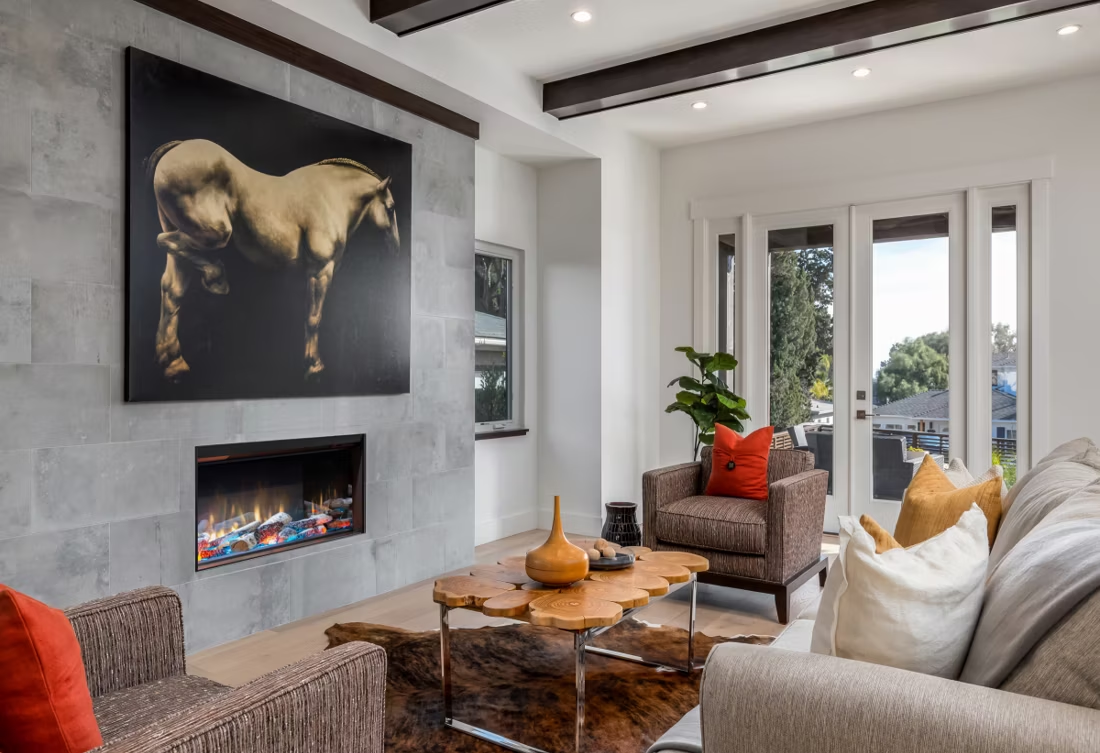
That's exactly where electric fireplaces earn their place. There's no flue to flash and seal against Gulf Coast rain, no combustion byproducts to vent in a humid, salt-air environment, and no masonry chimney to worry about during hurricane season. Most plug-in inserts run on a standard household circuit; larger built-in units typically need a dedicated 20-amp circuit run by a licensed electrician, something CenterPoint Energy customers across the county should budget for alongside the unit itself. The tradeoff worth knowing upfront: electric fireplaces need grid power to run, so they won't provide heat during a storm-related outage the way a wood or gas unit can.
Three steps. No salesperson until you're ready.
Tell us about your project
Your zip code, your situation, and the fuel you're leaning toward—or let the answers point you to one.
See what's actually available
The brands dealers within 100 miles genuinely carry—real options, never a catalog mirage.
Get your dealer & Project Guide
A trusted local dealer, plus the free Project Guide & Parts List that names every component of the job.
Frequently Asked Questions
How much does an electric fireplace installation cost in Galveston County?
A basic plug-in electric insert or mantel unit runs $400 to $1,200 installed, since it typically just needs to be set into an existing opening or against a wall with an outlet nearby. Built-in electric fireplaces or units requiring a new dedicated circuit run higher—often $1,500 to $3,500 once an electrician pulls new wiring, especially in older Galveston Island homes with older panels that need upgrading first. Homes in flood-zone construction with raised foundations sometimes see slightly higher labor costs due to under-house wiring runs. Local dealers will quote a firm number after seeing your panel and the unit you want.
Will an electric fireplace actually heat my Galveston County home?
Most electric fireplaces are rated for 400-1,500 square feet of supplemental heat, which is plenty for zone heating a living room or bedroom on the handful of genuinely cold nights the county gets each winter. Given that Galveston County logs under 900 heating degree days a year, almost nobody here needs a fireplace as a primary heat source—central HVAC handles that. Electric units are chosen for ambiance first, with supplemental warmth as a bonus on the occasional 30- or 40-degree night that rolls in with a winter front off the Gulf.
Will my electric fireplace work during a hurricane-related power outage?
No—and this is the one honest tradeoff to weigh before choosing electric in a county where extended outages are a real possibility every June through November. Unlike a wood stove or a gas fireplace with battery-backup ignition, an electric fireplace is entirely dependent on grid power (or a generator) to run its heater and flame effects. If backup heat during storm season is a priority for your household, some homeowners in Galveston County pair an electric fireplace for daily ambiance with a portable generator hookup, or choose gas for at least one room. Ask a local dealer about your specific outage-resilience goals before you commit.
Do I need a permit to install an electric fireplace in Galveston County?
It depends on the scope of work and which jurisdiction you're in. A simple plug-in unit that uses an existing outlet typically doesn't require a permit anywhere in the county. A built-in installation that involves new electrical wiring, a dedicated circuit, or altering a wall or mantel structure usually does require an electrical permit—through the City of Galveston, League City Development Services, Texas City, or the Galveston County Building Permits office if you're in an unincorporated area. Most licensed electricians and hearth dealers who handle built-in electric installs will pull the permit as part of the job.
Electric insert vs. built-in vs. freestanding—what's the difference?
An electric insert is designed to slot into an existing fireplace opening—a popular choice for Galveston's older homes with decorative masonry or gas fireplaces that are being converted away from an unused chimney. A built-in electric fireplace is framed into a wall like a piece of millwork, common in new construction across League City and Friendswood subdivisions. A freestanding or mantel-package unit is the simplest option—plug it in, set it against a wall, done—and it's popular in rental properties and older homes on the island where nobody wants to touch existing wiring or masonry.
What should I look for in an electric fireplace given Galveston's humidity and salt air?
Coastal humidity and salt air are hard on any appliance with metal components, and electric fireplaces are no exception. Look for units with corrosion-resistant housings and sealed electronics, and avoid mounting units directly against exterior walls facing the Gulf without some kind of moisture barrier. Homeowners on Galveston Island and the Bolivar Peninsula side of the county in particular should ask a local dealer which manufacturers hold up best in salt-air conditions—it's a question worth asking before you buy, not after the remote control starts acting up in year two.
Electric vs. gas—which is right for my Galveston County home?
Gas fireplaces offer real heat output, the option of battery-backed ignition that keeps working in a power outage, and an authentic flame—a strong choice for a county where hurricane season makes outage resilience a real consideration. Electric fireplaces cost less to install, need no gas line or venting at all, and work anywhere there's an outlet, but they go dark the moment the power does. For a primary living space where storm resilience matters, many Galveston County homeowners lean gas. For a bedroom, sunroom, or secondary space where ambiance is the goal and installation simplicity matters more, electric is usually the easier, lower-cost answer.
What electrical work is involved in installing a built-in electric fireplace?
Most mid-size and large built-in electric fireplaces call for a dedicated 120-volt, 15- or 20-amp circuit rather than sharing a circuit with other outlets—this avoids tripped breakers when the heater kicks on at full output. A licensed electrician will run new wire from your panel to the fireplace location, which is straightforward in most Galveston County homes but can involve extra labor in older pier-and-beam construction on the island where access under the house is tighter. Your dealer or electrician will confirm the exact circuit requirement based on the specific unit's wattage before installation.
Is wood heat ever used in Galveston County, or is it strictly decorative?
Wood-burning fireplaces are largely a decorative or occasional-use feature here rather than any kind of heat source—with winter lows averaging 49°F and well under 900 heating degree days a year, there's little practical need for cordwood heat the way there is in a place like Bismarck, ND. Some older homes in Galveston's East End Historic District still have original masonry fireplaces that burn local oak, pecan, or mesquite a handful of nights a season purely for atmosphere. For most homeowners today, though, electric or gas is the practical choice, and that's reflected in how rarely wood stoves get installed new anywhere in the county.
Can I put a TV above my fireplace?
Yes—with an asterisk. Fireplaces are hot and TVs don't like heat. Either put a mantel between them to deflect rising warmth, or choose a fireplace with heat-management technology that creates a cool zone on the wall above—the wall stays around 125 degrees, barely warm, while the room still gets full heat. If you like clean lines and don't want a mantel, heat management is the answer.
Do electric fireplaces actually produce heat?
Yes—most put out around 4,800–5,000 BTUs from a standard outlet, which comfortably warms a bedroom, office, or den as a comfort-zone heater. What they won't do is carry a whole house the way wood, gas, or pellet can. Think of electric as ambiance-first with honest supplemental heat: flames on with no heat in July, flames plus warmth in January.
How much should I budget for a fireplace?
For an average home—covering the fireplace, the vent pipe, and basic installation—a budget between $3,900 and $5,500 gives you a lot of options across wood, gas, and pellet. By the time you add finish work, gas line, and electrical, the average complete installation lands between $5,000 and $12,000 all-in. In a remodel or new build, a good rule is to put about 2.5% of the total project cost toward the fireplace.
Can I install a fireplace myself?
If you're putting a fire in your house on purpose, it's best to work with an expert. Unless you're genuinely experienced in framing, gas line, vent pipe, and the national code on clearances to combustibles, have a professional do it—and ideally the same company that sells you the fireplace, so warranty, service, and liability all live under one roof.
Stove and Fireplace Dealers in Galveston County
Listings include WhyFire partner dealers, dealers we have verified as authorized for the brands we recommend, and established local businesses that carry hearth products. Every listing shows which one it is. The ones marked Preferred run on WhyFire's software, so they can show you real pricing and book your appointment right here. No manufacturer pays for placement. How we verify dealers →
USA Supreme Services, LLC
South Texas Brick
Patio 1
Tru Lite Gas Products
Find your electric fireplace in Galveston County.
Tell us a bit about your home—and whether hurricane-season backup heat matters to you—and we'll send a free Project Guide & Parts List with the right electric fireplace, the exact parts, and a trusted local dealer to install it.
Find Your Fireplace →