
Simple, safe heat for Gaines County's mild winters.
With average lows near 28°F and only a light overall winter heating load each year, Gaines County doesn't need a furnace-replacing wood or pellet setup—it needs clean, plug-in warmth for the shoulder season. Find the right unit and connect with a trusted local dealer.
Every Project Starts From One of These Five Situations
Zone heat that matches the Llano Estacado's short winters.
Gaines County sits on the Llano Estacado in West Texas—flat, dry, cotton-and-peanut country wrapped around the Permian Basin oil fields, with Seminole as the county seat and smaller communities like Loop and Seagraves spread across the rest of the county. Climate zone 3B keeps winters short and generally mild: average lows sit around 28°F, and the county sees only a light overall winter heating load a season—a fraction of what a place like Fargo, ND or Bismarck, ND sees. That's not enough sustained cold to justify a full wood-burning setup, but it's plenty of chilly mornings and cold fronts blowing off the Caprock to make a real fireplace worth having.
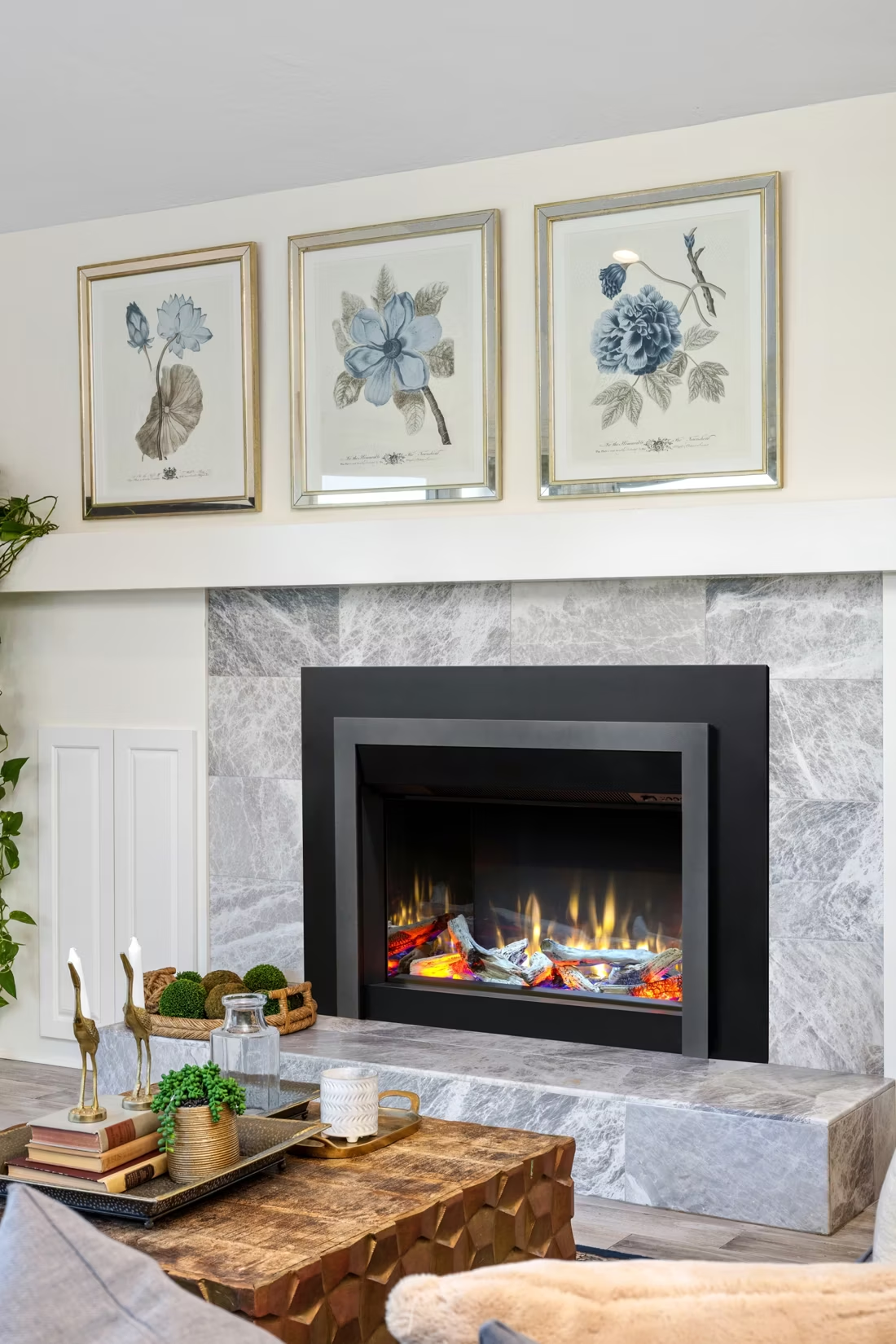
That's where electric makes sense here. A large share of Gaines County housing is manufactured or modular—common on farm and ranch properties and in oil-field worker housing around Seminole—and electric units install cleanly in those homes without a chimney, gas line, or masonry work. No venting means no clearance headaches and no combustion byproducts to manage. Whether it's a built-in unit in a new-construction living room or a plug-in insert dropped into an old, unused fireplace opening, the appeal is the same: real-looking flame and supplemental warmth on the nights that call for it, installed in an afternoon by a licensed local electrician.
Three steps. No salesperson until you're ready.
Tell us about your project
Your zip code, your situation, and the fuel you're leaning toward—or let the answers point you to one.
See what's actually available
The brands dealers within 100 miles genuinely carry—real options, never a catalog mirage.
Get your dealer & Project Guide
A trusted local dealer, plus the free Project Guide & Parts List that names every component of the job.
Frequently Asked Questions
How much does an electric fireplace installation cost in Gaines County?
Plug-in electric fireplaces and inserts that run off a standard 120V outlet typically run $300 to $900 for the unit itself, with little to no install cost beyond placement. Larger built-in units—the kind framed into a wall or a mantel surround—usually need a dedicated 20-amp circuit, which adds $200 to $600 for an electrician depending on how far the run is from your panel. All-in, most Gaines County homeowners land between $500 and $2,000 for a built-in installation, less for a simple insert or mantel package. There's no chimney, flue, or venting to price in, which is the main reason electric tends to land well below wood or gas installs in this county.
Electric vs. gas fireplace—which makes more sense in Gaines County?
Both are common choices here. Gas fireplaces run on propane or natural gas (natural gas service is available in and around Seminole) and put out real, sustained heat—a better fit if you want a fireplace to meaningfully offset your furnace on cold-front nights. Electric units don't heat as large a space, but they skip the gas line, venting, and annual appliance service that gas requires, and they cost less to install and maintain. For a lot of Gaines County homes—especially manufactured housing or a room that just needs ambiance and light supplemental warmth—electric covers the need without the added infrastructure. Homes that lean on the fireplace more seriously for heat during winter storms often go gas instead.
Will an electric fireplace actually heat a room, or is it just for looks?
Most electric fireplaces include a built-in fan heater rated around 1,500 watts, which is enough to noticeably warm a small-to-medium room—roughly 400 to 1,000 square feet depending on insulation and ceiling height. Given Gaines County's average winter low of 28°F and a relatively short heating season, that's realistic supplemental heat for a living room or bedroom rather than a whole-home solution. If you're trying to heat an open-concept space or an older farmhouse with poor insulation, talk to a local dealer about a higher-output unit or placement that maximizes airflow—but for most rooms in the county, standard output is plenty.
Can I install an electric fireplace in a manufactured or mobile home?
Yes, and it's one of the more common installs in Gaines County given how much of the housing stock is manufactured or modular. Electric units generate no combustion byproducts and require no venting, so they avoid the clearance and roof-penetration issues that complicate wood or gas installs in manufactured housing. The main thing to get right is the electrical circuit—manufactured home panels can be tighter on capacity than a site-built house, so a licensed electrician should confirm the panel can support a dedicated 20-amp circuit before a built-in unit goes in. Plug-in models sidestep that question entirely.
Do I need a permit to install an electric fireplace in Gaines County?
A simple plug-in electric fireplace or insert generally doesn't require a permit since it uses an existing outlet. If your installation involves running a new dedicated circuit—common for larger built-in units—that electrical work typically needs a permit through the applicable local building authority, whether that's the City of Seminole or Gaines County for work outside city limits. A licensed electrician handling the circuit work will usually pull that permit as part of the job, so you don't need to coordinate it yourself.
Why don't more people in Gaines County burn wood for heat?
Wood heat is genuinely rare here. Gaines County's mild winters—average lows around 28°F and only a light overall winter heating load a season—don't create the sustained cold that makes a wood stove worth the investment, and the Llano Estacado's flat, largely treeless landscape means there's no local forest land base or cutting-permit culture to support it. Some rural properties do burn mesquite, oak, or pecan salvaged from land clearing or old orchard removal in an outdoor fire pit or an old fireplace, but it's a minor, occasional use case rather than a primary heating strategy. If ambiance and an occasional real fire matter to you, most homeowners here get better results—and far less maintenance—from a gas or electric unit.
Are pellet stoves an option in Gaines County?
Not really, and it's worth being upfront about that. Regional pellet brands like Forest Energy and Lignetics are technically available through farm-and-ranch supply channels in West Texas, but pellet appliances see very little use in Gaines County—the heating season is too short to justify the equipment cost, and there's no local dealer base for service or fuel resupply the way you'd find in a colder, more forested region. If you're drawn to a pellet stove for its look or the idea of biomass heat, it's possible, but expect to source fuel and service from farther afield than you would with an electric or gas unit.
What's the best type of electric fireplace for a Gaines County home?
For most homes here, a built-in electric insert or a linear wall-mounted unit from brands like Dimplex, Amantii, or Napoleon covers the need well—realistic flame effect, a usable 1,500-watt heater, and a clean install that doesn't require venting. If you have an old, unused masonry fireplace, an electric insert sized to the opening is often the simplest upgrade—no chimney work, no sweep, just slide it in and plug it in (or wire it to a dedicated circuit for higher output). For manufactured homes or rentals, a freestanding mantel package with a plug-in insert is usually the most flexible option since it doesn't require modifying the structure.
How much does it cost to run an electric fireplace in Gaines County?
A typical electric fireplace on its heater setting draws around 1,500 watts. At current electric cooperative and utility rates in the region, that works out to roughly 15 to 25 cents an hour of heater use—noticeably cheaper per hour than propane, though it can't heat as large an area. Running it flame-only, without the heater engaged, draws only a small fraction of that, which is why a lot of homeowners here run the fireplace for ambiance on mild evenings and only switch on the heat during an actual cold front.
Can I put a TV above my fireplace?
Yes—with an asterisk. Fireplaces are hot and TVs don't like heat. Either put a mantel between them to deflect rising warmth, or choose a fireplace with heat-management technology that creates a cool zone on the wall above—the wall stays around 125 degrees, barely warm, while the room still gets full heat. If you like clean lines and don't want a mantel, heat management is the answer.
Does an electric fireplace need a vent or chimney?
No—that's its superpower. An electric fireplace needs a wall and an outlet, period. No vent pipe, no gas line, no clearances to design around, which is why it works in bedrooms, offices, apartments, and walls where venting a gas or wood unit would be impractical or impossible. Installation is typically the simplest and least expensive of any fireplace type.
What is an in-home preview and do I need one?
It's a visit where a hearth professional measures your space, confirms the model you picked actually works in your home, and walks the specs—framing, gas line, venting, finish work—before anything is ordered. Some details you just can't know until you see the house. Never make a down payment without one; it's the single most-skipped step that burns buyers.
Does a fireplace add value to my home?
On average, a fireplace adds back to the home about the same amount you spent installing it. Add the monthly savings from heating the rooms you actually use instead of the whole house—often hundreds of dollars a year—and the value case is strong before you even count what a fire does for how your family uses the room.
Stove and Fireplace Dealers in Gaines County
Listings include WhyFire partner dealers, dealers we have verified as authorized for the brands we recommend, and established local businesses that carry hearth products. Every listing shows which one it is. The ones marked Preferred run on WhyFire's software, so they can show you real pricing and book your appointment right here. No manufacturer pays for placement. How we verify dealers →
Ford Insulation And Fireplaces
Seal’s Energy Depot
Bill Placer's Chimney Sweep
Caprock Brick
Coastal Insulation
A & A Chimeny Sweep w/Texas Fp
Find your electric fireplace in Gaines County.
Tell us a bit about your home and we'll match you with the right electric fireplace or insert, then send over a free Project Guide & Parts List—the exact parts for your install and a trusted local Gaines County dealer to do the work.
Find Your Fireplace →