
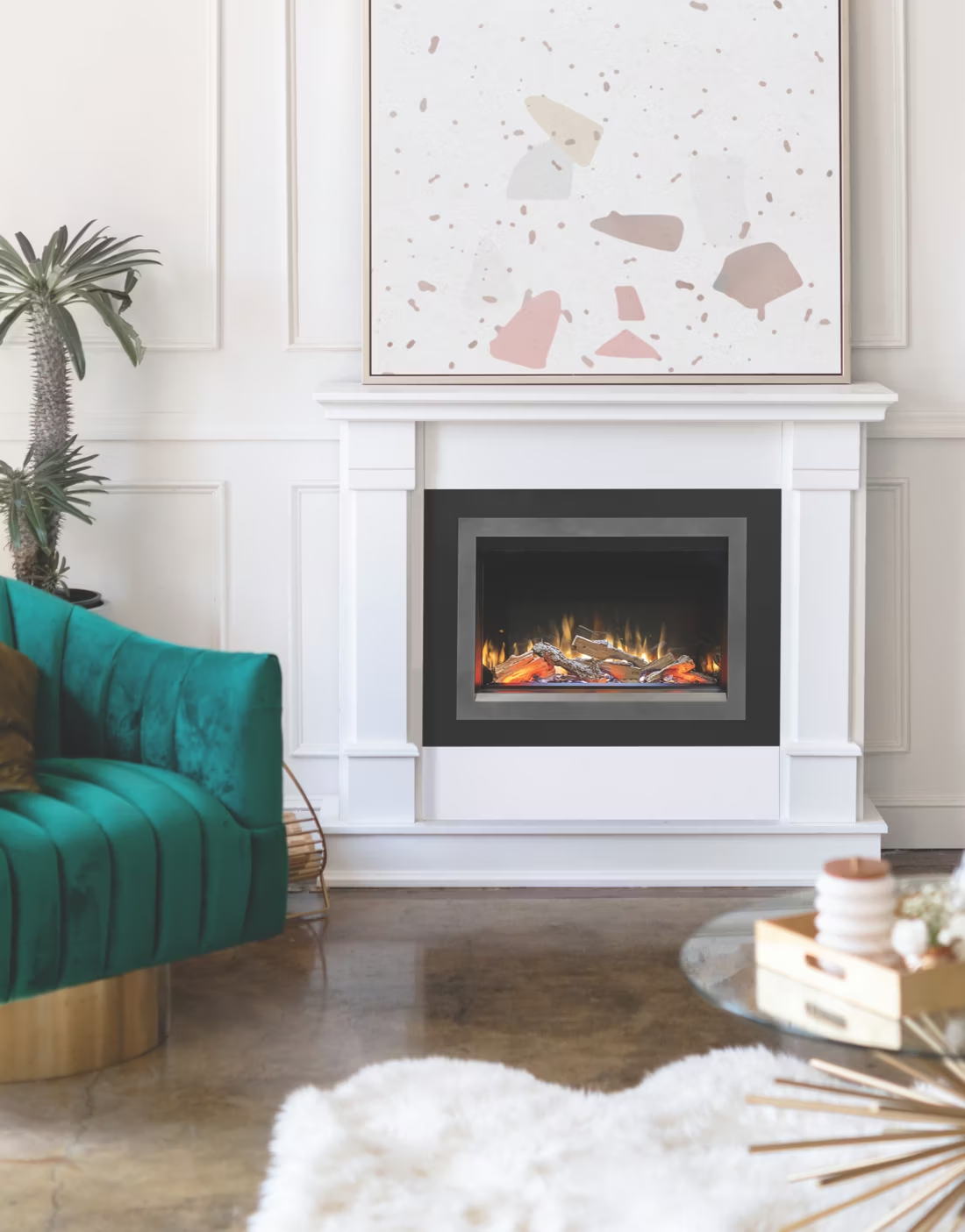
Electric fireplaces built for Fort Hood living.
No venting, no chimney, no fuel to store—just plug-in or hardwired warmth that works for on-post housing, off-post rentals, and everything in between. Find the right unit and a trusted local dealer.
Every Project Starts From One of These Five Situations
Mild winters, military housing, and the case for electric heat.
Fort Hood sits in climate zone 2A at just over 900 feet elevation, with an average winter low around 36°F and a mild, short heating season each year. Compare that to Fargo, ND, which has a heating season nearly four and a half times as long, and it's clear this is not a wood-stove-and-cordwood kind of winter. Central Texas cold snaps are real but short—a few nights a year, not a season. Oak, pecan, and mesquite grow all over Coryell County, but locally they're firewood for the smoker and the grill, not the primary heat source, which is a big part of why wood-burning appliances rarely make sense here.
What does make sense is electric. Fort Hood's population turns over constantly with PCS orders and deployments, and a huge share of households here are renting—either on post through the housing office or off post in Killeen and Harker Heights. Electric fireplaces fit that reality: no gas line, no masonry, no open flame to clear with a landlord or the housing office, and no chimney to leave behind when you move. Whether you're served by Oncor, Texas-New Mexico Power, or Heart of Texas Electric Cooperative, the math works too—at roughly $0.1262 per kWh, running a 1,500-watt unit for supplemental warmth or ambiance costs pennies a night.
Three steps. No salesperson until you're ready.
Tell us about your project
Your zip code, your situation, and the fuel you're leaning toward—or let the answers point you to one.
See what's actually available
The brands dealers within 100 miles genuinely carry—real options, never a catalog mirage.
Get your dealer & Project Guide
A trusted local dealer, plus the free Project Guide & Parts List that names every component of the job.
Frequently Asked Questions
How much does it cost to install an electric fireplace near Fort Hood?
A plug-in electric fireplace or freestanding stove typically runs $300 to $1,500 for the unit itself, with no installation beyond finding an outlet—most renters and on-post families go this route because it requires no landlord approval and no permit. A built-in wall unit or electric insert into an existing masonry fireplace usually lands between $1,500 and $3,000 once you factor in a licensed electrician running a dedicated 20-amp circuit and any trim or surround work. Either way, you're skipping the venting, chimney, and gas line costs that come with wood or gas installs—which is a big part of why electric is popular in a market with so much turnover.
Why isn't wood heat common around Fort Hood?
With only a mild, short heating season each year and average winter lows near 36°F, Coryell County simply doesn't have the sustained cold that makes wood heat practical the way it is in places like Duluth, MN or Bozeman, MT. Oak, pecan, and mesquite are all abundant locally, but they're overwhelmingly used for grilling and smoking, not home heating. On top of the climate, most Fort Hood family housing is subject to Army fire-safety and housing-office restrictions that prohibit solid-fuel stoves and open masonry fireplaces in on-post units. Electric fireplaces sidestep both issues—no smoke, no solid fuel, no chimney to maintain.
Will an electric fireplace keep working if the power goes out?
No—electric fireplaces, like any other electric appliance, stop working the moment the power does. That matters in Central Texas: the February 2021 winter storm knocked out ERCOT-connected power across the region, including here in Coryell County, for days. If backup heat during a grid outage is a real priority for your household, a propane or natural gas unit with battery-backup ignition is a better fit for that specific need. For everyday ambiance and mild-weather supplemental warmth, though, electric is hard to beat on cost and simplicity.
What size electric fireplace do I need for my home?
Most electric fireplace heaters put out around 4,000 to 5,000 BTUs, which comfortably supplements heat in a room up to roughly 400 square feet—plenty for a Fort Hood living room or bedroom given how mild winters here actually are. Larger great rooms or open floor plans in newer Killeen and Harker Heights construction may do better with two smaller units or a larger linear wall unit rated for a bigger footprint. Since electric units are rarely your home's primary heat source in this climate, sizing is more about matching the visual scale of the fireplace to the wall than solving a serious BTU shortfall—a local dealer can help you strike that balance.
What's the difference between an electric insert, a wall-mount unit, and a mantel package?
An electric insert is built to slide into an existing fireplace opening, including a masonry fireplace you're no longer using for wood—it's a popular upgrade for older off-post homes in Killeen that already have a hearth. A wall-mount or built-in unit is recessed into the wall itself, framed like a window, and is common in newer construction. A mantel package pairs a freestanding or built-in electric firebox with a surrounding mantel and shelf, giving you a finished look without any construction—a common choice for renters who want the fireplace to look permanent but need to take it with them at the next PCS.
Do I need a permit to install an electric fireplace near Fort Hood?
A plug-in electric fireplace needs no permit at all—it's treated like any other appliance you plug into an outlet. A hardwired built-in unit that requires a new dedicated circuit does typically need an electrical permit, pulled through the City of Killeen Building Services or Coryell County depending on where you live. If you're in Fort Hood family housing itself, any modification—including adding a hardwired fireplace—needs sign-off from the Directorate of Public Works or housing office before work starts, since the Army, not you, owns the structure.
Can I get an electric fireplace with flame effects but no heat?
Yes, and it's a genuinely useful option in a climate like this one. Most electric fireplaces let you run the flame visual independently of the heater, so you can enjoy the ambiance year-round—including on 100-degree Central Texas summer nights—without adding any warmth to the room. Given how few genuinely cold nights Fort Hood sees each winter, a lot of local buyers end up using the heat function only a handful of times a year and the flame effect the rest of the time.
How much does it cost to run an electric fireplace here?
At the local residential rate of about $0.1262 per kWh, a 1,500-watt electric fireplace heater running for five hours costs roughly 19 cents. Used most evenings through the mild Fort Hood winter, that's typically $5 to $10 a month—a fraction of what running a gas fireplace or central heat costs over the same stretch. Running just the flame effect without the heater draws only a few watts, so leaving it on for ambiance costs next to nothing.
Electric vs. gas fireplace—which is right for my Fort Hood home?
Gas fireplaces deliver real, substantial heat output and can run during a power outage with the right ignition system, but they require a gas line, venting work, and a permanent installation that's a harder sell for renters or on-post families who may move within a year or two. Electric fireplaces skip all of that—no gas line, no venting, no permanent commitment—in exchange for lower heat output and total dependence on grid power. Given how mild Fort Hood winters run and how often families here relocate, electric is usually the more practical choice for day-to-day ambiance and light supplemental warmth, while gas makes more sense for a long-term homeowner who wants a stronger primary heat source.
Can I put a TV above my fireplace?
Yes—with an asterisk. Fireplaces are hot and TVs don't like heat. Either put a mantel between them to deflect rising warmth, or choose a fireplace with heat-management technology that creates a cool zone on the wall above—the wall stays around 125 degrees, barely warm, while the room still gets full heat. If you like clean lines and don't want a mantel, heat management is the answer.
Do electric fireplaces actually produce heat?
Yes—most put out around 4,800–5,000 BTUs from a standard outlet, which comfortably warms a bedroom, office, or den as a comfort-zone heater. What they won't do is carry a whole house the way wood, gas, or pellet can. Think of electric as ambiance-first with honest supplemental heat: flames on with no heat in July, flames plus warmth in January.
What is an in-home preview and do I need one?
It's a visit where a hearth professional measures your space, confirms the model you picked actually works in your home, and walks the specs—framing, gas line, venting, finish work—before anything is ordered. Some details you just can't know until you see the house. Never make a down payment without one; it's the single most-skipped step that burns buyers.
Can I install a fireplace myself?
If you're putting a fire in your house on purpose, it's best to work with an expert. Unless you're genuinely experienced in framing, gas line, vent pipe, and the national code on clearances to combustibles, have a professional do it—and ideally the same company that sells you the fireplace, so warranty, service, and liability all live under one roof.
Electric Service in Fort Hood
An electric fireplace's heater draws about 1,500 watts—pennies per hour at local rates.
Oncor Electric Delivery Company LLC
Texas-New Mexico Power Co
Heart Of Texas Electric Coop
Find your electric fireplace near Fort Hood.
Tell us a bit about your home—on post or off—and we'll send you a free Project Guide & Parts List for your electric fireplace project, plus a match with a trusted local dealer who can install it right.
Find Your Fireplace →