
Instant, no-vent heat for Floydada and Lockney homes.
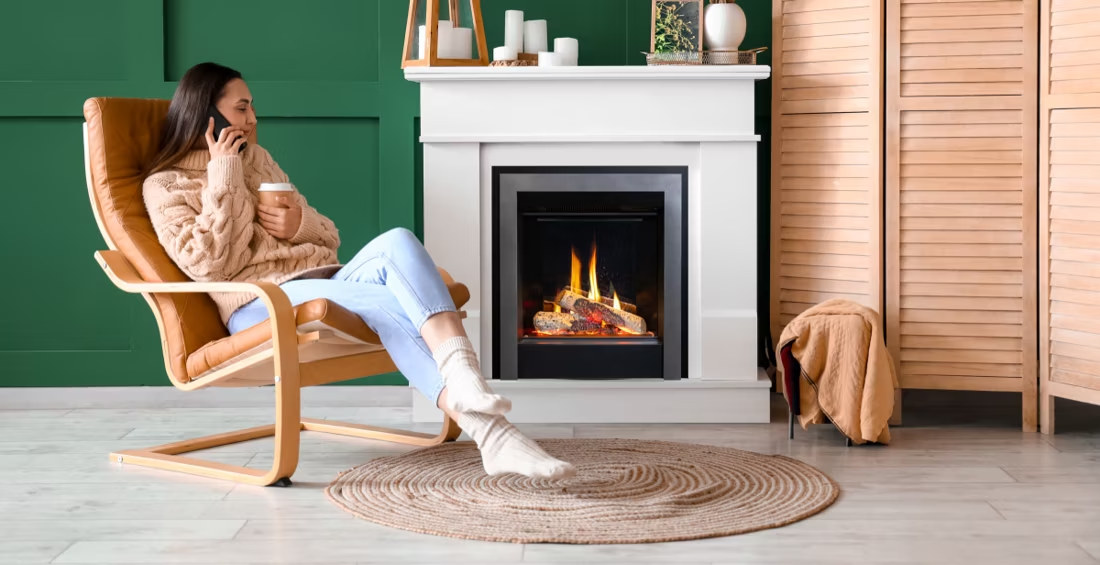
Floyd County's Caprock winters are milder than the northern plains, but the wind still bites. An electric fireplace or insert adds real zone heat and ambiance to any room with a standard outlet—no gas line, no chimney, no permit headaches.
Every Project Starts From One of These Five Situations
Simple heat that fits a plains county without gas lines to every room.
Floyd County sits on the flat, wind-exposed High Plains of the Texas Panhandle, at roughly 3,200 feet elevation, with about 4,390 residents spread mostly between Floydada and Lockney. Climate zone 4B keeps winters here far less brutal than a place like Bismarck, ND—average winter lows sit around 25°F and the county's winter heating load is a fraction of what Upper Midwest towns rack up. Cold snaps do roll off the Caprock with real wind chill, but the season is short and moderate compared to true cold-climate country.
Most homes here run on propane or an electric heat pump for whole-house heat, delivered through South Plains Electric Cooperative lines that reach the county's farms and ranches. What's often missing is a gas line to the family room or a second living space—running one is expensive on a rural lot. That's where electric fireplaces and inserts do their job: plug into an existing outlet, add real supplemental warmth and a live-flame look to a den, bonus room, or manufactured home, and skip the chimney, gas line, and inspection entirely. It's a practical fit for a county built around cotton and grain operations rather than dense in-town gas infrastructure.
Three steps. No salesperson until you're ready.
Tell us about your project
Your zip code, your situation, and the fuel you're leaning toward—or let the answers point you to one.
See what's actually available
The brands dealers within 100 miles genuinely carry—real options, never a catalog mirage.
Get your dealer & Project Guide
A trusted local dealer, plus the free Project Guide & Parts List that names every component of the job.
Frequently Asked Questions
How much does an electric fireplace installation cost in Floyd County?
Electric fireplaces and inserts are the least expensive hearth option available in Floyd County, typically running $300 to $2,500 installed depending on whether you're adding a simple plug-in insert into an existing masonry opening or a larger built-in wall unit with dedicated wiring. Because there's no gas line, no venting, and no chimney work involved, most jobs in Floydada or Lockney are a same-day install. If a dedicated 120V or 240V circuit needs to be run for a larger unit, expect a licensed electrician's time added to the quote—still far less than a wood, gas, or pellet install in this county.
What size electric fireplace or insert do I need for my home?
Sizing an electric unit is mostly about the room, not the whole house, since these are supplemental heaters rather than primary heat sources. A 1,000-1,500 watt insert or wall unit comfortably takes the edge off a bedroom or den in a Floyd County home during a Panhandle cold front, while larger 1,500-watt units with built-in fans can handle an open living area. Given the wind exposure on the Caprock, homeowners in older, less-insulated farmhouses around Floydada often want the higher-wattage option even though the county's overall heating season is moderate. A local dealer can walk your room and recommend wattage based on ceiling height and window exposure.
Do I need a permit to install an electric fireplace in Floyd County?
In most cases, no—a plug-in electric fireplace or insert that uses an existing outlet doesn't require a building permit through the Floyd County Courthouse in Floydada. If your install calls for a new dedicated circuit or panel work, that portion falls under standard electrical permitting and should be pulled by a licensed electrician, which most reputable local dealers coordinate as part of the job. This is one of the simplest hearth projects to permit in the county, if a permit is even needed at all.
Can an electric fireplace replace my primary heat source in Floyd County?
Not as a whole-home solution. With a moderate winter heating load and winter lows that average around 25°F, Floyd County's heating need is real but moderate—most homes still rely on a propane furnace or electric heat pump for whole-house heat. Electric fireplaces are best used as zone heat: warming the room you're actually in so you can turn down the thermostat elsewhere, or adding backup comfort in a room the central system struggles to reach. For a small, well-insulated space like a converted garage or sunroom, a higher-wattage unit can come close to serving as primary heat, but that's the exception rather than the rule.
What's the difference between an electric fireplace, insert, and stove?
An electric insert is built to slide into an existing fireplace opening—a common upgrade for older Floydada and Lockney homes with a masonry firebox that's rarely used for wood anymore. An electric fireplace is a standalone or built-in unit designed for a wall or custom mantel surround, common in newer construction or remodels. An electric stove is a freestanding cabinet-style unit that mimics a wood stove's look without any of the venting requirements. All three plug into standard household power and produce the same electric heat—the choice comes down to what opening or footprint you're working with.
Will an electric fireplace still work during a power outage?
No—and this is worth being direct about. Because electric fireplaces run entirely on household power, they shut down the moment the electricity does, unlike a wood stove or a battery-backed gas unit. Rural Floyd County does see occasional outages tied to Panhandle wind events and ice, so if backup heat during a power failure matters to your household, a propane appliance is the more reliable choice for that specific need. Electric units are best understood as everyday supplemental comfort, not storm-outage insurance.
Is wood heat common in Floyd County?
Not really, despite the oak, pecan, and mesquite that grow along the county's creek draws and shelterbelts. Floyd County's winters are short and moderate enough—average lows near 25°F—that wood-burning stoves and fireplaces never became the heating standard here the way they did farther north or in the Hill Country. A handful of rural properties still keep a wood stove for backup or for the mesquite-smoke ambiance, but it's the exception. If you're set on wood, a local dealer can still source a stove, but expect them to walk you through why electric or propane is the more practical everyday choice for this climate.
What about pellet stoves in Floyd County?
Pellet stoves are essentially a non-factor here. Regional pellet brands like Forest Energy and Lignetics are technically available through hearth suppliers serving West Texas, but Floyd County's mild heating load and lack of an established wood-pellet supply chain mean almost no local demand. Homeowners occasionally ask about pellet stoves after seeing them elsewhere, but a local dealer will typically steer you toward an electric or propane unit that better matches how heating actually works on the South Plains.
Electric vs. gas—which is right for my home?
Propane and gas fireplaces deliver more heat output and can be sized to serve as real primary or near-primary heat, which matters on the coldest Panhandle mornings when temperatures drop well below the winter average. Electric fireplaces cost less to install, need no gas line or venting, and are the simpler choice for a spare room, rental property, or manufactured home common throughout Floyd County. Many households here end up with both—propane for the main living space and an electric insert or unit for a secondary room where running a gas line isn't practical. A local dealer can help you figure out which room needs which.
Can I put a TV above my fireplace?
Yes—with an asterisk. Fireplaces are hot and TVs don't like heat. Either put a mantel between them to deflect rising warmth, or choose a fireplace with heat-management technology that creates a cool zone on the wall above—the wall stays around 125 degrees, barely warm, while the room still gets full heat. If you like clean lines and don't want a mantel, heat management is the answer.
Does an electric fireplace need a vent or chimney?
No—that's its superpower. An electric fireplace needs a wall and an outlet, period. No vent pipe, no gas line, no clearances to design around, which is why it works in bedrooms, offices, apartments, and walls where venting a gas or wood unit would be impractical or impossible. Installation is typically the simplest and least expensive of any fireplace type.
What is an in-home preview and do I need one?
It's a visit where a hearth professional measures your space, confirms the model you picked actually works in your home, and walks the specs—framing, gas line, venting, finish work—before anything is ordered. Some details you just can't know until you see the house. Never make a down payment without one; it's the single most-skipped step that burns buyers.
Can I install a fireplace myself?
If you're putting a fire in your house on purpose, it's best to work with an expert. Unless you're genuinely experienced in framing, gas line, vent pipe, and the national code on clearances to combustibles, have a professional do it—and ideally the same company that sells you the fireplace, so warranty, service, and liability all live under one roof.
Stove and Fireplace Dealers in Floyd County
Listings include WhyFire partner dealers, dealers we have verified as authorized for the brands we recommend, and established local businesses that carry hearth products. Every listing shows which one it is. The ones marked Preferred run on WhyFire's software, so they can show you real pricing and book your appointment right here. No manufacturer pays for placement. How we verify dealers →
A & A Chimeny Sweep w/Texas Fp
Caprock Brick
Coastal Insulation
Ford Insulation And Fireplaces
Find your electric fireplace in Floyd County.
Tell us about your home and we'll put together a free Project Guide & Parts List—the right electric fireplace or insert for your space, matched with a trusted local Floyd County dealer who can install it.
Find Your Fireplace →