
Clean, Instant Heat for El Paso County's Mild Desert Winters.
From Downtown El Paso out to Fabens, San Elizario, Horizon City, and Anthony, gas fireplaces deliver real warmth on the region's occasional hard freezes and steady ambiance the rest of the year. Find the right unit and get matched with a trusted local dealer.
Every Project Starts From One of These Five Situations
A high desert climate built for gas, not wood.
El Paso County sits in climate zone 3B with a mild, short winter heating season and an average winter low near 34°F—a fraction of the heating load a place like Bismarck, ND or Duluth, MN carries. Most winters here call for occasional warmth, not round-the-clock heat. But the region isn't immune to real cold: the February 2021 winter storm brought sustained freezing temperatures and multi-day power outages across the county, from El Paso proper out to Horizon City and Socorro. A gas fireplace with the right ignition system is one of the few heating appliances that can keep a room warm when the grid goes down, which is exactly the scenario homeowners here remember.
El Paso County is also designated a non-attainment area for ozone and particulate matter, which matters more than most homeowners realize when choosing a hearth appliance. Wood smoke adds directly to the pollution load the county is already working to reduce, which is part of why wood-burning fireplaces are rare here despite the native oak, pecan, and mesquite that grow along the Rio Grande valley—those species mostly end up in smokers and firepits, not indoor hearths. Gas fireplaces burn far cleaner, produce instant heat with no ash or smoke, and are available through Texas Gas Service across most of the city and its incorporated suburbs, with propane filling the gap in outlying communities like Tornillo and parts of San Elizario.
Three steps. No salesperson until you're ready.
Tell us about your project
Your zip code, your situation, and the fuel you're leaning toward—or let the answers point you to one.
See what's actually available
The brands dealers within 100 miles genuinely carry—real options, never a catalog mirage.
Get your dealer & Project Guide
A trusted local dealer, plus the free Project Guide & Parts List that names every component of the job.
Frequently Asked Questions
How much does a gas fireplace installation cost in El Paso County?
Most gas fireplace and insert installations in El Paso County land somewhere between $4,000 and $9,500, depending on the unit, whether you're converting an existing masonry fireplace or building new, and how far the gas line has to run. A direct-vent insert dropped into an existing wood-burning fireplace with a gas line already nearby is usually the least expensive path. New construction, remodels that require framing and fresh venting, or homes on propane that need a tank set are typically the higher end. Local dealers will give you a firm number after seeing your existing chimney or wall setup.
Can I convert my old wood-burning fireplace to gas?
Yes, and it's one of the most common projects in El Paso County, where many homes built in the 1960s through 1980s have open masonry fireplaces that see little actual use. A gas insert slides into that existing opening and vents through the same chimney with a stainless liner, so you keep the look of the fireplace while gaining real, controllable heat and none of the ash or smoke that adds to the county's ozone and particulate load. Converting typically runs $4,000 to $8,500 depending on the insert and whether a gas line already reaches the fireplace location.
Do I need natural gas, or can I run a fireplace on propane?
Either works, and which one you use mostly comes down to where in the county you live. Texas Gas Service covers most of the city of El Paso and its close-in incorporated communities, so if your home already has a gas range or water heater, adding a fireplace to that line is usually straightforward. Out toward Fabens, San Elizario, and Tornillo, where natural gas mains don't reach every property, propane is the standard fallback—either an existing tank or a new one set by a local propane supplier. Most gas fireplace models can be configured for either fuel; your installer sets the correct orifice and regulator for whichever you have.
Will my gas fireplace still work if the power goes out?
It depends on the ignition system, and this is worth asking about directly given what El Paso Electric customers experienced during the February 2021 freeze. Units with IPI (intermittent pilot ignition) run on a battery backup—usually AA cells inside the unit—that kicks in automatically and lets the fireplace light on demand even with no grid power. Valor fireplaces take a slightly different approach: their pilot generates its own electricity through a thermocouple, so there are no batteries to remember at all. For a county that has seen real multi-day cold-weather outages, either option beats a fireplace that goes dark exactly when you need it most.
What's the difference between a gas fireplace, insert, and stove?
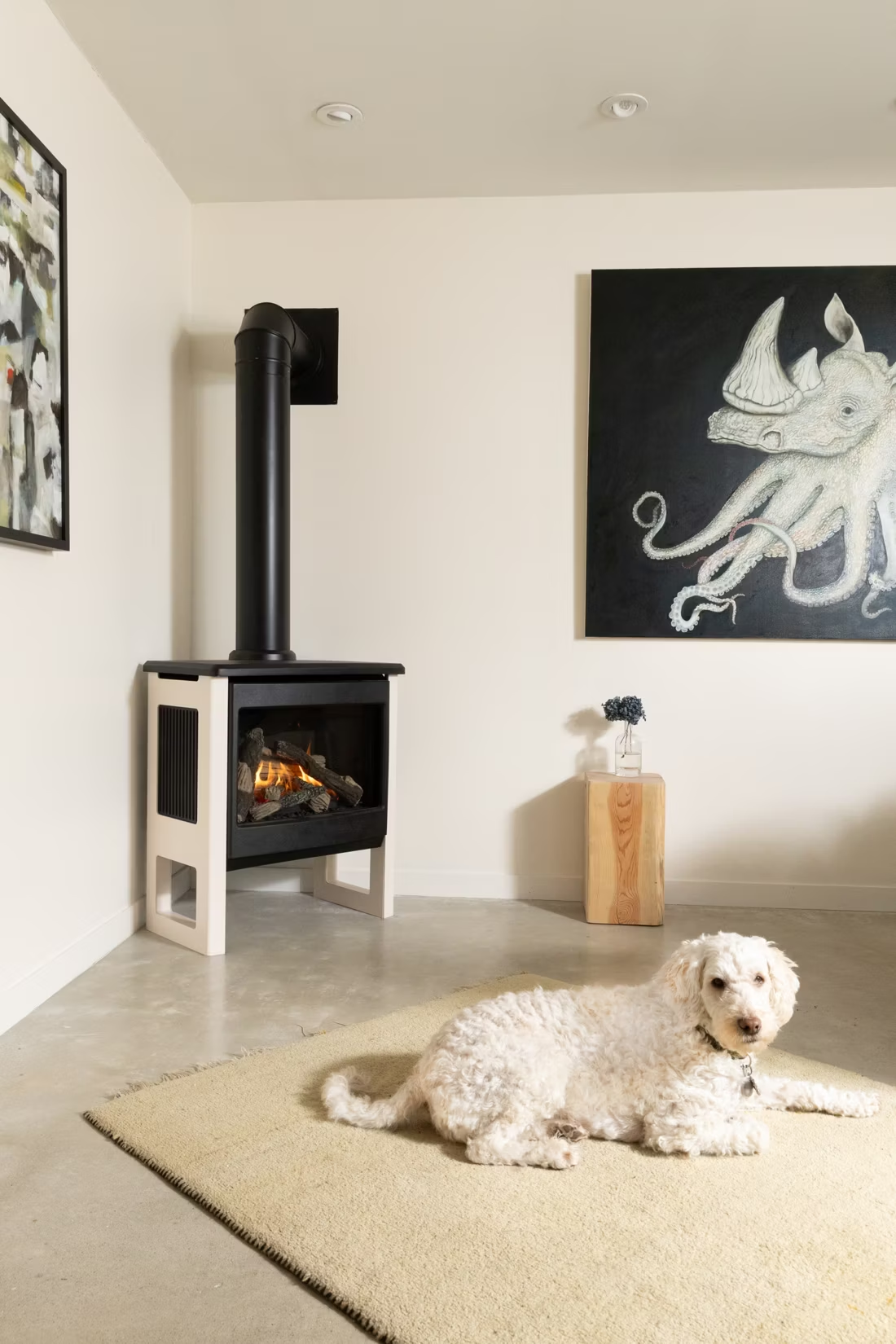
A gas fireplace is a built-in unit framed into a wall, typically used in new construction or a full remodel. A gas insert is sized to slide into an existing masonry fireplace opening, which is the more common project in El Paso County's older housing stock. A gas stove is a freestanding cast-iron or steel unit that sits on the floor and vents through a wall or ceiling, useful in a room with no existing fireplace at all. For most El Paso County homeowners looking to upgrade an old wood-burning hearth, an insert is the straightforward answer.
Do I need a permit to install a gas fireplace in El Paso County?
Yes. Inside the city of El Paso, permits for both the appliance installation and the gas line work go through the City of El Paso Development Services Department. In unincorporated parts of the county, and in independent municipalities like Socorro and Horizon City, permitting runs through the local building office serving that jurisdiction. The gas line portion specifically requires a licensed gas-fitter, which is one reason working with an established local dealer matters—they coordinate the gas work, venting, and inspection sign-off rather than leaving you to manage separate trades.
Should I get a vented or vent-free gas fireplace?
Vented (direct-vent) gas fireplaces draw combustion air from outside and exhaust it back outside through sealed venting, keeping combustion byproducts out of your living space entirely. Vent-free units burn without external venting and are legal in Texas, but they release water vapor and trace combustion gases indoors and require strict room-sizing and ventilation rules to run safely. Given that El Paso County is a designated non-attainment area for ozone and particulate matter, most local dealers steer homeowners toward direct-vent units—they perform better, don't affect indoor air quality, and don't add to a pollution load the county is already working to bring down.
How often does a gas fireplace need to be serviced?
Plan on an annual inspection, ideally before the first cold snap of the season. A technician checks the burner, pilot assembly, venting, gas connections, and any electronic ignition components, and cleans the glass and firebox interior. It's a lighter lift than sweeping a wood chimney, but skipping it is still the most common cause of pilot and ignition failures. Local service providers in the El Paso area typically charge in the $150 to $250 range for a standard annual visit.
Gas vs. electric fireplace—which makes more sense in El Paso County?
Gas delivers real heat output, which matters on the county's occasional hard-freeze nights, and with the right ignition system it can keep running through a power outage. Electric fireplaces plug into a standard outlet, need no gas line or venting at all, and work well for pure ambiance or as a secondary heat source in a bedroom or den—a good fit for manufactured housing or colonia-area homes where running a gas line isn't practical. Wood-burning fireplaces, by contrast, are genuinely uncommon here: the mild, short winter heating season doesn't call for cordwood heat, and the county's ozone non-attainment status makes wood smoke an added concern rather than a tradition worth preserving. For most El Paso County homeowners, the choice comes down to gas for heat performance or electric for simplicity, not wood.
What's the difference between an insert and a zero-clearance fireplace?
An insert is a fireplace that slides into a pre-existing wood-burning fireplace—if you don't have one, there's nothing to insert it into. A zero-clearance fireplace is built into a framed wall, which makes it the answer for remodels and new construction. Simple test: existing masonry fireplace means insert; blank or framed wall means zero-clearance.
Why is my open fireplace making my house colder?
Open fireplaces suck—literally. As the fire burns, it consumes air your furnace already paid to heat and pulls it out through the chimney, so the house is actually colder after the fire goes out than before you lit it. An insert fixes this: it seals the chimney, puts fixed glass across the front, and turns that hole in your house into a real heat source.
What is an in-home preview and do I need one?
It's a visit where a hearth professional measures your space, confirms the model you picked actually works in your home, and walks the specs—framing, gas line, venting, finish work—before anything is ordered. Some details you just can't know until you see the house. Never make a down payment without one; it's the single most-skipped step that burns buyers.
Can I install a fireplace myself?
If you're putting a fire in your house on purpose, it's best to work with an expert. Unless you're genuinely experienced in framing, gas line, vent pipe, and the national code on clearances to combustibles, have a professional do it—and ideally the same company that sells you the fireplace, so warranty, service, and liability all live under one roof.
Stove and Fireplace Dealers in El Paso County
Listings include WhyFire partner dealers, dealers we have verified as authorized for the brands we recommend, and established local businesses that carry hearth products. Every listing shows which one it is. The ones marked Preferred run on WhyFire's software, so they can show you real pricing and book your appointment right here. No manufacturer pays for placement. How we verify dealers →
Southwest Chimney Sweeps Inc
Jack White Building Specialties
K.d. Scholten Co.
Hi Tech Home Services
Get matched with a gas fireplace dealer in El Paso County.
Tell us about your home and we'll match you with a trusted local dealer and send you a free Project Guide & Parts List—the exact parts, vent kit, and installer recommendation for your gas fireplace project in El Paso County.
Find Your Fireplace →