
Built for Dripping Springs' Short, Mild Winters.
A gas fireplace built for Hill Country evenings—real flame, instant on, no wood to haul. Get matched with a trusted local dealer who knows what's actually installable in your home.
Every Project Starts From One of These Five Situations
Ambiance first, backup heat second.
Dripping Springs sits in the Hill Country west of Austin at about 1,170 feet, in a climate zone (2A) where winters are short and mild—the average winter low is just 39°F and the area logs only around 1,811 heating degree days a year. That's a fraction of what a true cold-climate town needs to survive January. Nobody here is heating a whole house on wood or gas the way a family in Buffalo or Duluth would. What drives demand is ambiance, resale value in the area's growing custom Hill Country home market, and the occasional hard freeze that reminds everyone winter can still bite.
Much of Dripping Springs and the surrounding Hays County acreage is unincorporated, and there's no citywide natural gas main serving most properties—so propane, not piped natural gas, is the fuel most local homeowners actually install. A local dealer will typically spec a direct-vent propane fireplace or insert, often paired with an existing or new propane tank, since Bluebonnet Electric Cooperative and Pedernales Electric Cooperative cover electric service here but neither delivers natural gas lines to most rural lots.
Three steps. No salesperson until you're ready.
Tell us about your project
Your zip code, your situation, and the fuel you're leaning toward—or let the answers point you to one.
See what's actually available
The brands dealers within 100 miles genuinely carry—real options, never a catalog mirage.
Get your dealer & Project Guide
A trusted local dealer, plus the free Project Guide & Parts List that names every component of the job.
Frequently Asked Questions
How much does a gas fireplace installation cost in Dripping Springs?
Most gas fireplace or insert installations in the Dripping Springs area run roughly $3,500 to $8,500, with the final number driven by whether you already have a propane tank on the property, the venting path, and whether you're building into a new custom stone surround (common in newer Hill Country construction) versus retrofitting an existing masonry fireplace. Homes without an existing propane tank should budget for tank delivery and setup from a local propane supplier as a separate line item—your hearth dealer can coordinate this, but it's worth asking about upfront.
Should I plan on propane or natural gas for my fireplace?
For most Dripping Springs addresses, plan on propane. Because so much of Hays County outside the city core is unincorporated acreage, natural gas mains simply haven't been extended to most neighborhoods—homeowners on Bluebonnet or Pedernales electric service are almost always on propane for gas appliances, including fireplaces. If you're in one of the newer developments closer to town, it's worth asking a local dealer to check availability before you commit to a model, but propane is the safe default assumption when budgeting.
Does wood heat make sense here instead of gas?
Not really as a primary heat source. With winter lows averaging 39°F and only about 1,811 heating degree days a year, Dripping Springs simply doesn't get cold enough, long enough, to justify wood as a heating strategy the way a colder climate would. Oak, pecan, and mesquite are all abundant locally, but around here they're far more likely to end up in a smoker than a wood stove firebox. A handful of homeowners do install wood-burning fireplaces purely for the look and the crackle on a rare cold snap, but gas is the practical choice for anyone who wants reliable, on-demand heat without stacking cordwood.
Do I need a permit to install a gas fireplace in Dripping Springs?
Generally yes, and where you file depends on your address. Properties inside Dripping Springs city limits go through the City's building department, while the many homes on acreage just outside city limits fall under unincorporated Hays County permitting instead. A propane line and appliance installation typically needs both a building permit and sign-off from a licensed gas-fitter for the line work itself. A reputable local hearth dealer will know which jurisdiction your address falls under and will usually pull the permit as part of the install.
Will my gas fireplace work if the power goes out?
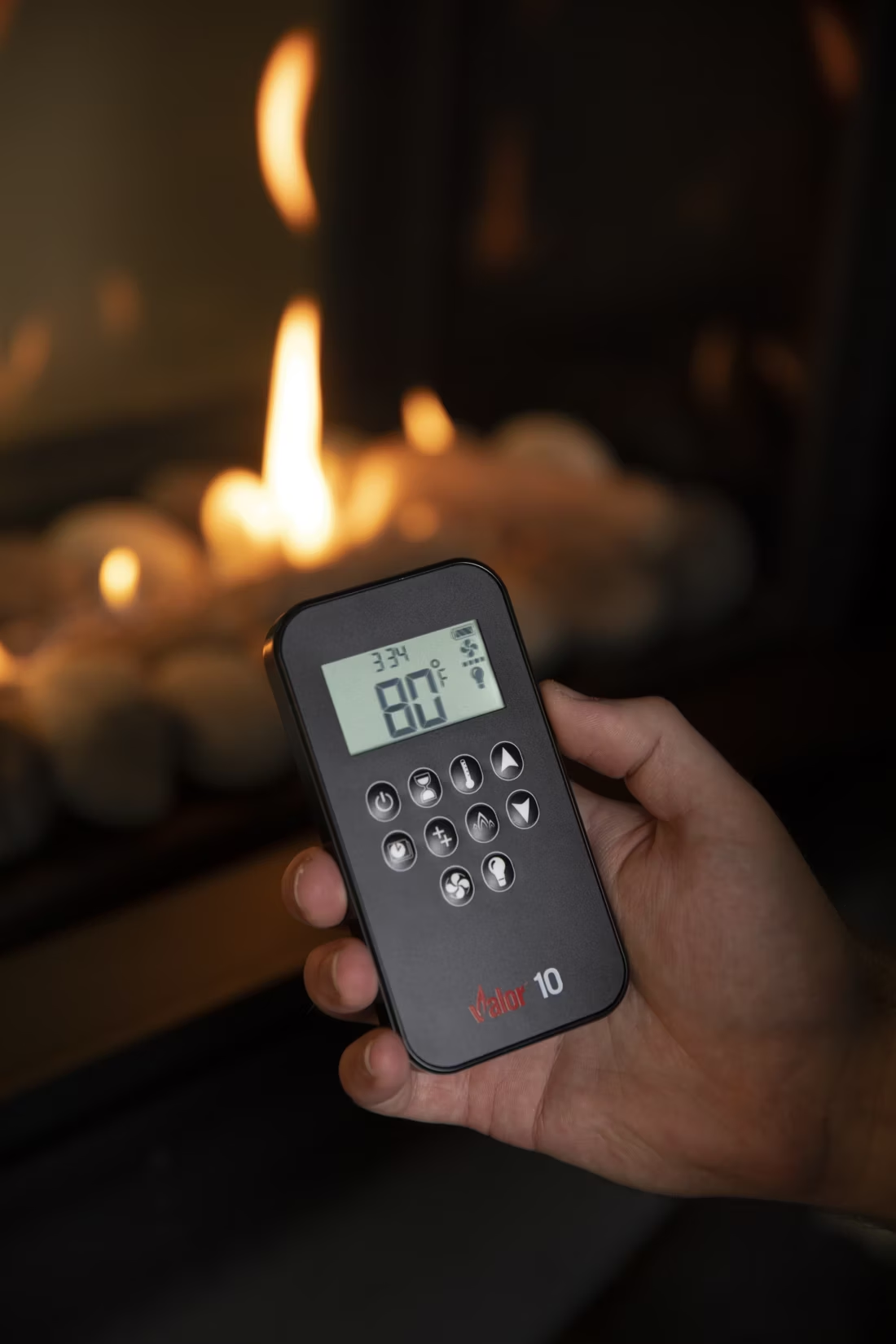
It can, with the right ignition system—and this matters more here than it used to. Since Winter Storm Uri knocked out ERCOT-connected power across Central Texas in February 2021, plenty of Dripping Springs homeowners have specifically asked for a fireplace that doesn't depend on the grid. Units with standing pilot or IPI ignition backed by batteries will still light during an outage; fully electronic ignition models generally won't. Valor fireplaces go a step further, generating their own power from the pilot's thermocouple with no batteries required. If backup heat during a grid event is part of why you're buying, say so up front—it changes which models your dealer will recommend.
Vented or vent-free—which is allowed and which makes sense?
Both are legal to install in Texas. Vented (direct-vent) units draw combustion air from outside and exhaust it back outside through a sealed pipe—they're the more common choice and work in any room size. Vent-free units burn directly into the living space and are subject to room-volume and ventilation rules, but Dripping Springs has no air quality non-attainment issues or inversion concerns that would complicate that choice the way they might in a smoggier metro. Direct-vent is still the more popular pick locally simply because it gives more design flexibility for custom stone surrounds, but a vent-free unit is a legitimate option for a smaller room or a home without existing venting.
Fireplace, insert, or stove—what's the right format for a Dripping Springs home?
A built-in gas fireplace is the standard choice for new construction and the custom Hill Country homes going up throughout Hays County, since it can be framed directly into a great room wall with a stone or shiplap surround. A gas insert makes sense if you have an older existing masonry wood fireplace you want to convert to push-button convenience without demoing the surround. A freestanding gas stove is less common here but works well in a smaller den, casita, or converted garage/flex space. A local dealer walking your specific room will tell you which format actually fits your existing opening or framing.
How often does a gas fireplace need to be serviced?
Plan on an annual inspection, ideally in early fall before the first cold front rolls through the Hill Country. A technician checks the burner, pilot or ignition system, gas connections, and venting, and cleans the glass and interior. Because Dripping Springs units run far fewer hours per season than a fireplace in a true cold climate, wear is lower—but propane systems specifically should have their regulator and line connections checked yearly, since propane runs at different pressure than natural gas and any leak is worth catching early.
Gas vs. electric fireplace—which fits a mild-winter home better?
Electric fireplaces are worth a serious look here given how mild the climate actually is—with Bluebonnet and Pedernales electric rates running around $0.11 to $0.12 per kWh, an electric unit costs very little to operate for the handful of genuinely cold nights Dripping Springs sees each winter, and installation is dramatically simpler (often $400–$1,200, no gas line or venting at all). Gas still wins on realism of flame and total heat output if you want a fireplace that can carry a room during a real cold snap or work as backup heat in a power outage—assuming you're on propane, since the outage-resilience argument only holds if the unit doesn't depend on the electric grid. For a secondary bedroom or a home office, electric is often the more sensible pick; for the main living area, most local homeowners still lean gas.
What's the difference between an insert and a zero-clearance fireplace?
An insert is a fireplace that slides into a pre-existing wood-burning fireplace—if you don't have one, there's nothing to insert it into. A zero-clearance fireplace is built into a framed wall, which makes it the answer for remodels and new construction. Simple test: existing masonry fireplace means insert; blank or framed wall means zero-clearance.
Can I put a TV above my fireplace?
Yes—with an asterisk. Fireplaces are hot and TVs don't like heat. Either put a mantel between them to deflect rising warmth, or choose a fireplace with heat-management technology that creates a cool zone on the wall above—the wall stays around 125 degrees, barely warm, while the room still gets full heat. If you like clean lines and don't want a mantel, heat management is the answer.
What is an in-home preview and do I need one?
It's a visit where a hearth professional measures your space, confirms the model you picked actually works in your home, and walks the specs—framing, gas line, venting, finish work—before anything is ordered. Some details you just can't know until you see the house. Never make a down payment without one; it's the single most-skipped step that burns buyers.
Does a fireplace add value to my home?
On average, a fireplace adds back to the home about the same amount you spent installing it. Add the monthly savings from heating the rooms you actually use instead of the whole house—often hundreds of dollars a year—and the value case is strong before you even count what a fire does for how your family uses the room.
Nearby Dealers
Hearth shops serving Dripping Springs and the surrounding area. Every listing shows whether it is a WhyFire partner, a dealer we have verified as authorized for the brands we recommend, or a local business carrying hearth products. No manufacturer pays for placement. How we verify dealers →
Jules Design Bar
Backyard & Patio Store - Austin
Crafted Flames
Quality Fire
EarthCore Industries
Tri-Supply - Austin
Find your gas fireplace in Dripping Springs.
Tell us a bit about your home and propane setup, and we'll put together a free Project Guide & Parts List—the right unit, the vent kit, and a trusted local Hill Country dealer to install it.
Find Your Fireplace →