
Gas fireplace warmth for the rare Rio Grande Valley freeze.
Doffing rarely needs heat, but when a hard freeze knocks out the grid, a properly vented propane fireplace keeps the living room warm regardless. We match you with a trusted local dealer who knows Hidalgo County installs.
Every Project Starts From One of These Five Situations
Built for ambiance, ready for the next hard freeze.
Doffing sits in the Rio Grande Valley of Hidalgo County, minutes from the river, in climate zone 2A—one of the hottest, most humid corners of the continental U.S. Winter lows average a mild 47°F and the area has only a brief, light winter heating season, a fraction of what a place like Duluth, MN racks up in a single month. Wood stoves and pellet stoves don't make practical sense in this climate, which is why those fuels are flagged not-applicable for this zip. Gas is a different story, and it earns its keep here for reasons that have less to do with everyday heating and more to do with ambiance and resilience.
Most Doffing homes are built around cooling, not heating, with minimal or no central heat source. But every few winters a hard freeze—like February 2021's Winter Storm Uri—pushes ERCOT to the edge and knocks out power across a service area split between AEP Texas Central, Oncor, and Magic Valley Electric Cooperative. In that moment, a direct-vent gas fireplace does double duty: a design feature for cool evenings most of the year, and real backup heat when the grid can't keep up. Natural gas mains don't reach much of unincorporated Hidalgo County, so the overwhelming majority of installations here run on propane, delivered and stored in a tank on the property.
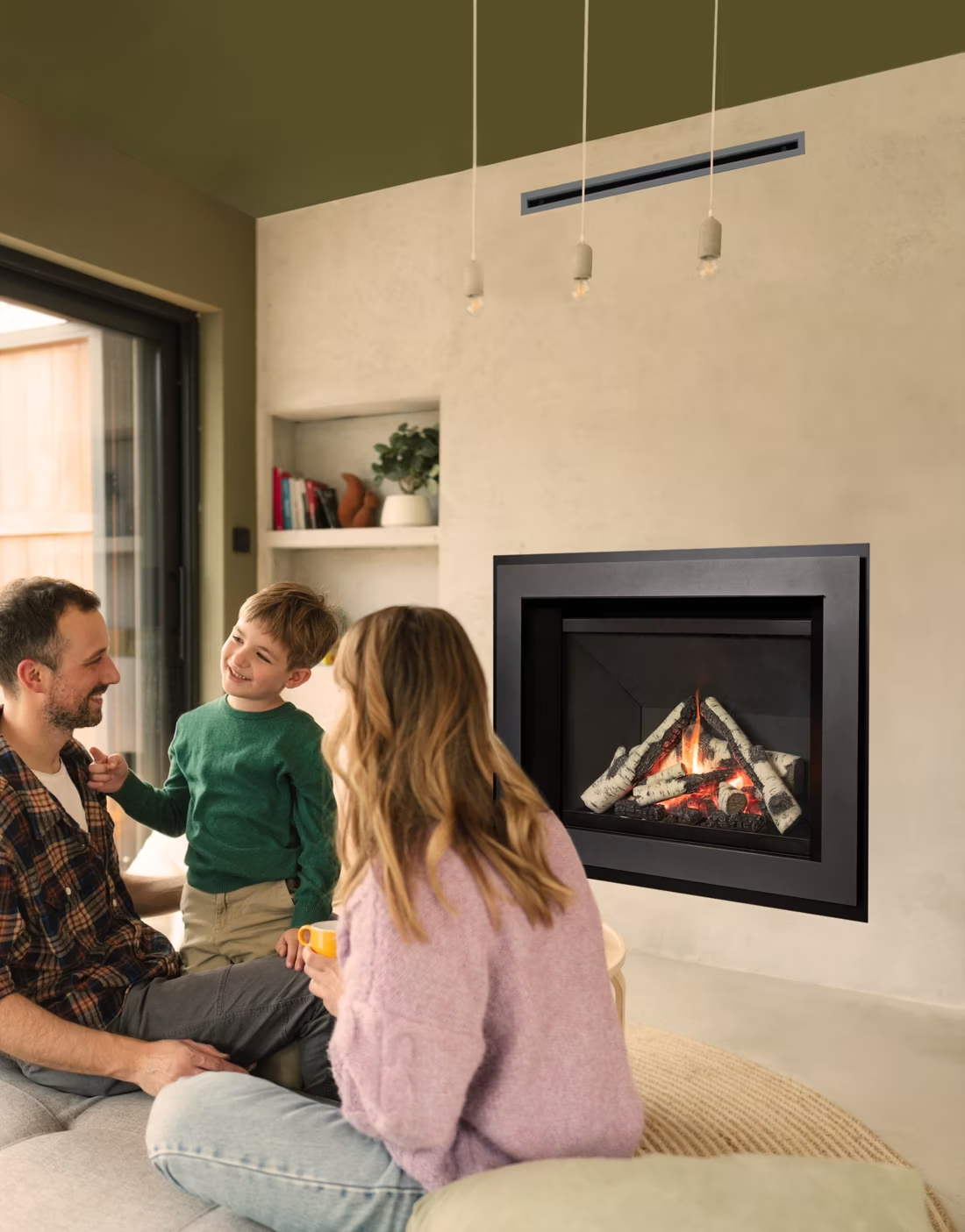
Three steps. No salesperson until you're ready.
Tell us about your project
Your zip code, your situation, and the fuel you're leaning toward—or let the answers point you to one.
See what's actually available
The brands dealers within 100 miles genuinely carry—real options, never a catalog mirage.
Get your dealer & Project Guide
A trusted local dealer, plus the free Project Guide & Parts List that names every component of the job.
Frequently Asked Questions
How much does a gas fireplace installation cost in Doffing?
A typical direct-vent gas fireplace installation in the Doffing area runs roughly $3,500 to $8,500, depending on the unit, whether it's built into new framing or an existing opening, and the length of propane line run. Homes without an existing propane tank should budget for tank installation as well—a 100- or 200-gallon aboveground tank adds to the project, often pushing the total toward $9,000 for a first-time propane setup. Because natural gas mains are limited around Doffing, most quotes from local dealers will already assume propane rather than natural gas.
Will I be installing a natural gas or propane fireplace?
Almost certainly propane. Doffing is unincorporated Hidalgo County, and natural gas distribution mains don't extend through most of this part of the Rio Grande Valley. Local propane suppliers deliver and refill residential tanks throughout the area, and propane fireplaces perform identically to natural gas units—same flame, same heat output, just a different fuel source and regulator setting. Your local dealer will size the tank and line based on your fireplace's BTU rating and any other propane appliances on the property, like a range or water heater.
Will my gas fireplace work during a power outage?
It can, and for Doffing that's a meaningful selling point. February 2021's Winter Storm Uri left much of the Rio Grande Valley without power for days as ERCOT struggled statewide, and rural stretches served by AEP Texas Central or Magic Valley Electric Cooperative are sometimes among the slower areas to see power restored after a hard freeze. A gas fireplace with IPI (intermittent pilot ignition) runs on battery backup and lights on demand even with the power out. Valor units go a step further—their pilot generates its own electricity through the thermocouple, so there's no battery to remember at all. For a home that otherwise has no backup heat source, that's the difference between riding out a freeze comfortably and not.
Do I need a permit to install a gas fireplace in Doffing?
Yes. Since Doffing is unincorporated, permitting runs through Hidalgo County's building permits office rather than a city department. Propane tank installation and gas line work also fall under Texas Railroad Commission propane safety rules, which is why this work should go through a licensed propane installer rather than a general handyman. Most local hearth dealers coordinate the building permit, the gas line, and the propane company's tank setup as one package, so you're not stuck managing three separate contractors.
Should I get a vented or vent-free gas fireplace?
For Doffing, vented (direct-vent) units are the better call. Vent-free gas fireplaces release combustion byproducts—including water vapor—directly into the room, and the Rio Grande Valley's already high ambient humidity means that extra moisture load is the last thing most homes need; it can contribute to condensation and mold risk in a climate that's humid nearly year-round. Direct-vent units draw combustion air from outside and exhaust it back outside through a sealed system, keeping indoor air quality unaffected. Vent-free units are legal in Texas, but most local dealers steer Valley customers toward direct-vent for exactly this reason.
Should I choose a fireplace, insert, or stove?
Because heating has never been a priority in this part of Texas, most Doffing homes were never built with a masonry fireplace to convert—which makes the insert option less common here than in colder climates. A built-in direct-vent gas fireplace, framed into a wall during a remodel or addition, is the most typical project. A freestanding gas stove is a good option if you want a lower-cost, faster install without framing work. If your home is one of the few with an existing masonry fireplace, a gas insert can still be fitted to it and will outperform an open masonry hearth for actual heat output on a cold snap.
How often does a gas fireplace need servicing?
Plan on an annual inspection, typically $150 to $250 with a local service technician. They'll check the burner, pilot assembly, propane line connections, and venting, and clean the glass and interior. Because these units in Doffing often sit unused for long stretches through the hot months and only fire up occasionally, it's worth having that inspection done before the first cool snap each fall rather than waiting until you actually need the heat—a pilot or igniter that's gone bad is far more common after months of disuse.
Why not just install a wood-burning fireplace instead?
Wood heat doesn't make much sense here, which is why it's marked not-applicable for Doffing. Oak, pecan, and mesquite are the classic Rio Grande Valley woods, but locally they're burned in pits and offset smokers far more than in home fireplaces—with only a brief, light winter heating season and winter lows averaging 47°F, there's little practical need for wood as a heat source. A small number of homeowners still install a wood-burning fireplace purely for the look and the occasional cool-evening fire, but for anyone who wants dependable, code-compliant heat during an actual freeze event, propane gas is the standard local choice.
Gas vs. electric fireplace—which fits my situation?
Both are viable in Doffing, and it comes down to what you need the unit to do. Electric fireplaces install with no venting or gas line at all, often for well under $1,500, and they're a great fit for a bedroom, den, or supplemental ambiance in a home already served by AEP Texas Central, Oncor, or Magic Valley Electric Cooperative. The tradeoff is that an electric fireplace goes dark the moment the power does—which is precisely when a hard freeze like Winter Storm Uri hits hardest. A propane gas fireplace with battery-backup or self-powered ignition keeps working when the grid doesn't. For a primary living space where backup heat actually matters, gas has the edge here; for a secondary room where it's purely about ambiance, electric is simpler and cheaper.
Why is my open fireplace making my house colder?
Open fireplaces suck—literally. As the fire burns, it consumes air your furnace already paid to heat and pulls it out through the chimney, so the house is actually colder after the fire goes out than before you lit it. An insert fixes this: it seals the chimney, puts fixed glass across the front, and turns that hole in your house into a real heat source.
Is my gas fireplace wasting gas?
If it was installed more than 15 years ago, probably. Older gas fireplaces keep a standing pilot light burning all the time, and that little flame can cost a couple hundred dollars a year. Newer models use pilot-on-demand ignition—the pilot lights only when you use the fireplace and goes out when you turn it off.
What is an in-home preview and do I need one?
It's a visit where a hearth professional measures your space, confirms the model you picked actually works in your home, and walks the specs—framing, gas line, venting, finish work—before anything is ordered. Some details you just can't know until you see the house. Never make a down payment without one; it's the single most-skipped step that burns buyers.
Can a fireplace actually lower my heating bill?
Yes—by creating a comfort zone. A furnace heats every square foot of the house just to warm the one room you're in; a gas fireplace on low burns roughly a sixth of the gas a typical furnace does. Set the furnace around 55–60 degrees as a baseline, then heat the rooms your family actually uses. Families who heat this way commonly save $20–$60 a month.
Nearby Dealers
Hearth shops serving Doffing and the surrounding area. Every listing shows whether it is a WhyFire partner, a dealer we have verified as authorized for the brands we recommend, or a local business carrying hearth products. No manufacturer pays for placement. How we verify dealers →
Grill Street Outdoor Kitchens
Get your Doffing gas fireplace project started.
Tell us about your home and we'll match you with a trusted local Doffing-area dealer and send over a free Project Guide & Parts List—the exact parts, including the vent kit, and the installer we recommend for your propane gas fireplace project.
Find Your Fireplace →