
Steady heat for wide-open Rolling Plains winters.
From the courthouse square in Dickens to the ranch roads around Spur and McAdoo, propane and gas fireplaces give West Texas homes instant, thermostat-controlled heat when a blue norther rolls through. Find the right unit and connect with a trusted local dealer.
Every Project Starts From One of These Five Situations
Instant heat for a county built on ranching, not gas lines.
Dickens County is home to fewer than 1,000 residents spread across roughly 900 square miles of rolling plains and canyon country south of Lubbock. There's no natural gas distribution network reaching most of the county—Dickens, Spur, McAdoo, and Afton run on well water and propane, not municipal utility lines. That makes propane, not piped natural gas, the default fuel for anyone considering a gas fireplace, insert, or stove out here.
The climate zone here (3B) means winters are generally mild by national standards, but the Rolling Plains get hit hard by fast-moving cold fronts—locals call them blue northers—that can drop temperatures 30 to 40 degrees in an afternoon. A gas fireplace gives a ranch house or in-town home in Dickens or Spur instant backup heat for those snap cold spells, without waiting on a wood fire to build or fighting a chimney draft in gusty plains wind. With no air quality restrictions on burning in the county, plenty of households still keep a wood stove going on oak, pecan, or mesquite—but gas has become the go-to for the guest room, the added-on porch, or the days nobody wants to haul wood.
Three steps. No salesperson until you're ready.
Tell us about your project
Your zip code, your situation, and the fuel you're leaning toward—or let the answers point you to one.
See what's actually available
The brands dealers within 100 miles genuinely carry—real options, never a catalog mirage.
Get your dealer & Project Guide
A trusted local dealer, plus the free Project Guide & Parts List that names every component of the job.
Frequently Asked Questions
How much does a gas fireplace installation cost in Dickens County?
Because Dickens County has no natural gas utility outside a handful of in-town connections, most installations here are propane-fueled, and pricing reflects that—a propane tank hookup, gas line run, and unit install typically totals $3,500 to $9,000 depending on whether you're converting an existing masonry fireplace or starting from scratch. Ranch properties outside Dickens, Spur, and McAdoo should expect a small travel charge added to the quote, since certified hearth dealers are generally based in Lubbock County, about 45 minutes away.
Can I convert my existing wood fireplace to a gas insert?
Yes, and it's a common upgrade for older homes in Dickens and Spur that already have a working masonry fireplace and chimney. A gas insert slides into the existing firebox and vents through a stainless liner run up the same chimney, so you keep the look of the original hearth while gaining instant on-off heat. Since most of the county runs on propane rather than piped gas, the installer will also spec a propane line from your existing tank—or install a new tank—as part of the job.
Should I use propane or natural gas for my fireplace in Dickens County?
For nearly everyone in Dickens County, the answer is propane. Natural gas mains don't reach most of the county's ranches and small towns, so unless your home already has a natural gas hookup—rare outside a limited service area—propane is the practical choice. Most gas fireplace models sold today can be configured for either fuel; your dealer simply sets the correct orifice and regulator for propane during installation and coordinates tank placement if you don't already have one.
Will a gas fireplace work if the power goes out?
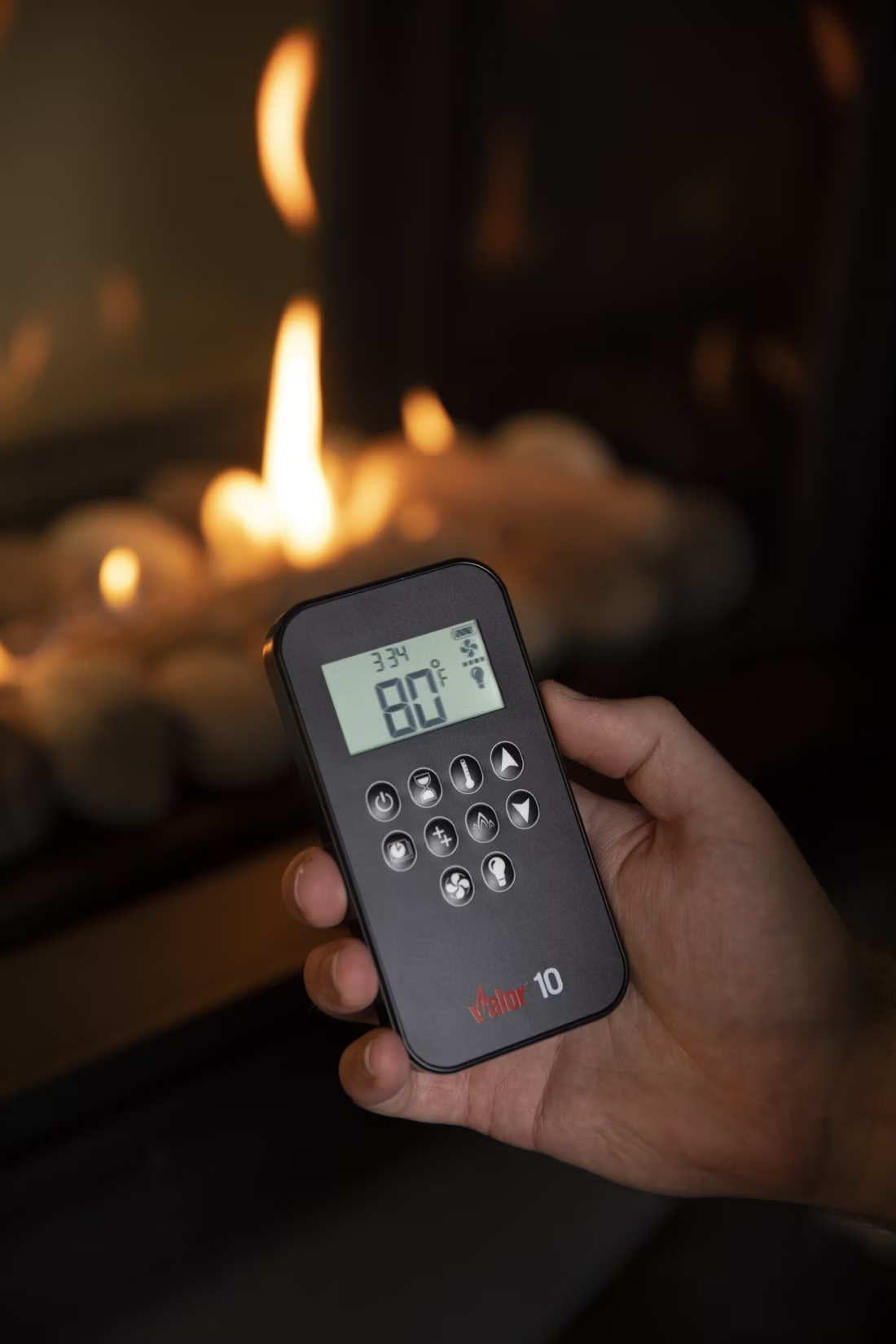
Most will, which matters in a county where ice storms and high winds can knock out rural electric co-op service for hours at a time. Units with intermittent pilot ignition (IPI) run on a small battery backup that kicks in automatically, so the fireplace lights and operates normally even with the grid down. Some brands, like Valor, generate their own electricity from the pilot flame's thermocouple and need no batteries at all—worth asking about if you want heat you can count on regardless of what the co-op line is doing.
What's the difference between a gas fireplace, insert, and stove?
A gas fireplace is a built-in unit framed into a wall, usually chosen for new construction or a remodel. A gas insert drops into an existing masonry firebox and uses the chimney you already have—the most common retrofit for older homes around the Dickens County courthouse square and in Spur. A gas stove is a freestanding cabinet unit that sits out from the wall like a traditional wood stove but burns propane or natural gas. For most homeowners here with an existing fireplace, an insert is the simplest and most cost-effective path.
Do I need a permit to install a gas fireplace in Dickens County?
It depends on where you are. Unincorporated Dickens County doesn't enforce a county-wide building code, so many rural ranch installations proceed without a formal permit. Inside city limits—Dickens or Spur—the local city office may require a building and gas-line permit, and any propane tank installation still has to meet state fire marshal setback rules regardless of location. A licensed propane installer or hearth dealer will know exactly what applies to your address and can pull whatever paperwork is needed.
What's the difference between vented and vent-free gas fireplaces?
Vented (direct-vent) units draw combustion air from outside and exhaust it back outside through a sealed pipe—they're the standard choice and produce real, substantial heat. Vent-free units burn propane or natural gas directly into the room without outside venting; they're legal in Texas but come with strict room-size and ventilation requirements, and they add moisture to the air, which matters in tightly sealed newer homes. For most Dickens County installations, especially larger ranch living rooms, a direct-vent unit is the safer and more effective choice. Your local dealer can walk through both options for your specific room.
How often should a gas fireplace be serviced?
Plan on an annual inspection, ideally before the first blue norther of the season hits in October or November. A technician checks the burner, pilot assembly, gas connections, and venting, and cleans the glass. Because certified hearth technicians aren't based in Dickens County itself, most homeowners schedule service through a Lubbock-based provider who can bundle Dickens County stops into a single trip—ask your dealer whether they offer that.
Gas vs. wood—which makes more sense for a Dickens County home?
Wood is still the backbone of heating on a lot of county ranches—oak, pecan, and mesquite are all locally available, there are no air quality burn restrictions here, and a wood stove keeps working with zero utility or propane delivery involved. Gas wins on convenience: instant heat with a flip of a switch or a remote, no ash, and a steadier temperature for a home office or guest room. Given the generally mild winters in this climate zone, punctuated by sharp but short cold fronts, a lot of local households end up with both—wood as the primary or backup heat source, gas for the rooms where convenience matters most.
Why is a fireplace insert so efficient?
An insert does two things: it seals the chimney completely, so you stop losing air you already paid to heat, and it radiates warmth into the room through the firebox and glass. Most add a heat-exchange fan that pulls cool room air underneath, wraps it around the hot firebox, and pushes it back out warm. Your home is more efficient before you've even lit the first fire.
Is my gas fireplace wasting gas?
If it was installed more than 15 years ago, probably. Older gas fireplaces keep a standing pilot light burning all the time, and that little flame can cost a couple hundred dollars a year. Newer models use pilot-on-demand ignition—the pilot lights only when you use the fireplace and goes out when you turn it off.
What is an in-home preview and do I need one?
It's a visit where a hearth professional measures your space, confirms the model you picked actually works in your home, and walks the specs—framing, gas line, venting, finish work—before anything is ordered. Some details you just can't know until you see the house. Never make a down payment without one; it's the single most-skipped step that burns buyers.
How much should I budget for a fireplace?
For an average home—covering the fireplace, the vent pipe, and basic installation—a budget between $3,900 and $5,500 gives you a lot of options across wood, gas, and pellet. By the time you add finish work, gas line, and electrical, the average complete installation lands between $5,000 and $12,000 all-in. In a remodel or new build, a good rule is to put about 2.5% of the total project cost toward the fireplace.
Stove and Fireplace Dealers in Dickens County
Listings include WhyFire partner dealers, dealers we have verified as authorized for the brands we recommend, and established local businesses that carry hearth products. Every listing shows which one it is. The ones marked Preferred run on WhyFire's software, so they can show you real pricing and book your appointment right here. No manufacturer pays for placement. How we verify dealers →
A & A Chimeny Sweep w/Texas Fp
Coastal Insulation
Caprock Brick
Ford Insulation And Fireplaces
Find your gas fireplace in Dickens County.
Tell us about your home or ranch property and we'll match you with the right propane or gas fireplace, insert, or stove—plus a free Project Guide & Parts List and a trusted local dealer to install it.
Find Your Fireplace →