
Find your electric fireplace in Denton County.
Clean, vent-free heat and ambiance for the fast-growing suburbs of Denton, Lewisville, Flower Mound, and beyond—built for North Texas winters that rarely dip far below freezing. Find the right unit and connect with a trusted local dealer.
Every Project Starts From One of These Five Situations
A mild climate built for zone heat, not furnace-grade wood or pellet heat.
Denton County sits at the northern edge of the Dallas-Fort Worth metroplex, spanning fast-growing cities like Denton, Lewisville, Flower Mound, Little Elm, Highland Village, Corinth, and Argyle, with a population that's crossed 900,000 and keeps climbing. The climate here is classified 3A—mixed-humid—with an average winter low around 34°F and just 2,477 heating degree days a year. Compare that to Duluth, Minnesota, which sees roughly 10,000 HDD annually, and it's clear Denton County homes aren't fighting brutal winters; they're managing a handful of genuinely cold weeks bookended by long mild stretches.
That climate reality shapes what actually gets installed. Wood stoves and pellet stoves are essentially absent from the county's fireplace market—not because the county lacks wood (oak, pecan, and mesquite are all common locally and fuel plenty of backyard smokers and grills), but because a 34°F average winter low doesn't justify the chimney work, ash cleanup, and cutting permits that make sense in a place like Fargo, North Dakota. Electric fireplaces fill the gap instead: no venting, no gas line, no combustion byproducts, and installation that fits neatly into the new-construction subdivisions going up across the county from Providence Village to Northlake. Most homeowners here want the look and ambiance of a fireplace with the option of real supplemental heat on the coldest nights—and an electric unit delivers both without touching the roofline.
Three steps. No salesperson until you're ready.
Tell us about your project
Your zip code, your situation, and the fuel you're leaning toward—or let the answers point you to one.
See what's actually available
The brands dealers within 100 miles genuinely carry—real options, never a catalog mirage.
Get your dealer & Project Guide
A trusted local dealer, plus the free Project Guide & Parts List that names every component of the job.
Frequently Asked Questions
How much does an electric fireplace installation cost in Denton County?
Most electric fireplace projects in Denton County run $300 to $1,500 for a wall-mounted or freestanding unit that plugs into an existing outlet, and $1,500 to $4,000 for a built-in linear unit or full mantel surround that requires a dedicated 120V or 240V circuit run by a licensed electrician. Converting an existing wood-burning masonry fireplace to an electric insert typically lands in the $1,000 to $3,000 range, depending on whether the opening needs trim work to fit the insert. Because there's no chimney, no gas line, and no venting to size, electric installs are consistently the least expensive fireplace project available to Denton County homeowners.
Do I need a permit to install an electric fireplace in Denton County?
In most cases, no separate mechanical or venting permit is required, since electric fireplaces don't produce combustion byproducts. If your installation requires a new dedicated circuit, an electrical permit is typically needed—homes inside city limits (Denton, Lewisville, Flower Mound, Little Elm, and the rest) pull that through their city's building department, while homes in unincorporated parts of the county go through Denton County Development Services. A licensed electrician handling the circuit work will usually pull the permit as part of the job, so it's rarely something homeowners have to manage themselves.
What size electric fireplace do I need?
Electric fireplaces are sized more for room coverage than whole-home heat. A typical unit puts out around 4,000 to 5,000 BTU, enough to comfortably supplement a 300 to 500 square foot living room or primary bedroom on the handful of nights each winter that dip into the 20s or 30s. Given Denton County's mild 2,477 heating degree day climate, almost no one is sizing an electric fireplace as a home's primary heat source—it's a zone-heat and ambiance decision, so most homeowners choose based on visual style (linear, traditional mantel, insert) rather than raw BTU output. A local dealer can confirm sizing based on your room and electrical setup.
Why don't more Denton County homes use wood or pellet stoves?
It comes down to the climate. With an average winter low of 34°F and only 2,477 heating degree days a year, Denton County simply doesn't get the sustained cold that makes wood or pellet heat worthwhile—nothing like Duluth, Minnesota or International Falls, Minnesota, where a wood stove can be a genuine primary heat source. Oak, pecan, and mesquite are all abundant locally, but they show up in backyard smokers far more often than fireplace inserts. A small number of rural homeowners on larger acreage still burn wood for ambiance or supplemental heat, but for the vast majority of the county's homes, especially the newer subdivisions, electric and gas fireplaces have replaced wood as the practical choice.
Electric vs. gas fireplace—which is right for my Denton County home?
Gas fireplaces, common throughout the county where natural gas service is available through Atmos Energy, deliver more heat output and a closer look to a real flame, but they require a gas line and venting work. Electric fireplaces skip both—they install anywhere there's an outlet or a simple circuit run, which makes them the go-to choice for interior rooms, primary bedrooms, and homes in newer subdivisions where the builder didn't run gas to every wall. Electric units also cost less upfront and have no annual gas-appliance service requirement. For homeowners who want flame ambiance without any combustion, venting, or gas bill, electric is usually the simpler and more flexible pick.
Will an electric fireplace work if the power goes out?
No—electric fireplaces stop working the moment power is lost, which is worth remembering after the February 2021 grid failure that left much of Denton County and the wider ERCOT service area without power for days. If backup heat during outages is a real priority for your household, a battery-backed gas fireplace or a small generator setup is a better fit than relying on an electric unit. For day-to-day ambiance and supplemental warmth, though, electric remains the lowest-maintenance option most of the year.
What type of electric fireplace fits my home best?
In the new-construction homes going up across Little Elm, Northlake, Providence Village, and similar growth areas, built-in linear electric fireplaces are the most common choice—they fit into a framed wall niche and pair well with open-concept living rooms. In older homes with an existing wood-burning masonry fireplace, an electric insert is usually the better retrofit: it slides into the existing opening, eliminates ash and smoke, and doesn't require any chimney work since there's no combustion to vent. Freestanding electric stoves and mantel packages are a third option for homeowners who want a plug-in, no-installation solution in a rental or a room without existing fireplace infrastructure.
How much maintenance does an electric fireplace need?
Very little. There's no chimney to sweep, no creosote to manage, and no annual gas-line inspection. Maintenance is mostly dusting the unit, occasionally replacing the LED ember bed or flame bulbs (LEDs typically last 20,000+ hours before needing attention), and checking that the heater element and fan are running cleanly if the unit sees heavy winter use. Compared to the annual chimney inspections wood-burning appliances require elsewhere, it's a near-zero-maintenance option—one more reason it's become the default fireplace choice in Denton County's newer housing stock.
Can I convert my existing wood-burning fireplace to electric?
Yes, and it's one of the more popular retrofit projects in Denton County's older neighborhoods, particularly in established parts of Denton and Lewisville with original masonry fireplaces. An electric insert slides into the existing firebox opening, and because there's no combustion, the chimney doesn't need a liner, cap work, or any venting modification—it can even stay capped and unused. The main installation step is running power to the fireplace location if there isn't already an outlet nearby, which a local dealer or electrician can assess during an in-home visit.
Can I put a TV above my fireplace?
Yes—with an asterisk. Fireplaces are hot and TVs don't like heat. Either put a mantel between them to deflect rising warmth, or choose a fireplace with heat-management technology that creates a cool zone on the wall above—the wall stays around 125 degrees, barely warm, while the room still gets full heat. If you like clean lines and don't want a mantel, heat management is the answer.
Does an electric fireplace need a vent or chimney?
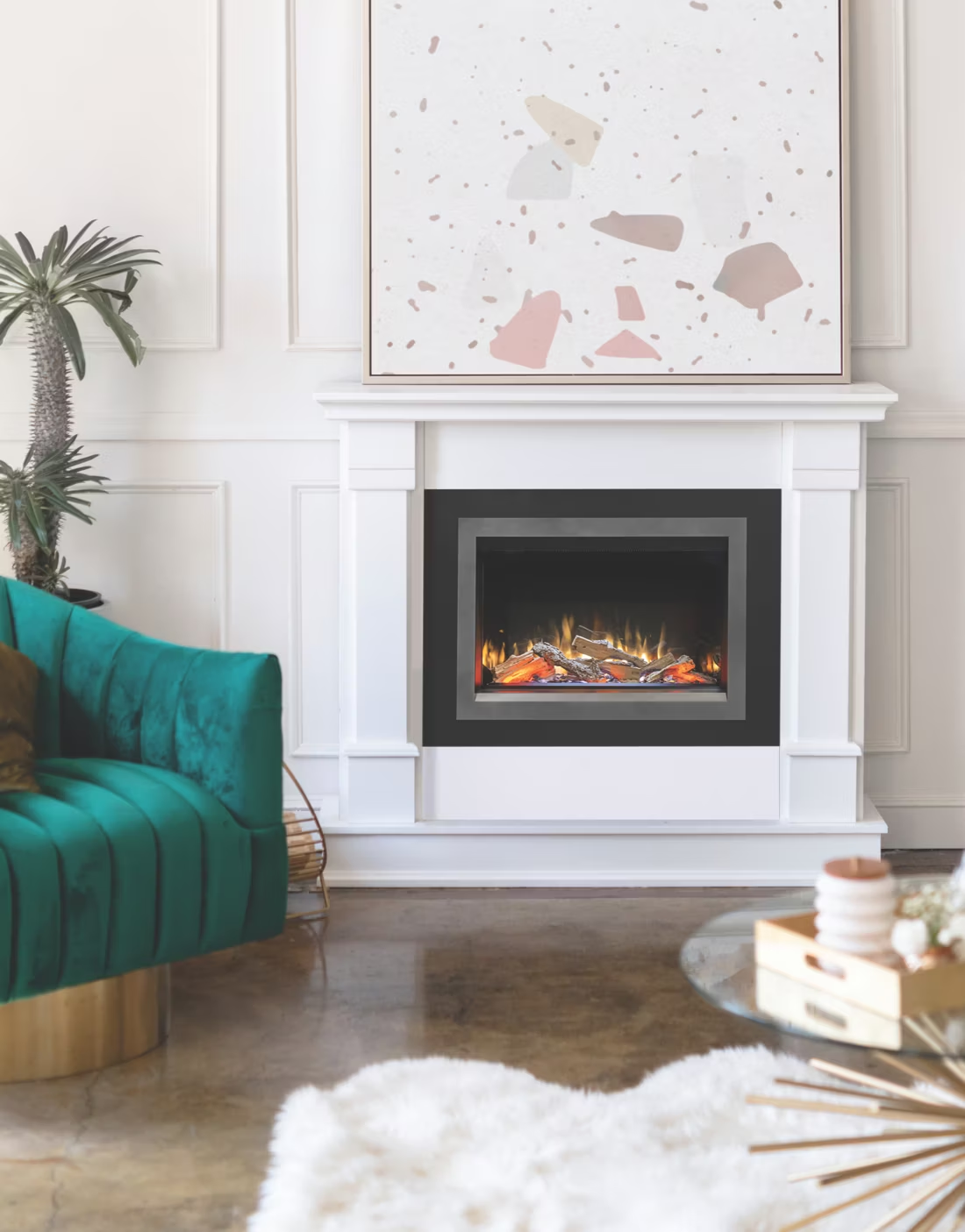
No—that's its superpower. An electric fireplace needs a wall and an outlet, period. No vent pipe, no gas line, no clearances to design around, which is why it works in bedrooms, offices, apartments, and walls where venting a gas or wood unit would be impractical or impossible. Installation is typically the simplest and least expensive of any fireplace type.
How much should I budget for a fireplace?
For an average home—covering the fireplace, the vent pipe, and basic installation—a budget between $3,900 and $5,500 gives you a lot of options across wood, gas, and pellet. By the time you add finish work, gas line, and electrical, the average complete installation lands between $5,000 and $12,000 all-in. In a remodel or new build, a good rule is to put about 2.5% of the total project cost toward the fireplace.
What is an in-home preview and do I need one?
It's a visit where a hearth professional measures your space, confirms the model you picked actually works in your home, and walks the specs—framing, gas line, venting, finish work—before anything is ordered. Some details you just can't know until you see the house. Never make a down payment without one; it's the single most-skipped step that burns buyers.
Stove and Fireplace Dealers in Denton County
Listings include WhyFire partner dealers, dealers we have verified as authorized for the brands we recommend, and established local businesses that carry hearth products. Every listing shows which one it is. The ones marked Preferred run on WhyFire's software, so they can show you real pricing and book your appointment right here. No manufacturer pays for placement. How we verify dealers →
Pittman Supply Company
Bbq Outfitters
Flames Fireplaces & Gas Grills
Distrinctive Outdoor Environments, LLC
Overhead Door Co. Of Dallas
Golden Blount
Sweeps N Ladders
Cosentino – Dallas
EarthCore Industries
Alliance Materials, Inc.
Elegant Fireside & Patio, LLC
Acme Brick Tile & Stone
Yard Art Patio & Fireplace - Allen
Find your electric fireplace in Denton County.
Tell us about your home and we'll match you with a trusted local dealer and a free Project Guide & Parts List—the exact parts and recommended dealer for your electric fireplace project in Denton County.
Find Your Fireplace →