
Instant heat for Panhandle winters, no wood pile required.
Deaf Smith County's blue northers can drop overnight lows into the low 20s with little warning. A gas fireplace lights instantly and keeps working through the wind and the cold. Find the right unit for your Hereford-area home and connect with a trusted local dealer.
Every Project Starts From One of These Five Situations
Convenient heat built for the High Plains.
Deaf Smith County sits on the flat Texas High Plains at roughly 3,800 feet, anchored by Hereford—the self-declared Beef Capital of the World and the county seat. Winters here run cold and dry rather than snowbound: a climate zone 4B profile, about 4,175 heating degree days a year, and average winter lows near 22 degrees, punctuated by fast-moving blue northers that can drop temperatures 30 degrees in an afternoon. Unlike forested parts of the state, this is cattle and irrigated-farm country, and native oak, pecan, and mesquite grow mostly in scattered riverbottoms and windbreaks rather than the kind of timber stands that support a wood-heating tradition.
That scarcity of local timber is a big part of why wood stoves never took hold here and why gas has become the default choice for both primary and supplemental heat. Atmos Energy and similar providers serve natural gas to much of in-town Hereford, while ranch and farm properties outside city limits typically run on propane tanks—a setup common across the Panhandle. Either fuel path gets you the same result: a gas fireplace or insert that fires up at the flip of a switch, holds steady through a windy, sub-freezing night, and doesn't depend on a wood supply that simply isn't local to Deaf Smith County.
Three steps. No salesperson until you're ready.
Tell us about your project
Your zip code, your situation, and the fuel you're leaning toward—or let the answers point you to one.
See what's actually available
The brands dealers within 100 miles genuinely carry—real options, never a catalog mirage.
Get your dealer & Project Guide
A trusted local dealer, plus the free Project Guide & Parts List that names every component of the job.
Frequently Asked Questions
How much does a gas fireplace installation cost in Deaf Smith County?
Most gas fireplace and insert installations in Deaf Smith County run somewhere between $3,500 and $9,000, depending on the unit, whether you're converting an existing masonry fireplace or building new, and how much gas line work is involved. A direct-vent insert into an existing fireplace that already has a gas line nearby sits at the lower end. A new built-in fireplace requiring framing, venting, and a longer gas line run—common in newer construction around Hereford—lands higher. Rural properties running on propane may see a modest add-on if a new tank or line extension is needed. A local dealer will give you a firm number after seeing your home.
Can I convert my existing wood fireplace to gas?
Yes, and it's a common project even in a county where wood heat was never the norm. Many older homes in Hereford have a masonry fireplace built for atmosphere rather than serious heat, since local oak, pecan, and mesquite were never plentiful enough to support daily wood burning. A gas insert dropped into that same firebox, vented through a stainless liner in the existing chimney, turns an underused fireplace into a real heat source without any structural rebuild. Expect the project to run in the same $3,500–$8,000 range as a standalone insert install, depending on your fuel source and line work.
Should I use natural gas or propane for my fireplace?
It depends on where your property sits. Homes within Hereford's city limits generally have access to natural gas service, which makes adding a fireplace straightforward if you already run gas appliances. Outside town—across the farms and feedlot operations that make up most of Deaf Smith County—propane is the standard, either from an existing tank or a new one installed by a local propane supplier. Nearly every gas fireplace on the market can be configured for either fuel; your installer sets the correct orifice and regulator for whichever you have.
Will my gas fireplace still work if the power goes out?
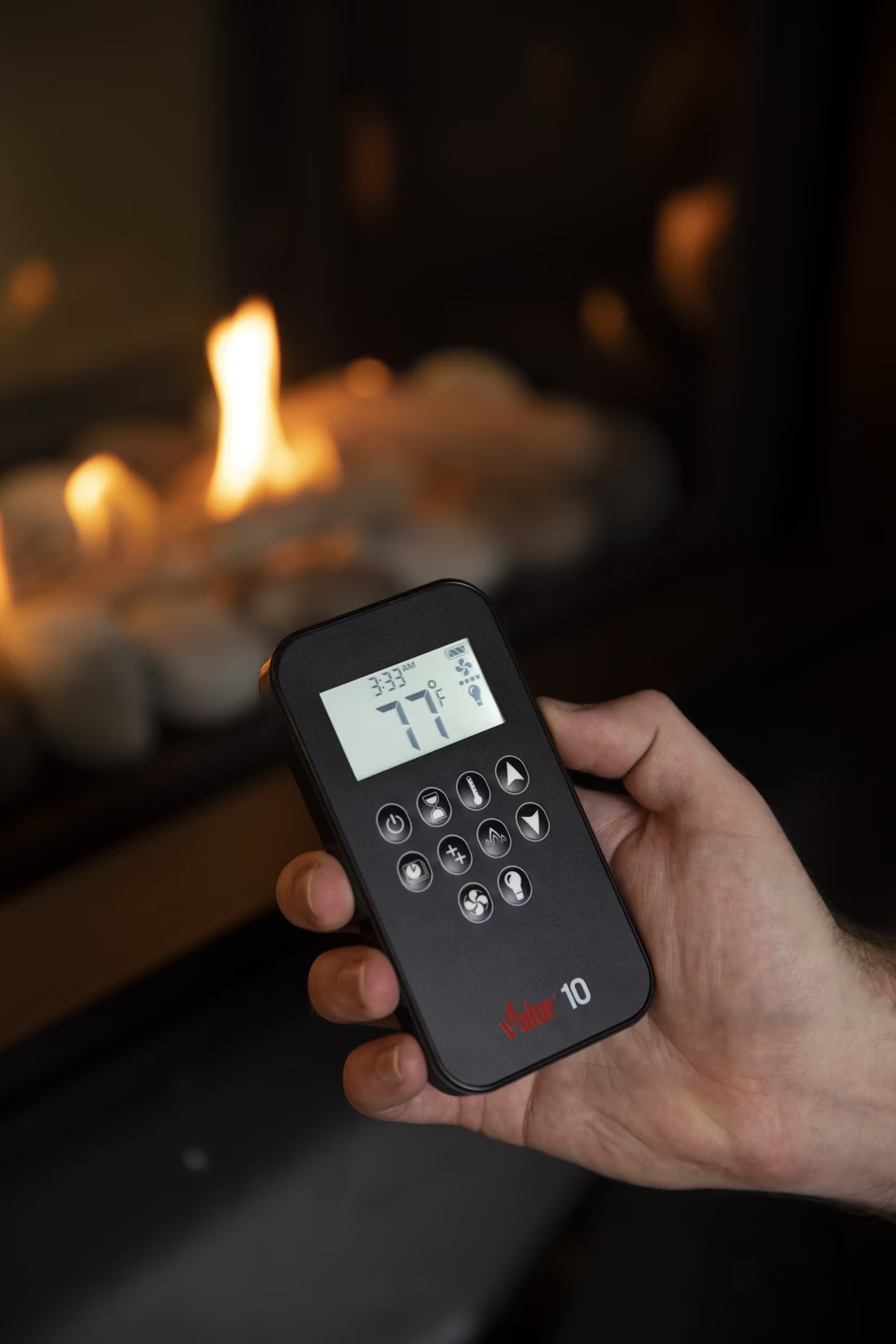
Most will, with the right ignition system. Units with intermittent pilot ignition (IPI) run on a small battery backup that kicks in automatically if the power drops, so the fireplace lights on demand just like normal—you just need to keep fresh batteries in the unit. Valor fireplaces take it a step further: their pilot generates its own electricity through the thermocouple, so there's no battery to remember at all. That matters in Deaf Smith County, where an ice-glazed blue norther can knock out power for a stretch right when you need heat most. Ask your local dealer about the ignition system on any unit you're considering.
What's the difference between a gas fireplace, gas insert, and gas stove?
A gas fireplace is a fully built-in unit framed into a wall—the right call for new construction or a remodel without an existing firebox. A gas insert slides into an existing masonry fireplace and vents through the chimney, which suits many of the older homes around Hereford that already have a fireplace opening but little use for it. A gas stove is a freestanding cabinet-style unit that sits on the floor and vents through a wall or chimney, a good option for a room without any existing fireplace at all. Most Deaf Smith County homeowners upgrading an existing fireplace land on an insert; new builds usually go with a built-in unit.
Do I need a permit to install a gas fireplace in Deaf Smith County?
Yes. Gas fireplace installations require both a building permit and a gas line permit, handled through the City of Hereford building department for in-town properties or the county for rural addresses outside city limits. The gas line portion has to be done by a licensed gas-fitter, which is one of the reasons it's worth using an established hearth dealer rather than a general handyman—they coordinate the gas work, venting, and inspection sign-off as one job instead of leaving you to manage separate trades.
Should I get a vented or vent-free gas fireplace?
Vented (direct-vent) fireplaces draw combustion air from outside and exhaust it back outside through sealed venting—they're the safest option and the one most local dealers recommend by default. Vent-free units burn without any outside venting and release some combustion byproducts into the room, which means strict rules around room size and ventilation. Vent-free models are legal in Texas, but for a county with dry, dusty conditions and homes that are often tightly sealed against wind, a direct-vent unit is generally the better fit for indoor air quality and long-term reliability.
How often does a gas fireplace need to be serviced?
Plan on an annual inspection, ideally before the first cold snap in fall. A technician checks the burner, pilot or ignition system, gas connections, and venting, and cleans the glass and interior. In Deaf Smith County specifically, it's worth having them check the outside vent termination and any air intakes for accumulated dust—Panhandle wind kicks up a fair amount of grit, and a partially blocked vent is one of the more common service calls out here. Most local providers charge somewhere in the $150–$250 range for a standard inspection.
Why is gas so much more common than wood heat in this county?
It comes down to what's actually available locally. Deaf Smith County's oak, pecan, and mesquite grow in scattered riverbottoms and windbreaks rather than real forest, so there's never been the kind of accessible firewood supply that supports a wood-heating culture the way it does in timbered parts of the country. Trucking cordwood in from elsewhere adds cost and hassle that most homeowners here skip entirely. Gas, by contrast, is either already piped into town through the local utility or delivered by propane suppliers who serve the surrounding ranches and farms as a matter of course—which is why it's the practical default for both primary and supplemental heat in this county.
Why is a fireplace insert so efficient?
An insert does two things: it seals the chimney completely, so you stop losing air you already paid to heat, and it radiates warmth into the room through the firebox and glass. Most add a heat-exchange fan that pulls cool room air underneath, wraps it around the hot firebox, and pushes it back out warm. Your home is more efficient before you've even lit the first fire.
Can I put a TV above my fireplace?
Yes—with an asterisk. Fireplaces are hot and TVs don't like heat. Either put a mantel between them to deflect rising warmth, or choose a fireplace with heat-management technology that creates a cool zone on the wall above—the wall stays around 125 degrees, barely warm, while the room still gets full heat. If you like clean lines and don't want a mantel, heat management is the answer.
Can I install a fireplace myself?
If you're putting a fire in your house on purpose, it's best to work with an expert. Unless you're genuinely experienced in framing, gas line, vent pipe, and the national code on clearances to combustibles, have a professional do it—and ideally the same company that sells you the fireplace, so warranty, service, and liability all live under one roof.
What is an in-home preview and do I need one?
It's a visit where a hearth professional measures your space, confirms the model you picked actually works in your home, and walks the specs—framing, gas line, venting, finish work—before anything is ordered. Some details you just can't know until you see the house. Never make a down payment without one; it's the single most-skipped step that burns buyers.
Stove and Fireplace Dealers in Deaf Smith County
Listings include WhyFire partner dealers, dealers we have verified as authorized for the brands we recommend, and established local businesses that carry hearth products. Every listing shows which one it is. The ones marked Preferred run on WhyFire's software, so they can show you real pricing and book your appointment right here. No manufacturer pays for placement. How we verify dealers →
Boyd's Equipment
Panhandle Outdoor Living & Fireplaces
Reid's Appliance Services
West Texas Brick
Find your gas fireplace in Deaf Smith County.
Tell us a bit about your home and we'll match you with the right gas fireplace, insert, or stove—plus a free Project Guide & Parts List and a trusted local dealer to install it.
Find Your Fireplace →