
Add electric fireplace warmth to your Dawson County home.
Zone heating and real-flame ambiance for Lamesa, O'Donnell, and the rest of Dawson County's cotton country—no venting, no gas line, and heat that turns on the moment you flip a switch. Find the right unit and a local dealer who can install it right.
Every Project Starts From One of These Five Situations
Mild plains winters, modern convenience.
Dawson County sits on the South Plains of West Texas, a flat expanse of cotton and cattle country anchored by Lamesa, the county seat. At climate zone 3B with a short, mild winter heating season and average winter lows around 26 degrees, this isn't cold-climate territory—nothing like Fargo, ND or International Falls, MN, where wood stoves run around the clock for months. Cold fronts do roll through and temperatures can dip sharply overnight, but sustained deep-freeze stretches are the exception, not the rule. That mild profile is exactly why wood stoves and pellet stoves are essentially nonexistent here—the local oak, pecan, and mesquite that show up in backyard smokers rarely find their way into a wood-burning appliance, because there simply isn't enough sustained cold to justify the investment.
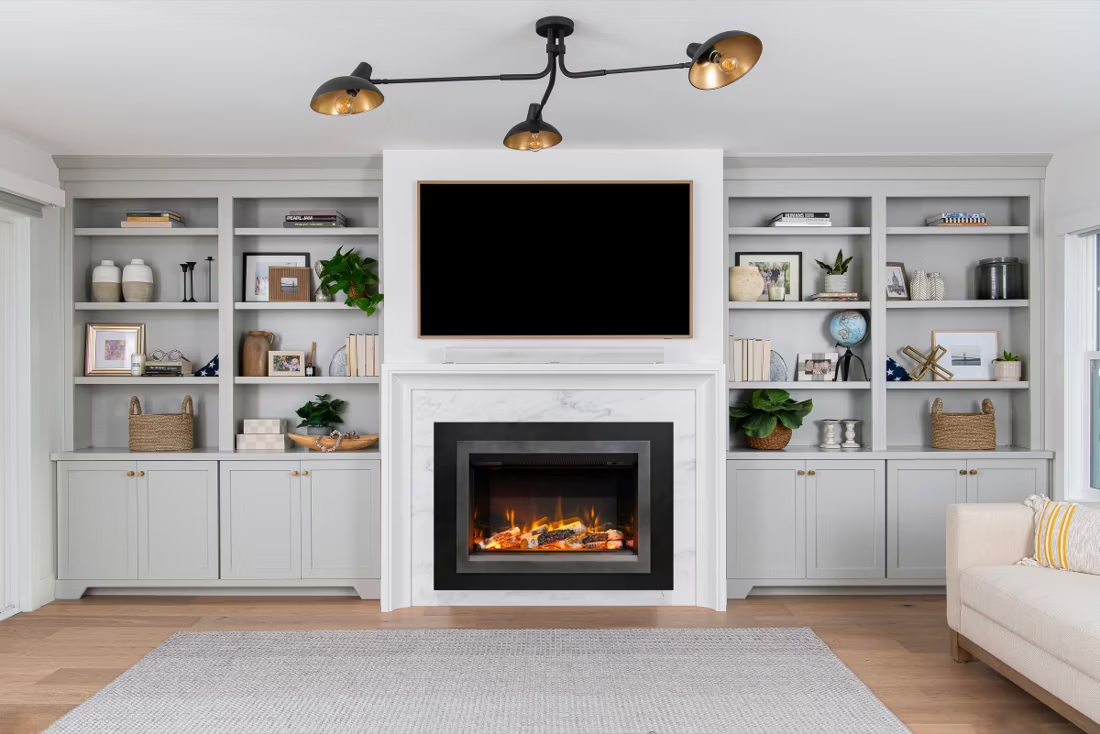
Electric fireplaces fill a different role: ambiance in a living room, supplemental warmth in a bonus room or converted garage, or a low-maintenance upgrade for an existing masonry fireplace that rarely gets used for a real wood fire. Because electric units plug into a standard outlet or a dedicated circuit—no chimney, no gas line, no venting—they install cleanly in the older farmhouses and newer builds alike that make up Dawson County's housing stock, including manufactured and mobile homes common across the rural parts of the county. Most homes here get their electric service through Lyntegar Electric Cooperative, and a properly sized electric insert or built-in unit runs efficiently on that existing service without any utility upgrades.
Three steps. No salesperson until you're ready.
Tell us about your project
Your zip code, your situation, and the fuel you're leaning toward—or let the answers point you to one.
See what's actually available
The brands dealers within 100 miles genuinely carry—real options, never a catalog mirage.
Get your dealer & Project Guide
A trusted local dealer, plus the free Project Guide & Parts List that names every component of the job.
Frequently Asked Questions
How much does it cost to install an electric fireplace in Dawson County?
Plug-in electric fireplaces and freestanding stoves need no installation beyond finding an outlet, so the unit cost is the only cost. Built-in electric fireplaces and inserts—the kind recessed into a wall or dropped into an existing masonry firebox—typically run $300 to $1,500 installed in Dawson County, depending on the unit and whether an electrician needs to run a new dedicated 20-amp circuit. Homes with an existing fireplace opening are usually on the lower end since there's no framing work involved; new wall installations or homes without existing electrical capacity nearby can push toward the higher end.
Electric or gas—which fireplace makes more sense in Dawson County?
Both are common choices here, and the right one depends on what you're trying to solve. Gas fireplaces and inserts deliver real, sustained heat output and can serve as a genuine secondary heat source during the occasional hard freeze that rolls across the South Plains. Electric units produce warmth too, but at a lower ceiling—they're better suited to zone heating a single room or adding fireplace ambiance without the cost of running a gas line. Given Dawson County's mild 26-degree average winter low, a lot of homeowners choose electric specifically because they don't need heavy-duty heat output—they want the look and glow of a fire with none of the venting, cleaning, or gas-line commitment.
Will an electric fireplace actually heat my room, or is it just for looks?
Most electric fireplaces include a built-in heater rated around 1,500 watts, which is enough to noticeably warm a single room—typically 400 to 1,000 square feet depending on insulation and ceiling height. That's genuinely useful supplemental heat for a Dawson County living room or converted sunroom on a cold front night, but it's not sized to replace your home's primary heating system. Most homeowners run the flame effect year-round for ambiance and switch on the heater only when a room needs a boost—which fits Dawson County's climate well, since deep, sustained cold that would demand a whole-home heat source is uncommon here.
Do I need a permit to install an electric fireplace in Dawson County?
A plug-in unit needs no permit at all. A built-in electric fireplace or insert that requires new wiring or a dedicated circuit typically falls under an electrical permit through the county building permit office in Lamesa, since it involves work behind the wall. Most licensed installers pull this permit as part of the job, so it's rarely something a homeowner has to manage directly. Unlike wood or gas installations, there's no venting inspection required—the permit, when needed, is strictly about the electrical work.
What's the best type of electric fireplace for a Dawson County home?
It depends on your home. For the ranch-style and mid-century homes common around Lamesa and O'Donnell, an electric insert that drops into an existing masonry firebox is often the simplest upgrade—it keeps the original mantel and hearth look while eliminating chimney maintenance entirely. For newer builds or bonus rooms without an existing fireplace, a wall-mounted or built-in linear electric fireplace gives a modern look without any structural changes. Manufactured and mobile homes, which make up a meaningful share of housing in rural Dawson County, generally do best with a freestanding electric stove or mantel unit rather than a recessed build-in, since wall cavities in these homes aren't always suited to in-wall installation. A local dealer can tell you which option fits your wall construction after a quick look.
Will my electric fireplace still work if the power goes out?
No—electric fireplaces are entirely dependent on grid power, so a Lyntegar Electric Cooperative outage (which does happen during West Texas wind events and ice storms) will shut the unit down along with everything else in the house. If backup heat during outages matters to you, a propane or natural gas fireplace is the better choice for that specific need, since many gas units can be configured to run on battery-backed ignition. Electric fireplaces are best understood as a daily-use, low-maintenance comfort feature rather than an emergency heat source.
Can I convert my existing wood-burning fireplace to electric?
Yes, and it's one of the most common projects for older homes in and around Lamesa. An electric insert slides into your existing masonry firebox, using the existing opening without any chimney work—you don't even need to keep the flue functional, since electric units produce no combustion byproducts. This is a popular option for homeowners who inherited a fireplace they never actually burn wood in and want the look of a fire without the ash, smoke, or occasional chimney maintenance. It's a same-day, low-disruption swap in most cases.
How much does it cost to run an electric fireplace in Dawson County?
A typical electric fireplace heater draws around 1,500 watts when the heat function is running, which costs roughly 15 to 25 cents per hour depending on your Lyntegar Electric Cooperative rate. Running the flame effect alone, without the heater engaged, uses only a few watts and costs a negligible amount—which is why most owners leave the flame on for ambiance and reserve the heater for when a room actually needs warming. Compared to running a gas fireplace or a whole-home HVAC system, electric fireplace heat is inexpensive as a supplemental source, though it's not efficient enough to use as a full-home heating strategy.
Why don't wood or pellet stoves show up much in Dawson County?
Dawson County's oak, pecan, and mesquite are prized locally for smoking meat, but they rarely end up burning in a wood stove, and pellet stoves are essentially absent here too. With only a short, mild winter heating season and winter lows averaging in the mid-20s, the sustained cold that makes wood and pellet heat worthwhile in places like Minneapolis, MN or Bismarck, ND just doesn't happen on the South Plains. A handful of rural properties keep a wood-burning fireplace for occasional ambiance, but for anyone shopping for a heating appliance today, gas and electric are the practical choices—which is also why you won't find much of a local wood-stove dealer network in the county.
Can I put a TV above my fireplace?
Yes—with an asterisk. Fireplaces are hot and TVs don't like heat. Either put a mantel between them to deflect rising warmth, or choose a fireplace with heat-management technology that creates a cool zone on the wall above—the wall stays around 125 degrees, barely warm, while the room still gets full heat. If you like clean lines and don't want a mantel, heat management is the answer.
Does an electric fireplace need a vent or chimney?
No—that's its superpower. An electric fireplace needs a wall and an outlet, period. No vent pipe, no gas line, no clearances to design around, which is why it works in bedrooms, offices, apartments, and walls where venting a gas or wood unit would be impractical or impossible. Installation is typically the simplest and least expensive of any fireplace type.
How much should I budget for a fireplace?
For an average home—covering the fireplace, the vent pipe, and basic installation—a budget between $3,900 and $5,500 gives you a lot of options across wood, gas, and pellet. By the time you add finish work, gas line, and electrical, the average complete installation lands between $5,000 and $12,000 all-in. In a remodel or new build, a good rule is to put about 2.5% of the total project cost toward the fireplace.
Can I install a fireplace myself?
If you're putting a fire in your house on purpose, it's best to work with an expert. Unless you're genuinely experienced in framing, gas line, vent pipe, and the national code on clearances to combustibles, have a professional do it—and ideally the same company that sells you the fireplace, so warranty, service, and liability all live under one roof.
Stove and Fireplace Dealers in Dawson County
Listings include WhyFire partner dealers, dealers we have verified as authorized for the brands we recommend, and established local businesses that carry hearth products. Every listing shows which one it is. The ones marked Preferred run on WhyFire's software, so they can show you real pricing and book your appointment right here. No manufacturer pays for placement. How we verify dealers →
Coastal Insulation
Ford Insulation And Fireplaces
A & A Chimeny Sweep w/Texas Fp
Caprock Brick
Find your electric fireplace in Dawson County.
Tell us a bit about your home and we'll match you with the right electric fireplace or insert, plus a free Project Guide & Parts List—the exact parts list and a trusted local Dawson County dealer to install it.
Find Your Fireplace →