
Add instant warmth to your Crosby County home.
Mild South Plains winters—average lows near 26°F and a short, mild heating season—make electric heat a practical, no-venting option from Crosbyton to Ralls. Find the right unit and connect with a trusted local dealer.
Every Project Starts From One of These Five Situations
Mild winters, simple installs.
Crosby County sits on the South Plains of West Texas, home to about 4,169 people spread between Crosbyton, Ralls, and the surrounding cotton and cattle country. Winters here are far from severe—Climate Zone 3B, an average winter low around 26°F, and a short, mild heating season mean most homes need supplemental warmth on cold snaps rather than a full-time heating system. That's a very different reality from the panhandle or the Rockies, and it shapes what actually makes sense to install here.
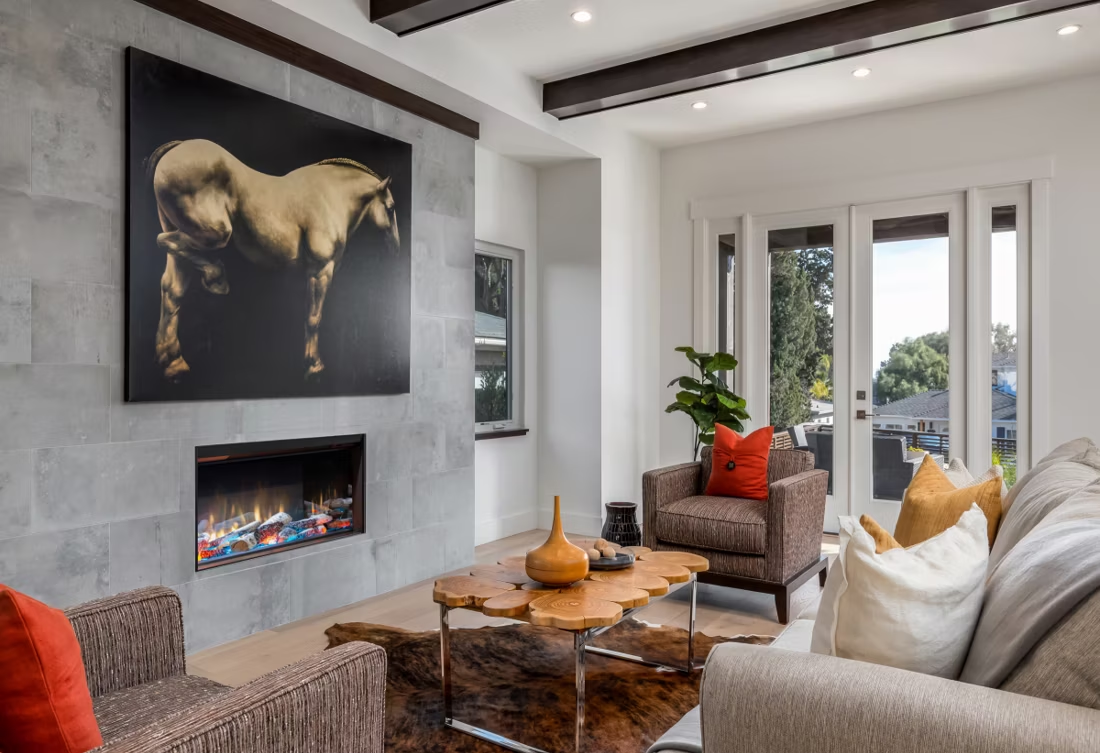
With no natural forest land and a climate that doesn't demand all-winter wood burning, wood stoves are essentially absent from Crosby County—the oak, pecan, and mesquite that grow along local creek bottoms get used for smoking brisket more than heating a house. Electric fireplaces fill the gap well: no chimney, no gas line, no venting through the roof, and a straightforward plug-in or dedicated-circuit install that a licensed local electrician can turn around quickly. For farmhouses on rural electric cooperative service outside Crosbyton and Ralls, that simplicity matters—there's no propane delivery schedule to manage and no combustion byproducts to vent.
Three steps. No salesperson until you're ready.
Tell us about your project
Your zip code, your situation, and the fuel you're leaning toward—or let the answers point you to one.
See what's actually available
The brands dealers within 100 miles genuinely carry—real options, never a catalog mirage.
Get your dealer & Project Guide
A trusted local dealer, plus the free Project Guide & Parts List that names every component of the job.
Frequently Asked Questions
How much does an electric fireplace installation cost in Crosby County?
A plug-in electric insert or wall-mount unit typically runs $200 to $800 installed, since most models simply need a standard outlet and a mounting bracket or existing firebox to slide into. Built-in electric fireplaces wired to a dedicated 120V or 240V circuit—common for a mantel-style unit in a living room remodel—run closer to $800 to $2,500 once electrician labor is included. Because Crosby County homes are on rural electric cooperative service in many areas, an electrician can confirm your panel has capacity for a dedicated circuit before you buy, which avoids a surprise trip charge later.
What type of electric fireplace works best for a Crosby County home?
For most homes here, a wall-mount or built-in insert into an existing masonry or open firebox is the popular choice—it delivers supplemental heat and ambiance without the upkeep of wood or the gas line work that propane units require. Freestanding electric stoves are a good fit for mobile homes and older farmhouses around Ralls and Crosbyton where a permanent built-in isn't practical. Since winters here rarely demand more than zone heating for a room or two, sizing is less about square footage and more about matching the unit's heater output (usually 1,500 watts) to the room you actually spend evenings in.
Do I need a permit to install an electric fireplace in Crosby County?
Most plug-in electric fireplaces don't require any permit—they're treated like any other appliance you plug into a wall outlet. If you're having a built-in unit wired to a new dedicated circuit, that electrical work typically does require a permit, either through the City of Crosbyton, the City of Ralls, or the county for unincorporated areas, depending on where you live. A licensed electrician doing the circuit work will usually pull that permit as part of the job, so it's worth confirming that upfront with whoever you hire.
Will an electric fireplace actually heat my house?
An electric fireplace is built for supplemental, zone heating—not whole-home heating—and that's a good match for Crosby County's mild winter profile. With average lows around 26°F and only a short, mild heating season, most homes here aren't fighting sustained sub-zero cold the way a home in Bismarck or Fargo would be. A single electric unit can comfortably take the edge off a living room or bedroom on a cold South Plains morning, but you'll still want central heat or a furnace running for the house as a whole.
What's the difference between an electric insert, a wall-mount, and a freestanding electric stove?
An electric insert is designed to slide into an existing fireplace opening—a common upgrade for older Crosbyton and Ralls homes with an unused wood-burning firebox that nobody wants to maintain anymore. A wall-mount is a flatter unit hung directly on the wall like a television, often used in newer construction or remodels where there's no existing firebox. A freestanding electric stove sits on the floor and can be moved room to room, which makes it a flexible option for renters or homes where a permanent install isn't in the cards. All three plug into standard household power in most cases.
Will my electric fireplace work during a power outage?
No—electric fireplaces need grid power to run, so they'll shut off during an outage just like any other electric appliance. In rural Crosby County, where outages during a spring hailstorm or summer thunderstorm can stretch longer than in town, that's worth planning around if you're relying on the fireplace for meaningful heat rather than ambiance. Homeowners who want backup heat during outages sometimes pair an electric fireplace for daily use with a propane heater or generator for emergencies, since propane is the standard alternative fuel in areas of the county without natural gas service.
Are wood stoves an option in Crosby County?
They're uncommon. Crosby County's semi-arid South Plains climate and lack of native forest mean there's no real wood-heat culture here the way there is in East Texas or the Hill Country—the oak, pecan, and mesquite you'll find locally are typically cut for smoking meat, not for stacking cordwood. A small number of rural homeowners still install a wood stove for backup heat during outages or for the atmosphere of a real fire, but for most Crosby County homes, electric or propane covers the actual heating need without the upkeep.
Electric vs. propane fireplace—which makes more sense here?
Propane fireplaces put out more heat and can be sized to genuinely warm a room on the coldest South Plains nights, and many rural Crosby County homes already have a propane tank for cooking or water heating, which makes adding a fireplace straightforward. Electric fireplaces cost less to install, need no fuel deliveries or tank rental, and are simpler to place anywhere there's an outlet—but they produce less usable heat and won't run without grid power. For a den or bedroom where ambiance and light supplemental warmth are the goal, electric usually wins. For a primary heating source in an older, drafty farmhouse, propane typically performs better.
Does my rural electric cooperative service affect my fireplace choice?
It can. Much of unincorporated Crosby County is served by a rural electric cooperative rather than a municipal utility, and rural co-op service occasionally has different panel capacity or service drop considerations than in-town power, especially on older farm properties. Before installing a built-in unit on a dedicated 240V circuit, it's worth having a local electrician confirm your panel and service can support it—a plug-in unit on a standard 120V outlet sidesteps the question entirely and is the simpler path for most homes in the county.
Can I put a TV above my fireplace?
Yes—with an asterisk. Fireplaces are hot and TVs don't like heat. Either put a mantel between them to deflect rising warmth, or choose a fireplace with heat-management technology that creates a cool zone on the wall above—the wall stays around 125 degrees, barely warm, while the room still gets full heat. If you like clean lines and don't want a mantel, heat management is the answer.
Does an electric fireplace need a vent or chimney?
No—that's its superpower. An electric fireplace needs a wall and an outlet, period. No vent pipe, no gas line, no clearances to design around, which is why it works in bedrooms, offices, apartments, and walls where venting a gas or wood unit would be impractical or impossible. Installation is typically the simplest and least expensive of any fireplace type.
Can a fireplace actually lower my heating bill?
Yes—by creating a comfort zone. A furnace heats every square foot of the house just to warm the one room you're in; a gas fireplace on low burns roughly a sixth of the gas a typical furnace does. Set the furnace around 55–60 degrees as a baseline, then heat the rooms your family actually uses. Families who heat this way commonly save $20–$60 a month.
Can I install a fireplace myself?
If you're putting a fire in your house on purpose, it's best to work with an expert. Unless you're genuinely experienced in framing, gas line, vent pipe, and the national code on clearances to combustibles, have a professional do it—and ideally the same company that sells you the fireplace, so warranty, service, and liability all live under one roof.
Stove and Fireplace Dealers in Crosby County
Listings include WhyFire partner dealers, dealers we have verified as authorized for the brands we recommend, and established local businesses that carry hearth products. Every listing shows which one it is. The ones marked Preferred run on WhyFire's software, so they can show you real pricing and book your appointment right here. No manufacturer pays for placement. How we verify dealers →
A & A Chimeny Sweep w/Texas Fp
Coastal Insulation
Caprock Brick
Get your Crosby County electric fireplace Project Guide.
Tell us about your home and we'll match you with a trusted local dealer and send a free Project Guide & Parts List—the right electric fireplace or insert for your space, with the parts you'll need and a dealer near Crosbyton or Ralls who can install it.
Find Your Fireplace →