
A mild East Texas winter still calls for a gas fireplace.
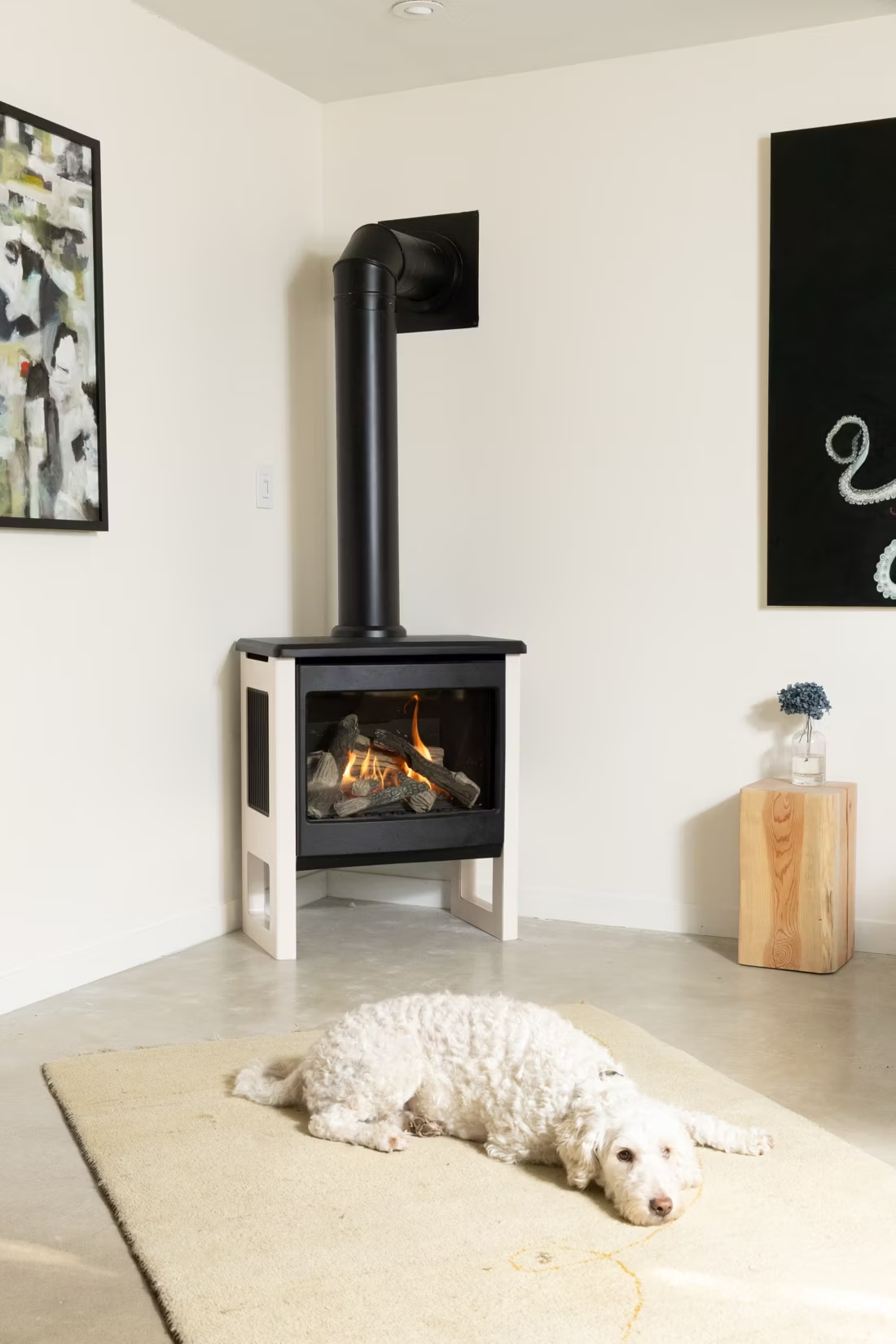
Crockett doesn't need a furnace-grade heater, but a direct-vent gas fireplace or a set of gas logs adds real warmth on the chilly nights Houston County does get. Find the right unit and connect with a trusted local dealer.
Every Project Starts From One of These Five Situations
Ambiance and backup warmth for a Zone 2A climate.
Crockett sits in climate zone 2A with an average winter low near 36°F and roughly 2,100 heating degree days a year—a fraction of what a place like Bismarck, ND sees in a single January. That means gas fireplaces here aren't carrying the heating load; they're doing the job of taking the edge off a cold front, warming a den on a 30-degree morning, or giving a living room a focal point that also happens to produce heat when the power flickers during an ice storm.
Because Houston County doesn't have citywide natural gas mains in most residential areas, the majority of Crockett installations run on propane, delivered and tanked by local suppliers. A direct-vent gas fireplace or insert set up for propane performs identically to a natural-gas unit—same flame, same heat output—it's simply a different fuel line and regulator. Electric utility service in the area comes from Oncor, Entergy Texas, and Houston County Electric Cooperative, so battery-backup or standing-pilot gas units are worth asking about if outages are a concern on your line.
Three steps. No salesperson until you're ready.
Tell us about your project
Your zip code, your situation, and the fuel you're leaning toward—or let the answers point you to one.
See what's actually available
The brands dealers within 100 miles genuinely carry—real options, never a catalog mirage.
Get your dealer & Project Guide
A trusted local dealer, plus the free Project Guide & Parts List that names every component of the job.
Frequently Asked Questions
How much does a gas fireplace installation cost in Crockett?
A typical gas fireplace or insert installation in Crockett runs from around $4,500 up to $10,000, with the spread driven mostly by propane tank and line work rather than the venting itself. A gas log set retrofit into an existing wood-burning fireplace, using a tank you already have, sits at the low end. A new direct-vent gas fireplace or insert with a fresh propane tank installation and buried line typically lands in the middle-to-upper range. Local dealers will walk your property and give a firm number since propane logistics vary block to block outside the city core.
Do I need natural gas, or does propane work fine in Crockett?
Propane is the standard fuel for gas fireplaces in Crockett and most of Houston County, since citywide natural gas mains don't reach most residential streets. Nearly every gas fireplace, insert, and log set on the market can be configured for propane with the correct orifice and regulator, so you're not limited on product selection. If you already have a propane tank for a range, water heater, or backup generator, adding a fireplace to that line is usually straightforward. If not, your local dealer can coordinate a tank installation with a regional propane supplier as part of the project.
Can I just add gas logs to my existing wood fireplace instead of a full insert?
Yes, and it's one of the most common and least expensive upgrades in Crockett. Vented gas log sets drop into an existing masonry fireplace and use the current chimney for venting, with a gas line run to a valve near the firebox. They give you real flame and real heat without the ash and creosote of burning oak or pecan, though they won't match the output or efficiency of a sealed direct-vent insert. For homeowners who want the fireplace mostly for atmosphere and occasional warmth on a 40-degree night, log sets are often the right scope and budget fit.
Will a gas fireplace still work if the power goes out?
Most will, which matters in Houston County where ice storms occasionally take down lines served by Oncor or HC Electric Co-op. Standing-pilot gas fireplaces and log sets need no electricity at all to light and run. Units with electronic intermittent pilot ignition (IPI) typically include a battery backup so they'll still fire on demand during an outage—just keep fresh batteries in the unit. Ask your installer specifically about the ignition type before you buy if outage performance matters to you.
What's the difference between a gas insert, a built-in fireplace, and gas logs?
A gas insert slides into an existing masonry fireplace opening and seals it into a high-efficiency direct-vent unit—the most common upgrade for older Crockett homes with a working chimney. A built-in gas fireplace is framed into a wall during new construction or a remodel, useful if you're building an addition or don't have an existing hearth. Gas logs are the lightest-touch option: they sit inside your current fireplace and vent up the existing chimney flue without sealing it off. For most homes here with an existing wood-burning fireplace, logs or an insert cover the vast majority of requests we see.
Do I need a permit to install a gas fireplace in Crockett?
Houston County and the City of Crockett require permitting for gas line work and any new propane tank installation, and most licensed local installers include that paperwork as part of the project rather than leaving it to the homeowner. Because propane line and tank work has to be handled by a licensed gas-fitter or propane technician, working with an established local dealer means the tank placement, line burial, and inspection get coordinated together instead of you juggling separate contractors.
What's the difference between vented and vent-free gas fireplaces?
Vented (direct-vent) units draw combustion air from outside and exhaust it back outside through a sealed pipe—they're the cleanest and most widely recommended option, and what most Crockett installers default to. Vent-free (ventless) gas fireplaces and log sets burn fuel directly into the room with no outside venting; they're legal in Texas but come with strict room-size and ventilation requirements since combustion byproducts stay indoors. Given Crockett's mild climate, a lot of homeowners lean toward vent-free log sets specifically because the fireplace is used occasionally for looks and light warmth rather than as a primary heat source—but a direct-vent unit is still the safer, more efficient choice if you'll run it often.
How often does a gas fireplace need to be serviced?
An annual inspection before the first cold front of the season is the standard recommendation, even for units that only run occasionally. A technician checks the burner, pilot assembly, gas connections, and glass, and confirms the propane regulator is set correctly. Because Crockett units run less frequently than they would in a colder climate, some homeowners stretch this to every other year for lightly-used log sets—but any unit that's been sitting unused since last winter is worth a quick check before you light it again.
Is a wood-burning fireplace still an option instead of gas in Crockett?
Wood-burning fireplaces and stoves are uncommon as a new install in Crockett—with roughly 2,100 heating degree days a year and mild winter lows around 36°F, most local dealers don't stock a wide wood-burning lineup, and it's simply not the typical project here. That said, plenty of existing homes still have working masonry wood fireplaces, and local oak, pecan, and mesquite are all available for the homeowners who prefer to keep burning wood occasionally. For most Crockett projects—new installs, remodels, or upgrading an old fireplace—gas logs or a gas insert are the more practical and popular route.
Is my gas fireplace wasting gas?
If it was installed more than 15 years ago, probably. Older gas fireplaces keep a standing pilot light burning all the time, and that little flame can cost a couple hundred dollars a year. Newer models use pilot-on-demand ignition—the pilot lights only when you use the fireplace and goes out when you turn it off.
Are new gas fireplaces really better than old ones?
Two ways, and they're both big. Looks: modern gas fireplaces are realistic enough that it's hard to believe they aren't burning wood. Cost: old units burn a standing pilot year-round (roughly $200 a year), while new ones use pilot-on-demand ignition and modern burners. Add remote controls and thermostat operation, and the day-to-day experience isn't close.
Can a fireplace actually lower my heating bill?
Yes—by creating a comfort zone. A furnace heats every square foot of the house just to warm the one room you're in; a gas fireplace on low burns roughly a sixth of the gas a typical furnace does. Set the furnace around 55–60 degrees as a baseline, then heat the rooms your family actually uses. Families who heat this way commonly save $20–$60 a month.
Can I install a fireplace myself?
If you're putting a fire in your house on purpose, it's best to work with an expert. Unless you're genuinely experienced in framing, gas line, vent pipe, and the national code on clearances to combustibles, have a professional do it—and ideally the same company that sells you the fireplace, so warranty, service, and liability all live under one roof.
Nearby Dealers
Hearth shops serving Crockett and the surrounding area. Every listing shows whether it is a WhyFire partner, a dealer we have verified as authorized for the brands we recommend, or a local business carrying hearth products. No manufacturer pays for placement. How we verify dealers →
Fieldstone & Fireplaces
Tri-Supply - Conroe
Fireplace & Patio Shop
Aaa Overhead Door Company
East Texas Brick Co.
Tdi Air Conditioning
Lyne Home Products
All Fired Up Fireplace & Outdoor
The Chimney Guy -Seven Points
Clay Structures Inc
Creekstone Outdoors
Creekstone Custom
Cunningham Gas Products
Find your gas fireplace in Crockett.
Tell us a bit about your home and we'll match you with a trusted local dealer and a free Project Guide & Parts List—the right gas fireplace, insert, or log set for your Crockett home, plus the exact parts and vent kit needed to install it.
Find Your Fireplace →