
The right electric fireplace for Crockett County's mild winters.
No chimney, no gas line, no wood to haul—just clean ambient heat that fits the way Ozona and the surrounding ranches actually use a fireplace. Find the right unit and connect with a trusted local dealer.
Every Project Starts From One of These Five Situations
Mild winters, easy installs, real ambiance.
Crockett County spans roughly 2,800 square miles of Edwards Plateau ranchland in West Texas, home to about 2,306 people and centered on Ozona, the county seat. This is oil-and-cattle country, not cold-country—climate zone 3B, an average winter low of 30°F, and just 2,485 heating degree days a year, roughly a quarter of what a place like Fargo, ND logs in a typical winter. Homes here don't need a heating system built to survive sustained sub-zero nights; they need something that takes the chill off a ranch house or manufactured home on the handful of genuinely cold mornings each winter.
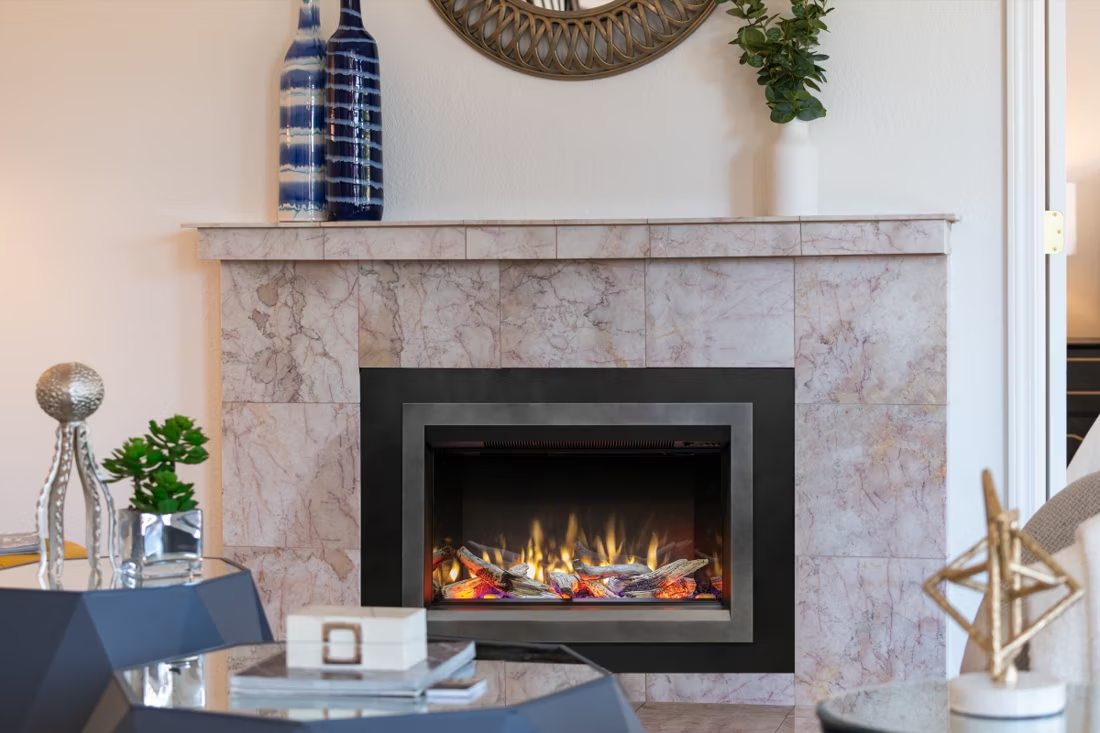
That's exactly the gap an electric fireplace fills. There's no venting to size, no chimney to maintain, and no propane tank to schedule refills for—an electrician runs a dedicated circuit and the unit is ready to use the same day, which matters in a county served by Southwest Texas Electric Cooperative's rural lines rather than a dense municipal grid. Oak, pecan, and mesquite grow throughout the county and get burned plenty—mostly in smokers and outdoor pits, not home heating systems, which is why wood and pellet stoves see little demand here. Electric fireplaces cover the ambiance and the supplemental warmth Crockett County actually needs, in living rooms, bedrooms, and the mobile and manufactured homes common throughout the ranch communities outside Ozona.
Three steps. No salesperson until you're ready.
Tell us about your project
Your zip code, your situation, and the fuel you're leaning toward—or let the answers point you to one.
See what's actually available
The brands dealers within 100 miles genuinely carry—real options, never a catalog mirage.
Get your dealer & Project Guide
A trusted local dealer, plus the free Project Guide & Parts List that names every component of the job.
Frequently Asked Questions
How much does an electric fireplace installation cost in Crockett County?
Plug-in electric inserts and freestanding units that use an existing outlet run as low as $300–$700 installed, since there's no venting or gas line to run—just placement and a safety check. Built-in wall units or larger inserts that need a dedicated 20-amp circuit typically land between $1,200 and $2,500 once an electrician's labor is included. Crockett County's rural layout means most installers serving Ozona and the surrounding ranches price a single trip charge into the estimate rather than hourly travel, so ask for an all-in number up front.
Do I need a permit to install an electric fireplace in Crockett County?
Crockett County has no countywide building code for unincorporated ranch property, so most rural installations proceed without a formal permit. Within the city limits of Ozona, an electrical permit is typically required any time a new dedicated circuit is added for a built-in fireplace—a straightforward inspection most licensed electricians handle as part of the job. Plug-in units that use an existing outlet generally don't trigger any permit requirement at all, in town or out.
Will my electric fireplace work during a power outage?
No—and this is worth planning around in a county served by a rural electric cooperative where line repairs after a spring or summer storm can take longer than in a city grid. Unlike a wood stove, an electric fireplace goes dark the moment power drops. If you want heat that survives an outage, a wood-burning option or a battery/generator backup for critical circuits is the answer; the electric fireplace itself should be treated as day-to-day ambiance and supplemental warmth, not emergency heat.
What size electric fireplace do I need for a ranch home or manufactured home?
Because Crockett County's winters are mild—average lows around 30°F and just 2,485 heating degree days a year—most homes only need an electric fireplace to supplement central heat in a single room, not carry the whole house. A 1,000–1,500 sq ft insert or wall unit comfortably takes the edge off a living room or primary bedroom. For manufactured and mobile homes, which are common throughout the county's ranch communities, a slim wall-mount or recessed unit is often the better fit than a deep built-in, since it avoids cutting into limited wall cavity depth.
What's the difference between an electric insert, a wall-mount, and an electric stove?
An electric insert drops into an existing fireplace opening—a good option if your Ozona home already has an old wood-burning firebox you'd rather not maintain. A wall-mount unit hangs flush or recessed into drywall like a flat-screen TV, popular in newer builds and remodels. A freestanding electric stove sits on the floor and mimics the look of a wood stove without any of the venting or fuel handling. All three plug into standard household power or a dedicated circuit, and a local dealer can tell you which fits your framing and wall depth.
Does my electric service affect what fireplace I can install?
For most units, no—a standard 15 or 20-amp circuit from Southwest Texas Electric Cooperative service is enough to run a typical electric fireplace. Larger built-in units with higher wattage draw may need their own dedicated circuit, which an electrician can confirm by checking your panel capacity during a site visit. This is one area where it pays to loop in your installer before buying a unit rather than after, especially for older ranch homes with panels that haven't been upgraded in decades.
Why don't more homes in Crockett County use wood or pellet stoves?
It's not a lack of wood—oak, pecan, and mesquite are all abundant locally and get burned regularly, just mostly in smokers and outdoor pits rather than home heating appliances. With only 2,485 heating degree days a year and winter lows that average 30°F, most Crockett County homes simply don't generate enough sustained cold-weather demand to justify a wood or pellet heating system and the chimney or venting that comes with it. Gas and electric cover the actual heating and ambiance need here far more efficiently.
Will an electric fireplace raise my electric bill much?
Running an electric fireplace costs roughly 15–30 cents per hour depending on your model's wattage and Southwest Texas Electric Cooperative's current rate—noticeably less than heating a whole room with central HVAC. Because most Crockett County homes only need supplemental warmth during a handful of genuinely cold mornings each winter, the seasonal cost is modest. Many models also separate the flame effect from the heater, so you can run the visual for ambiance year-round without the heating element drawing power in summer.
Electric vs. gas—which is right for my Crockett County home?
Gas fireplaces in Crockett County typically run on propane, since natural gas infrastructure is limited outside Ozona's core—that means a tank, a gas line, and venting work, which pushes installed cost well above an electric unit. Electric skips all of that: no fuel storage, no venting, and a same-day install in most cases. Gas does offer stronger heat output for homes that actually want a fireplace to carry real heating load, but given the county's mild 2,485 heating degree days, most homeowners here choose electric for the ambiance and light supplemental warmth and reserve gas or a wood option for the rare hard freeze.
Can I put a TV above my fireplace?
Yes—with an asterisk. Fireplaces are hot and TVs don't like heat. Either put a mantel between them to deflect rising warmth, or choose a fireplace with heat-management technology that creates a cool zone on the wall above—the wall stays around 125 degrees, barely warm, while the room still gets full heat. If you like clean lines and don't want a mantel, heat management is the answer.
Do electric fireplaces actually produce heat?
Yes—most put out around 4,800–5,000 BTUs from a standard outlet, which comfortably warms a bedroom, office, or den as a comfort-zone heater. What they won't do is carry a whole house the way wood, gas, or pellet can. Think of electric as ambiance-first with honest supplemental heat: flames on with no heat in July, flames plus warmth in January.
What is an in-home preview and do I need one?
It's a visit where a hearth professional measures your space, confirms the model you picked actually works in your home, and walks the specs—framing, gas line, venting, finish work—before anything is ordered. Some details you just can't know until you see the house. Never make a down payment without one; it's the single most-skipped step that burns buyers.
Can a fireplace actually lower my heating bill?
Yes—by creating a comfort zone. A furnace heats every square foot of the house just to warm the one room you're in; a gas fireplace on low burns roughly a sixth of the gas a typical furnace does. Set the furnace around 55–60 degrees as a baseline, then heat the rooms your family actually uses. Families who heat this way commonly save $20–$60 a month.
Stove and Fireplace Dealers in Crockett County
Listings include WhyFire partner dealers, dealers we have verified as authorized for the brands we recommend, and established local businesses that carry hearth products. Every listing shows which one it is. The ones marked Preferred run on WhyFire's software, so they can show you real pricing and book your appointment right here. No manufacturer pays for placement. How we verify dealers →
Unlimited Air
Area – San Angelo, Tx
Find your electric fireplace in Crockett County.
Tell us a bit about your home and we'll put together a free Project Guide & Parts List—the right electric fireplace, the exact parts, and a trusted local dealer near Ozona who can install it.
Find Your Fireplace →