
Simple, safe zone heat for Cooke County's mild winters.
With average winter lows around 32°F and just under 2,900 heating degree days a year, Cooke County rarely needs a furnace-replacing appliance—electric fireplaces fit the bill for supplemental warmth from Gainesville to Muenster to Lindsay. Find the right unit and get matched with a trusted local dealer.
Every Project Starts From One of These Five Situations
A modest heating season calls for a modest solution.
Cooke County sits in climate zone 3A, where winters are short and mild by any national standard—about 2,886 heating degree days a year, compared to well over 7,800 in a place like Burlington, VT. Most Cooke County homes don't need whole-house wood heat; they need a way to take the chill off a living room, sunroom, or den on the handful of genuinely cold nights each winter. That's exactly the job an electric fireplace is built for.
The county is served primarily by Cooke County Electric Cooperative in the rural areas outside Gainesville, with City of Gainesville Utilities covering in-town service. Either way, electric fireplaces need nothing more than a standard outlet or, for larger built-ins, a dedicated 120V or 220V circuit run by a licensed electrician—no chimney, no gas line, no venting through the roof. For ranch properties, manufactured homes, and in-town rentals alike across Cooke County, that simplicity is a big part of the appeal, even where oak, pecan, and mesquite are plentiful and wood heat still has its place.
Three steps. No salesperson until you're ready.
Tell us about your project
Your zip code, your situation, and the fuel you're leaning toward—or let the answers point you to one.
See what's actually available
The brands dealers within 100 miles genuinely carry—real options, never a catalog mirage.
Get your dealer & Project Guide
A trusted local dealer, plus the free Project Guide & Parts List that names every component of the job.
Frequently Asked Questions
How much does an electric fireplace installation cost in Cooke County?
Plug-in electric fireplaces and stoves that run on a standard outlet typically cost $200 to $800 for the unit itself, with no installation labor required beyond setting it in place. Wall-mounted or built-in units that need a dedicated circuit run $300 to $1,500 once you add electrician labor, particularly if the wiring has to reach an exterior wall or a room without an existing 220V line. Full mantel-and-surround installs, or converting an existing masonry fireplace opening to an electric insert, generally land in the $1,500 to $3,500 range. Homes further out in the county—toward Era, Callisburg, or Rosston—may see a modest travel charge if an electrician has to drive out from Gainesville.
Do I need a permit or an electrician to install an electric fireplace?
A plug-in electric fireplace that runs off an existing outlet needs no permit and no electrician—you plug it in and it works. A hardwired built-in unit, however, typically requires an electrical permit, whether you're inside Gainesville, Muenster, Lindsay, or Valley View city limits (through the city) or out in unincorporated Cooke County (through the county building department). Any time a new dedicated circuit or breaker is involved, hire a licensed electrician—most local hearth dealers either employ one directly or coordinate the work as part of the installation.
What size electric fireplace do I need for my Cooke County home?
Because Cooke County's heating season is short and winter lows average around 32°F, most electric units here are sized for zone heating rather than whole-home output—a 5,000 to 9,000 BTU heater comfortably takes the edge off a living room, bedroom, or den. That's a very different sizing conversation than you'd have in a place like Duluth, MN, where a single appliance sometimes has to carry real heating load through a long, hard winter. For most homes in Gainesville and the surrounding towns, a mid-size wall-mount or insert unit rated for 400 to 1,000 square feet is plenty; a local dealer can confirm the right fit based on your room and insulation.
Electric vs. gas fireplace—which is right for my home?
Gas fireplaces put out more real heat and can run during a power outage if you choose the right ignition system, but they require either a natural gas line or a propane tank plus venting work. Electric fireplaces skip all of that—no gas line, no venting, no combustion byproducts—and install almost anywhere with an outlet or a simple circuit. For a Cooke County home already plumbed for propane or natural gas and looking for a serious secondary heat source, gas is often the better long-term choice. For a rental property, a bonus room, or anyone who just wants ambiance and a little extra warmth without construction, electric is usually the simpler and cheaper path.
Electric vs. wood fireplace—which is right for my home?
Cooke County has plenty of oak, pecan, and mesquite on the ground, and a fair number of rural homeowners still keep a wood-burning stove or fireplace as backup heat and for the self-sufficiency it offers. Wood keeps working when the power doesn't—worth remembering after Winter Storm Uri in February 2021, when ERCOT-triggered outages left parts of North Texas without power for days during genuinely cold weather. Electric fireplaces can't do that; they go dark the moment the grid does. For a primary living space where you want reliable backup warmth on a ranch or acreage property, wood is worth serious consideration. For an in-town home, an apartment, or a secondary room where convenience matters more than emergency backup, electric is the easier install.
Will my electric fireplace still work during a power outage?
No—electric fireplaces require continuous power to run the heating element, blower, and flame-effect lighting, so they shut off the instant the power does. This is worth thinking through for Cooke County specifically, given the rolling blackouts that hit North Texas during Winter Storm Uri in 2021. If backup heat during a grid failure is a real priority for your household, pair the electric unit with a wood-burning stove or a generator, or consider a propane appliance with battery-backed ignition instead. If the electric fireplace is purely for supplemental warmth and ambiance in a home with other heat sources, this limitation matters less.
Can I install an electric fireplace in a rental, apartment, or manufactured home?
Yes—this is one of the strongest use cases for electric fireplaces in Cooke County. Manufactured and mobile homes are common throughout the rural parts of the county, and electric units avoid the structural and venting changes that wood or gas installs require, which matters on homes not built for masonry chimneys. Plug-in models work in apartments and rentals in Gainesville without any landlord approval for structural changes, and wall-mounted units typically satisfy HOA rules that restrict exterior venting or masonry alterations. Just confirm your unit's clearance requirements around furniture and curtains, same as any heater.
How long do electric fireplaces last, and what maintenance do they need?
Electric fireplace heating elements and LED flame-effect lighting are typically rated for 20,000 to 30,000 hours of use, which translates to well over a decade of normal seasonal use in a mild climate like Cooke County's. There's no chimney to sweep and no creosote to worry about—maintenance is limited to periodically cleaning the dust filter or vents on the blower and wiping down the glass or lens. This low-maintenance profile is part of why electric units are popular as secondary heat sources in guest rooms, sunrooms, and rental properties across the county.
Electric vs. pellet stove—which makes more sense here?
Pellet stoves, using bagged fuel from regional brands like Forest Energy and Lignetics, put out significantly more heat than an electric unit and can serve as a real primary or backup heat source—but they require a vent through an exterior wall or roof, a hopper to refill, and electricity to run the auger and blower, which means they also go down in an outage. Electric fireplaces need none of that infrastructure but top out at zone-heating output. Given Cooke County's short, mild heating season, most homeowners choose electric for convenience and ambiance in secondary rooms, and reserve pellet or wood appliances for anyone who wants a genuine backup heat source on the property.
Do electric fireplaces actually produce heat?
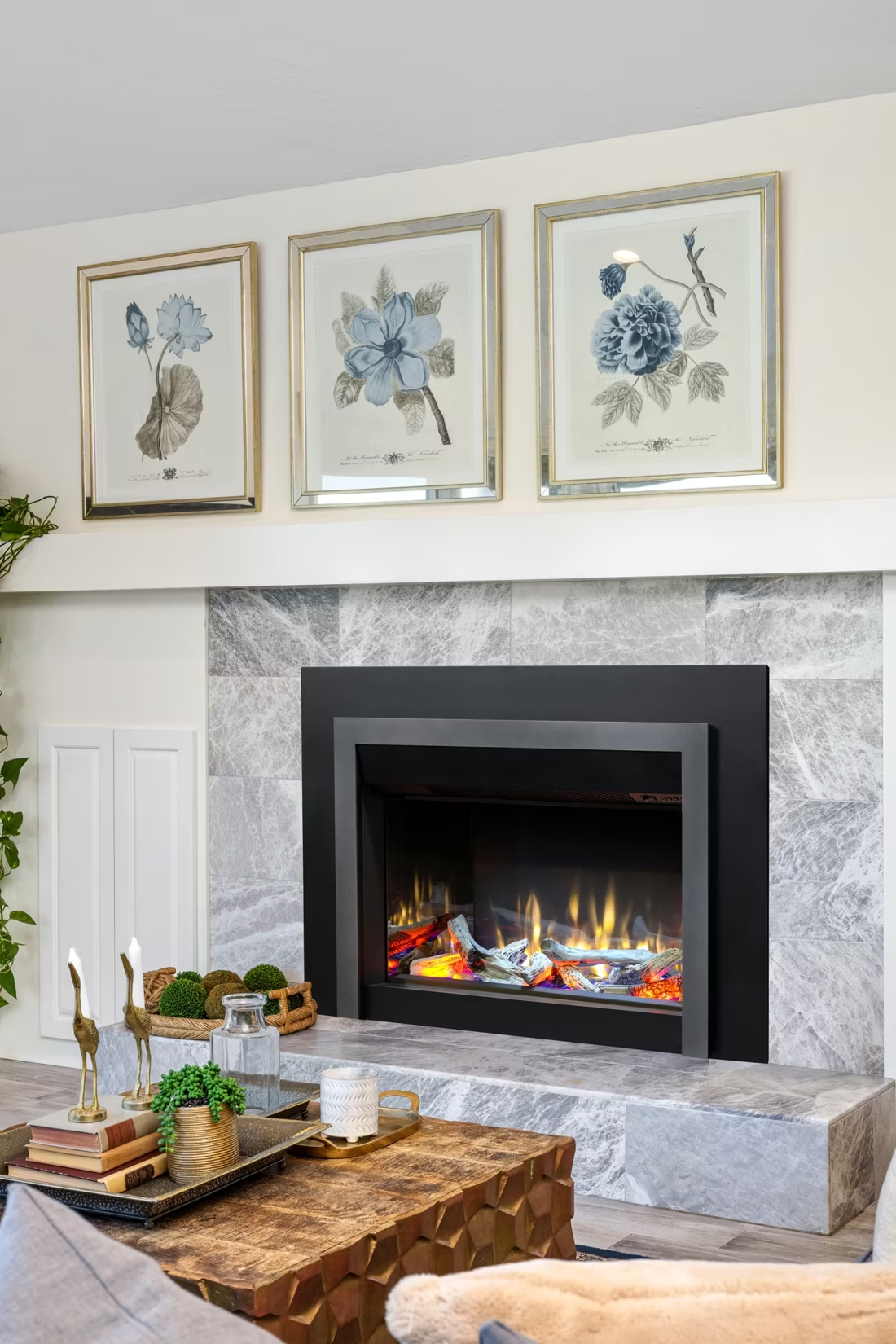
Yes—most put out around 4,800–5,000 BTUs from a standard outlet, which comfortably warms a bedroom, office, or den as a comfort-zone heater. What they won't do is carry a whole house the way wood, gas, or pellet can. Think of electric as ambiance-first with honest supplemental heat: flames on with no heat in July, flames plus warmth in January.
Can I put a TV above my fireplace?
Yes—with an asterisk. Fireplaces are hot and TVs don't like heat. Either put a mantel between them to deflect rising warmth, or choose a fireplace with heat-management technology that creates a cool zone on the wall above—the wall stays around 125 degrees, barely warm, while the room still gets full heat. If you like clean lines and don't want a mantel, heat management is the answer.
Can I install a fireplace myself?
If you're putting a fire in your house on purpose, it's best to work with an expert. Unless you're genuinely experienced in framing, gas line, vent pipe, and the national code on clearances to combustibles, have a professional do it—and ideally the same company that sells you the fireplace, so warranty, service, and liability all live under one roof.
Does a fireplace add value to my home?
On average, a fireplace adds back to the home about the same amount you spent installing it. Add the monthly savings from heating the rooms you actually use instead of the whole house—often hundreds of dollars a year—and the value case is strong before you even count what a fire does for how your family uses the room.
Stove and Fireplace Dealers in Cooke County
Listings include WhyFire partner dealers, dealers we have verified as authorized for the brands we recommend, and established local businesses that carry hearth products. Every listing shows which one it is. The ones marked Preferred run on WhyFire's software, so they can show you real pricing and book your appointment right here. No manufacturer pays for placement. How we verify dealers →
Heffley's Hearth & Home
Polar Bear Chimney Sweep
Sweeps N Ladders
Fan & Flame
Ntx Bbq Supply
Find your electric fireplace in Cooke County.
Tell us a bit about your home and we'll match you with a trusted local Cooke County dealer, plus a free Project Guide & Parts List—the exact components for your electric fireplace project, sized right for your room.
Find Your Fireplace →