
Warm ambiance for Comanche County homes, without touching the chimney.
Comanche County's winters rarely test a heating system the way North Texas or the Panhandle does—which makes electric fireplaces a practical, no-vent way to add real warmth and glow to a ranch house, mobile home, or new build. Find the right unit and connect with a trusted local dealer.
Every Project Starts From One of These Five Situations
A short heating season built for a plug-in fire.
Comanche County sits in the Cross Timbers region of central Texas, home to about 6,800 residents spread across the county seat of Comanche and smaller communities like De Leon, Gustine, and Sidney. With an average winter low around 34°F and just 2,204 heating degree days a year, this is one of the mildest heating climates in the country—nothing close to the sub-zero stretches that drive homeowners in places like Bismarck or Duluth to size up a wood stove. Most Comanche County homes handle winter fine with a central heat pump or furnace; the fireplace question here is less about survival heat and more about ambiance, zone comfort in a back bedroom or sunroom, and the crackle-and-glow look people want without babysitting a wood fire.
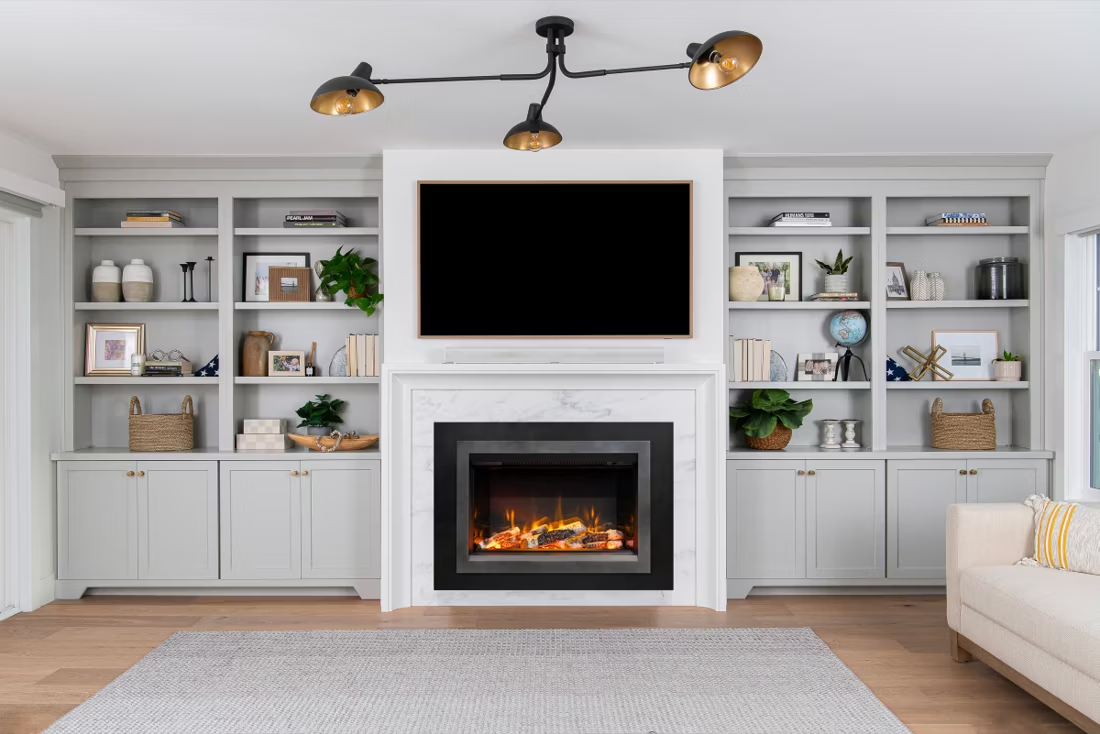
That's exactly the gap electric fireplaces fill. A built-in electric insert or a wall-mount unit plugs into a standard outlet or a dedicated 120V/240V circuit—no chimney, no gas line, no venting through the roof. That matters in a county where a lot of the housing stock is older ranch homes and manufactured housing without an existing masonry fireplace to retrofit. Comanche County Electric Cooperative serves much of the rural county, and running an electric fireplace a few hours a night costs only pennies more on the bill. For homeowners who still want the wood-fire look and the local oak, pecan, and mesquite culture that shows up more at the smoker than the hearth, electric delivers the visual without the mess.
Three steps. No salesperson until you're ready.
Tell us about your project
Your zip code, your situation, and the fuel you're leaning toward—or let the answers point you to one.
See what's actually available
The brands dealers within 100 miles genuinely carry—real options, never a catalog mirage.
Get your dealer & Project Guide
A trusted local dealer, plus the free Project Guide & Parts List that names every component of the job.
Frequently Asked Questions
How much does an electric fireplace installation cost in Comanche County?
Most electric fireplace projects in Comanche County run $300 to $2,500. A simple plug-in insert or a freestanding electric stove that drops into an existing fireplace opening sits at the low end—no electrician needed if it runs off a standard 15-amp outlet. A built-in wall unit or a linear electric fireplace set into new framing, which often calls for a dedicated 240V circuit run by a licensed electrician, lands at the higher end. Because there's no chimney, flue, or gas line involved, electric installs are consistently the fastest and least expensive fireplace project available in the county.
What size electric fireplace do I need for my Comanche County home?
Electric fireplaces are rated more for visual scale and supplemental warmth than whole-home heating, since most units top out around 1,500 watts (roughly 5,000 BTU) regardless of size. For a bedroom, sunroom, or den in the 150-400 sq ft range, a 30-40 inch insert or wall unit is plenty to take the chill off. For a great room or open living space, a 50-60 inch linear unit gives you more visual presence, though you'll still want your central system doing the real heavy lifting on the rare nights that dip into the 20s. A local dealer can walk your room and tell you what actually looks right on the wall, which matters more here than raw heat output.
Who installs electric fireplaces in Comanche County?
For a plug-in unit, installation is often DIY or handled by whoever sells you the fireplace—set it in the opening or mount it on the wall, and you're done. For a built-in unit needing a dedicated circuit, you'll want a licensed electrician, and the hearth dealers serving Comanche County typically coordinate that as part of the install rather than leaving you to find your own trade. Skip the chimney sweep search entirely—with no combustion and no flue, electric fireplaces don't need annual chimney inspections, which is one of the appeals for homeowners tired of that upkeep.
What's the difference between an electric insert, a wall-mount, and a mantel package?
An electric insert is built to slide into an existing fireplace opening—a common retrofit for older Comanche County homes with a masonry firebox that's rarely used for wood anymore. A wall-mount (or linear) unit hangs flush on a wall like a TV, no existing opening required, and works well in newer construction or a room addition. A mantel package pairs a smaller electric unit with a surrounding mantel and often a hearth base, giving you the traditional fireplace look in a room that never had one. For manufactured homes and newer builds around De Leon and Gustine, wall-mount and mantel units are usually the easier fit since there's no masonry to work around.
Do I need a permit to install an electric fireplace in Comanche County?
In most cases, no. Comanche County, like much of rural Texas, has no county-wide building code outside incorporated city limits, so a straightforward plug-in electric fireplace typically doesn't trigger a permit at all. If your project involves running a new dedicated circuit—common for larger built-in units—that electrical work should still be done to code by a licensed electrician, and if you're inside the city limits of Comanche or another incorporated town, check with that city's building office first. There's no EPA emissions rule to worry about either, since electric units don't burn anything.
What's the best electric fireplace for Comanche County's climate?
Given the mild winters here—average lows around 34°F and a heating season that's short compared to most of the country—the deciding factor for most Comanche County homeowners is realistic flame appearance and finish, not raw BTU output. Look for models with LED flame technology and adjustable brightness so the unit looks good running with the heat off during warmer months, which is most of the year here. Brands like Dimplex and Napoleon offer strong flame realism at a range of price points, and a local dealer can show you the difference in person rather than relying on a photo online.
Electric vs. wood—which fits my home better?
Wood heat has real roots in this part of Texas—oak, pecan, and mesquite are all locally available, and plenty of homes keep a wood-burning fireplace or stove going for backyard fires and the smoker as much as for warmth. But with only 2,204 heating degree days a year, wood as a primary heat source is overkill for most Comanche County homes, and it comes with chimney maintenance and ash cleanup electric skips entirely. Electric makes more sense as an easy, no-mess way to add a fire feature to a room, especially in manufactured housing or a room addition where running a chimney isn't practical. Homeowners who want the campfire ritual still lean wood; homeowners who want the look with none of the upkeep lean electric.
How much does it cost to run an electric fireplace in Comanche County?
A typical 1,500-watt electric fireplace costs about 15 to 20 cents per hour to run on heat mode, based on current residential electric rates from providers serving the county, including Comanche County Electric Cooperative. Running it a few hours most evenings through the winter adds maybe $10 to $20 to a monthly bill—far less than most homeowners expect. On flame-only mode, with the heater switched off, the cost drops to nearly nothing since only the LED lighting draws power.
Are electric fireplaces a good fit for manufactured and mobile homes in Comanche County?
Yes—electric is often the best fireplace option for manufactured housing, which makes up a meaningful share of the housing stock in rural communities like Sidney and Gustine. There's no roof penetration for venting, no clearance requirements for combustible framing the way a wood or gas unit needs, and most units can run off existing household wiring. A wall-mount or a small insert set into a cabinet opening gives a manufactured home real ambiance without any of the structural modification a vented fireplace would require.
Do electric fireplaces actually produce heat?
Yes—most put out around 4,800–5,000 BTUs from a standard outlet, which comfortably warms a bedroom, office, or den as a comfort-zone heater. What they won't do is carry a whole house the way wood, gas, or pellet can. Think of electric as ambiance-first with honest supplemental heat: flames on with no heat in July, flames plus warmth in January.
Can I put a TV above my fireplace?
Yes—with an asterisk. Fireplaces are hot and TVs don't like heat. Either put a mantel between them to deflect rising warmth, or choose a fireplace with heat-management technology that creates a cool zone on the wall above—the wall stays around 125 degrees, barely warm, while the room still gets full heat. If you like clean lines and don't want a mantel, heat management is the answer.
How much should I budget for a fireplace?
For an average home—covering the fireplace, the vent pipe, and basic installation—a budget between $3,900 and $5,500 gives you a lot of options across wood, gas, and pellet. By the time you add finish work, gas line, and electrical, the average complete installation lands between $5,000 and $12,000 all-in. In a remodel or new build, a good rule is to put about 2.5% of the total project cost toward the fireplace.
Can a fireplace actually lower my heating bill?
Yes—by creating a comfort zone. A furnace heats every square foot of the house just to warm the one room you're in; a gas fireplace on low burns roughly a sixth of the gas a typical furnace does. Set the furnace around 55–60 degrees as a baseline, then heat the rooms your family actually uses. Families who heat this way commonly save $20–$60 a month.
Stove and Fireplace Dealers in Comanche County
Listings include WhyFire partner dealers, dealers we have verified as authorized for the brands we recommend, and established local businesses that carry hearth products. Every listing shows which one it is. The ones marked Preferred run on WhyFire's software, so they can show you real pricing and book your appointment right here. No manufacturer pays for placement. How we verify dealers →
David's Stove Shop Inc
C&G Products
Rodak's Coffee And Bbq Grills
Texas Building Supply
Backyard And Patio Store - Waco
Darden Building Materials
Hoover True Value Hardware
Find your electric fireplace in Comanche County.
Tell us a bit about your home and we'll match you with the right electric fireplace or insert, plus a free Project Guide & Parts List with your recommended local dealer in Comanche County.
Find Your Fireplace →