
Instant heat for Collingsworth County, without the firewood.
Clean, on-demand heat for the cold fronts that sweep across Collingsworth County's ranch and wheat country—from Wellington to the rural stretches along the Salt Fork. Find the right unit and connect with a trusted local dealer.
Every Project Starts From One of These Five Situations
Reliable heat without the hassle of wood.
Collingsworth County sits in the Rolling Plains of the Texas Panhandle, home to about 2,285 people spread across ranchland, wheat and cotton fields, and the county seat of Wellington. At roughly 2,950 heating degree days and average winter lows near 28°F, this is a genuine but moderate heating climate—nothing like the 8,000-plus HDD winters of a place like Fargo ND or Duluth MN, but still cold enough that homes need real supplemental heat during the county's sharp blue-norther cold fronts, when temperatures can drop 30 degrees in an afternoon.
With no non-attainment or air quality restrictions in the county, gas appliances run without any of the burn-curtailment concerns you'd see elsewhere. Natural gas service is limited mostly to in-town Wellington; most homes outside city limits rely on propane, delivered and serviced by regional suppliers like West Texas Gas. Local oak, pecan, and mesquite are plentiful—but they're used far more for smoking meat than for home heating in a climate this mild, which is why a properly sized gas fireplace or insert, rather than a wood stove, is the practical choice for most Collingsworth County homes.
Three steps. No salesperson until you're ready.
Tell us about your project
Your zip code, your situation, and the fuel you're leaning toward—or let the answers point you to one.
See what's actually available
The brands dealers within 100 miles genuinely carry—real options, never a catalog mirage.
Get your dealer & Project Guide
A trusted local dealer, plus the free Project Guide & Parts List that names every component of the job.
Frequently Asked Questions
How much does a gas fireplace installation cost in Collingsworth County?
Most gas fireplace and insert installations in Collingsworth County run roughly $3,500 to $8,500, with the low end covering a direct-vent insert into an existing masonry fireplace where a propane line or tank is already in place, and the higher end covering new construction work that requires framing, venting, and a fresh gas line run from a new propane tank. Because most of the county sits outside Wellington's limited natural gas footprint, expect propane tank setup or line extension to factor into your quote if you're out on a ranch or farmstead rather than in town.
Can I convert my existing wood fireplace to gas?
Yes, and it's a common request from owners of older Wellington homes built with a traditional masonry fireplace that was rarely used for real heat even when new. A gas insert installed into the existing firebox, vented through the current chimney with a stainless liner, typically runs $4,000 to $7,500 depending on whether you're running off an existing propane tank or need a new one set. Given how mild Collingsworth County winters are compared to the northern Plains, most owners convert for convenience and ambiance rather than necessity—but the heat output is a real upgrade over an open masonry fireplace on the county's colder nights.
Do I need natural gas, or should I plan on propane?
Plan on propane unless you're inside Wellington's limited natural gas service area. Collingsworth County's population of just over 2,285 doesn't support the kind of gas main buildout you'd see in a larger town, so the great majority of county homes—especially ranches and farmsteads outside city limits—run on propane delivered by regional suppliers such as West Texas Gas. Any gas fireplace or insert you're considering can be configured for propane with the correct orifice and regulator; your installer will handle that setup and coordinate the tank if you don't already have one.
Will my gas fireplace work during a power outage?
Most modern gas fireplaces will, which matters in a county where ice storms and high Panhandle winds can knock out power for hours at a time. Units with intermittent pilot ignition (IPI) run on a small battery backup that keeps them lighting on demand even with the power out. Valor fireplaces go a step further—their pilot's thermocouple generates its own electricity, so there's no battery to replace or forget about. Ask your local installer which ignition system is on any unit you're considering, especially if you're out on a rural property where a service call after a storm isn't quick.
What's the difference between a gas fireplace, gas insert, and gas stove?
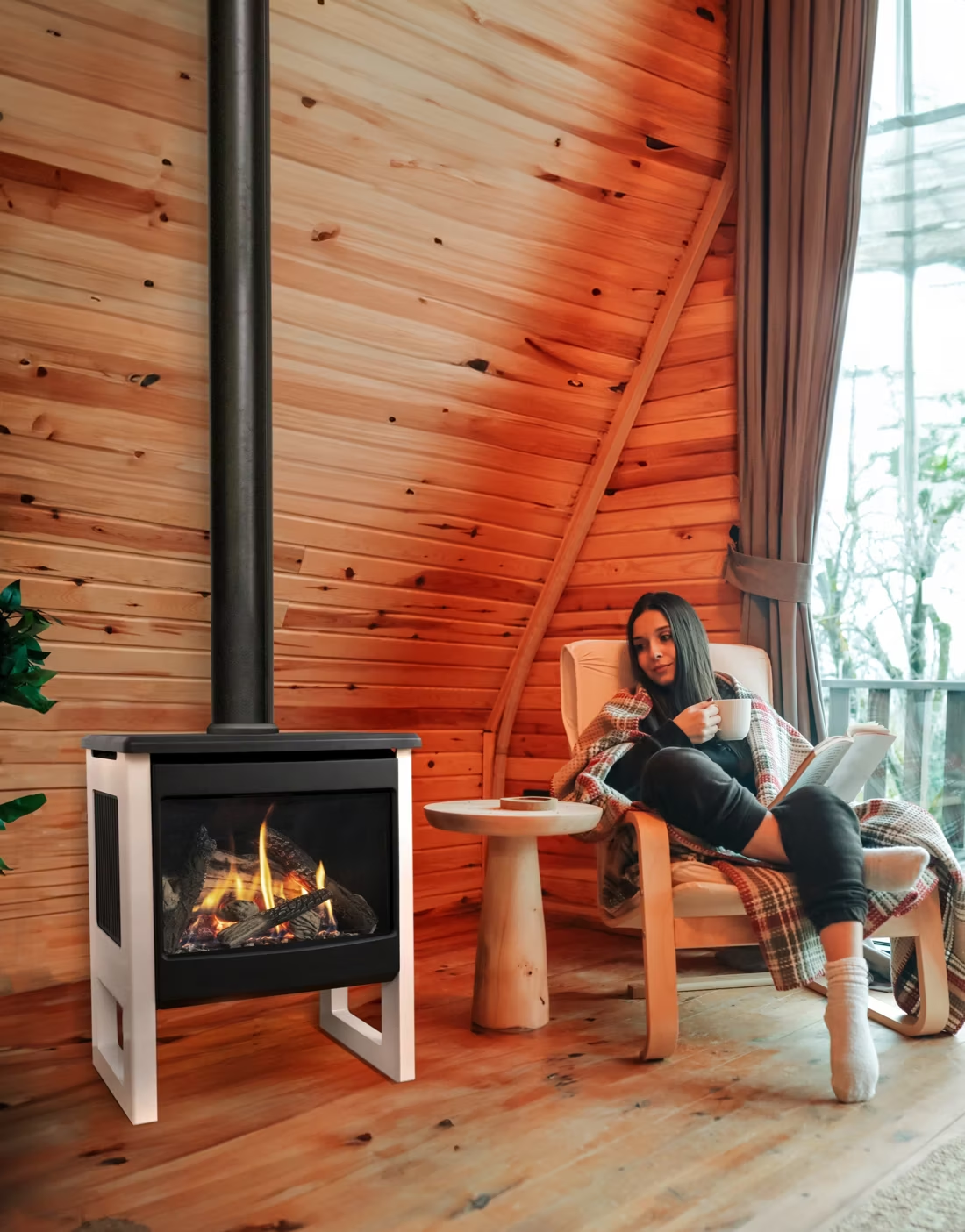
A gas fireplace is a fully built-in unit framed into a wall, typically used in new construction or a remodel. A gas insert slides into an existing masonry firebox and uses the chimney as its vent path, which is the common route for older Wellington homes upgrading a rarely-used wood fireplace. A gas stove is a freestanding, floor-mounted unit that doesn't require an existing fireplace opening at all—a good option for a ranch house or outbuilding without a chimney. For most Collingsworth County homeowners with an existing fireplace, the insert is the simplest and most cost-effective path.
Do I need a permit to install a gas fireplace in Collingsworth County?
Within Wellington city limits, gas fireplace installations typically require a building permit and gas line inspection through the city. Outside city limits, Collingsworth County has no general building code enforcement, but propane system work still must be performed by an installer licensed through the Railroad Commission of Texas, which regulates LP-gas installations statewide. A reputable local installer will already carry that license and will tell you upfront whether your project falls inside or outside the city's permitting jurisdiction.
What's the difference between vented and vent-free gas fireplaces?
Vented gas fireplaces—direct-vent or B-vent—pull combustion air from outside and exhaust it back outside through sealed venting, keeping combustion byproducts out of the house. Vent-free units burn fuel directly into the room and rely on oxygen depletion sensors and strict room-sizing rules to stay safe. Texas permits vent-free units, and they're sometimes used in small rooms or outbuildings on Collingsworth County properties where running a vent isn't practical. For a primary living space, though, a vented direct-vent unit is still the more universally recommended choice—it delivers strong heat without any tradeoff on indoor air quality.
How often should my gas fireplace be serviced?
Plan on an annual inspection, ideally before the fall cold fronts start rolling through. A technician checks the burner, pilot assembly, gas connections, and venting, and cleans the glass and interior. This matters more than it might seem in a rural county like Collingsworth, where a service technician may be coming out from Amarillo or Childress—getting on a fall schedule before the first blue norther hits beats waiting for a mid-winter breakdown.
Gas vs. wood—which makes sense for my home?
In a lot of Texas counties this is a close call, but not really here. Collingsworth County's mild winters—about 2,950 heating degree days and average lows around 28°F—mean wood heat is more novelty than necessity; local oak, pecan, and mesquite get used far more for smoking brisket than for warming a house. A handful of rural homeowners still keep a wood-burning stove for backup heat or atmosphere, but for actual day-to-day heating during cold fronts, a gas fireplace or insert running on propane is the practical, low-maintenance choice most county homeowners land on.
Why is my open fireplace making my house colder?
Open fireplaces suck—literally. As the fire burns, it consumes air your furnace already paid to heat and pulls it out through the chimney, so the house is actually colder after the fire goes out than before you lit it. An insert fixes this: it seals the chimney, puts fixed glass across the front, and turns that hole in your house into a real heat source.
Can I put a TV above my fireplace?
Yes—with an asterisk. Fireplaces are hot and TVs don't like heat. Either put a mantel between them to deflect rising warmth, or choose a fireplace with heat-management technology that creates a cool zone on the wall above—the wall stays around 125 degrees, barely warm, while the room still gets full heat. If you like clean lines and don't want a mantel, heat management is the answer.
What is an in-home preview and do I need one?
It's a visit where a hearth professional measures your space, confirms the model you picked actually works in your home, and walks the specs—framing, gas line, venting, finish work—before anything is ordered. Some details you just can't know until you see the house. Never make a down payment without one; it's the single most-skipped step that burns buyers.
How much should I budget for a fireplace?
For an average home—covering the fireplace, the vent pipe, and basic installation—a budget between $3,900 and $5,500 gives you a lot of options across wood, gas, and pellet. By the time you add finish work, gas line, and electrical, the average complete installation lands between $5,000 and $12,000 all-in. In a remodel or new build, a good rule is to put about 2.5% of the total project cost toward the fireplace.
Stove and Fireplace Dealers in Collingsworth County
Listings include WhyFire partner dealers, dealers we have verified as authorized for the brands we recommend, and established local businesses that carry hearth products. Every listing shows which one it is. The ones marked Preferred run on WhyFire's software, so they can show you real pricing and book your appointment right here. No manufacturer pays for placement. How we verify dealers →
Giblet Stove Sales
Find your gas fireplace in Collingsworth County.
Tell us a bit about your home and we'll match you with the right gas fireplace, insert, or stove—plus a free Project Guide & Parts List and a trusted local dealer to install it.
Find Your Fireplace →