
Real ambiance, real heat, no venting required.
Collin County's mild winters and booming new-construction subdivisions—from Plano to Frisco to Prosper—make electric one of the easiest hearth upgrades around. Find the right unit and get matched with a trusted local installer.
Every Project Starts From One of These Five Situations
Electric fits Collin County's growth curve.
Collin County has added residents faster than almost any county in Texas, and it shows in the housing stock—new subdivisions stretching from Plano and Allen through Frisco, McKinney, Wylie, and out to Prosper and Celina. Winters here are mild by any national standard: Climate Zone 3A, an average winter low of 36°F, and a winter heating season only about a third as long and intense as a place like Bismarck, ND sees in a typical winter. That means almost nobody in Collin County is heating a home with a fireplace as a primary heat source. What they want is ambiance, a focal point over the mantel, and maybe a boost of supplemental warmth on the handful of nights that dip into the 20s.
That's exactly the gap electric fills. A plug-in or built-in electric fireplace needs no chimney, no gas line, and often no permit at all for a simple insert—which matters in a county full of production-built homes and HOA-governed communities where adding gas service or a masonry chimney mid-remodel isn't practical. Builders and remodelers across Collin County increasingly spec electric inserts and wall-mount units in primary bedrooms, media rooms, and secondary living spaces where a gas line was never run. Wood-burning fireplaces, by contrast, are largely a non-factor here—Collin County's mild climate and abundant local oak, pecan, and mesquite notwithstanding, there simply isn't enough cold to justify cutting and stacking firewood as a heat strategy, and many newer subdivisions restrict open burning altogether.
Three steps. No salesperson until you're ready.
Tell us about your project
Your zip code, your situation, and the fuel you're leaning toward—or let the answers point you to one.
See what's actually available
The brands dealers within 100 miles genuinely carry—real options, never a catalog mirage.
Get your dealer & Project Guide
A trusted local dealer, plus the free Project Guide & Parts List that names every component of the job.
Frequently Asked Questions
How much does an electric fireplace installation cost in Collin County?
Costs vary a lot by unit type. A basic plug-in electric insert or freestanding unit runs $300 to $1,200 and typically needs no electrical work beyond an existing outlet. A built-in wall unit or mantel-surround package that draws more current—common in the larger family rooms found in newer Frisco and Prosper builds—often calls for a dedicated 20-amp circuit, which adds a licensed electrician and, in most cases, a permit through the city's building department. All-in for a built-in installation with new wiring and a custom surround, expect $1,500 to $4,000 depending on finish materials. A local dealer will quote the exact number after seeing your space and your existing electrical panel.
Do I need a permit to install an electric fireplace in Collin County?
It depends on the unit. A freestanding or plug-in electric fireplace that uses an existing standard outlet generally doesn't require a permit anywhere in Collin County. A built-in electric insert that requires new wiring or a dedicated circuit does need an electrical permit, pulled through whichever city you're in—Plano Building Inspections, Frisco's Building Inspection Division, or McKinney Building Codes, for example. Because there's no venting, no gas line, and no chimney involved, the permitting process for electric is far simpler than a gas or wood installation—this is one of the biggest practical advantages of the fuel type in a county with this much active new construction.
What's the difference between an electric insert, a wall-mount unit, and a freestanding electric fireplace?
An electric insert is built to slide into an existing fireplace opening—a common retrofit in older homes around downtown McKinney or historic Plano where a wood-burning masonry fireplace sits unused. A wall-mount unit hangs flush on the wall like a large flat-screen and is popular in newer Frisco and Allen builds where the fireplace doubles as a TV mounting surface. A freestanding electric fireplace is a self-contained cabinet-style unit that plugs in anywhere, which makes it the easiest option for renters and apartment dwellers throughout the county. All three heat similarly; the choice mostly comes down to the room and whether you're retrofitting or building new.
Does an electric fireplace actually produce real heat, or is it just for looks?
Most electric fireplaces include a built-in heater rated around 4,000 to 5,000 BTU—enough to noticeably warm a single room, similar to a space heater. Given Collin County's mild profile (a short, light winter heating season and winter lows averaging 36°F), that's plenty for the handful of genuinely cold nights the county sees each year. What an electric unit won't do is heat a whole house on its own—it's a supplemental or zone-heating solution, not a furnace replacement. Most local buyers here are after the visual of a real-looking flame with the option to run the heater only when it's actually needed.
Electric vs. gas fireplace—which is right for my Collin County home?
Gas remains a standard, popular choice throughout Collin County, particularly in homes already plumbed for it, and it delivers more consistent real heat output for the occasional cold front. Electric wins on installation simplicity—no gas line, no venting, no combustion byproducts to worry about—and on flexibility, since a unit can go anywhere there's an outlet or a simple 20-amp run. For primary living rooms in gas-plumbed homes, gas is often still the default. For bedrooms, home offices, media rooms, and any space without existing gas service—which describes a lot of the newer construction spreading through Prosper, Celina, and Anna—electric is usually the more practical fit.
Is a wood-burning fireplace still an option in Collin County, or is that unusual here?
Wood-burning fireplaces are uncommon as a serious heating choice in Collin County—the climate simply doesn't demand it, with a winter heating season a fraction as long and intense as colder regions of the country see. Some older homes in established neighborhoods around Plano and McKinney still have their original masonry wood-burning fireplaces, and local oak, pecan, and mesquite are all burnable species if you want the authentic experience occasionally. But most homeowners converting an old wood fireplace today are choosing an electric or gas insert instead, both for convenience and because many HOA-governed communities discourage or restrict open wood burning.
Can I put an electric insert into my existing wood-burning masonry fireplace?
Yes, and it's one of the more common projects for older housing stock in Collin County—think the established neighborhoods of downtown McKinney, older sections of Plano, or Allen's earlier subdivisions. An electric insert slides into the existing firebox opening, and because there's no venting requirement, there's no need to touch the existing chimney or flue. It's a straightforward retrofit that a local dealer can typically measure and install in a single visit, and it instantly eliminates the draft and creosote maintenance that comes with an old open masonry fireplace.
What brands of electric fireplaces are available through Collin County dealers?
Local hearth dealers in the DFW area typically carry a mix of established electric fireplace brands like Dimplex, Napoleon, and Amantii, spanning everything from budget-friendly freestanding units to premium linear wall-mount models with realistic flame technology. Selection varies by dealer and by what's currently stocked, which is exactly why matching with the right local retailer matters more than chasing a specific brand name online—they'll know what's actually available and what fits your electrical setup.
Where do electric fireplaces work best in a Collin County home?
Given the mild climate here, electric fireplaces tend to go wherever homeowners want a focal point without the commitment of gas or wood—primary bedrooms, home offices, media rooms, and secondary living areas in the larger floor plans common to newer Frisco, McKinney, and Prosper builds. They're also popular in Collin County's growing stock of apartments and townhomes, where a plug-in or wall-mount unit adds warmth and style without any structural or gas work at all. Main living rooms in gas-plumbed homes still lean toward gas as the primary hearth, with electric filling in everywhere else.
Can I put a TV above my fireplace?
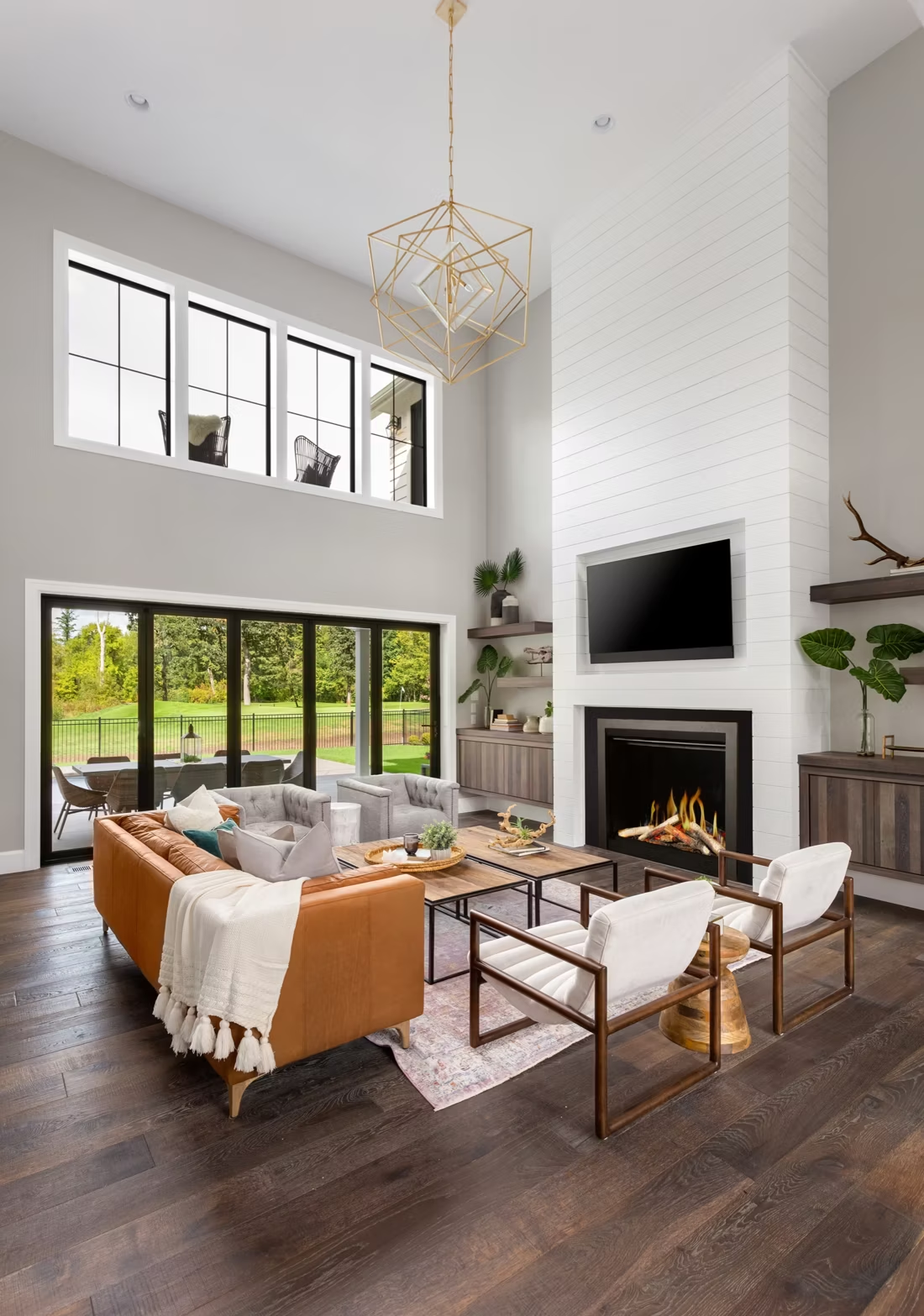
Yes—with an asterisk. Fireplaces are hot and TVs don't like heat. Either put a mantel between them to deflect rising warmth, or choose a fireplace with heat-management technology that creates a cool zone on the wall above—the wall stays around 125 degrees, barely warm, while the room still gets full heat. If you like clean lines and don't want a mantel, heat management is the answer.
Do electric fireplaces actually produce heat?
Yes—most put out around 4,800–5,000 BTUs from a standard outlet, which comfortably warms a bedroom, office, or den as a comfort-zone heater. What they won't do is carry a whole house the way wood, gas, or pellet can. Think of electric as ambiance-first with honest supplemental heat: flames on with no heat in July, flames plus warmth in January.
Can I install a fireplace myself?
If you're putting a fire in your house on purpose, it's best to work with an expert. Unless you're genuinely experienced in framing, gas line, vent pipe, and the national code on clearances to combustibles, have a professional do it—and ideally the same company that sells you the fireplace, so warranty, service, and liability all live under one roof.
How much should I budget for a fireplace?
For an average home—covering the fireplace, the vent pipe, and basic installation—a budget between $3,900 and $5,500 gives you a lot of options across wood, gas, and pellet. By the time you add finish work, gas line, and electrical, the average complete installation lands between $5,000 and $12,000 all-in. In a remodel or new build, a good rule is to put about 2.5% of the total project cost toward the fireplace.
Stove and Fireplace Dealers in Collin County
Listings include WhyFire partner dealers, dealers we have verified as authorized for the brands we recommend, and established local businesses that carry hearth products. Every listing shows which one it is. The ones marked Preferred run on WhyFire's software, so they can show you real pricing and book your appointment right here. No manufacturer pays for placement. How we verify dealers →
Yard Art Patio & Fireplace - Allen
Elegant Fireside & Patio, LLC
Flames Fireplaces & Gas Grills
Sweeps N Ladders
Golden Blount
Distrinctive Outdoor Environments, LLC
Overhead Door Co. Of Dallas
Pittman Supply Company
Cosentino – Dallas
Find your electric fireplace in Collin County.
Tell us a bit about your home and we'll match you with the right electric fireplace or insert—plus a free Project Guide & Parts List covering the exact components and your recommended local Collin County dealer.
Find Your Fireplace →