
Warmth on demand for Channelview's mild Gulf Coast winters.
No chimney, no gas line, no venting—just a switch and a flame effect that fits how little heat Channelview homes actually need. Find the right unit and connect with a trusted local dealer.
Every Project Starts From One of These Five Situations
Heat that matches the actual need.
Channelview sits at just 26 feet of elevation along the Houston Ship Channel in climate zone 2A, where winter lows average a mild 44°F and the entire heating season is short and light overall. Compare that to a place like Duluth, MN, which racks up that much winter heating load in a matter of weeks, and it's clear why Channelview homes don't need—and mostly don't want—a whole-home wood or pellet heating system. Wood stoves and pellet inserts are essentially absent here, not because of air quality restrictions (Harris County lists none for this area) but because there's simply no real demand for high-output cordwood heat in a climate this warm.
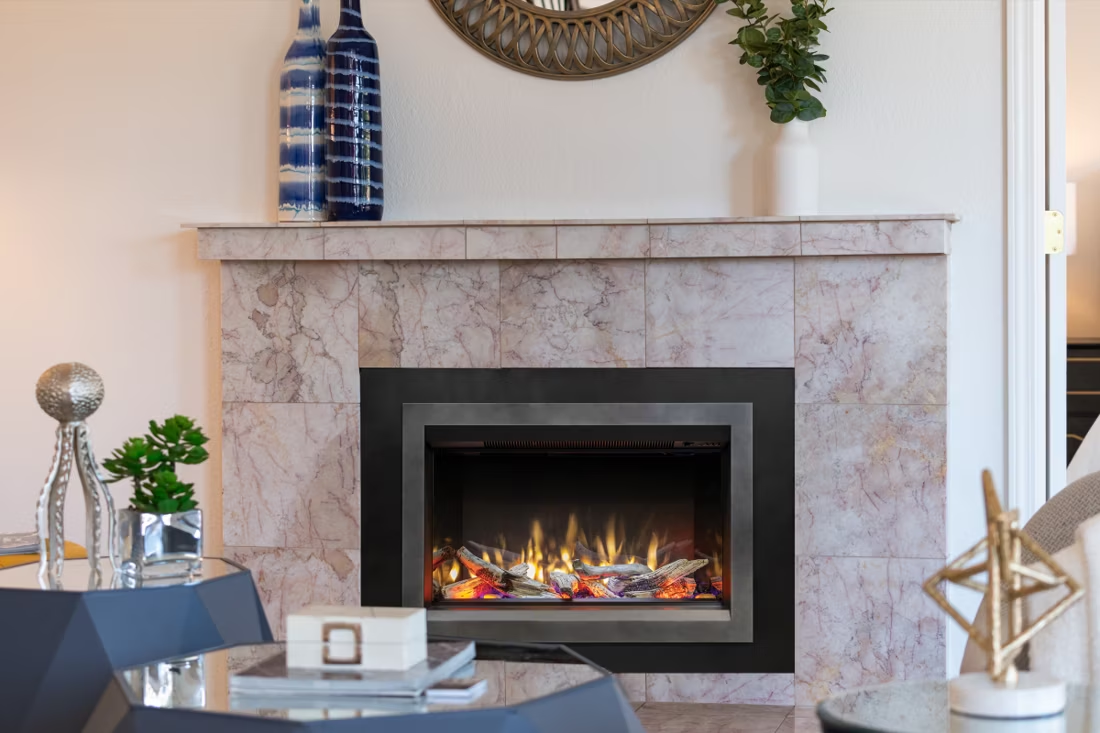
That's where electric fireplaces earn their place. A freestanding or wall-mount electric unit plugs into a standard outlet or a dedicated circuit, requires no chimney or gas line, and delivers instant flame and ambiance with supplemental heat for the handful of genuinely cold nights each winter. CenterPoint Energy operates the electric distribution grid across most of Channelview, with Entergy Texas and San Bernard Electric Coop serving adjacent pockets of unincorporated Harris County—and because Texas runs a deregulated retail electricity market, homeowners here can shop retail providers while CenterPoint keeps the lines running. At residential rates in the 13.66¢ to 14.16¢ per kWh range, running a 1,500-watt electric fireplace on heat mode costs roughly 20 to 21 cents an hour, which is cheap insurance for a cold snap that might only last a few days a year.
Three steps. No salesperson until you're ready.
Tell us about your project
Your zip code, your situation, and the fuel you're leaning toward—or let the answers point you to one.
See what's actually available
The brands dealers within 100 miles genuinely carry—real options, never a catalog mirage.
Get your dealer & Project Guide
A trusted local dealer, plus the free Project Guide & Parts List that names every component of the job.
Frequently Asked Questions
How much does it cost to install an electric fireplace in Channelview?
It depends heavily on the type. A freestanding or mantel-style electric fireplace is essentially a plug-and-play appliance—no electrician, no permit, and the unit itself is the only real cost. A built-in wall unit or an electric insert dropped into an existing masonry fireplace opening typically needs a licensed electrician to run a dedicated 15- or 20-amp circuit, plus carpentry to frame or trim the opening, which is where labor costs come in. Because Channelview is unincorporated Harris County, any electrical work tied to a built-in installation falls under the Harris County Permits Office rather than a city building department—a local dealer or electrician handling the install will typically pull that permit as part of the job.
What size electric fireplace do I need for my home?
In a climate like Channelview's, sizing is less about BTU output for whole-room heating and more about matching the unit to the wall or opening you have and the ambiance you want. Most electric inserts and mantel units on the market top out around 4,600–5,200 BTU (roughly 1,500 watts) in heat mode, which is plenty to warm a bedroom or living area on the coldest nights of the year without overheating a space that rarely needs supplemental heat at all. A local dealer can walk you through fireplace widths (typically 30 to 60 inches) to match your existing mantel, TV wall, or fireplace opening.
Do I need a permit for an electric fireplace in Channelview?
A plug-in freestanding or mantel unit needs no permit at all—it's treated like any other appliance. A built-in wall unit that requires new electrical wiring is a different story: since Channelview is unincorporated, that work falls under Harris County's electrical permitting rather than a city inspector, and it needs to be done by a licensed electrician. Most local hearth and electrical retailers handle this paperwork as part of a built-in installation, so it's rarely something the homeowner has to manage directly.
Electric vs. gas fireplace—which makes more sense in Channelview?
Both are considered standard, mainstream options here, unlike wood or pellet, which see almost no real demand given the mild climate. Gas fireplaces (natural gas or propane) put out real, sustained heat and can offer emergency operation during power outages with the right ignition system—a genuine consideration in a Gulf Coast community that sees hurricane-season grid disruptions. Electric fireplaces skip the gas line and venting entirely, cost less to install, and are the simpler choice for ambiance or light supplemental heat in a bedroom, den, or apartment. For a primary living space where you want a fireplace that can carry real heat load during a rare cold snap, gas is usually the stronger pick; for secondary rooms, rentals, or homes where simplicity matters most, electric wins.
How much does it cost to run an electric fireplace in Channelview?
Running costs are low. Most electric fireplaces draw around 1,500 watts on their highest heat setting (less with the flame effect alone and no heat). At Channelview-area residential rates of roughly 13.66¢ to 14.16¢ per kWh—depending on whether CenterPoint Energy's territory or a co-op like San Bernard Electric serves your address—that works out to about 20 to 21 cents per hour of heated use. Running one for a few hours most winter evenings adds only a few dollars a month to the bill, which is part of why electric units are popular as a supplemental or accent heat source rather than a whole-home system here.
What type of electric fireplace is most popular in Channelview homes?
Wall-mount and mantel-package units are the most common choice for Channelview's mix of single-family homes and townhomes, largely because they double as a TV wall feature and don't require any structural chimney work. Electric inserts that slide into an existing masonry fireplace opening are popular for older homes with a fireplace that's rarely or never used for wood—the insert covers the opening, adds a flame effect, and removes the maintenance and draft issues of an open firebox. Freestanding electric stoves are less common here than in colder markets, since there's little demand for a stove-style radiant heat source.
Will an electric fireplace actually heat my house?
Not the whole house, and it isn't designed to. Electric fireplaces are built to provide zone heat for a single room—typically enough to raise the temperature by several degrees in a bedroom, living room, or den. In Channelview's climate, with an average winter low of 44°F and only a short, light heating season each year, that's usually all that's needed: a central HVAC system handles the rare hard freeze, and the electric fireplace covers the in-between evenings when you want warmth in one room without running the whole system. Homeowners looking for a unit that can genuinely replace a furnace should look at gas instead.
Will my electric fireplace work during a power outage?
No—and this is worth being upfront about. Electric fireplaces have no battery backup or standby fuel source; if CenterPoint Energy's grid goes down, so does the fireplace. That matters more in Channelview than in many places, given the Gulf Coast's hurricane season and the outages that can follow tropical storms. If backup heat during an outage is a priority alongside everyday ambiance, a gas fireplace with a battery-backed or self-powered ignition system is the better complement—some homeowners here install one of each: electric for daily convenience, gas for storm-season reliability.
Why don't more Channelview homes have wood-burning fireplaces?
It's not a restriction—Harris County lists no air quality curtailment concerns for the area—it's simply a mismatch of climate and infrastructure. With winter lows averaging 44°F and a heating season a fraction of what northern states see, there's little practical need for a cordwood heat source, and Channelview's industrial Ship Channel corridor and suburban Houston setting don't come with the national forest cutting permits or firewood culture you'd find in a colder, more rural region. Local oak, pecan, and mesquite are available for smokers and outdoor fire pits, but as a primary hearth appliance, electric and gas have largely replaced wood here.
Can I put a TV above my fireplace?
Yes—with an asterisk. Fireplaces are hot and TVs don't like heat. Either put a mantel between them to deflect rising warmth, or choose a fireplace with heat-management technology that creates a cool zone on the wall above—the wall stays around 125 degrees, barely warm, while the room still gets full heat. If you like clean lines and don't want a mantel, heat management is the answer.
Do electric fireplaces actually produce heat?
Yes—most put out around 4,800–5,000 BTUs from a standard outlet, which comfortably warms a bedroom, office, or den as a comfort-zone heater. What they won't do is carry a whole house the way wood, gas, or pellet can. Think of electric as ambiance-first with honest supplemental heat: flames on with no heat in July, flames plus warmth in January.
How much should I budget for a fireplace?
For an average home—covering the fireplace, the vent pipe, and basic installation—a budget between $3,900 and $5,500 gives you a lot of options across wood, gas, and pellet. By the time you add finish work, gas line, and electrical, the average complete installation lands between $5,000 and $12,000 all-in. In a remodel or new build, a good rule is to put about 2.5% of the total project cost toward the fireplace.
Can a fireplace actually lower my heating bill?
Yes—by creating a comfort zone. A furnace heats every square foot of the house just to warm the one room you're in; a gas fireplace on low burns roughly a sixth of the gas a typical furnace does. Set the furnace around 55–60 degrees as a baseline, then heat the rooms your family actually uses. Families who heat this way commonly save $20–$60 a month.
Nearby Dealers
Hearth shops serving Channelview and the surrounding area.
All Thingz U Need Inc
Gas Equipment Company - Houston
Electric Service in Channelview
An electric fireplace's heater draws about 1,500 watts—pennies per hour at local rates.
Entergy Texas Inc.
San Bernard Electric Coop, Inc
Find your electric fireplace in Channelview.
Tell us a bit about your home and we'll put together a free Project Guide & Parts List—the right electric fireplace or insert for your space, matched with a trusted local Channelview-area dealer who can install it correctly.
Find Your Fireplace →