
Instant Gas Heat for Chandler, Texas Homes.
Mild East Texas winters don't mean you skip real heat. Find the right gas fireplace or insert for your Henderson County home, and get matched with a trusted local dealer.
Every Project Starts From One of These Five Situations
Comfort heat built for East Texas mild winters.
Chandler sits in Henderson County at just under 400 feet elevation, where winters are short and mild by national standards—average lows hover around 37°F and the area logs roughly 2,072 heating degree days a year, a fraction of what a place like Duluth, MN sees. But mild doesn't mean irrelevant: East Texas still gets hard freezes, ice events, and the kind of multi-day cold snaps that made Winter Storm Uri in February 2021 so painful for homes without a backup heat source. A gas fireplace fills that gap—instant, controllable heat for cold mornings and grid stress alike, without the upkeep of a wood-burning setup.
With a population around 3,300, Chandler doesn't have the municipal natural gas infrastructure you'd find in a larger city—most homes here run on propane for fireplace and appliance fuel, delivered and serviced by local propane suppliers. Electric service comes through Oncor Electric Delivery or Trinity Valley Electric Cooperative depending on where you sit in the county, but that's a separate system from your fireplace's fuel line. A local hearth dealer will know exactly how to spec a propane-fed unit correctly for your home, including tank sizing and regulator setup.
Three steps. No salesperson until you're ready.
Tell us about your project
Your zip code, your situation, and the fuel you're leaning toward—or let the answers point you to one.
See what's actually available
The brands dealers within 100 miles genuinely carry—real options, never a catalog mirage.
Get your dealer & Project Guide
A trusted local dealer, plus the free Project Guide & Parts List that names every component of the job.
Frequently Asked Questions
How much does a gas fireplace installation cost in Chandler?
Most propane gas fireplace installations in the Chandler area run roughly $3,500 to $8,500, depending on the unit, whether you're installing into an existing masonry fireplace or building out new, and whether a propane tank is already in place. Homes with an existing propane tank and appliance line are on the lower end; homes that need a new propane tank set and buried line run will land toward the higher end. A local dealer will walk your home before quoting a firm number, since tank placement and line runs vary a lot on rural East Texas lots.
Can I convert my existing wood fireplace to gas?
Yes, and it's a common upgrade in this part of Henderson County, where a lot of older homes were built with a wood-burning masonry fireplace as the default. A gas insert or log set can typically go into that existing firebox, using the chimney you already have with a proper liner. Since Chandler runs on propane rather than piped natural gas, the conversion also means running or extending a propane line from your tank—your installer will size that as part of the job, usually landing in the same $3,500-$8,500 range as a standalone install.
Does Chandler have natural gas, or is it propane?
Chandler is a small town without citywide natural gas mains, so propane is the standard fuel for gas fireplaces here, same as most of rural Henderson County. If you already have a propane tank for your water heater, range, or furnace, adding a fireplace usually just means tapping into that existing system. If you don't have a tank yet, a local propane supplier can set one and your hearth dealer will coordinate the line work. Nearly every gas fireplace model on the market can be configured for propane, so fuel type shouldn't limit which unit you choose.
Will my gas fireplace still work if the power goes out?
Most modern propane fireplaces will, which matters here—Chandler is served by Oncor Electric Delivery and Trinity Valley Electric Cooperative, and both grids have shown they can go down hard during major winter events like the February 2021 freeze. Units with intermittent pilot ignition (IPI) run on a small battery backup that keeps the igniter working even with no household power. Valor fireplaces go a step further: the pilot's thermocouple generates its own electricity, so there's no battery to remember or replace. For a home that wants a real backup heat plan during an ERCOT-strained cold snap, that's worth asking your dealer about directly.
What's the difference between a gas fireplace, gas insert, and gas stove?
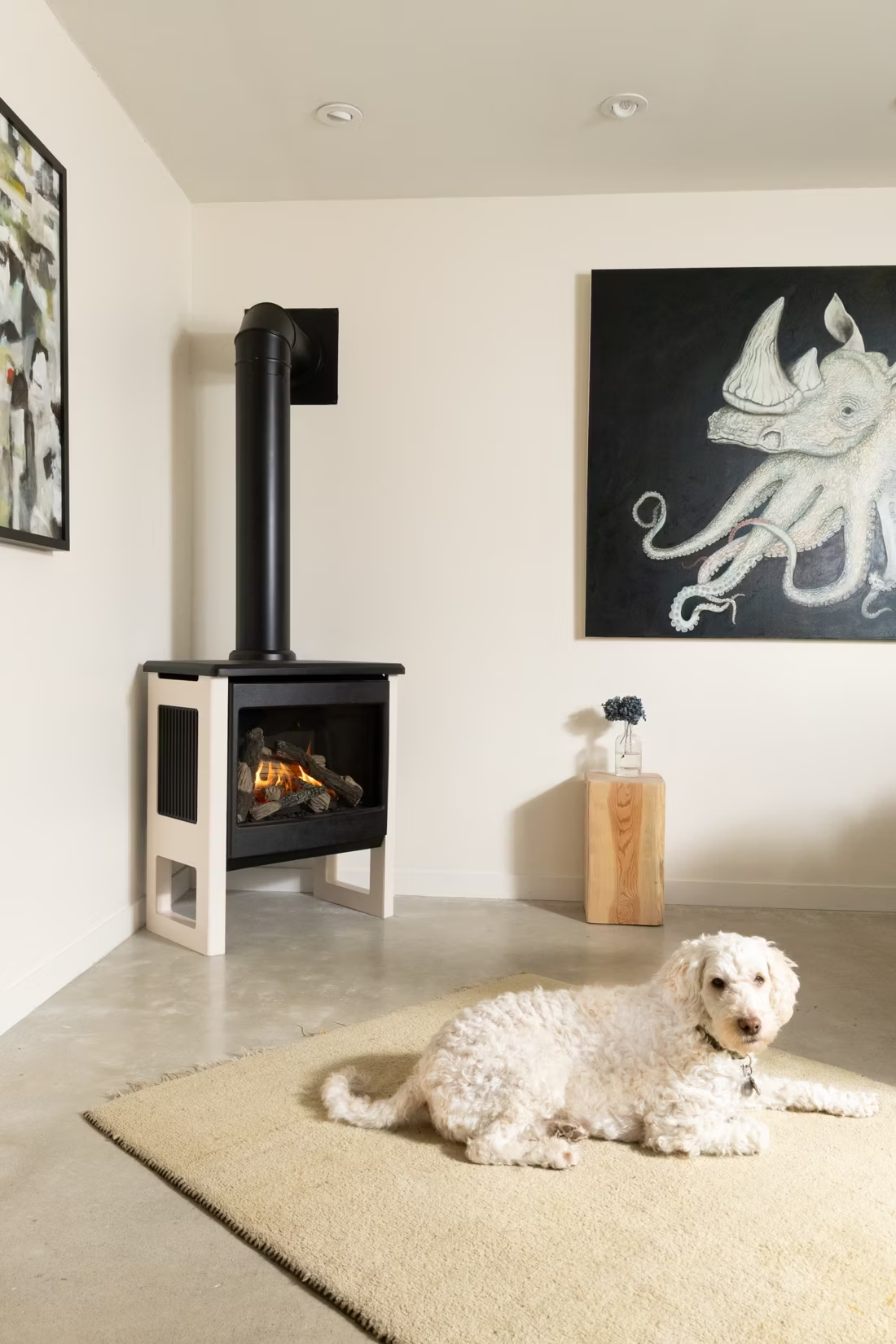
A gas fireplace is a fully built-in unit framed into a wall, typically chosen for new construction or a remodel. A gas insert is built to slide into an existing masonry firebox, which fits a lot of older Chandler-area homes that already have a wood fireplace they'd rather not tend anymore. A gas stove is a freestanding cabinet-style unit that sits out in the room like a wood stove but runs on gas or propane. For most homes here with an existing fireplace, an insert is the simplest upgrade; homes without one usually go with a built-in unit or freestanding stove instead.
Do I need a permit to install a gas fireplace in Chandler?
Yes—installations in Chandler and unincorporated Henderson County generally require a building permit, and the propane line work needs to be handled by a licensed propane technician or gas-fitter. Most established hearth dealers coordinate this permitting and the line work together rather than leaving you to chase down separate trades. Given how spread out lots are in this part of the county, it's worth confirming with your installer up front whether your specific address falls under city or county jurisdiction.
Should I get a vented or vent-free gas fireplace?
Vented (direct-vent) units draw combustion air from outside and exhaust it back outside through a sealed pipe—they're the safer, most universally recommended choice and work in any room size. Vent-free units burn propane directly into the room air without external venting; they're legal in Texas but come with strict room-size and ventilation rules, plus an oxygen depletion sensor as a safety requirement. For most Chandler homes, direct-vent units are the more practical pick since they don't limit which room you can install in or require you to track ventilation math. A local dealer can walk you through both if you're weighing the tradeoff for a smaller room or camp house.
How often does a gas fireplace need to be serviced?
Plan on an annual inspection, same as any propane appliance—a technician checks the burner, pilot assembly, line connections, and any battery backup or electronic ignition, and cleans the glass and interior. This is a quick visit compared to wood chimney sweeping, but it matters just as much for safety, especially on units that sit unused through Chandler's long mild stretches and then get worked hard during a cold snap. Local propane service providers typically charge in the $150-$250 range for this annual check.
Gas vs. wood—which makes more sense in Chandler?
Wood is deeply practical here—oak, pecan, and mesquite are all common locally, firewood is easy to source or cut, and a wood stove keeps working with zero electricity, which matters when the grid gets shaky during an ice event. Gas trades that self-sufficiency for convenience: instant on-off heat, no ash or smoke, and a clean look that suits a primary living room. Given how mild most of Chandler's winters are, plenty of local homeowners lean gas for everyday ambiance and comfort, while keeping a wood-burning option or generator plan for the rare hard freeze. It's common to see both in the same house—gas up front, wood as the fallback.
Is my gas fireplace wasting gas?
If it was installed more than 15 years ago, probably. Older gas fireplaces keep a standing pilot light burning all the time, and that little flame can cost a couple hundred dollars a year. Newer models use pilot-on-demand ignition—the pilot lights only when you use the fireplace and goes out when you turn it off.
What's the difference between an insert and a zero-clearance fireplace?
An insert is a fireplace that slides into a pre-existing wood-burning fireplace—if you don't have one, there's nothing to insert it into. A zero-clearance fireplace is built into a framed wall, which makes it the answer for remodels and new construction. Simple test: existing masonry fireplace means insert; blank or framed wall means zero-clearance.
What is an in-home preview and do I need one?
It's a visit where a hearth professional measures your space, confirms the model you picked actually works in your home, and walks the specs—framing, gas line, venting, finish work—before anything is ordered. Some details you just can't know until you see the house. Never make a down payment without one; it's the single most-skipped step that burns buyers.
Does a fireplace add value to my home?
On average, a fireplace adds back to the home about the same amount you spent installing it. Add the monthly savings from heating the rooms you actually use instead of the whole house—often hundreds of dollars a year—and the value case is strong before you even count what a fire does for how your family uses the room.
Nearby Dealers
Hearth shops serving Chandler and the surrounding area. Every listing shows whether it is a WhyFire partner, a dealer we have verified as authorized for the brands we recommend, or a local business carrying hearth products. No manufacturer pays for placement. How we verify dealers →
East Texas Brick Co.
Tdi Air Conditioning
Fieldstone & Fireplaces
Find your gas fireplace in Chandler.
Tell us about your home and your propane setup, and we'll match you with a trusted local dealer plus a free Project Guide & Parts List—the exact parts, including your vent kit, for a Chandler gas fireplace project done right.
Find Your Fireplace →