
Find the right gas fireplace for Chambers County's Gulf Coast winters.
With winter lows averaging 41°F and only a light winter heating load each year, Chambers County doesn't need wood heat to survive winter—but a gas fireplace still earns its place for ambiance, hurricane-season backup, and the occasional hard freeze. We'll match you with a vetted local dealer who knows the difference.
Every Project Starts From One of These Five Situations
Comfort heat for a climate that rarely demands it.
Chambers County sits on the flat Gulf Coast plain between Houston and the bay towns of Anahuac and Beach City, with Trinity Bay and Galveston Bay shaping the eastern edge of the county. Climate Zone 2A means hot, humid summers and short, mild winters—an average low around 41°F and a winter heating season that's just a small fraction of what a place like Duluth, MN or Fargo, ND racks up before Thanksgiving. Native oak, pecan, and mesquite grow throughout the county, but wood heat is essentially absent here; nobody in Anahuac or Winnie is running a wood stove to survive January the way homeowners do in colder climates. When a hard freeze does roll through—like the February 2021 statewide freeze that knocked out power across the Gulf Coast—it's the exception, not the rule.
That's exactly why gas fireplaces do well in Chambers County: they're chosen for the flip-a-switch ambiance and real-estate appeal in growing subdivisions around Mont Belvieu—itself one of the largest natural gas liquids hubs in North America—and for the peace of mind that comes with a unit that can still throw heat during a hurricane-season outage. CenterPoint Energy Entex serves natural gas to much of the incorporated county, while rural pockets around Hankamer, Stowell, and Cove more commonly run on propane from local suppliers. Either way, a properly vented gas fireplace or insert gives you instant, controllable heat without the humidity, ash, or upkeep that wood heat would add in an already humid coastal climate.
Three steps. No salesperson until you're ready.
Tell us about your project
Your zip code, your situation, and the fuel you're leaning toward—or let the answers point you to one.
See what's actually available
The brands dealers within 100 miles genuinely carry—real options, never a catalog mirage.
Get your dealer & Project Guide
A trusted local dealer, plus the free Project Guide & Parts List that names every component of the job.
Frequently Asked Questions
How much does a gas fireplace installation cost in Chambers County?
Costs vary with the unit, the venting path, and whether new gas line work is required, but most Chambers County installs land somewhere between $3,000 and $9,500. A direct-vent gas insert dropped into an existing masonry fireplace with a gas line already run is on the lower end. A new built-in gas fireplace for a remodel or new construction—with framing, venting through an exterior wall, and a fresh gas line—sits toward the middle and higher end, especially in newer Mont Belvieu subdivisions where homes are being framed from scratch. A local retailer will give you a firm number after seeing your home and your existing gas service.
Can I convert my existing fireplace to gas?
Yes, and it's one of the more common projects for older homes in and around Anahuac that were originally built with a wood-burning masonry fireplace nobody actually uses for heat. A gas insert goes into the existing firebox, using a stainless liner run through the same chimney, and the conversion typically runs $3,500 to $8,000 in Chambers County depending on whether you're already on natural gas through CenterPoint Energy Entex or need a propane setup instead. The result keeps the look of the original fireplace while giving you real, controllable heat instead of a fireplace that mostly sits cold and decorative.
Do I need natural gas, or can I use propane?
Either works, and which one you have usually comes down to where in the county you live. Natural gas through CenterPoint Energy Entex reaches most of the incorporated areas—Mont Belvieu, Anahuac, and parts of Beach City—so if your water heater or range already runs on natural gas, adding a fireplace is straightforward. In more rural stretches of the county, including areas around Hankamer, Stowell, and Cove, propane from a local supplier is the standard alternative, either from an existing tank or a new one installed alongside the fireplace. Most gas fireplace models can be set up for either fuel—your installer just configures the correct orifice and regulator for what you've got.
Will my gas fireplace still work if the power goes out?
Most modern gas fireplaces will, which matters in a county that sees both hurricane-season outages and the occasional hard freeze like the one that hit the whole Gulf Coast in February 2021. Units with IPI (intermittent pilot ignition) run on battery backup—typically a few AA batteries inside the unit—that kick in automatically when the power drops, so the fireplace still lights on demand. Valor units go a step further: their pilot's thermocouple generates its own electricity, so there's no battery to remember at all. If backup heat during a storm is part of why you're considering gas, ask your local dealer about the ignition system on any unit you're looking at.
What's the difference between a gas fireplace, insert, and stove?
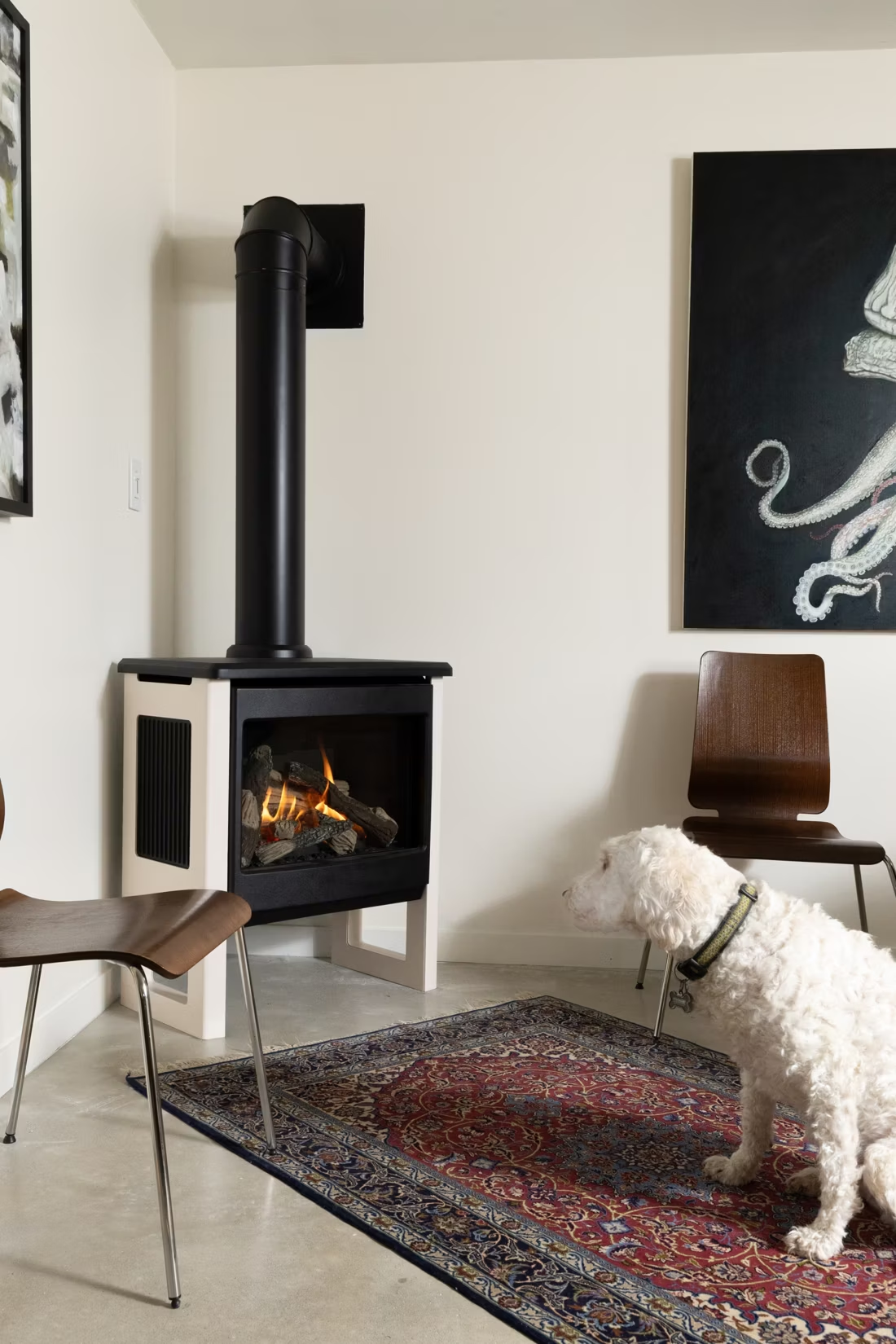
A gas fireplace is a fully built-in unit framed into a wall—the typical choice for new construction in the growing subdivisions around Mont Belvieu and Beach City. A gas insert is sized to slot into an existing masonry firebox, which is the more common project in older Anahuac and Winnie homes that already have a chimney. A gas stove is a freestanding cabinet-style unit that sits on the floor and vents through a wall or ceiling, useful where there's no existing fireplace and no interest in framing one in. Most Chambers County homeowners with an existing fireplace go with an insert; new builds usually go built-in.
Do I need a permit to install a gas fireplace in Chambers County?
Generally yes—a building permit and a gas line permit are standard for new gas fireplace installations, whether you're inside Anahuac, Mont Belvieu, or unincorporated Chambers County, and the gas line work itself has to be done by a licensed gas-fitter regardless of jurisdiction. Most established local hearth retailers handle this coordination as part of the install, pulling permits and scheduling inspections so you're not managing separate trades yourself. It's worth confirming the exact process with your specific municipality or the county permitting office before work starts, since requirements can differ slightly between incorporated towns and the unincorporated county.
Should I get a vented or vent-free gas fireplace?
Vented gas fireplaces (direct-vent or B-vent) pull combustion air from outside and exhaust it back outside through a sealed system—no byproducts released into the room. Vent-free units burn fuel directly into the living space and are legal in Texas within certain room-size and ventilation limits, but they add moisture and combustion byproducts to indoor air. That's a bigger downside in Chambers County than it would be somewhere dry, because Gulf Coast humidity is already high most of the year—adding more moisture indoors isn't doing your home any favors. For that reason, most local dealers steer Chambers County homeowners toward vented direct-vent units, which perform well and don't add to a humidity problem you probably already manage with your AC.
How often should a gas fireplace be serviced in Chambers County?
An annual inspection is the standard recommendation for any gas fireplace or insert—a technician checks the burner, pilot, gas connections, and venting, and cleans the glass and interior. In Chambers County's coastal air, homes closer to Trinity Bay and Galveston Bay can see faster corrosion on venting hardware and exterior components than homes further inland, so annual service is worth keeping on schedule rather than stretching it out. Most local gas appliance technicians charge in the $150-$250 range for a standard annual inspection.
Gas vs. electric fireplace—which is right for my home?
In a mild climate like Chambers County's, both are realistic options, and the choice usually comes down to what you want out of the fireplace. Gas gives you a real flame, genuine heat output, and—with the right ignition system—a unit that still works during a power outage, which matters given the county's hurricane exposure. Electric fireplaces are simpler to install (often no venting or gas line at all), cost less upfront, and work fine as a purely decorative or light-supplemental-heat option in newer builds around Mont Belvieu and Beach City, but they go dark the moment the power does. If backup heat during a storm matters to you, gas is the more resilient choice; if you just want ambiance with minimal installation hassle, electric is worth a look too.
Is my gas fireplace wasting gas?
If it was installed more than 15 years ago, probably. Older gas fireplaces keep a standing pilot light burning all the time, and that little flame can cost a couple hundred dollars a year. Newer models use pilot-on-demand ignition—the pilot lights only when you use the fireplace and goes out when you turn it off.
Why is a fireplace insert so efficient?
An insert does two things: it seals the chimney completely, so you stop losing air you already paid to heat, and it radiates warmth into the room through the firebox and glass. Most add a heat-exchange fan that pulls cool room air underneath, wraps it around the hot firebox, and pushes it back out warm. Your home is more efficient before you've even lit the first fire.
Can a fireplace actually lower my heating bill?
Yes—by creating a comfort zone. A furnace heats every square foot of the house just to warm the one room you're in; a gas fireplace on low burns roughly a sixth of the gas a typical furnace does. Set the furnace around 55–60 degrees as a baseline, then heat the rooms your family actually uses. Families who heat this way commonly save $20–$60 a month.
How much should I budget for a fireplace?
For an average home—covering the fireplace, the vent pipe, and basic installation—a budget between $3,900 and $5,500 gives you a lot of options across wood, gas, and pellet. By the time you add finish work, gas line, and electrical, the average complete installation lands between $5,000 and $12,000 all-in. In a remodel or new build, a good rule is to put about 2.5% of the total project cost toward the fireplace.
Stove and Fireplace Dealers in Chambers County
Listings include WhyFire partner dealers, dealers we have verified as authorized for the brands we recommend, and established local businesses that carry hearth products. Every listing shows which one it is. The ones marked Preferred run on WhyFire's software, so they can show you real pricing and book your appointment right here. No manufacturer pays for placement. How we verify dealers →
Balboa Company - Beaumont
Tri-Supply - Beaumont
The Fire Box Inc.
Find your gas fireplace in Chambers County.
Tell us a bit about your home and we'll match you with a trusted local Chambers County dealer, plus a free Project Guide & Parts List—the exact parts, including the vent kit, for your specific installation.<br/>
Find Your Fireplace →