
Warmth and ambiance without a chimney, right on the Panhandle plains.
From Dimmitt to Nazareth and Hart, Castro County homes are turning to electric fireplaces and inserts for supplemental heat and everyday ambiance—no venting, no gas line, no wood to haul. Find the right unit and connect with a trusted local dealer.
Every Project Starts From One of These Five Situations
Simple, code-light heat for a wide-open county.
Castro County sits on the flat High Plains of the Texas Panhandle—cotton and dairy country, with the county seat of Dimmitt anchoring a population of roughly 5,500 spread across Dimmitt, Nazareth, and Hart. At climate zone 4B with an average winter low of 22°F and about 4,235 heating degree days a year, it's a real winter—enough to want supplemental heat in a den or bedroom—but nowhere near the sustained sub-zero stretches that drive heavy wood-burning demand in places like Fargo, ND or Bismarck, ND. That milder, shorter heating season is a big part of why electric fireplaces fit so naturally here.
There's also a practical reason wood and pellet stoves are a non-factor across the county: this is open farmland, not timberland. The oak, pecan, and mesquite that do grow locally are prized around here for smoking brisket and ribs, not for cordwood supply—there's no real local firewood trade to lean on, and trucking pellets in from Amarillo or Lubbock rarely pencils out for the handful of homes that would use them. Electric fireplaces sidestep all of that. A freestanding or wall-mounted unit plugs into a standard outlet or runs off a dedicated circuit, needs no chimney or vent kit, and installs cleanly in the older farmhouses and manufactured homes common throughout rural Castro County—whether you're on South Plains Electric Cooperative service in the county or Xcel Energy (SPS) service in town.
Three steps. No salesperson until you're ready.
Tell us about your project
Your zip code, your situation, and the fuel you're leaning toward—or let the answers point you to one.
See what's actually available
The brands dealers within 100 miles genuinely carry—real options, never a catalog mirage.
Get your dealer & Project Guide
A trusted local dealer, plus the free Project Guide & Parts List that names every component of the job.
Frequently Asked Questions
How much does an electric fireplace installation cost in Castro County?
Most electric fireplace projects in Castro County run somewhere between $500 and $2,000 all-in. A plug-in freestanding unit or a mantel-style electric fireplace that uses an existing outlet sits at the low end—often just the cost of the unit plus placement. A built-in wall unit or a linear electric fireplace insert that requires a licensed electrician to run a dedicated 240V circuit—common in older Dimmitt and Nazareth farmhouses without extra outlets near the intended location—runs higher. There's no chimney, gas line, or venting work to price in, which is a big part of why electric stays on the lower end of hearth project costs.
Should I get a plug-in electric fireplace or a built-in unit?
A plug-in unit—freestanding, mantel-style, or a simple insert into an existing fireplace opening—is the fastest and cheapest route and works fine on a standard 120V outlet for most models under 1,500 watts. A built-in or wall-recessed electric fireplace looks more like a true fixture but usually needs a dedicated circuit and sometimes minor wall framing, which means an electrician is part of the job. For a lot of Castro County homes, especially older farmhouses with an existing fireplace opening that's never going to see a real fire again, an insert-style plug-in unit into that opening is the simplest upgrade.
Do I need a permit to install an electric fireplace in Castro County?
A plug-in freestanding electric fireplace typically doesn't require any permit—it's no different than plugging in a space heater. If you're having a built-in unit hardwired on a dedicated circuit, that electrical work should be pulled through the county or, if you're inside Dimmitt city limits, through the city, and should be done by a licensed electrician. There's no gas line, chimney, or clearance-to-combustibles inspection to worry about, which keeps the process considerably simpler than a wood or gas installation.
Will my electric fireplace still work during a power outage?
No—this is the one honest trade-off worth knowing before you buy. Electric fireplaces need grid power to run, so during a Panhandle ice storm or wind event that knocks out South Plains Electric Cooperative or Xcel Energy service, the unit goes dark along with everything else in the house. If backup heat during outages matters to you—a real consideration in rural Castro County where restoration times can stretch longer than in town—pair the electric fireplace with a propane heater or generator rather than relying on it as your only cold-weather plan.
Why don't wood or pellet stoves make sense in Castro County?
Castro County is High Plains farmland—flat, open, and largely treeless outside of windbreaks and shelterbelts. The oak, pecan, and mesquite you do find locally get used for smoking meat far more than for heating, and there's no meaningful local firewood trade the way there is in forested parts of the state. Pellets face a similar problem: brands like Forest Energy and Lignetics show up in nearby regional markets, but hauling bagged pellets into Castro County for a handful of stoves rarely makes economic sense. Electric and gas cover the heating need here without asking homeowners to solve a fuel-supply problem the county just isn't set up for.
What's the best electric fireplace for Castro County's climate?
With an average winter low around 22°F and a heating season that's real but not extreme, most Castro County homes do well with a mid-size electric insert or wall unit in the 1,400–1,500 watt range, used as zone heat for a den, living room, or bedroom rather than whole-house heat. If ambiance matters more than actual BTU output—say, a unit for a formal dining room that only sees occasional cold evenings—a lower-wattage model with a strong flame display is a fine choice. A local dealer can walk through your specific room and usage before recommending wattage and placement.
Electric vs. gas fireplace—which is right for my Castro County home?
Gas is the stronger choice if you want real heat output, an option that keeps working with a battery-backup ignition during a power outage, and you're already set up with propane service, which is common on farms and ranches throughout the county. Electric is the stronger choice if you want the simplest, lowest-cost install with no gas line or venting at all, and you're using it mainly for supplemental warmth in one room rather than as a primary heat source. A number of Castro County homeowners end up choosing electric specifically because it avoids gas line work in a detached or older structure where running propane isn't practical.
Where can I find an electric fireplace dealer near Dimmitt, Nazareth, or Hart?
Castro County itself is small enough that dedicated hearth showrooms aren't common in Dimmitt, Nazareth, or Hart—most homeowners end up working with a dealer based in a larger nearby market like Plainview, Lubbock, or Amarillo who covers rural delivery and installation across the county. That's exactly the matching problem Find My Fireplace solves: rather than guessing which retailer actually services your address, we connect you with a trusted local dealer who covers Castro County and knows what installs cleanly in the area's older farmhouses and newer builds alike.
How long does an electric fireplace installation take?
A plug-in freestanding or insert-style unit can often be placed and running the same day it arrives—there's no curing time, no venting to run, and no inspection to schedule. A built-in wall unit that needs a dedicated circuit typically adds a half-day to a full day for the electrical work, depending on whether the electrician has to run new wire through existing walls. Either way, it's a fast project compared to a wood or gas installation, which is one of the reasons electric appeals to homeowners who want the look and warmth without a multi-week project.
Can I put a TV above my fireplace?
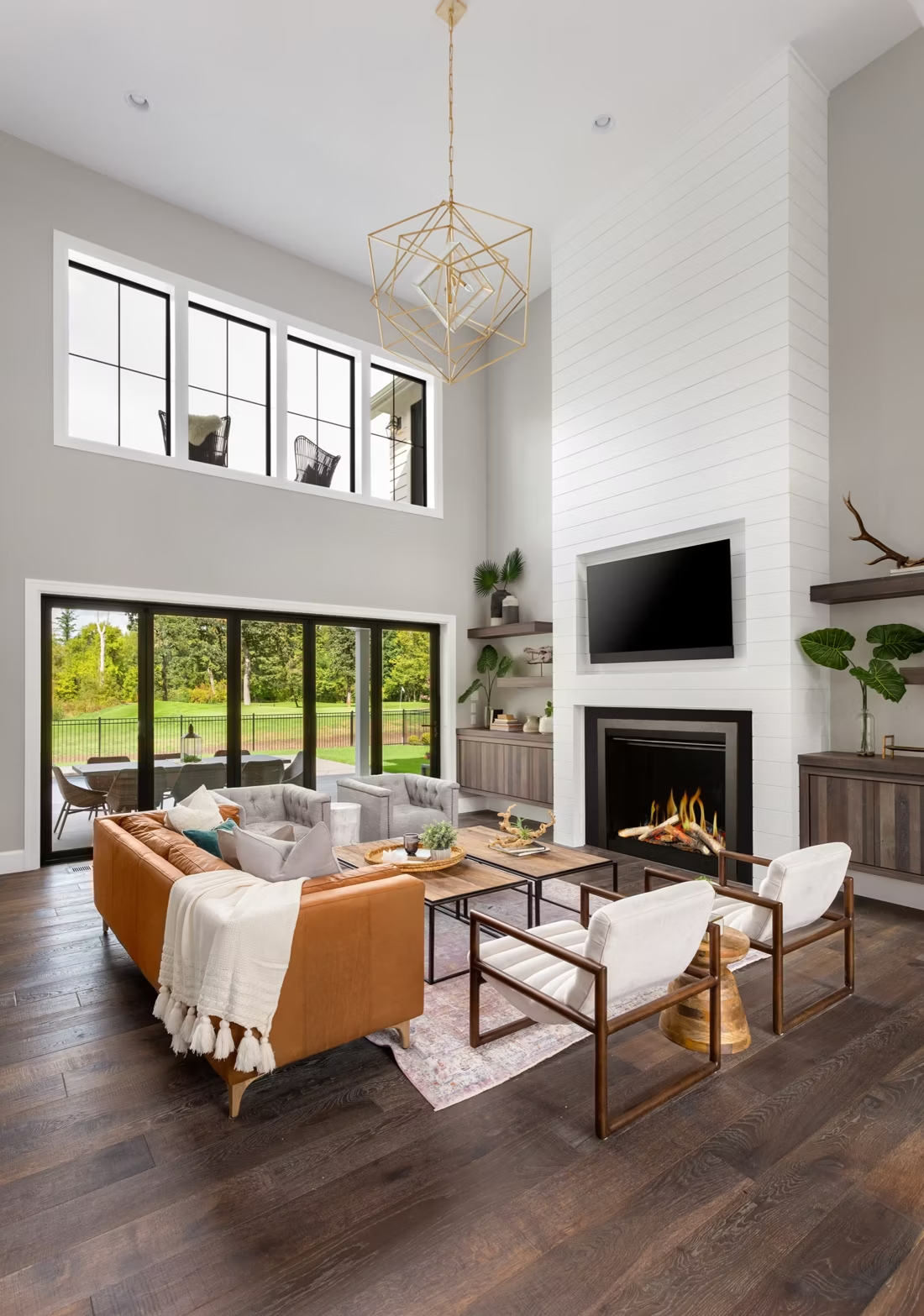
Yes—with an asterisk. Fireplaces are hot and TVs don't like heat. Either put a mantel between them to deflect rising warmth, or choose a fireplace with heat-management technology that creates a cool zone on the wall above—the wall stays around 125 degrees, barely warm, while the room still gets full heat. If you like clean lines and don't want a mantel, heat management is the answer.
Do electric fireplaces actually produce heat?
Yes—most put out around 4,800–5,000 BTUs from a standard outlet, which comfortably warms a bedroom, office, or den as a comfort-zone heater. What they won't do is carry a whole house the way wood, gas, or pellet can. Think of electric as ambiance-first with honest supplemental heat: flames on with no heat in July, flames plus warmth in January.
Can I install a fireplace myself?
If you're putting a fire in your house on purpose, it's best to work with an expert. Unless you're genuinely experienced in framing, gas line, vent pipe, and the national code on clearances to combustibles, have a professional do it—and ideally the same company that sells you the fireplace, so warranty, service, and liability all live under one roof.
Should the dealer who sells my fireplace also install it?
Ideally, yes. A fireplace project involves vent pipe, gas line, electrical, and often tile or stone. Hire three or four separate trades and you own the liability and the game of telephone between them. One company selling and installing means one accountable party, start to finish—ask about factory training, on-time completion records, and what happens if an inspection fails.
Stove and Fireplace Dealers in Castro County
Listings include WhyFire partner dealers, dealers we have verified as authorized for the brands we recommend, and established local businesses that carry hearth products. Every listing shows which one it is. The ones marked Preferred run on WhyFire's software, so they can show you real pricing and book your appointment right here. No manufacturer pays for placement. How we verify dealers →
Boyd's Equipment
West Texas Brick
Reid's Appliance Services
Panhandle Outdoor Living & Fireplaces
Find your electric fireplace in Castro County.
Tell us a bit about your home in Dimmitt, Nazareth, Hart, or elsewhere in the county, and we'll send you a free Project Guide & Parts List—the right electric fireplace or insert for your space, plus a match with a trusted local dealer.
Find Your Fireplace →