
Find the right electric fireplace for your Camp County home.
With winter lows averaging around 32°F and only about 2,700 heating degree days a year, Camp County homes don't need a furnace-grade wood or gas setup to stay comfortable—electric heat and ambiance often do the job. Find the right unit and connect with a trusted local dealer.
Every Project Starts From One of These Five Situations
Mild winters, minimal fuss.
Camp County sits in East Texas's climate zone 3A, where winters are short and generally mild—average lows hover around freezing rather than the deep sub-zero stretches you'd see in a place like Bismarck ND or Duluth MN. At roughly 2,700 heating degree days a year, most Camp County homes need supplemental heat for a handful of cold snaps rather than months of sustained cold. That's exactly the profile where electric fireplaces make the most sense: they add real, controllable warmth to a room without the chimney, venting, or fuel storage that wood and gas installations require.
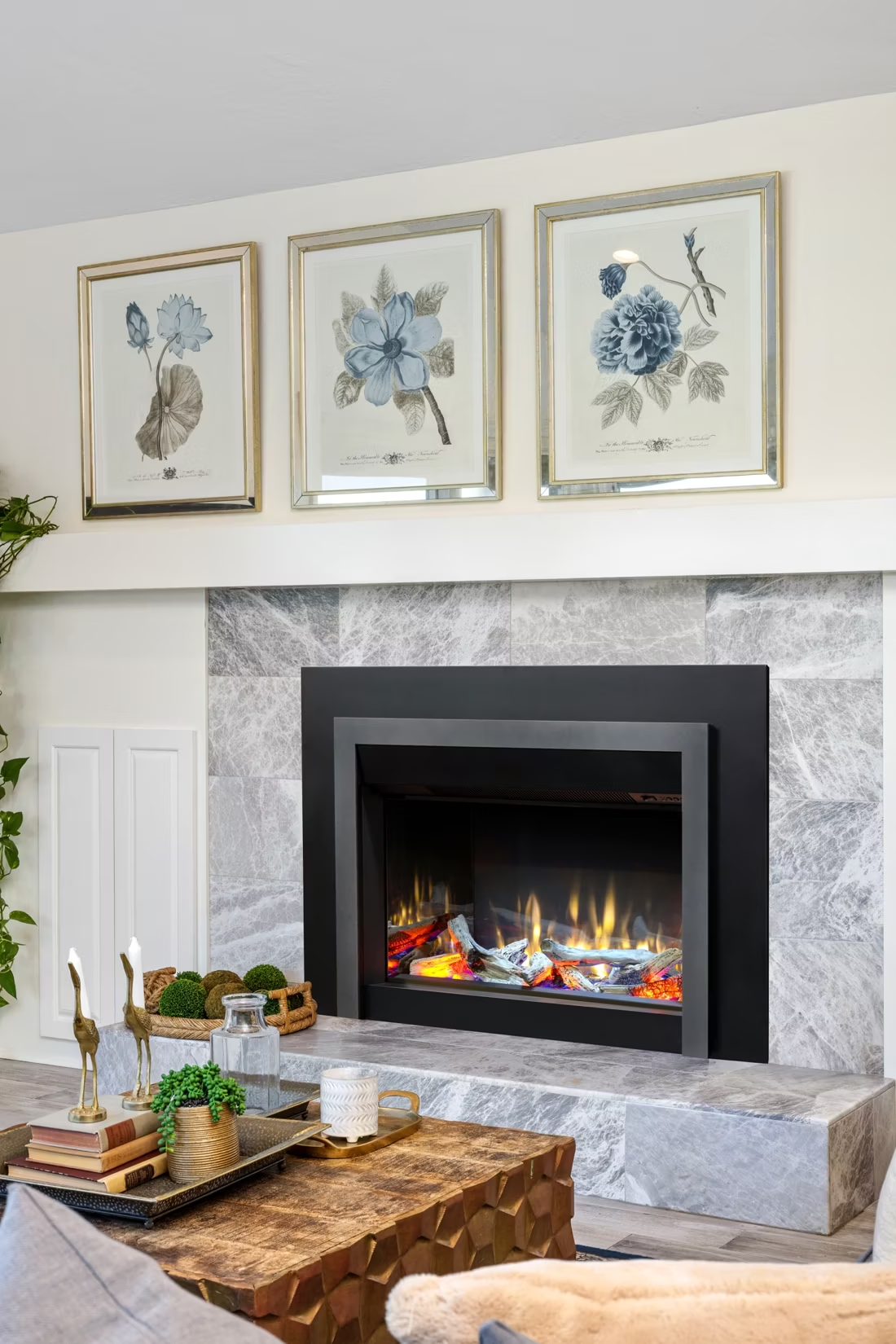
Around Pittsburg and the rest of the county, many homeowners already have central HVAC or window units doing the heavy lifting, so an electric fireplace or insert is chosen for zone heating in a den or bonus room, or simply for the look of a fire without the upkeep of oak, pecan, or mesquite firewood—all of which are common locally for those who do burn wood. Electric units plug into a standard outlet, need no permit or masonry work in most cases, and can be installed in an afternoon by a qualified local dealer, which is part of why they've become a practical choice for a mild-winter county like this one.
Three steps. No salesperson until you're ready.
Tell us about your project
Your zip code, your situation, and the fuel you're leaning toward—or let the answers point you to one.
See what's actually available
The brands dealers within 100 miles genuinely carry—real options, never a catalog mirage.
Get your dealer & Project Guide
A trusted local dealer, plus the free Project Guide & Parts List that names every component of the job.
Frequently Asked Questions
How much does an electric fireplace installation cost in Camp County?
A typical electric fireplace or insert installation in Camp County runs between $400 and $1,200, depending on whether it's a plug-in unit dropped into an existing opening or a built-in model that requires some carpentry and a dedicated circuit. Because Camp County's climate zone 3A winters are mild—average lows around 32°F—most homeowners here are looking for a supplemental or ambiance-focused unit rather than a whole-home heat source, which keeps costs on the lower end of that range. A local dealer can give you a firm number after seeing the space.
Do I need a permit to install an electric fireplace in Camp County?
In most cases, no. Plug-in electric fireplaces and many built-in electric inserts don't require a building permit because there's no venting, gas line, or chimney work involved. If your installation requires a new dedicated electrical circuit, an electrician may pull a simple electrical permit as part of the job. Your local dealer can confirm what, if anything, applies to your specific home and installation.
Will an electric fireplace actually heat my room, or is it just for looks?
Most electric fireplaces sold today include a real heating element—typically a fan-forced or infrared heater rated to comfortably warm a single room of 400 to 1,000 square feet. Given Camp County's mild winter profile (lows averaging around 32°F, about 2,700 heating degree days per year), that's usually plenty for the cold snaps the county actually sees. Homeowners who want the visual of a fire without any heat output can simply run the flame effect with the heater switched off, which most units allow independently.
What's the difference between a plug-in electric fireplace and a built-in electric insert?
A plug-in electric fireplace is a self-contained unit—freestanding, wall-mounted, or designed to slide into an existing fireplace opening—that just needs a standard outlet. A built-in electric insert is designed to be recessed into a wall or existing masonry firebox for a more finished, seamless look, sometimes with custom surrounds or mantels. For Camp County homeowners converting an old wood-burning fireplace that's rarely used, an electric insert is a popular way to get instant ambiance without chimney maintenance. Plug-in units are the simpler, lower-cost route for a room that doesn't have an existing fireplace opening.
Can an electric fireplace replace my wood-burning fireplace?
Yes—this is one of the most common projects local dealers handle in Camp County. An electric insert can be installed directly into an existing wood-burning firebox, and since there's no venting requirement, the chimney can stay capped and unused going forward. This is a popular option for homeowners who like the look of their fireplace but don't want to deal with sourcing oak, pecan, or mesquite firewood, ash cleanup, or chimney sweeping for a fireplace that's mostly used a few evenings a year.
How does electric heat compare to gas or wood for Camp County's climate?
Wood and gas fireplaces are built to produce serious sustained heat output, which matters in places with long, harsh winters—but Camp County's climate zone 3A winters are mild by comparison, averaging around 32°F with roughly 2,702 heating degree days a year. For most homes here, that means wood or gas is overbuilt for what's actually a supplemental heating need in a handful of cold weeks. Electric fireplaces cost less upfront, need no chimney or gas line, and can be operated with a remote or app—trade-offs that make sense in a mild climate. Homeowners who want authentic wood heat, or who cook with wood using local oak or pecan, may still prefer a wood-burning setup, but electric is a legitimate primary choice for most Camp County living spaces.
Do electric fireplaces work during a power outage?
No—electric fireplaces require power to operate, both for the heating element and the flame effect, so they won't function during an outage. This is worth factoring in if you're choosing between fuel types specifically for backup heat during severe weather. In Camp County, ice storms are the more likely outage risk during winter months; homeowners who want a backup heat option that works without power typically pair an electric fireplace for daily use with a wood-burning unit or portable propane heater kept on hand for outages.
How much does it cost to run an electric fireplace?
Most electric fireplace heating elements draw around 1,500 watts on the highest setting, which typically costs somewhere in the range of 15 to 20 cents per hour to run depending on local electricity rates. Since Camp County's mild winters mean the heater is only needed for a limited number of cold days each year, and many homeowners run the flame effect without heat most of the time for ambiance, total seasonal operating cost tends to stay modest compared to running a wood stove or gas insert for the same number of hours.
Electric vs. wood—which is right for my Camp County home?
Wood offers real radiant heat, the option to burn locally available oak, pecan, or mesquite, and a fireplace that keeps working if the power goes out—but it also means chimney maintenance, ash cleanup, and sourcing firewood. Electric offers instant on-off convenience, no venting or fuel storage, and lower installation cost, but no heat during a power outage and less overall heat output. For Camp County's mild climate zone 3A winters, electric is a practical primary choice for most living spaces, while wood remains appealing to homeowners who value self-sufficiency or already burn wood for other reasons. A local dealer can walk through both options for your specific room.
Can I put a TV above my fireplace?
Yes—with an asterisk. Fireplaces are hot and TVs don't like heat. Either put a mantel between them to deflect rising warmth, or choose a fireplace with heat-management technology that creates a cool zone on the wall above—the wall stays around 125 degrees, barely warm, while the room still gets full heat. If you like clean lines and don't want a mantel, heat management is the answer.
Do electric fireplaces actually produce heat?
Yes—most put out around 4,800–5,000 BTUs from a standard outlet, which comfortably warms a bedroom, office, or den as a comfort-zone heater. What they won't do is carry a whole house the way wood, gas, or pellet can. Think of electric as ambiance-first with honest supplemental heat: flames on with no heat in July, flames plus warmth in January.
What is an in-home preview and do I need one?
It's a visit where a hearth professional measures your space, confirms the model you picked actually works in your home, and walks the specs—framing, gas line, venting, finish work—before anything is ordered. Some details you just can't know until you see the house. Never make a down payment without one; it's the single most-skipped step that burns buyers.
Can I install a fireplace myself?
If you're putting a fire in your house on purpose, it's best to work with an expert. Unless you're genuinely experienced in framing, gas line, vent pipe, and the national code on clearances to combustibles, have a professional do it—and ideally the same company that sells you the fireplace, so warranty, service, and liability all live under one roof.
Stove and Fireplace Dealers in Camp County
Listings include WhyFire partner dealers, dealers we have verified as authorized for the brands we recommend, and established local businesses that carry hearth products. Every listing shows which one it is. The ones marked Preferred run on WhyFire's software, so they can show you real pricing and book your appointment right here. No manufacturer pays for placement. How we verify dealers →
Fireside Corner
Youngs Brothers Buck Stove
Find your electric fireplace in Camp County.
Tell us a bit about your home and we'll match you with the right electric fireplace or insert, plus a free Project Guide & Parts List with the exact parts and a trusted local dealer to install them.
Find Your Fireplace →