
Find the right electric fireplace for your Caldwell County home.
Mild Central Texas winters mean electric heat covers most Caldwell County homes without a chimney, gas line, or firewood pile. Get matched with a trusted local dealer who installs it right.
Every Project Starts From One of These Five Situations
A climate that doesn't ask much of a heater.
Caldwell County sits in Climate Zone 2A with an average winter low around 40°F and a very light winter heating season—a fraction of what a place like Fargo, ND or Duluth, MN sees in a single month. Homes here rarely need a heating appliance that can hold a fire overnight against sub-zero cold. What most Lockhart, Luling, and Martindale homeowners actually want is ambiance and supplemental warmth for the handful of genuinely cold nights each winter, plus a clean look that doesn't require venting, gas service, or a wood supply.
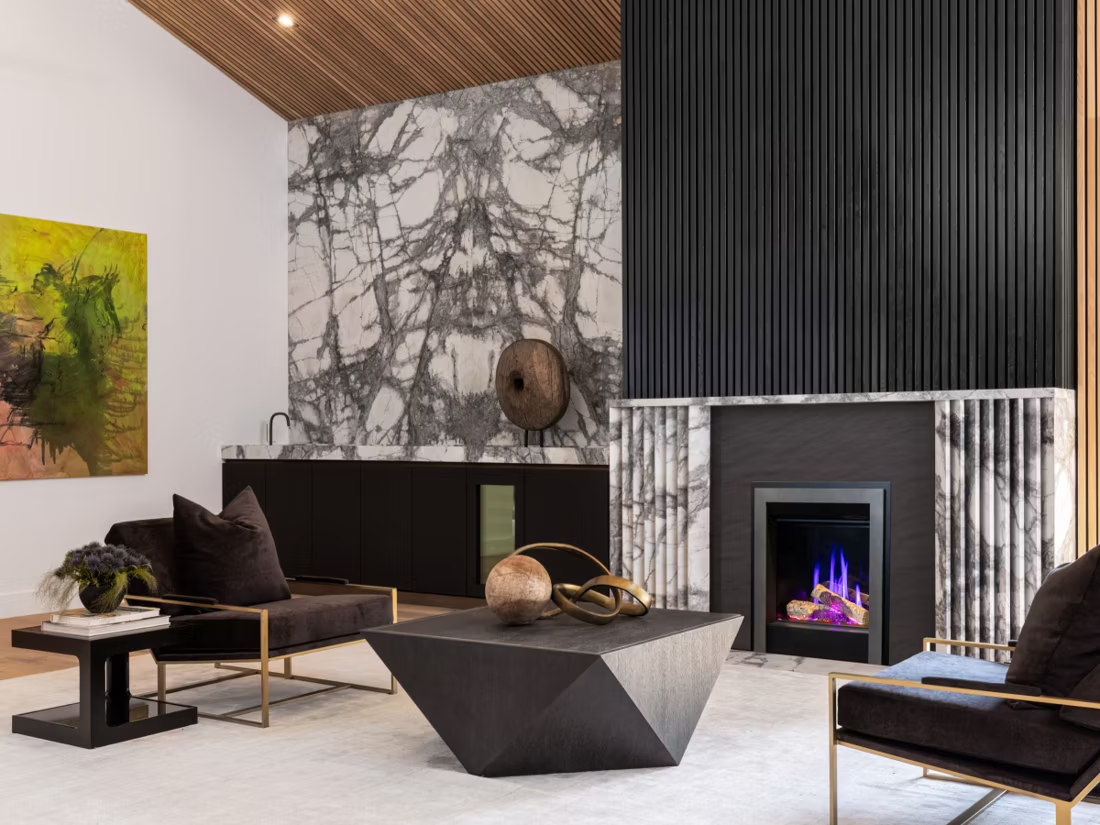
That's exactly where electric fireplaces fit. There's no permit hassle, no chimney to maintain, and no combustion byproducts to vent—an electric insert or wall unit plugs into a standard outlet (or a dedicated 240V circuit for larger units) and runs on demand. For a county where oak, pecan, and mesquite are the local firewood staples but wood heat is more tradition than necessity given the mild climate, electric offers a low-commitment way to add a fireplace focal point to a living room, bedroom, or den without touching the roofline or the gas meter.
Three steps. No salesperson until you're ready.
Tell us about your project
Your zip code, your situation, and the fuel you're leaning toward—or let the answers point you to one.
See what's actually available
The brands dealers within 100 miles genuinely carry—real options, never a catalog mirage.
Get your dealer & Project Guide
A trusted local dealer, plus the free Project Guide & Parts List that names every component of the job.
Frequently Asked Questions
How much does an electric fireplace installation cost in Caldwell County?
Most electric fireplace installations in Caldwell County run $400 to $1,200. A plug-in insert or wall-mounted unit that uses an existing outlet sits at the low end. Larger built-in units, or installs that require an electrician to add a dedicated 240V circuit, land at the higher end. Because there's no venting, gas line, or masonry work involved, electric is consistently the least expensive fireplace option available to homeowners in Lockhart, Luling, and the surrounding county.
Do I need a permit to install an electric fireplace in Caldwell County?
Typically no, for a standard plug-in insert or mantel unit—it's treated like any other appliance. If your installation requires new electrical wiring, such as adding a dedicated circuit for a larger built-in unit, an electrician will pull an electrical permit as part of that work. This is far simpler than the permitting required for wood or gas installations, which is part of why electric appeals to homeowners who want a fireplace without the paperwork.
Will an electric fireplace actually produce enough heat for my Caldwell County home?
For supplemental heat, yes—most units put out 4,000 to 5,000 BTUs, enough to warm a single room comfortably. Given that Caldwell County only sees a very light winter heating season and winter lows average around 40°F, most homeowners here aren't asking an electric fireplace to be their primary heat source anyway. It's meant to take the edge off a cold January night in a den or bedroom while your central HVAC handles the rest of the house. If you're looking for whole-home heat, a gas or wood option sized for the space would be a better fit—a local dealer can walk you through the tradeoffs.
What's the difference between an electric insert and a built-in electric fireplace?
An electric insert is designed to drop into an existing fireplace opening—useful if a Caldwell County home has an old wood-burning fireplace that's rarely used and you want the look of a fire without the ash and upkeep. A built-in electric fireplace is framed into a wall during construction or remodel, similar to how a gas fireplace would be installed, and often includes a mantel surround. Wall-mounted units are a third option—they hang like a large flat-screen and need only a nearby outlet. A local dealer can help match the format to your existing opening or wall layout.
Does Caldwell County get cold enough to need any kind of fireplace heat?
Winters here are mild by national standards—average lows sit around 40°F, and hard freezes are the exception rather than the rule. That said, Central Texas has seen genuine cold snaps in recent years, including extended freezes that stressed the electric grid. Many Caldwell County homeowners want a fireplace for both fireside ambiance most of the season and a reliable supplemental heat source for the occasional harder freeze. An electric unit handles the ambiance and day-to-day supplemental warmth well; homeowners specifically worried about grid-outage backup heat during a severe freeze sometimes pair it with a wood or propane option that doesn't depend on power.
Will my electric fireplace work during a power outage?
No—electric fireplaces require power to run the heater and, in most models, the flame-effect display. This is worth flagging directly for Caldwell County homeowners, since the region isn't immune to grid stress during winter freeze events. If backup heat during an outage is a priority for your household, a wood stove or a gas unit with battery-backup ignition (like models from Valor that self-generate power off the pilot's thermocouple) would serve that purpose better. An electric fireplace is best thought of as a daily-use ambiance and supplemental-heat appliance, not an emergency heat source.
Can I put an electric fireplace on any wall in my house?
Nearly always, yes—that's one of the format's advantages over wood or gas. As long as there's an accessible outlet (or an electrician can run one), a wall-mounted or built-in electric unit can go virtually anywhere: a bedroom, a home office, an apartment, or a rental where gas and wood options aren't allowed. There's no concern about combustible clearances to a chimney flue or makeup air requirements the way there is with a real combustion appliance. A local dealer can confirm clearance-to-combustibles specs for the specific model you're considering.
How do electric fireplace running costs compare to gas or wood in Caldwell County?
Electric fireplaces are inexpensive to install but typically cost more per BTU to run than gas or wood, since electricity is generally the priciest way to generate heat. For a county with as light a winter heating season as Caldwell County, that difference matters less in practice—you're running the unit occasionally for a cold evening, not for months of primary heat. If you were planning to run supplemental heat constantly through a Central Texas winter, gas would be the more economical choice long-term; for occasional use and ambiance, the higher per-hour electric cost is a minor factor.
Electric vs. gas fireplace—which is right for my Caldwell County home?
Gas offers real heat output, no need for outlet access at every location, and the option to run during a power outage with the right ignition system—but it requires either natural gas service or a propane tank, plus venting and a gas line permit. Electric skips all of that: no venting, no gas line, and it can go anywhere there's an outlet, but it depends entirely on grid power and costs more per BTU to run. For most Caldwell County homes with mild winters and modest heating needs, electric is the simpler, lower-cost install for ambiance and occasional supplemental heat. For a primary living space where you want real warmth on demand, gas is usually the better long-term fit. A local dealer can help you weigh both against your specific home.
Can I put a TV above my fireplace?
Yes—with an asterisk. Fireplaces are hot and TVs don't like heat. Either put a mantel between them to deflect rising warmth, or choose a fireplace with heat-management technology that creates a cool zone on the wall above—the wall stays around 125 degrees, barely warm, while the room still gets full heat. If you like clean lines and don't want a mantel, heat management is the answer.
Does an electric fireplace need a vent or chimney?
No—that's its superpower. An electric fireplace needs a wall and an outlet, period. No vent pipe, no gas line, no clearances to design around, which is why it works in bedrooms, offices, apartments, and walls where venting a gas or wood unit would be impractical or impossible. Installation is typically the simplest and least expensive of any fireplace type.
Does a fireplace add value to my home?
On average, a fireplace adds back to the home about the same amount you spent installing it. Add the monthly savings from heating the rooms you actually use instead of the whole house—often hundreds of dollars a year—and the value case is strong before you even count what a fire does for how your family uses the room.
Can a fireplace actually lower my heating bill?
Yes—by creating a comfort zone. A furnace heats every square foot of the house just to warm the one room you're in; a gas fireplace on low burns roughly a sixth of the gas a typical furnace does. Set the furnace around 55–60 degrees as a baseline, then heat the rooms your family actually uses. Families who heat this way commonly save $20–$60 a month.
Stove and Fireplace Dealers in Caldwell County
Listings include WhyFire partner dealers, dealers we have verified as authorized for the brands we recommend, and established local businesses that carry hearth products. Every listing shows which one it is. The ones marked Preferred run on WhyFire's software, so they can show you real pricing and book your appointment right here. No manufacturer pays for placement. How we verify dealers →
Crafted Flames
Tri-Supply - Austin
EarthCore Industries
Backyard & Patio Store - Austin
Find your electric fireplace in Caldwell County.
Tell us a bit about your home and we'll match you with the right electric fireplace or insert, plus a free Project Guide & Parts List and a trusted local dealer to install it.
Find Your Fireplace →