
Clean, instant ambiance for Baytown's mild winters.
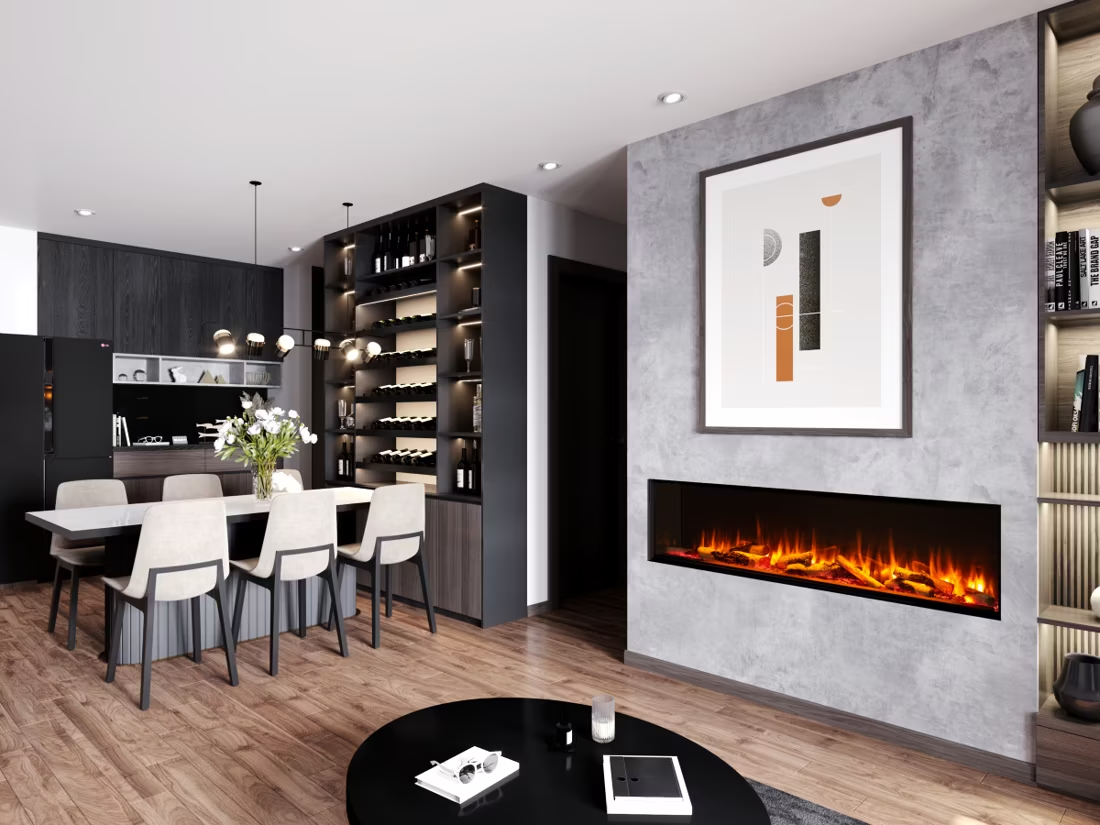
With winter lows averaging 41°F along the Gulf Coast, Baytown homes rarely need heavy-duty heat. Electric fireplaces deliver the look and warmth people actually want here—no chimney, no gas line, no venting.
Every Project Starts From One of These Five Situations
Low heating demand, high style demand.
Baytown sits at 21 feet of elevation on the Houston Ship Channel, in climate zone 2A, where winter lows average 41°F and the whole heating season is short and mild. Compare that to a place like Duluth, MN, which has a long, deep-cold winter, and it's clear why serious wood or pellet heating systems just aren't part of the local building culture here—homes near the Exxon Mobil refinery and throughout Harris County are built to handle Gulf Coast humidity and heat, not sustained sub-freezing cold.
That's exactly where electric fireplaces fit. They don't need a flue, a gas line, or combustion air—a built-in unit plugs into a standard circuit or a dedicated 120V/240V line, and a plug-in insert just needs an outlet. Electric service in the Baytown area comes through CenterPoint Energy's distribution grid, with Entergy Texas and San Bernard Electric Cooperative serving parts of the surrounding county, and residential rates in the area run roughly $0.1366–$0.1416 per kWh under Texas's deregulated retail market. For a house that needs ambiance and light supplemental warmth ten or fifteen nights a year, not a primary heat source, electric is often the simplest and most sensible answer.
Three steps. No salesperson until you're ready.
Tell us about your project
Your zip code, your situation, and the fuel you're leaning toward—or let the answers point you to one.
See what's actually available
The brands dealers within 100 miles genuinely carry—real options, never a catalog mirage.
Get your dealer & Project Guide
A trusted local dealer, plus the free Project Guide & Parts List that names every component of the job.
Frequently Asked Questions
How much does an electric fireplace installation cost in Baytown?
A plug-in electric insert or freestanding stove typically runs $300–$1,200 installed, since most just need an existing outlet and a hearth pad or media cabinet. A built-in wall unit with a dedicated 240V circuit, drywall framing, and a mantel surround runs higher, usually $1,500–$4,500 depending on the finish work. Because there's no venting or gas line to run, electric installs in Baytown are almost always faster and cheaper than a comparable gas or wood project—a local dealer can usually give you a firm number after seeing the wall and your electrical panel.
What's the difference between a plug-in electric insert and a built-in electric fireplace?
A plug-in insert drops into an existing fireplace opening, media wall cutout, or TV stand and runs off a standard outlet—it's the easiest option for renters or anyone who wants flexibility to move it later. A built-in electric fireplace is framed into a wall like a real fireplace, often wired to its own 240V circuit for higher heat output, and finished with tile, shiplap, or a mantel surround. For Baytown homes doing a media wall or fireplace remodel, built-in units from brands like Dimplex, Napoleon, or Touchstone are popular because they read as a permanent architectural feature rather than an appliance.
Do I need a permit to install an electric fireplace in Baytown?
A simple plug-in unit generally doesn't require a permit since there's no new wiring, venting, or gas work involved. If you're adding a built-in unit that needs a new circuit or an electrician running a dedicated 240V line, that electrical work typically requires a permit through the City of Baytown's Building Services Division or, for homes outside city limits, Harris County Permits. Most local dealers coordinate the licensed electrician and permit paperwork as part of the installation, so you're not left tracking down inspections yourself.
Which electric utility serves my home in Baytown?
CenterPoint Energy owns and maintains most of the electric distribution grid in and around Baytown, while Entergy Texas serves portions of the surrounding area and San Bernard Electric Cooperative covers some rural pockets of Harris County. Because Texas has a deregulated retail electricity market, your actual bill comes from a retail provider you choose, not directly from the utility that owns the wires—but either way, adding a fireplace that draws 1,500 watts on high is a minor load increase most homes handle without any panel upgrade.
Is an electric fireplace enough heat for a Baytown winter?
For most homes here, yes. With winter lows averaging 41°F and only a short, mild winter heating season—a fraction of what a Northern city like Bismarck, ND or Buffalo, NY sees—Baytown homes rely on central HVAC for the handful of genuinely cold nights and want a fireplace mainly for ambiance and a boost of radiant warmth in one room. A 1,500-watt electric unit can comfortably heat a 400–1,000 sq ft space, which covers a living room or bedroom on the coldest nights without needing to run supplemental heat throughout the whole house.
Why don't more Baytown homes use wood-burning fireplaces?
Wood heat isn't really part of the local building culture along the Gulf Coast, and for good reason—with winter lows averaging 41°F, sustained wood burning for heat isn't necessary, and the region's humidity makes storing and seasoning firewood more of a hassle than it's worth. Oak, pecan, and mesquite are common regionally, but mostly for smoking and grilling rather than home heating. A small number of Baytown homeowners still install a wood-burning fireplace for the look and occasional use, but most who want a traditional fireplace experience without the maintenance opt for electric instead.
Electric vs. gas fireplace—which is right for my Baytown home?
Gas fireplaces are common in the area and give you a real flame with strong heat output, but they require a gas line and venting work, which adds cost and complexity to the install. Electric fireplaces skip both of those—no gas line, no flue, no combustion byproducts—and can be installed almost anywhere there's an outlet or a standard circuit. For a primary living space where you want a strong, realistic-looking flame and don't mind the extra install complexity, gas is worth considering. For secondary rooms, rentals, media walls, or anyone who wants ambiance with minimal installation hassle, electric is usually the simpler, less expensive choice.
How much does it cost to run an electric fireplace in Baytown?
Most electric fireplaces draw about 1,500 watts on the heat setting and a fraction of that with the flame effect only and heat turned off. At Baytown's residential rates of roughly $0.1366–$0.1416 per kWh, running the heater for 4 hours a night costs somewhere around 80 cents to a dollar. Running the flame effect alone, without heat, costs only a few cents an hour—which is one reason electric units are popular here for ambiance on mild evenings when you don't want or need the heat.
What features should I look for in an electric fireplace for a Gulf Coast climate?
Look for a unit with adjustable flame-only mode so you can run it for looks without adding heat during Baytown's long warm season—most quality units from Dimplex, Napoleon, and Touchstone offer this as standard. Because of the area's humidity, it's also worth choosing a unit rated for the space (some built-ins are designed for damp or semi-outdoor installs, useful for covered patios) and confirming the heater has a real thermostat rather than just high/low settings, so it doesn't overwork on the handful of genuinely cold nights each winter. A local dealer can match features to your specific room and wall setup.
Can I put a TV above my fireplace?
Yes—with an asterisk. Fireplaces are hot and TVs don't like heat. Either put a mantel between them to deflect rising warmth, or choose a fireplace with heat-management technology that creates a cool zone on the wall above—the wall stays around 125 degrees, barely warm, while the room still gets full heat. If you like clean lines and don't want a mantel, heat management is the answer.
Does an electric fireplace need a vent or chimney?
No—that's its superpower. An electric fireplace needs a wall and an outlet, period. No vent pipe, no gas line, no clearances to design around, which is why it works in bedrooms, offices, apartments, and walls where venting a gas or wood unit would be impractical or impossible. Installation is typically the simplest and least expensive of any fireplace type.
Does a fireplace add value to my home?
On average, a fireplace adds back to the home about the same amount you spent installing it. Add the monthly savings from heating the rooms you actually use instead of the whole house—often hundreds of dollars a year—and the value case is strong before you even count what a fire does for how your family uses the room.
Can I install a fireplace myself?
If you're putting a fire in your house on purpose, it's best to work with an expert. Unless you're genuinely experienced in framing, gas line, vent pipe, and the national code on clearances to combustibles, have a professional do it—and ideally the same company that sells you the fireplace, so warranty, service, and liability all live under one roof.
Nearby Dealers
Hearth shops serving Baytown and the surrounding area.
All Thingz U Need Inc
Gas Equipment Company - Houston
Electric Service in Baytown
An electric fireplace's heater draws about 1,500 watts—pennies per hour at local rates.
Entergy Texas Inc.
San Bernard Electric Coop, Inc
Find your electric fireplace in Baytown.
Tell us a bit about your home and we'll put together a free Project Guide & Parts List—the exact unit, wiring notes, and a trusted local Baytown dealer who can install it right.
Find Your Fireplace →