
Add real fireplace warmth, without the chimney.
For Seymour and the ranch and farm communities across Baylor County, an electric fireplace adds ambiance and supplemental zone heat with no venting, no gas line, and no wood to split. Find the right unit and connect with a trusted local dealer.
Every Project Starts From One of These Five Situations
A mild-winter county where a plug is often all you need.
Baylor County sits out on the Rolling Plains of West Texas, with Seymour as the county seat and a population under 3,000 spread across a lot of open ground. Winters here run mild by national standards—an average low around 28°F and roughly 3,040 heating degree days, a fraction of what a place like Bismarck, ND or Duluth, MN sees in a single season. That means most Baylor County homes don't need a whole-house wood or gas burner to get through winter; they need something that takes the edge off a cold front and looks good doing it.
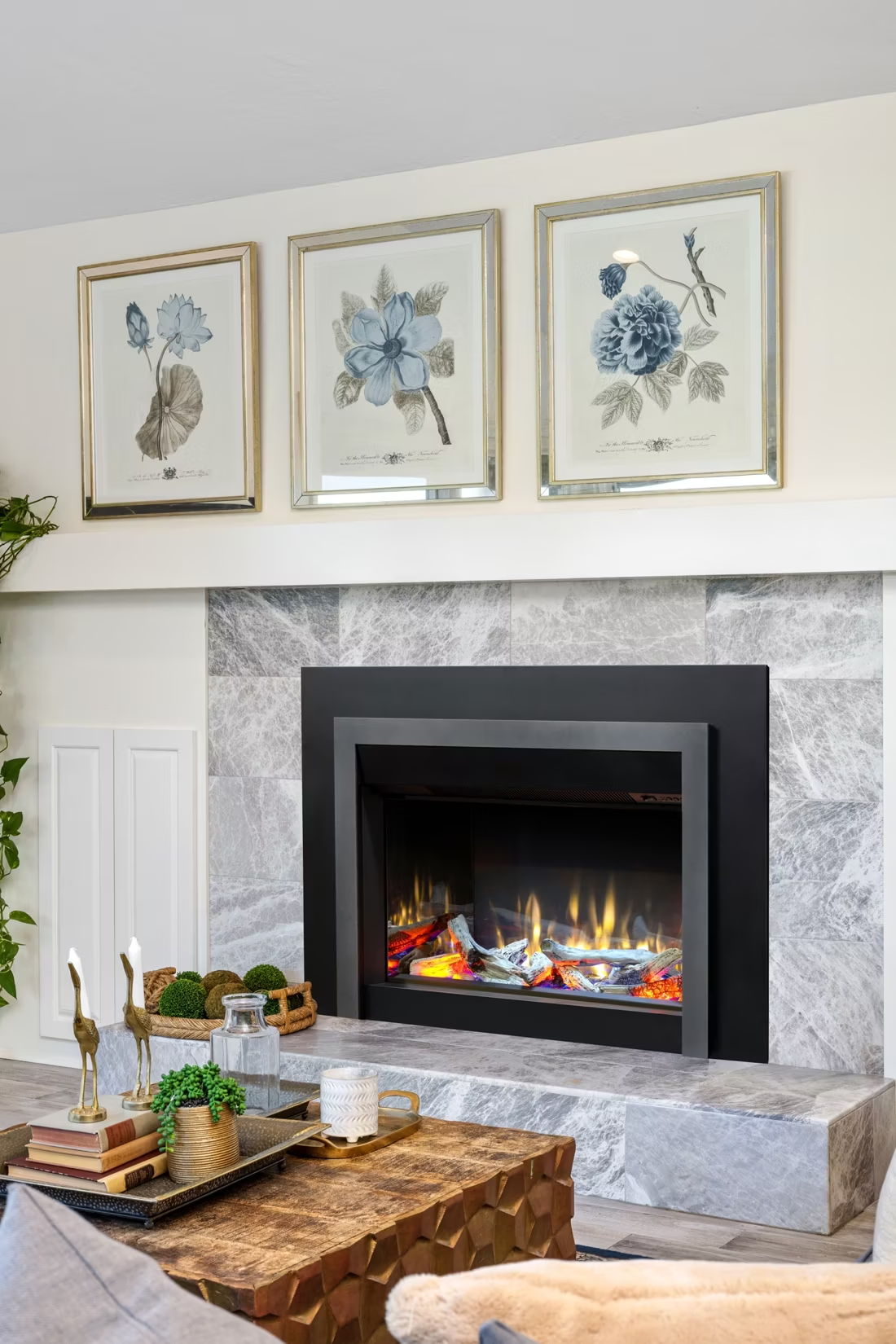
That's exactly the gap an electric fireplace fills. Plug-in inserts and built-in linear units install into an existing opening or a stud wall in an afternoon, with no masonry, no flue, and no combustion byproducts to vent outside—which matters in a county with a lot of older farmhouses, manufactured homes, and rentals where cutting a new chimney through the roof isn't realistic. Oak, pecan, and mesquite still fuel plenty of wood-burning stoves and outdoor pits around the county, but for a bedroom, a den, or a mobile home that just needs supplemental warmth on a January blue norther, electric is often the simplest and least invasive option a local dealer will recommend.
Three steps. No salesperson until you're ready.
Tell us about your project
Your zip code, your situation, and the fuel you're leaning toward—or let the answers point you to one.
See what's actually available
The brands dealers within 100 miles genuinely carry—real options, never a catalog mirage.
Get your dealer & Project Guide
A trusted local dealer, plus the free Project Guide & Parts List that names every component of the job.
Frequently Asked Questions
How much does an electric fireplace cost to install in Baylor County?
A basic plug-in electric insert or freestanding unit typically runs $150 to $600 installed, since it just needs a standard household outlet—no permit, no electrician required in most cases. A built-in linear electric fireplace or a larger unit that needs its own dedicated 20-amp circuit runs higher, generally $1,200 to $3,500 once a licensed electrician runs new wiring and the surround or mantel work is finished. For most Baylor County homes—including manufactured homes and older farmhouses around Seymour—the plug-in route is the faster and cheaper path to warmth in a single room.
Do I need a permit to install an electric fireplace in Baylor County?
There's no burn permit involved since there's no combustion, no chimney, and no flue—that's one of the appeals of electric in a county without natural gas infrastructure in most areas. If your installation involves adding a new dedicated circuit or breaker for a larger built-in unit, that electrical work typically does require a permit through the county building department in Seymour. A plug-in unit that uses an existing outlet generally doesn't trigger any permit at all. Your local dealer can tell you which category your project falls into before you buy.
What size electric fireplace do I need for my home?
Electric fireplaces are rated in BTUs for supplemental heat, but sizing in Baylor County is really about the room, not the whole house—most electric units are built to warm 400 to 1,000 square feet, which covers a bedroom, living room, or den easily. Given the county's mild winter lows (averaging around 28°F) and just over 3,000 heating degree days a year, an electric unit rarely needs to carry a whole home the way a wood stove would in a harsher climate. A local dealer will size the unit to the specific room, factoring in ceiling height and how drafty an older farmhouse or manufactured home tends to be.
Will an electric fireplace keep my home warm during a hard freeze or a power outage?
An electric fireplace will comfortably take the chill off during a typical Rolling Plains cold front, but it's worth being direct about the tradeoff: electric units need continuous power to run, so they offer zero backup heat during an outage. Baylor County has seen extended winter power disruptions during severe ice events, and a household relying solely on electric heat has no fallback in that scenario. Many local homeowners pair an electric fireplace for everyday convenience and ambiance with a wood stove or fireplace as backup—oak and mesquite are both common, easy-to-source firewood in the area—precisely so they're not without heat if the grid goes down.
What's the difference between an electric fireplace, insert, and log set?
An electric fireplace is typically a self-contained built-in or wall-mounted unit designed for new construction or a remodel. An electric insert is sized to slot into an existing masonry or zero-clearance firebox, letting you convert an old wood-burning fireplace to electric without touching the chimney (or in some cases, capping it). An electric log set is the simplest option—a plug-in log insert that drops into an existing firebox purely for visual flame effect, usually with modest supplemental heat. For Baylor County homes with an existing but rarely-used wood fireplace, an insert is often the easiest upgrade; for new rooms or additions, a built-in unit is more common.
How much does it cost to run an electric fireplace?
Most electric fireplaces draw around 1,500 watts on the heat setting, which works out to roughly 15 to 20 cents an hour of runtime at typical residential electric rates through the utility serving Baylor County—considerably cheaper per hour than propane and comparable to running a space heater. Flame-only mode with the heater off uses a fraction of that. Because Baylor County's mild winters mean most households only need supplemental heat rather than round-the-clock operation, actual monthly cost impact tends to be modest compared to a home relying on electric heat as its primary source.
Electric vs. wood—which is right for my Baylor County home?
Wood offers real backup heat during outages, the lowest ongoing fuel cost if you're cutting or sourcing your own oak, pecan, or mesquite, and the kind of radiant heat that carries a drafty older home through a cold front. Electric offers instant on-off convenience, zero maintenance, no chimney or clearances to worry about, and an easy install in manufactured homes or rentals where venting isn't practical. Given Baylor County's relatively mild 3,040 heating degree days, a lot of households here don't need wood as primary heat the way a colder climate would—but many still keep a wood-burning option specifically as a hedge against winter power outages, and layer in electric for everyday convenience.
Electric vs. pellet stove—which makes more sense here?
Pellet stoves, running bagged pellets from brands like Forest Energy or Lignetics, burn cleaner than cordwood and offer more consistent heat output than a basic electric unit—but they still require electricity to run the auger and blower, and they need a proper vent through an exterior wall or roof. Electric fireplaces skip the venting and the pellet bags entirely, plugging straight into an outlet or a dedicated circuit. For a Baylor County home that mainly wants ambiance and light supplemental warmth in one room, electric is usually the simpler and cheaper path; pellet makes more sense if you want a heavier, longer-duration heat source and are willing to manage fuel deliveries.
Can I install an electric fireplace myself?
A basic plug-in unit—freestanding, wall-mounted, or a log set insert—can often be installed by a handy homeowner in an afternoon, since it just needs a standard outlet and a stable surface or wall mount. A built-in linear unit that requires a new circuit, in-wall wiring, or finish carpentry around a mantel is a different project, and that electrical work should go through a licensed electrician regardless of whether a permit is required. A local dealer can tell you honestly which category your planned installation falls into before you buy anything.
Can I put a TV above my fireplace?
Yes—with an asterisk. Fireplaces are hot and TVs don't like heat. Either put a mantel between them to deflect rising warmth, or choose a fireplace with heat-management technology that creates a cool zone on the wall above—the wall stays around 125 degrees, barely warm, while the room still gets full heat. If you like clean lines and don't want a mantel, heat management is the answer.
Do electric fireplaces actually produce heat?
Yes—most put out around 4,800–5,000 BTUs from a standard outlet, which comfortably warms a bedroom, office, or den as a comfort-zone heater. What they won't do is carry a whole house the way wood, gas, or pellet can. Think of electric as ambiance-first with honest supplemental heat: flames on with no heat in July, flames plus warmth in January.
What is an in-home preview and do I need one?
It's a visit where a hearth professional measures your space, confirms the model you picked actually works in your home, and walks the specs—framing, gas line, venting, finish work—before anything is ordered. Some details you just can't know until you see the house. Never make a down payment without one; it's the single most-skipped step that burns buyers.
Can a fireplace actually lower my heating bill?
Yes—by creating a comfort zone. A furnace heats every square foot of the house just to warm the one room you're in; a gas fireplace on low burns roughly a sixth of the gas a typical furnace does. Set the furnace around 55–60 degrees as a baseline, then heat the rooms your family actually uses. Families who heat this way commonly save $20–$60 a month.
Stove and Fireplace Dealers in Baylor County
Listings include WhyFire partner dealers, dealers we have verified as authorized for the brands we recommend, and established local businesses that carry hearth products. Every listing shows which one it is. The ones marked Preferred run on WhyFire's software, so they can show you real pricing and book your appointment right here. No manufacturer pays for placement. How we verify dealers →
The Ember Shop, Inc.
Home Escapes & More
Find your electric fireplace in Baylor County.
Tell us a bit about your home and we'll put together a free Project Guide & Parts List for your Baylor County electric fireplace project, and match you with a trusted local dealer to install it.
Find Your Fireplace →