
Find the right gas fireplace for your Bandera County ranch home.
From the Cowboy Capital of the World to the cabins ringing Medina Lake, gas fireplaces bring instant ambiance and backup warmth to Hill Country homes—without the wood-hauling. Find the right unit and connect with a trusted local dealer.
Every Project Starts From One of These Five Situations
Ambiance heat for Hill Country ranch homes.
Bandera County sits in the Texas Hill Country west of San Antonio, with a year-round population of just over 7,000 spread thin across Bandera, Pipe Creek, Medina, Lakehills, Tarpley, and Utopia. Winters here are mild by any national standard—an average low of 37°F and only about 1,916 heating degree days a year, a fraction of what a place like Duluth, MN racks up in a single hard winter. That means a gas fireplace in Bandera County is rarely doing survival-level work. It's doing ambiance, evening warmth on a limestone hearth, and backup heat for the ice storms that do occasionally sweep through the Hill Country, including the multi-day outages many county residents remember from Winter Storm Uri in February 2021.
Bandera County is rural enough that municipal natural gas mains don't reach most properties, so propane is the dominant fuel for gas fireplaces and inserts here—delivered and tanked by regional Hill Country suppliers rather than piped from a utility. That's a normal setup for the county's ranch homes, lake cabins around Medina Lake, and the growing number of short-term rental cabins near Lost Maples State Natural Area. A trusted local dealer sizes the propane tank, runs the line, and vents the unit correctly for your specific property—no guesswork borrowed from a big-box showroom floor plan built for a suburb with natural gas already in the wall.
Three steps. No salesperson until you're ready.
Tell us about your project
Your zip code, your situation, and the fuel you're leaning toward—or let the answers point you to one.
See what's actually available
The brands dealers within 100 miles genuinely carry—real options, never a catalog mirage.
Get your dealer & Project Guide
A trusted local dealer, plus the free Project Guide & Parts List that names every component of the job.
Frequently Asked Questions
How much does a gas fireplace installation cost in Bandera County?
Most gas fireplace and insert installations in Bandera County run somewhere between $3,500 and $9,500, with the spread driven mostly by whether you already have a propane tank and line in place. A direct-vent insert going into an existing stone or masonry fireplace on a property that already runs propane appliances sits toward the lower end. New construction, a first-time propane tank installation, or a built-in unit requiring fresh venting through a rock or timber-frame wall pushes toward the higher end. Local dealers serving the county will walk your property before quoting—tank placement and line runs on larger ranch acreage can add cost that a flat online estimate would miss entirely.
Can I convert my existing wood fireplace to gas?
Yes, and it's a common project on older Bandera County ranch homes built around a stone fireplace originally meant for oak, pecan, or mesquite. A gas insert typically drops into that existing masonry opening with a stainless liner run up the flue, so you keep the look of the original hearth while gaining instant on-off heat. The main variable locally is fuel supply—if the property already has a propane tank feeding the range or water heater, the conversion is straightforward; if not, your dealer will need to coordinate a tank placement with a regional propane supplier as part of the job.
Do I need natural gas, or does propane work for a gas fireplace here?
Propane is the standard fuel for gas fireplaces across Bandera County. Natural gas mains don't extend into most of the county's unincorporated areas, so homes in and around Bandera, Pipe Creek, Medina, and Lakehills typically run on a propane tank rather than piped gas. That's not a downgrade—nearly every gas fireplace and insert on the market can be configured for propane with the correct orifice and regulator. Your local dealer will confirm whether your property already has a tank in place or whether a new one needs to be set by a Hill Country propane supplier before installation.
Will my gas fireplace work during a power outage?
Most modern gas fireplaces with intermittent pilot ignition (IPI) include a battery backup that keeps the unit lighting on demand when the power drops—worth having in Bandera County, where ice on the Hill Country's rural power lines has caused multi-day outages, most memorably during Winter Storm Uri in 2021. Valor fireplaces take a different approach: their pilot generates its own electricity through a thermocouple, so there's no battery to remember to replace. For a ranch property or a lake cabin near Medina Lake that sits empty for stretches at a time, that self-powering design is worth asking your dealer about directly.
What's the difference between a gas fireplace, gas insert, and gas stove?
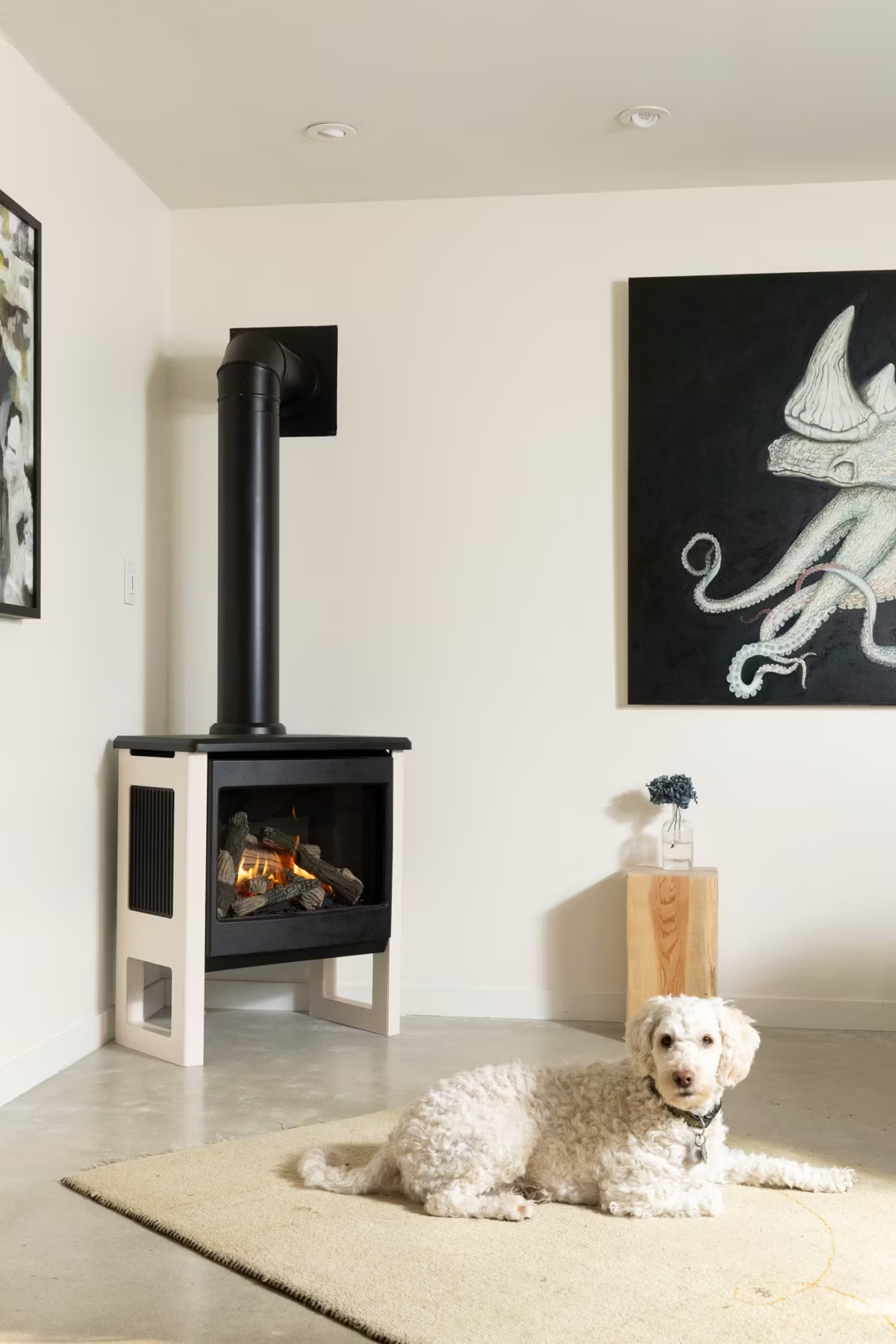
A gas fireplace is a fully built-in unit framed into a wall—the right call for new construction or a remodel without an existing hearth. A gas insert is built to slide into an existing masonry fireplace opening, which describes a lot of the stone hearths found in older Bandera County ranch homes. A gas stove is a freestanding cabinet-style unit that sits on the floor and vents out through a wall or roof, a good fit for a cabin or bunkhouse without a built-in fireplace at all. For most county homeowners with an existing stone hearth, an insert is the simplest upgrade.
Do I need a permit to install a gas fireplace in Bandera County?
Yes—new gas fireplace installations generally require a building permit and gas-line sign-off through Bandera County's permitting office, and properties near Medina Lake or the Medina River may also need a floodplain check depending on location. Most local hearth dealers handle this paperwork as part of the installation rather than leaving it to the homeowner, which matters here since propane line work has to be coordinated with whichever regional supplier sets your tank. If you're building new or adding a fireplace during a remodel, ask your dealer to confirm permitting status before work starts.
What's the difference between vented and vent-free gas fireplaces?
Vented (direct-vent) gas fireplaces draw combustion air from outside and exhaust the byproducts back outside through sealed venting—they're the safest, most universally code-compliant option and deliver real, sustained heat. Vent-free units burn directly into the room without external venting; they're legal in Texas and popular for retrofits into rooms with no existing chimney or vent path, which comes up often in older Bandera County cabins and outbuildings converted for weekend use. Vent-free models require attention to room size and ventilation, so most local dealers will walk you through both options if your property doesn't already have a place to run a vent.
How often should my gas fireplace be serviced?
An annual inspection is the standard recommendation for any gas appliance, including direct-vent fireplaces and inserts. A technician checks the burner, pilot assembly, gas connections, and any battery backup or electronic ignition, then cleans the glass and interior. This matters more than it might seem in Bandera County, where a fireplace at a lake cabin or a rental property near Lost Maples may sit unused for weeks between visits—a pre-season check before the cabin's next occupied stretch catches pilot or ignition issues before a guest does.
Gas vs. wood—which is right for my Bandera County property?
Bandera County has no air quality restrictions or burn bans on the books, and oak, pecan, and mesquite are all abundant on local ranch land, so wood-burning remains a genuinely practical and popular choice here—not just a novelty. Wood also keeps working with zero electricity, which matters during ice-related outages. Gas wins on convenience: instant on-off operation with no ash cleanup, no wood stacking, and no tending required, which is exactly why it's the common pick for primary living rooms and rental cabins where guests want warmth without instruction. Many county homes end up with both—wood in a shop or bunkhouse, gas in the main house.
Why is my open fireplace making my house colder?
Open fireplaces suck—literally. As the fire burns, it consumes air your furnace already paid to heat and pulls it out through the chimney, so the house is actually colder after the fire goes out than before you lit it. An insert fixes this: it seals the chimney, puts fixed glass across the front, and turns that hole in your house into a real heat source.
What's the difference between an insert and a zero-clearance fireplace?
An insert is a fireplace that slides into a pre-existing wood-burning fireplace—if you don't have one, there's nothing to insert it into. A zero-clearance fireplace is built into a framed wall, which makes it the answer for remodels and new construction. Simple test: existing masonry fireplace means insert; blank or framed wall means zero-clearance.
Can a fireplace actually lower my heating bill?
Yes—by creating a comfort zone. A furnace heats every square foot of the house just to warm the one room you're in; a gas fireplace on low burns roughly a sixth of the gas a typical furnace does. Set the furnace around 55–60 degrees as a baseline, then heat the rooms your family actually uses. Families who heat this way commonly save $20–$60 a month.
Can I install a fireplace myself?
If you're putting a fire in your house on purpose, it's best to work with an expert. Unless you're genuinely experienced in framing, gas line, vent pipe, and the national code on clearances to combustibles, have a professional do it—and ideally the same company that sells you the fireplace, so warranty, service, and liability all live under one roof.
Stove and Fireplace Dealers in Bandera County
Listings include WhyFire partner dealers, dealers we have verified as authorized for the brands we recommend, and established local businesses that carry hearth products. Every listing shows which one it is. The ones marked Preferred run on WhyFire's software, so they can show you real pricing and book your appointment right here. No manufacturer pays for placement. How we verify dealers →
Hill Country Fireplaces
Bbq Outfitters
Installed Building Products, LLC
Pico Propane Operating
Orange County Bldg Materl
Schilling Fireplace & Wood Stoves
Parrish & Company Inc - San Antonio
Home & Patio
Area – San Antonio, Tx
Find your gas fireplace in Bandera County.
Tell us a bit about your Bandera County property and we'll send you a free Project Guide & Parts List—the exact parts, vent kit, and a matched local dealer for your gas fireplace project.
Find Your Fireplace →