
Pellet heat in a city that rarely needs it.
Austin's mild winters mean pellet stoves are a niche choice, not a mainstream one. If your situation still calls for one, we'll help you find out and connect you with a trusted local dealer.
Every Project Starts From One of These Five Situations
A climate that doesn't ask much of a heating system.
Austin sits in climate zone 2A at just 608 feet of elevation, and it shows in the numbers: about 1,442 heating degree days a year and a winter low averaging 42°F. Compare that to a genuinely cold-climate city like Duluth, MN, which racks up close to 9,000 HDD most winters, and it's clear why pellet stoves—appliances built to run for months at a stretch—don't have an obvious job to do here. That's why pellet is flagged not-applicable for Austin: it isn't that the technology doesn't work, it's that Travis County homes rarely need sustained supplemental heat long enough to justify one.
Most Austin homes get through the handful of cold weeks each winter with a heat pump or a gas furnace, and a fireplace here is more often a design feature than a heating necessity—which is also why wood is flagged not-applicable and gas is the standard fire-feature choice. Pellet still shows up occasionally: in a Hill Country weekend cabin without gas service, a converted garage or workshop, or a home owned by someone who moved from a colder state and wants the specific feel of a pellet fire. For those situations, a local dealer can tell you honestly whether it's worth doing.
Three steps. No salesperson until you're ready.
Tell us about your project
Your zip code, your situation, and the fuel you're leaning toward—or let the answers point you to one.
See what's actually available
The brands dealers within 100 miles genuinely carry—real options, never a catalog mirage.
Get your dealer & Project Guide
A trusted local dealer, plus the free Project Guide & Parts List that names every component of the job.
Frequently Asked Questions
Are pellet stoves common in Austin homes?
No, and there's no reason to pretend otherwise. Austin's climate zone 2A logs only about 1,442 heating degree days a year, with winter lows averaging 42°F—mild enough that most Travis County homes rely on a heat pump or gas furnace for the few genuinely cold weeks each winter. A small number of homeowners still install pellet stoves for ambiance, a Hill Country cabin without gas service, or because they moved from a colder climate and want that specific kind of fire. It's a specialty purchase in Austin, not a mainstream heating decision.
What does a pellet stove installation cost in Austin?
Because pellet-specialist installers are thin on the ground here compared to Austin's robust gas and electric fireplace market, pricing tends to sit at the low-to-mid end of national norms—roughly $3,000 to $6,000 installed for a freestanding stove, more if you're converting an existing fireplace to a pellet insert with new venting. Expect fewer competing local quotes than you'd get shopping a gas fireplace install in the same zip code.
Can a pellet stove work as backup heat during a Texas winter storm?
Not reliably, and this is worth knowing before you buy one for that reason. Winter Storm Uri in February 2021 took down both the ERCOT grid and, in places, natural gas service across Travis County—and a pellet stove's auger and combustion blower both need electricity to run. Without a generator or a substantial battery backup, a pellet stove goes dark exactly when you'd want it most. If grid-outage backup heat is the actual goal, a battery-equipped gas unit is a more dependable answer here than pellet.
Where can I buy pellet fuel in Austin?
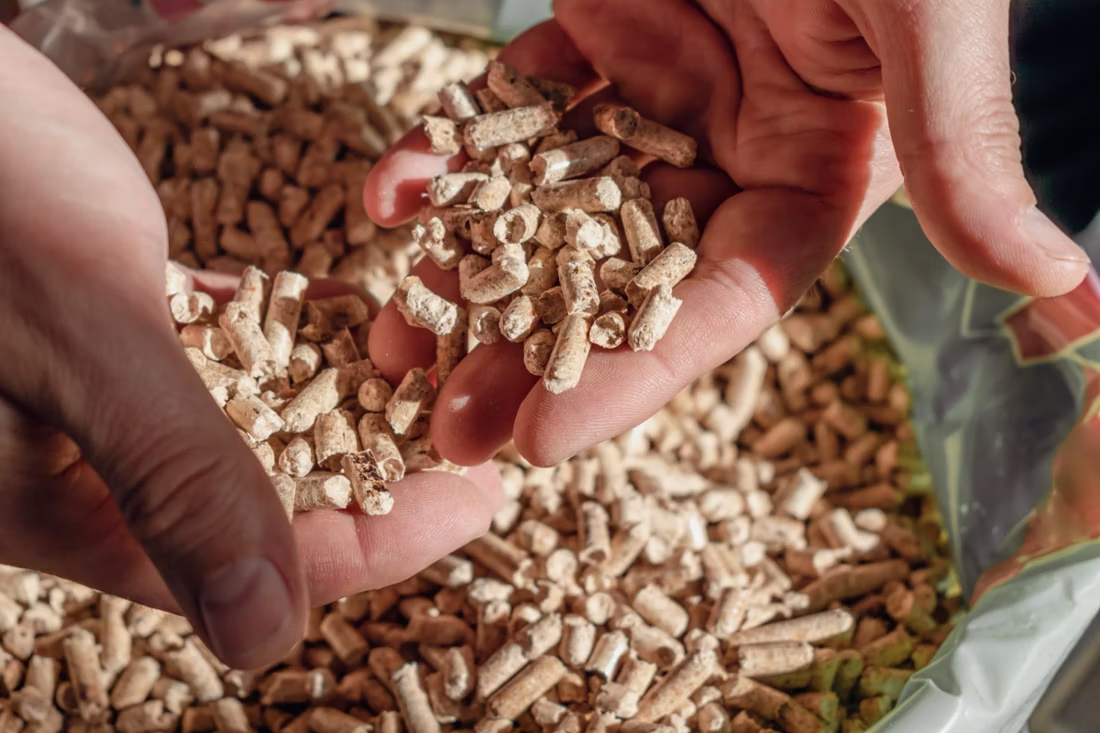
Bagged hardwood pellets aren't sitting on every corner the way they are in Minnesota or the Mountain West. Regional brands like Forest Energy and Lignetics turn up seasonally at rural supply and feed stores around Travis County—Callahan's General Store is a known local source in the cooler months—but stock is seasonal rather than year-round. Homeowners who go the pellet route in Austin generally buy several tons up front rather than counting on restocking bag by bag all winter.
Why don't Austin homes rely on wood or pellet heat the way colder cities do?
Both are flagged not-applicable for Austin for the same underlying reason: this is a mild 2A climate where most homes are built around central HVAC—a heat pump or gas furnace—with a fireplace treated as an accent rather than a heat source. Local wood species like oak, pecan, and mesquite are plentiful, but around here they end up in backyard smokers, not stacked in cords for winter heating. A gas fireplace or insert is the default choice for Austin homeowners who want a fire feature without taking on a heating obligation.
How much electricity does a pellet stove use, and what would it cost to run in Austin?
A pellet stove's auger motor and combustion blower typically pull 100–400 watts, in the range of a couple of light bulbs. At Austin Energy's residential rate (around $0.126/kWh) or Pedernales Electric Cooperative's rate (around $0.122/kWh), running one continuously would only cost a few dollars a month. Electricity cost was never the obstacle to pellet heat in Austin—the obstacle is a climate mild enough (42°F average winter low) that there's rarely enough heating demand to justify the appliance in the first place.
What permits do I need to install a pellet stove in Austin?
Pellet stove installations generally require a building permit through the City of Austin Development Services Department, or the appropriate county building department if the home sits in unincorporated Travis County, covering the wall or roof venting penetration and clearance-to-combustibles inspection. Because pellet installs are uncommon here, it's worth confirming directly with your installer that they've pulled Austin-specific permits before, rather than assuming the process is identical to a gas fireplace permit.
What's the difference between a pellet stove and a pellet insert?
A pellet stove is freestanding and vents through a nearby exterior wall, so it can go almost anywhere with the right clearances. A pellet insert fits into an existing masonry or prefab fireplace opening and uses that existing chimney chase for venting. In Austin, where gas fireplaces are the default built-in option, homeowners who do go with pellet are more often adding a freestanding stove to a converted garage, workshop, or Hill Country weekend property than retrofitting an existing masonry fireplace.
Pellet vs. gas—which makes more sense for an Austin home?
For nearly every Travis County home, gas wins. Gas fireplaces and inserts run on Austin's existing natural gas or propane infrastructure, need no fuel storage or hauling, and start at the flip of a switch—a good match for a climate where you might only want supplemental heat a few weeks a year. Pellet makes sense for a narrow slice of buyers: someone heating an outbuilding or cabin without gas service, or a transplant from a colder climate who specifically wants a pellet-burning fire. A local dealer can walk through both against your actual heating needs before you commit either way.
How often does a pellet stove need cleaning?
A clean pellet stove is a happy pellet stove. Plan on cleaning the burn pot about once a week when you're burning regularly—ash and clinkers gum up the air holes just like a pellet barbecue. Most pellet stove problems trace back to skipped cleaning that nobody explained up front. Some designs make it easy with a trapdoor burn pot: pull a lever and the gunk drops into the ash pan.
What's the difference between an insert and a zero-clearance fireplace?
An insert is a fireplace that slides into a pre-existing wood-burning fireplace—if you don't have one, there's nothing to insert it into. A zero-clearance fireplace is built into a framed wall, which makes it the answer for remodels and new construction. Simple test: existing masonry fireplace means insert; blank or framed wall means zero-clearance.
Can a fireplace actually lower my heating bill?
Yes—by creating a comfort zone. A furnace heats every square foot of the house just to warm the one room you're in; a gas fireplace on low burns roughly a sixth of the gas a typical furnace does. Set the furnace around 55–60 degrees as a baseline, then heat the rooms your family actually uses. Families who heat this way commonly save $20–$60 a month.
Can I install a fireplace myself?
If you're putting a fire in your house on purpose, it's best to work with an expert. Unless you're genuinely experienced in framing, gas line, vent pipe, and the national code on clearances to combustibles, have a professional do it—and ideally the same company that sells you the fireplace, so warranty, service, and liability all live under one roof.
Preferred Dealer in Austin
Marked Preferred because they run on WhyFire's software—so they can show you real pricing and book your appointment right here. No manufacturer pays for placement. How we verify dealers →
Pellet Brands Stocked Around Austin
Manufacturers will point you to the nearest stocking dealer.
Find your pellet stove in Austin.
Tell us about your home and situation, and if pellet is genuinely the right fit, we'll match you with a trusted local dealer and send a free Project Guide & Parts List—the exact parts, vent kit, and recommended dealer for your Austin project.
Find Your Fireplace →