
Instant heat for the rare cold nights in Atascosa County.
With such a light winter heating load, Atascosa County doesn't need a furnace running all winter—but a gas fireplace gives Pleasanton, Jourdanton, Poteet, and Lytle homes instant, reliable warmth for the cold fronts that do roll through South Texas.
Every Project Starts From One of These Five Situations
Warmth on demand, built for a mild climate.
Atascosa County sits in climate zone 2A, with an average winter low around 40 degrees and a very light winter heating load—a fraction of what a place like Fargo, ND sees in a single hard month. Most winters here are mild, with a handful of nights that dip into the 20s and, on rare occasions like the February 2021 freeze, well below that. Ranch and rural homes throughout the county, along with in-town properties in Pleasanton, Jourdanton, Poteet, Charlotte, and Lytle, don't need a fireplace to survive winter—but they do want one that lights instantly on the nights it's actually needed.
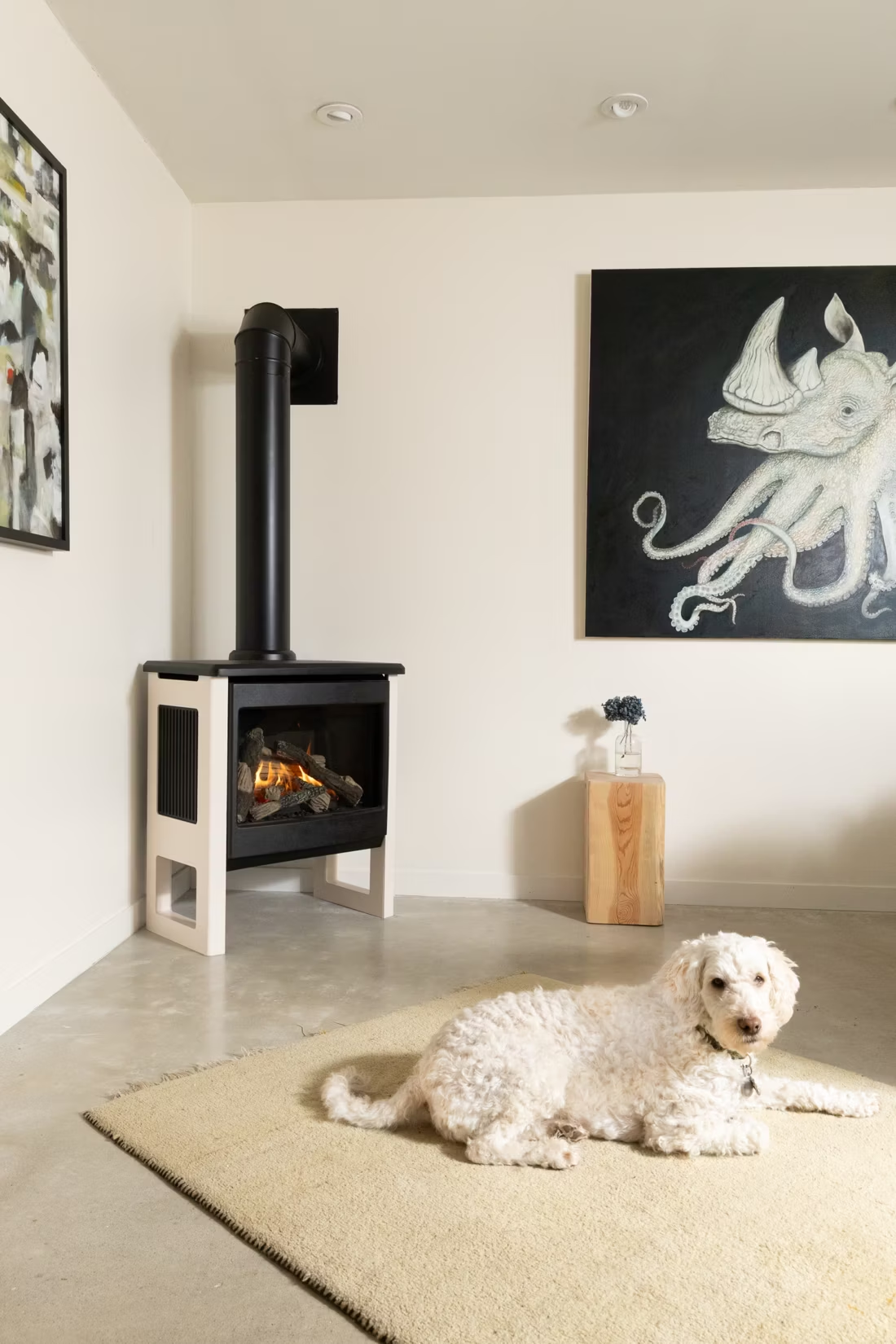
That's where gas fits the county well. A direct-vent gas fireplace or insert delivers real heat at the flip of a switch or the press of a remote, with none of the upkeep a wood-burning setup requires in a climate that rarely calls for one. Natural gas service reaches parts of the incorporated towns, but propane is still the standard fuel across most of unincorporated Atascosa County, where ranchettes and larger acreages are common. Either way, local oak, pecan, and mesquite stay in the smoker and the pit—the fireplace itself is about steady, no-fuss warmth on the nights the thermometer actually drops.
Three steps. No salesperson until you're ready.
Tell us about your project
Your zip code, your situation, and the fuel you're leaning toward—or let the answers point you to one.
See what's actually available
The brands dealers within 100 miles genuinely carry—real options, never a catalog mirage.
Get your dealer & Project Guide
A trusted local dealer, plus the free Project Guide & Parts List that names every component of the job.
Frequently Asked Questions
How much does a gas fireplace installation cost in Atascosa County?
Most gas fireplace and insert installations in this area run roughly $3,500 to $8,000, depending on the unit, the venting path, and whether new gas line work is required. A direct-vent insert going into an existing masonry fireplace that already has gas nearby is on the lower end. New construction, a fresh propane tank set, or a longer line run out to a rural ranch home on acreage outside Pleasanton or Charlotte will push costs toward the higher end. A local dealer will give you a firm number after seeing the space in person.
Can I convert my existing wood-burning fireplace to gas?
Yes, and it's a common request in this county precisely because true wood-burning use is rare in a climate with such a light winter heating load. Most conversions involve installing a direct-vent gas insert or a vented log set into the existing masonry firebox, using the existing chimney as the vent path. Homeowners in Jourdanton and Poteet who built their fireplaces for looks more than heat often find a gas insert finally makes the fireplace worth using on a cold front.
Should I use natural gas or propane for my fireplace?
It depends on where in the county you're located. Homes inside town limits in Pleasanton or Jourdanton may have natural gas service available, which simplifies things if you already run a gas water heater or range. Outside city limits—which covers most of Atascosa County's ranch and rural acreage—propane is the standard, either from an existing tank or a new tank set by a local propane supplier. Nearly every gas fireplace on the market can be configured for either fuel; your installer sets the correct orifice and regulator for whichever you have.
Will my gas fireplace still work if the power goes out?
Most modern gas fireplaces will, which matters more in this county than the mild average winter suggests—the February 2021 winter storm knocked out power across South Texas for days during the coldest stretch in a generation. Units with intermittent pilot ignition (IPI) run on a small battery backup that keeps the fireplace lighting on demand even with the power out. Valor fireplaces go a step further and generate their own electricity off the pilot's thermocouple, so there's no battery to remember. Worth asking your local dealer about when you're comparing units.
What's the difference between a gas fireplace, gas insert, and gas stove?
A gas fireplace is a built-in unit framed into a wall, typical for new construction or a remodel. A gas insert slides into an existing masonry firebox and uses the existing chimney as its vent—the more common upgrade for older Atascosa County homes with a fireplace that was originally built for wood but rarely gets used that way. A gas stove is a freestanding unit that sits on the floor, useful when there's no existing fireplace opening to work with. Most homeowners here with an existing hearth go with an insert.
Do I need a permit to install a gas fireplace in Atascosa County?
In most cases, yes—a building permit and a gas line permit are required for new gas fireplace installations. Inside city limits, permits go through the city (Pleasanton, Jourdanton, Poteet, or Lytle each handle their own); in unincorporated parts of the county, the Atascosa County building office handles it. The gas line work itself needs a licensed gas-fitter, which is part of why most homeowners let their hearth dealer coordinate the whole job rather than pulling permits themselves.
Vented vs. vent-free gas fireplaces—which is right for a South Texas home?
Vented (direct-vent) units draw combustion air from outside and exhaust exhaust gases back outside through sealed venting—they're the safest and most universally recommended option, and there's no air-quality reason locally to avoid them. Vent-free units burn directly into the room and are legal in Texas, but they release some moisture and combustion byproducts into the living space and come with strict room-sizing rules. For most Atascosa County homes, a direct-vent unit is the better call, especially for larger open ranch-style living areas where a vent-free unit's room-size limits can be a real constraint.
How often does a gas fireplace need servicing?
An annual check is recommended even though gas units need far less attention than wood-burning ones. A technician inspects the burner, pilot assembly, venting, and gas connections, and cleans the glass—usually a $150 to $250 visit. Because most Atascosa County gas fireplaces run only occasionally rather than daily through a real winter, some homeowners stretch this to every other year, but an annual look before the first cold front is the safer habit.
Should I even consider a wood-burning fireplace instead of gas?
For most homes here, gas makes more sense. With an average winter low around 40 degrees and a very light winter heating load overall, true wood-burning heat is rarely necessary, and it's uncommon to see a new wood stove installed in the county—most local wood use goes toward the smoker and pit with oak, pecan, or mesquite rather than the fireplace. Some homeowners still want a wood-burning fireplace for the look and the occasional real fire on a cold night, and that's a fine choice too, but if convenience and instant heat on the nights you actually need it matter more, gas is the better fit for Atascosa County's climate.
Why is a fireplace insert so efficient?
An insert does two things: it seals the chimney completely, so you stop losing air you already paid to heat, and it radiates warmth into the room through the firebox and glass. Most add a heat-exchange fan that pulls cool room air underneath, wraps it around the hot firebox, and pushes it back out warm. Your home is more efficient before you've even lit the first fire.
What do I measure to size a fireplace insert?
Four numbers tell you what fits: the front width, the front height, the back width, and the overall depth of your existing fireplace opening. Grab a tape measure, jot those down, and snap a photo of the wall—those two things do more to move your project forward than anything else you can do today.
Can a fireplace actually lower my heating bill?
Yes—by creating a comfort zone. A furnace heats every square foot of the house just to warm the one room you're in; a gas fireplace on low burns roughly a sixth of the gas a typical furnace does. Set the furnace around 55–60 degrees as a baseline, then heat the rooms your family actually uses. Families who heat this way commonly save $20–$60 a month.
What is an in-home preview and do I need one?
It's a visit where a hearth professional measures your space, confirms the model you picked actually works in your home, and walks the specs—framing, gas line, venting, finish work—before anything is ordered. Some details you just can't know until you see the house. Never make a down payment without one; it's the single most-skipped step that burns buyers.
Stove and Fireplace Dealers in Atascosa County
Listings include WhyFire partner dealers, dealers we have verified as authorized for the brands we recommend, and established local businesses that carry hearth products. Every listing shows which one it is. The ones marked Preferred run on WhyFire's software, so they can show you real pricing and book your appointment right here. No manufacturer pays for placement. How we verify dealers →
Installed Building Products, LLC
Orange County Bldg Materl
Area – San Antonio, Tx
Home & Patio
Bbq Outfitters
Find your gas fireplace in Atascosa County.
Tell us a bit about your home and we'll match you with a trusted local dealer and send over a free Project Guide & Parts List—the exact parts, including the vent kit, for your gas fireplace project in Atascosa County.
Find Your Fireplace →