
Find the right gas fireplace for your Andrews County home.
Mild Permian Basin winters mean gas heat here is mostly about ambiance and occasional supplemental warmth, not survival heat. We match you with a trusted local dealer who knows what actually installs cleanly in this climate.
Every Project Starts From One of These Five Situations
Comfort heat for short, mild winters.
Andrews County sits in climate zone 3B with an average winter low around 31°F and roughly 2,407 heating degree days a year—a fraction of what a place like Bismarck, ND or Fargo, ND sees each winter. Compare that to Fargo's 9,000-plus HDD and it's clear why heating hardware here looks different: most Andrews County homes need a fireplace for a handful of genuinely cold nights, weekend ambiance, and the occasional West Texas cold front, not round-the-clock BTUs.
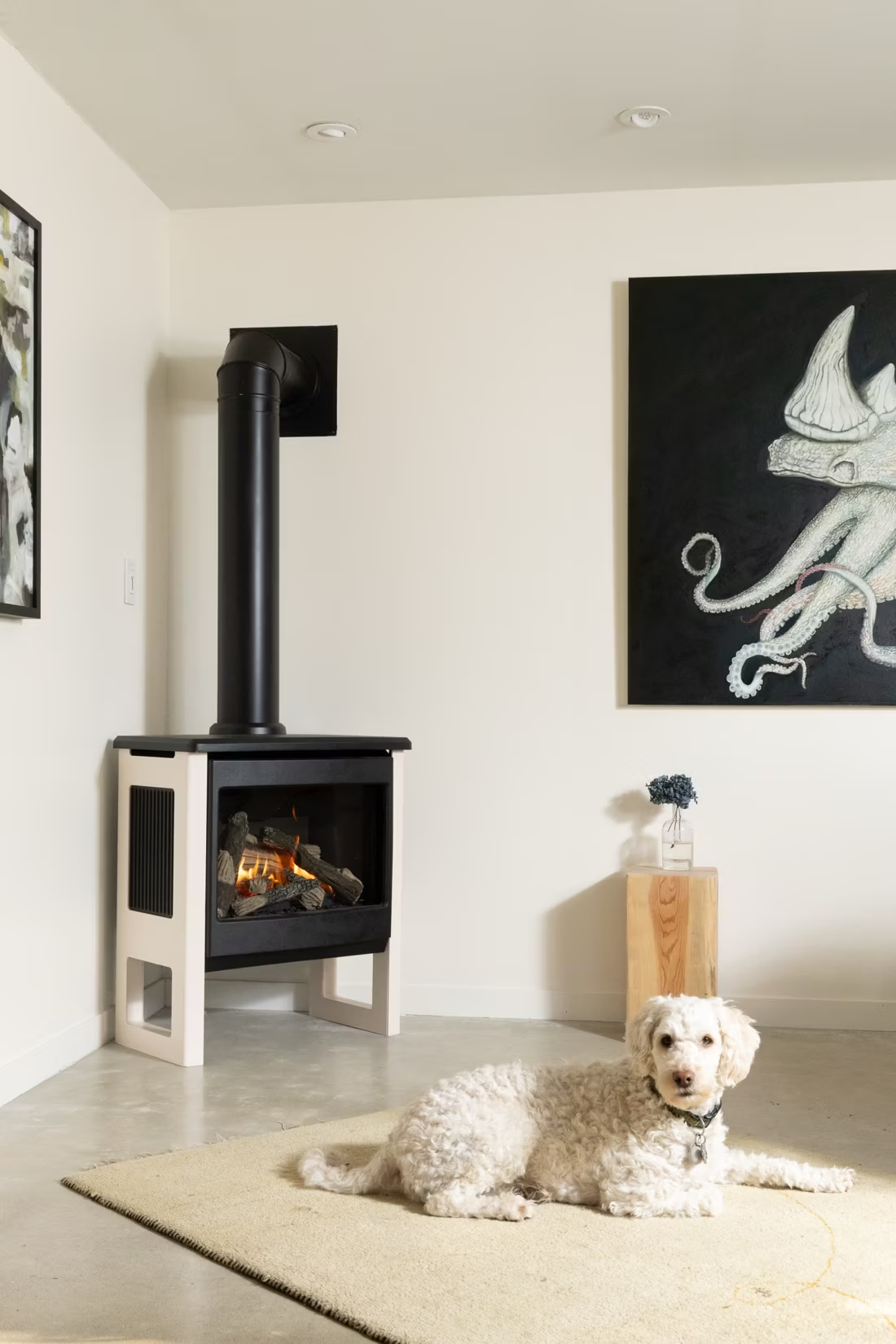
That's exactly where gas earns its place. A direct-vent gas fireplace or insert gives you real, instant heat on the nights a cold front rolls through—with no ash, no wood storage, and no chimney sweep required season after season. Whether you're on natural gas service in the city of Andrews or running propane out on a rural spread, a properly sized gas unit with correctly run venting is a low-maintenance way to add heat and a focal point to a living room without over-building for a climate that just doesn't demand it.
Three steps. No salesperson until you're ready.
Tell us about your project
Your zip code, your situation, and the fuel you're leaning toward—or let the answers point you to one.
See what's actually available
The brands dealers within 100 miles genuinely carry—real options, never a catalog mirage.
Get your dealer & Project Guide
A trusted local dealer, plus the free Project Guide & Parts List that names every component of the job.
Frequently Asked Questions
How much does a gas fireplace installation cost in Andrews County?
Gas fireplace installations in Andrews County typically run in a range similar to other West Texas markets—expect the lower end if you're installing a direct-vent insert into an existing masonry fireplace with gas already run to the room, and the higher end if you need a new gas line, framing for a built-in unit, or a propane tank set for a rural property outside city gas service. Because winter demand is modest here, many homeowners choose a mid-size unit sized for a single living area rather than whole-home heat, which keeps costs toward the lower end of typical ranges. A local dealer will give you a firm number after walking the space.
Do I need natural gas, or should I plan on propane?
It depends on where in the county you're located. Homes inside the city of Andrews with existing natural gas service for a range, water heater, or furnace can usually add a fireplace with a straightforward gas line tap. Rural properties outside city gas lines will need propane, either from an existing tank or a new tank set by a regional propane supplier. Most gas fireplace models sold by local dealers can be configured for either fuel—it's simply a matter of the correct orifice and regulator being installed, which your dealer handles as part of the job.
What's the difference between a gas fireplace, insert, and gas stove?
A gas fireplace is a built-in unit framed into a wall, typically chosen for new construction or a remodel. A gas insert drops into an existing masonry fireplace opening and uses the existing chimney as its vent path, which is the common choice for older Andrews County homes with a fireplace that's rarely used. A gas stove is a freestanding, cast-iron-look unit that sits on the floor rather than being built into a wall—a good option when you want a focal point in a room without an existing fireplace opening. For most homeowners here upgrading an existing hearth, an insert is the simplest and least invasive path.
Will a gas fireplace still work if the power goes out?
Most modern gas fireplaces will, yes. Units with intermittent pilot ignition (IPI) include a battery backup—typically a set of AA batteries inside the unit—that keeps the fireplace operating on demand when the power drops. Valor units take a slightly different approach: the pilot's thermocouple generates its own electricity, so there's no battery to remember at all. For West Texas cold fronts that can bring gusty winds and occasional outages, that's a reasonable thing to ask your local dealer about when comparing units.
Do I need a permit to install a gas fireplace in Andrews County?
Yes—new gas fireplace installations typically require both a building permit and a gas line permit, coordinated through the applicable city or county building office depending on whether you're inside Andrews city limits or in unincorporated Andrews County. The gas line work itself needs a licensed gas-fitter. This is one of the main reasons to work with an established local hearth dealer rather than a handyman: they coordinate the permitting, the gas line trade, and the final inspection as one project instead of leaving you to manage separate contractors.
Vented vs. vent-free gas fireplaces—which should I choose?
Vented gas fireplaces (direct-vent) pull combustion air from outside and exhaust combustion byproducts back outside through a sealed vent pipe—this is the standard, code-compliant choice in Texas and the option most local dealers install by default. Vent-free (ventless) units burn without any exterior venting, which technically boosts efficiency but releases some water vapor and combustion byproducts into the room, and they carry strict room-sizing and ventilation requirements. Vent-free units are legal in Texas but less commonly installed for a primary living space. For Andrews County's mild winters, a direct-vent unit sized modestly for the room is usually the right call—you get real heat and a clean look without air quality trade-offs.
How often does a gas fireplace need to be serviced?
Plan on an annual inspection, ideally before the first cold front of the season. A technician checks the burner, pilot assembly, gas connections, and venting, and cleans the glass and interior. It's a much lighter lift than wood chimney maintenance—most gas service providers in this part of West Texas charge in the neighborhood of $150–$250 for a standard annual check, and it's worth doing even in a mild climate since a unit that only fires a dozen nights a year can still develop dust or pilot issues between seasons.
Is a wood-burning fireplace or stove a realistic option in Andrews County?
Not really, and it's worth saying plainly: with an average winter low around 31°F and only about 2,407 heating degree days a year, Andrews County's climate doesn't call for wood as a heat source the way a place like Duluth, MN or Helena, MT does. Local oak, pecan, and mesquite are available and burn well for the rare homeowner who wants a wood-burning fireplace purely for ambiance or occasional use, but most local dealers steer West Texas homeowners toward gas or electric for a straightforward reason: the maintenance and chimney upkeep of a wood system doesn't pencil out against how few nights it would actually see real use here.
Gas vs. electric fireplace—which fits an Andrews County home better?
Both work well in this climate, and the choice usually comes down to what you want out of the fireplace. Gas delivers real radiant heat and a genuine flame, which matters if you want the unit to actually take the edge off a cold front night. Electric fireplaces cost far less to install—often a few hundred dollars versus several thousand for gas—since there's no venting or gas line involved, and they're a strong choice for homeowners who mainly want a realistic flame effect and modest supplemental heat rather than a serious heat source. Given how mild Andrews County winters run, electric is a perfectly reasonable choice for a secondary room; gas tends to win out in the main living space where people want it to double as real heat on the coldest nights.
What's the difference between an insert and a zero-clearance fireplace?
An insert is a fireplace that slides into a pre-existing wood-burning fireplace—if you don't have one, there's nothing to insert it into. A zero-clearance fireplace is built into a framed wall, which makes it the answer for remodels and new construction. Simple test: existing masonry fireplace means insert; blank or framed wall means zero-clearance.
What do I measure to size a fireplace insert?
Four numbers tell you what fits: the front width, the front height, the back width, and the overall depth of your existing fireplace opening. Grab a tape measure, jot those down, and snap a photo of the wall—those two things do more to move your project forward than anything else you can do today.
How much should I budget for a fireplace?
For an average home—covering the fireplace, the vent pipe, and basic installation—a budget between $3,900 and $5,500 gives you a lot of options across wood, gas, and pellet. By the time you add finish work, gas line, and electrical, the average complete installation lands between $5,000 and $12,000 all-in. In a remodel or new build, a good rule is to put about 2.5% of the total project cost toward the fireplace.
Can a fireplace actually lower my heating bill?
Yes—by creating a comfort zone. A furnace heats every square foot of the house just to warm the one room you're in; a gas fireplace on low burns roughly a sixth of the gas a typical furnace does. Set the furnace around 55–60 degrees as a baseline, then heat the rooms your family actually uses. Families who heat this way commonly save $20–$60 a month.
Stove and Fireplace Dealers in Andrews County
Listings include WhyFire partner dealers, dealers we have verified as authorized for the brands we recommend, and established local businesses that carry hearth products. Every listing shows which one it is. The ones marked Preferred run on WhyFire's software, so they can show you real pricing and book your appointment right here. No manufacturer pays for placement. How we verify dealers →
Seal’s Energy Depot
Bill Placer's Chimney Sweep
Ford Insulation And Fireplaces
Get matched with a gas fireplace dealer in Andrews County.
Tell us about your home and we'll put together a free Project Guide & Parts List—the exact parts, vent kit included, plus our recommended local dealer for your gas fireplace project.”
Find Your Fireplace →