
A Fireplace That Works Even When the Grid Doesn't.
Aledo winters are mild, but Parker County still sees hard freezes and the occasional grid strain. Find the right gas fireplace or insert and get matched with a local dealer who installs it correctly the first time.
Every Project Starts From One of These Five Situations
Comfort on demand, built for Parker County's mild winters.
Aledo sits at just under 900 feet in Parker County, a climate zone 3A pocket with a mild, short heating season—a fraction of what a place like Fargo, ND logs each winter. Winter lows average in the low 30s, so most homes here don't need a wood stove or pellet appliance running around the clock. What Aledo does get are sharp cold fronts, the kind locals call blue northers, where temperatures can drop 30 degrees in an afternoon. A gas fireplace fits that rhythm well: it sits unused for stretches, then delivers real heat the moment a front rolls through.
Aledo has grown fast as a Fort Worth exurb, and that growth shows up in the housing stock—large custom homes and equestrian properties on acreage, many built in the last two decades with gas fireplaces specified from the start. Natural gas service reaches many of the newer subdivisions closer to Fort Worth, while homes on larger lots or older county roads more often run on propane with a tank on the property. Either fuel works fine for a gas fireplace or insert. And after Winter Storm Uri showed much of Texas what an extended ERCOT outage looks like, a growing number of Aledo homeowners are choosing gas units specifically for the ability to run without electricity.
Three steps. No salesperson until you're ready.
Tell us about your project
Your zip code, your situation, and the fuel you're leaning toward—or let the answers point you to one.
See what's actually available
The brands dealers within 100 miles genuinely carry—real options, never a catalog mirage.
Get your dealer & Project Guide
A trusted local dealer, plus the free Project Guide & Parts List that names every component of the job.
Frequently Asked Questions
How much does a gas fireplace installation cost in Aledo?
Most gas fireplace and insert installations in Aledo run $4,000 to $9,000, with the spread driven mainly by whether you're on natural gas or propane and how much gas line work is involved. A direct-vent insert going into an existing masonry fireplace on a home already plumbed for gas sits at the lower end. New construction or a remodel that requires framing, venting through an exterior wall, and a fresh gas line run—or a new propane tank set for a home on acreage without natural gas—pushes toward the higher end. A local dealer will give you a firm number after walking the site.
Does wood heat make sense in Aledo, or should I just go with gas?
For most Aledo homes, gas is the practical choice. With average winter lows in the low 30s and a mild, short heating season overall, there's rarely a stretch cold enough to justify running a wood stove as primary heat, and local oak, pecan, and mesquite are more commonly seen in backyard smokers than woodpiles. A handful of homeowners on larger properties still keep a wood-burning fireplace for atmosphere or for burning fallen oak limbs, but as a heating strategy, gas delivers more consistent warmth with none of the ash, storage, or chimney upkeep.
Should I install a natural gas or propane fireplace in Aledo?
It depends on where your property sits. Homes in newer subdivisions closer to Fort Worth are more likely to already have natural gas service, in which case adding a fireplace is straightforward. Homes further out on Parker County acreage more commonly run on propane, either with an existing tank or a new tank set by a local supplier. Most gas fireplace models can be configured for either fuel with the correct orifice and regulator, so the decision usually comes down to what's already running to your house—your dealer can confirm which lines feed your property.
Will a gas fireplace work if the power goes out?
Most modern gas fireplaces will, which is one of the biggest reasons Aledo homeowners choose them. Units with IPI (intermittent pilot ignition) run off a small battery backup that kicks in automatically when the power drops, so the fireplace lights and operates normally until service is restored—just remember to swap the batteries occasionally. Valor fireplaces take a different approach: their pilot generates its own electricity through the thermocouple, so there's no battery to remember at all. After the multi-day ERCOT outages during Winter Storm Uri, a lot of local homeowners specifically ask for battery-backup or self-powering units when they're shopping—it's a reasonable ask for this part of Texas.
What's the difference between a gas fireplace, gas insert, and gas stove?
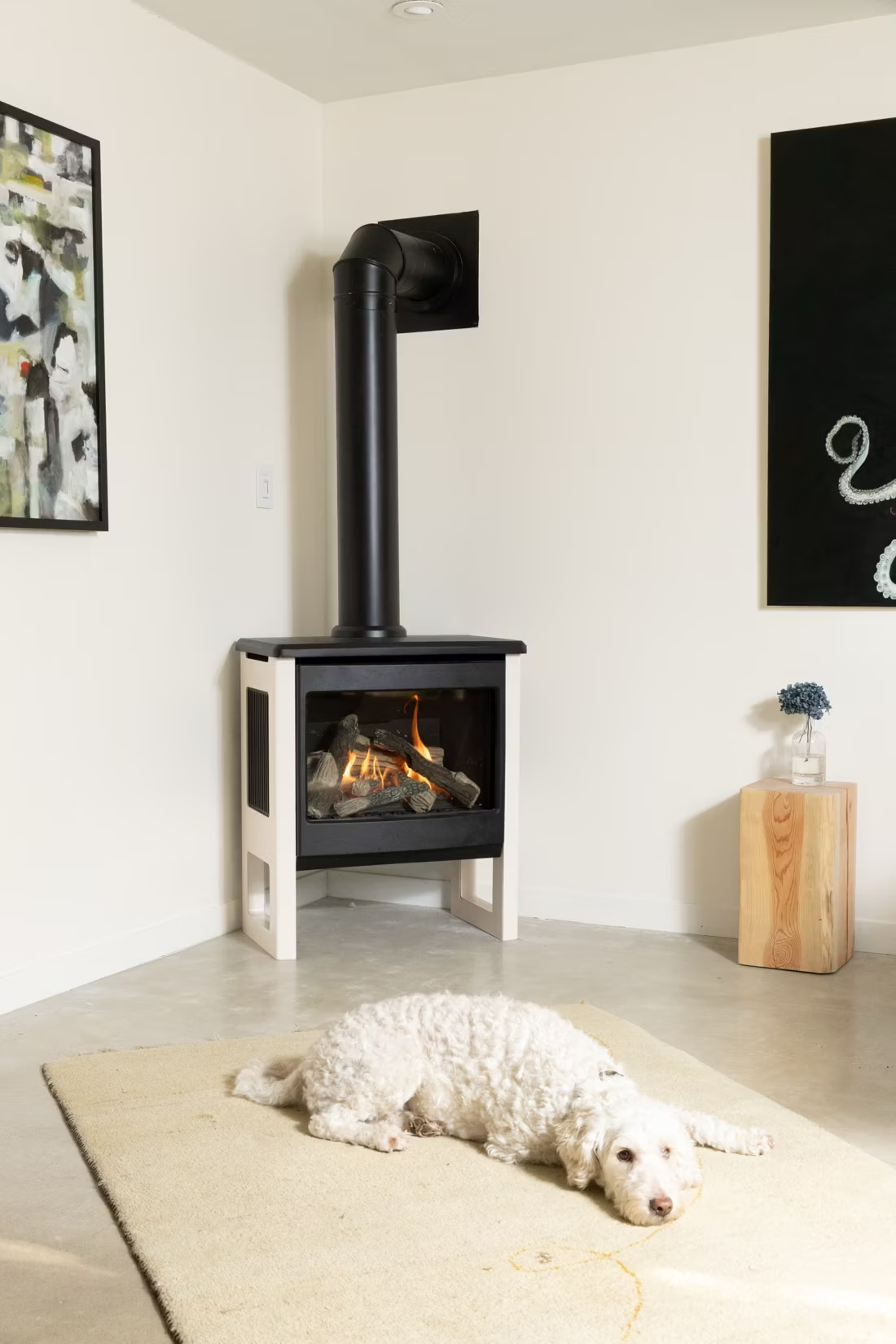
A gas fireplace is a fully built-in unit framed into a wall—the standard choice for new construction, which describes a lot of Aledo's recent home building. A gas insert drops into an existing masonry fireplace opening and uses the chimney as its venting path, which is the right call if your home already has a wood-burning fireplace you want to convert. A gas stove is a freestanding unit on its own base, often chosen for a den, sunroom, or a barn-style guest house on larger properties. A local dealer can tell you within minutes which option fits your existing structure.
Do I need a permit to install a gas fireplace in Aledo?
Yes—new gas fireplace installations require a building permit through the City of Aledo, or through Parker County for properties outside city limits, along with a gas line permit if new piping is involved. The gas line portion has to be done by a licensed gas-fitter, which is one of the reasons it's worth using an installer who coordinates the permit, the gas line, and the venting together rather than piecing the job out to separate trades.
Are vent-free gas fireplaces allowed in Texas?
Yes, Texas permits vent-free (ventless) gas fireplaces, and they show up in some Aledo homes as supplemental units in a den or bonus room because they don't require any venting through a wall or roof. That said, vented direct-vent fireplaces remain the more common and more broadly recommended choice—they draw combustion air from outside and exhaust it back outside, so there's no debate about indoor air quality. If you're considering a vent-free unit, pay attention to the manufacturer's minimum room size and make sure it has an oxygen depletion sensor; a local dealer can walk you through whether it's a good fit for the specific room.
How often does a gas fireplace need to be serviced?
An annual inspection is the standard recommendation, ideally in early fall before the first cold front comes through. A technician checks the burner, pilot or ignition system, venting, and gas connections, and cleans the glass and interior components. It's a much smaller job than chimney sweeping on a wood-burning unit, but skipping it is how minor issues—a dirty flame sensor, a weak battery backup—turn into a fireplace that won't light on the one night you actually need it.
Gas fireplace vs. electric fireplace—which makes more sense in Aledo?
Both are common choices locally, and the right one depends on what you're after. A gas fireplace puts out real, radiant heat and can keep running during a power outage—a genuine advantage given ERCOT's track record in hard freezes. An electric fireplace, by contrast, needs no gas line or venting at all, installs almost anywhere on a standard outlet, and runs on the same electric service from Oncor, Tri-County Electric, or Wise Electric that already powers the rest of the house—but it stops working the moment the power does. For a primary living space where you want real backup heat, gas is usually the better fit. For a bedroom, office, or secondary space where ambiance matters more than BTUs, electric is often the simpler, cheaper install.
Is my gas fireplace wasting gas?
If it was installed more than 15 years ago, probably. Older gas fireplaces keep a standing pilot light burning all the time, and that little flame can cost a couple hundred dollars a year. Newer models use pilot-on-demand ignition—the pilot lights only when you use the fireplace and goes out when you turn it off.
Why is my open fireplace making my house colder?
Open fireplaces suck—literally. As the fire burns, it consumes air your furnace already paid to heat and pulls it out through the chimney, so the house is actually colder after the fire goes out than before you lit it. An insert fixes this: it seals the chimney, puts fixed glass across the front, and turns that hole in your house into a real heat source.
Can a fireplace actually lower my heating bill?
Yes—by creating a comfort zone. A furnace heats every square foot of the house just to warm the one room you're in; a gas fireplace on low burns roughly a sixth of the gas a typical furnace does. Set the furnace around 55–60 degrees as a baseline, then heat the rooms your family actually uses. Families who heat this way commonly save $20–$60 a month.
Does a fireplace add value to my home?
On average, a fireplace adds back to the home about the same amount you spent installing it. Add the monthly savings from heating the rooms you actually use instead of the whole house—often hundreds of dollars a year—and the value case is strong before you even count what a fire does for how your family uses the room.
Nearby Dealers
Hearth shops serving Aledo and the surrounding area. Every listing shows whether it is a WhyFire partner, a dealer we have verified as authorized for the brands we recommend, or a local business carrying hearth products. No manufacturer pays for placement. How we verify dealers →
David's Stove Shop Inc
Rodak's Coffee And Bbq Grills
Texas Building Supply
Brothers Supply Co.
Alliance Materials, Inc.
Find your gas fireplace in Aledo.
Tell us about your home and we'll put together a free Project Guide & Parts List—the exact parts, including the vent kit, and a trusted local Aledo-area dealer who can install it right.
Find Your Fireplace →