
Find a Gas Fireplace Built for Alamo Heights' Short, Mild Winters.
With such a short, mild winter, Alamo Heights doesn't need a fireplace to survive winter. But a gas fireplace still earns its keep—instant ambiance on the rare 40-degree night, and real backup heat if the grid ever has another Winter Storm Uri.
Every Project Starts From One of These Five Situations
In Alamo Heights, gas fireplaces are built for ambiance, not survival heat.
Alamo Heights sits at 764 feet in climate zone 2A—hot and humid most of the year, with average winter lows around 40 degrees and a heating load that's a fraction of what a place like Duluth or Bismarck sees. That's why wood-burning fireplaces are effectively absent here despite the century oak and pecan trees lining Broadway and Patterson—nobody's stacking cordwood to get through a Texas winter. Gas is the fuel that actually fits the climate: an on-demand fireplace that dresses up a living room in one of the city's 1920s-40s Spanish Revival or Tudor homes, without asking anyone to tend a fire that isn't really needed for heat.
Most homes inside the City of Alamo Heights are already on CPS Energy's natural gas lines—the same utility that runs most gas ranges and water heaters in these older houses—so adding or converting to a gas fireplace usually means tying into service you already have. The bigger local consideration is what happened in February 2021: Winter Storm Uri knocked out power across Bexar County for days during a genuine hard freeze, and homeowners with battery-backup or millivolt gas fireplaces were the ones who kept a warm room. That's less about everyday comfort and more about having one reliable heat source that doesn't depend on the grid staying up.
Three steps. No salesperson until you're ready.
Tell us about your project
Your zip code, your situation, and the fuel you're leaning toward—or let the answers point you to one.
See what's actually available
The brands dealers within 100 miles genuinely carry—real options, never a catalog mirage.
Get your dealer & Project Guide
A trusted local dealer, plus the free Project Guide & Parts List that names every component of the job.
Frequently Asked Questions
How much does a gas fireplace installation cost in Alamo Heights?
Most gas fireplace and insert installations in Alamo Heights run $3,500 to $9,000. A direct-vent insert dropped into an existing masonry fireplace—common in the neighborhood's 1920s and '30s Tudor and Spanish Revival homes—sits toward the lower end if a gas line is already nearby. A new built-in gas fireplace for a remodel or addition, with fresh gas line runs and venting through an exterior wall, lands toward the higher end. Homes in the Alamo Heights Historic District sometimes carry added cost for exterior venting that has to be routed discreetly to satisfy historic-appearance guidelines. A local installer will give you a firm number after seeing the house.
Can I convert my existing wood fireplace to gas?
Yes, and it's a common project on the older streets around Olmos Basin and Broadway, where many houses still have the original masonry fireplace even though wood-burning fireplaces get almost no real use in this climate. A gas insert with a stainless liner slides into the existing firebox and vents up the same chimney, so the exterior look of the house doesn't change. Because most of these homes already have a CPS Energy gas line for the water heater or range, the conversion is often more about running a branch line to the fireplace than starting from scratch—which keeps costs closer to the lower end of the local range.
Do I need natural gas, or is propane an option?
Within the City of Alamo Heights, CPS Energy's natural gas network covers nearly every address, so most installations simply tie into existing service. Propane becomes the practical option mainly for homeowners just outside the city's gas footprint in unincorporated Bexar County, where a local propane supplier delivers to a tank on the property. Nearly every gas fireplace model sold locally can be set up for either fuel—it's a matter of the correct orifice and regulator, which your installer configures during the install.
Will my gas fireplace still work if the power goes out?
This is the question worth asking after February 2021, when Winter Storm Uri left parts of Bexar County without power for days during a real freeze. Standard IPI (intermittent pilot ignition) gas fireplaces run on AA battery backup and will light on demand even with the grid down, as long as the batteries are fresh. Millivolt pilot systems go a step further—the pilot flame itself generates the small amount of electricity needed to open the gas valve, so there's no battery to forget. For Alamo Heights homeowners who remember Uri, a millivolt or battery-backup unit is the difference between a warm room and a cold, dark one during the next hard freeze.
What's the difference between a gas fireplace, gas insert, and gas stove?
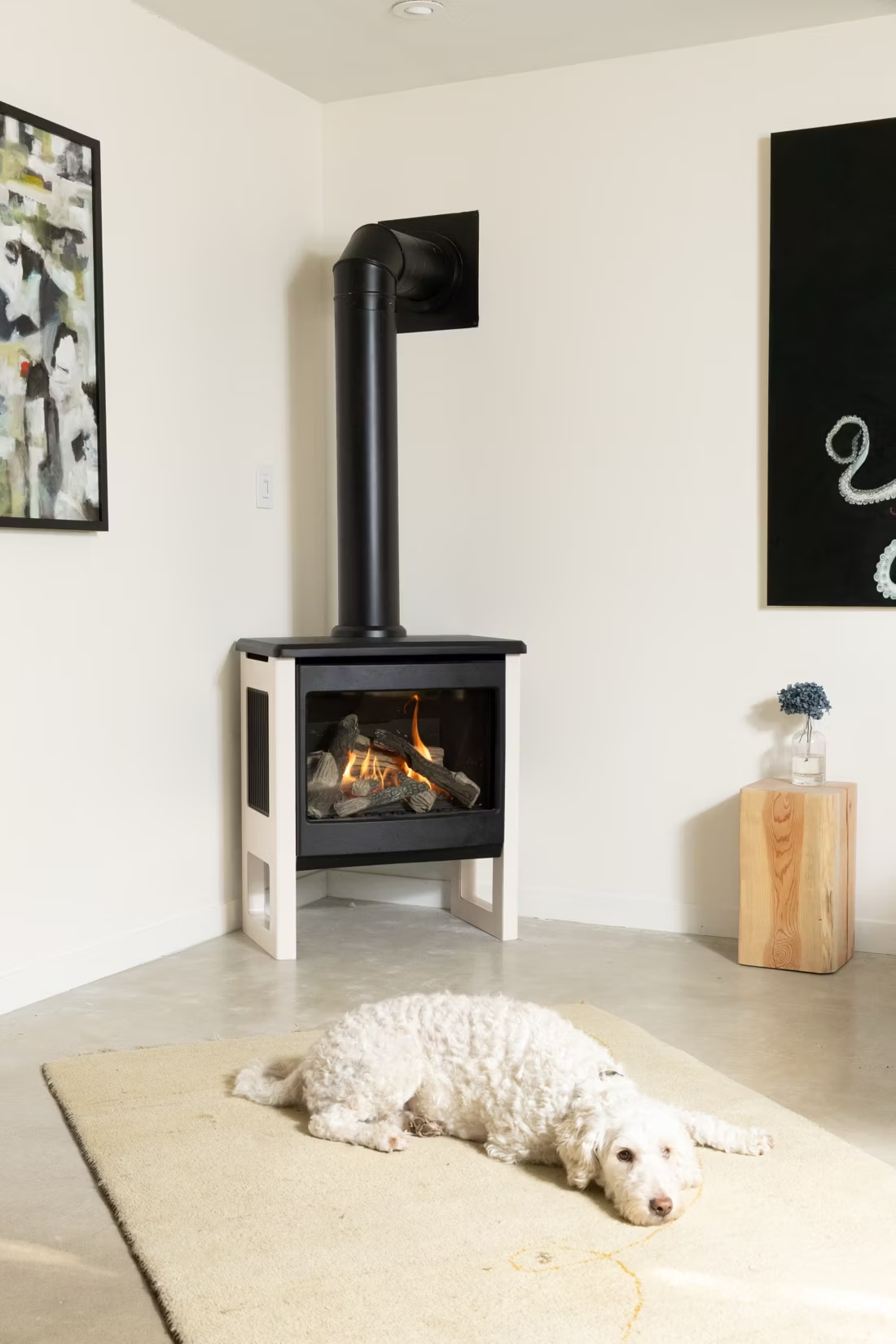
A gas fireplace is a fully built-in unit framed into a wall—typical for new construction or a remodel that doesn't already have a hearth. A gas insert is sized to slide into an existing masonry firebox, which is the more common route in Alamo Heights given how many of the historic homes here already have one. A gas stove is a freestanding cabinet-style unit that sits on the floor and vents through a wall or existing chimney, useful in rooms with no fireplace opening at all. For most Alamo Heights homeowners upgrading an old, rarely-used wood fireplace, an insert is the straightforward choice.
Do I need a permit to install a gas fireplace in Alamo Heights?
Yes. The City of Alamo Heights Building Department requires a building permit and a separate gas permit for new gas fireplace work, and the gas line itself has to be run by a licensed gas-fitter. If your home falls within the Alamo Heights Historic District, exterior venting placement may also need to respect the district's design guidelines, since B-vent or direct-vent terminations are visible from the street on many of these older homes. A local hearth dealer who's installed in the historic core before can usually flag this before it becomes a delay.
Should I get a vented or vent-free gas fireplace?
Vented direct-vent fireplaces draw combustion air from outside and exhaust it back outside, and they're the standard, code-approved choice everywhere in Texas, including Alamo Heights. Vent-free (ventless) units burn gas directly into the room and are legal here too, and they occasionally come up for homeowners who want ambiance in a room with no chimney and no interest in exterior venting—for example, a study or sunroom addition. Given how mild the winters are here, a vent-free log set can make sense purely for atmosphere, but for anyone using the fireplace regularly or as a real heat source, a vented direct-vent unit is the better call for indoor air quality.
How often should a gas fireplace be serviced in Alamo Heights?
Plan on an annual inspection, ideally before the first cool spell each fall. San Antonio's humidity can affect pilot assemblies and igniters over a long, muggy summer of sitting unused, so a yearly check of the burner, gas connections, and glass seal catches problems before the one week you actually want to use it. Local gas appliance technicians typically charge $150 to $250 for this service—modest compared to the cost of a cracked glass panel or a corroded ignition module discovered mid-winter.
Should I get gas or consider a wood-burning fireplace instead?
Honestly, wood-burning fireplaces don't make much practical sense in Alamo Heights—with such a short, mild winter and lows averaging 40 degrees, there's no real heating need to justify stacking oak, pecan, or mesquite cordwood the way homeowners do in colder climates. A handful of people still keep a wood-burning fireplace going for the smell and the ritual on a rare cold front, but for anyone who wants a fireplace they'll actually use regularly, gas is the far more sensible choice here: instant on-off operation, no ash or creosote, and—with the right ignition system—a real source of backup heat if the power ever goes out during a freeze event like Uri.
Why is a fireplace insert so efficient?
An insert does two things: it seals the chimney completely, so you stop losing air you already paid to heat, and it radiates warmth into the room through the firebox and glass. Most add a heat-exchange fan that pulls cool room air underneath, wraps it around the hot firebox, and pushes it back out warm. Your home is more efficient before you've even lit the first fire.
What do I measure to size a fireplace insert?
Four numbers tell you what fits: the front width, the front height, the back width, and the overall depth of your existing fireplace opening. Grab a tape measure, jot those down, and snap a photo of the wall—those two things do more to move your project forward than anything else you can do today.
Can I install a fireplace myself?
If you're putting a fire in your house on purpose, it's best to work with an expert. Unless you're genuinely experienced in framing, gas line, vent pipe, and the national code on clearances to combustibles, have a professional do it—and ideally the same company that sells you the fireplace, so warranty, service, and liability all live under one roof.
How much should I budget for a fireplace?
For an average home—covering the fireplace, the vent pipe, and basic installation—a budget between $3,900 and $5,500 gives you a lot of options across wood, gas, and pellet. By the time you add finish work, gas line, and electrical, the average complete installation lands between $5,000 and $12,000 all-in. In a remodel or new build, a good rule is to put about 2.5% of the total project cost toward the fireplace.
Nearby Dealers
Hearth shops serving Alamo Heights and the surrounding area. Every listing shows whether it is a WhyFire partner, a dealer we have verified as authorized for the brands we recommend, or a local business carrying hearth products. No manufacturer pays for placement. How we verify dealers →
Home & Patio
Area – San Antonio, Tx
Orange County Bldg Materl
Installed Building Products, LLC
Bbq Outfitters
Parrish & Company Inc - San Antonio
Pico Propane Operating
Find your gas fireplace in Alamo Heights.
Tell us a bit about your home and we'll match you with a trusted local dealer and send over a free Project Guide & Parts List—the exact fireplace or insert, venting, and gas line plan for your Alamo Heights project.
Find Your Fireplace →