
Add real heat and ambiance, without a chimney in sight.
From Lebanon to Mt. Juliet to Watertown, Wilson County's mild winters make electric fireplaces a practical, no-venting way to add warmth and glow to any room. Find the right unit and connect with a trusted local dealer.
Every Project Starts From One of These Five Situations
Electric fireplaces fit the way Wilson County actually lives.
Wilson County sits in Tennessee's Climate Zone 4A, a mixed-humid zone where winter lows average around 28°F and the county logs roughly 3,802 heating degree days a year—a fraction of what a true cold-climate market like Duluth, Minnesota racks up (closer to 10,000). That's not a place where families need a stove capable of holding coals through a sub-zero night; it's a place where a few weeks of genuinely cold weather bookend a mild season, and most heating happens in short bursts. That's exactly the situation electric fireplaces are built for.
Wilson County has also been one of the fastest-growing corners of the Nashville metro, with new subdivisions, townhomes, and finished-basement remodels popping up across Mt. Juliet, Lebanon, and Watertown. Electric units—inserts, wall-mounts, and freestanding stoves—install without a chimney, flue, or gas line, which makes them a natural fit for condos, rentals, and basements that Middle Tennessee Electric Membership Corporation (MTEMC) and Nashville Electric Service customers are adding heat and ambiance to every year. There are no air-quality restrictions or burn permits to plan around here—just a standard outlet or, for larger built-ins, a dedicated circuit an electrician can add in an afternoon.
Three steps. No salesperson until you're ready.
Tell us about your project
Your zip code, your situation, and the fuel you're leaning toward—or let the answers point you to one.
See what's actually available
The brands dealers within 100 miles genuinely carry—real options, never a catalog mirage.
Get your dealer & Project Guide
A trusted local dealer, plus the free Project Guide & Parts List that names every component of the job.
Frequently Asked Questions
How much does an electric fireplace installation cost in Wilson County?
Plug-in electric inserts and freestanding stoves are the cheapest entry point, often running $300 to $900 installed since they use a standard 120-volt outlet and need no structural work. Built-in wall units or recessed electric fireplaces with custom surrounds run higher, typically $1,500 to $3,500, once you factor in framing, trim carpentry, and—for larger units—a dedicated 20-amp circuit run by a licensed electrician. Homes in newer Mt. Juliet subdivisions with unfinished basements tend to land on the lower end since there's no existing wall or mantel to remove first; older Lebanon and Watertown homes converting a masonry fireplace usually cost more because of surround and mantel work.
How big of an electric fireplace do I need for my Wilson County home?
Most electric fireplaces top out around 5,000 to 10,000 BTUs—enough to noticeably warm a single room, but not a whole-house heat source. Given Wilson County's mild Zone 4A winters and 28°F average lows, that's usually plenty: electric units here are almost always installed as zone heat for a den, bedroom, or finished basement rather than a home's primary heat. Pick based on the room, not the whole house—a 400 to 600 square foot living space is about the practical ceiling for one unit at typical settings.
Do I need a permit to install an electric fireplace in Wilson County?
In most cases, no. Because electric fireplaces don't require venting, a chimney, or a gas line, a plug-in insert or freestanding stove typically doesn't trigger a permit from the Wilson County Building & Codes Department or the City of Lebanon and Mt. Juliet building offices. Larger built-in units that require a new dedicated electrical circuit do need an electrical permit, and any project that involves removing a mantel, altering a wall opening, or reframing around a recessed unit should be checked against local building codes first. A licensed electrician or your local hearth retailer can tell you quickly which category your project falls into.
What's the difference between an electric insert, a wall-mount, and an electric stove?
An electric insert is built to slide into an existing masonry fireplace opening, converting a wood-burning firebox—often originally built to burn local oak or hickory—into a clean, flame-effect heater without ever touching the chimney. A wall-mount unit hangs like a flat-screen TV and is popular in newer Mt. Juliet and Lebanon builds that never had a fireplace to begin with. A freestanding electric stove mimics a traditional wood stove's look and can go almost anywhere with an outlet—a common choice for finished basements and rental units across the county. All three run on standard household current; the differences come down to look and where in the room you want the heat and flame to sit.
How much does it cost to run an electric fireplace in Wilson County?
Most electric fireplaces draw around 1,500 watts on their heat setting. At Middle Tennessee Electric Membership Corporation's typical residential rates, running one for a few hours an evening costs somewhere in the range of 15 to 25 cents an hour—a fraction of what it costs to heat a whole room with central HVAC. Flame-only mode with the heater off uses only a few watts, which is why many Wilson County homeowners run the visual effect for ambiance on mild evenings without touching the thermostat at all.
What's the best electric fireplace for Wilson County's climate?
Because Wilson County winters are short and mild by national standards, most homeowners here prioritize flame realism and room ambiance over raw heat output—brands like Dimplex, Napoleon, and Touchstone all make units with adjustable LED flame beds that look convincing even with the heater switched off, which matters for the many weeks of the year when Wilson County doesn't need supplemental heat at all. For the handful of genuinely cold nights each winter, look for a unit with a built-in thermostat and a 4,600 to 5,000 BTU heater rating—enough to take the chill off a bedroom or den without overloading a standard circuit.
Electric vs. wood—which is right for my Wilson County home?
Wood remains a strong option in Wilson County—local oak, hickory, maple, and pine are all common and widely available, there are no air-quality restrictions on burning here, and a wood stove keeps working during a power outage. Electric can't do that; it needs power to run. What electric offers instead is zero maintenance, no chimney or venting to inspect, no ash or creosote, and installation in places a wood stove simply can't go—an upstairs bedroom, a condo, a finished basement without an existing flue. For a primary or backup heat source, especially in older rural parts of the county, wood still has the edge. For ambiance and convenient zone heat in a newer home or apartment, electric usually wins.
Where do homeowners typically install electric fireplaces in Wilson County?
Finished basements are one of the most common spots, especially in newer Mt. Juliet homes where a basement rec room needs a heat source but running gas line or a chimney isn't practical. Bedrooms and primary suites are another popular choice, since a wall-mount or insert adds warmth and ambiance without the upkeep of a wood-burning unit. Landlords and property managers across Lebanon and Mt. Juliet's growing rental and townhome market also favor electric units because tenants can operate them safely without any venting, chimney maintenance, or fire-tending know-how.
Electric vs. pellet stove—which should I choose?
Pellet stoves burn compressed wood pellets—regional brands like Lignetics, Hamer Pellet Fuel, and Greenway Renewable Energy are all available to Wilson County customers—and can produce meaningfully more heat than an electric unit, making them a better fit if you want a genuine secondary heat source for a larger area. They do require a hopper to be loaded, periodic ash cleanout, and venting through an exterior wall. Electric fireplaces need none of that: no fuel to buy or store, no venting, and instant on-off operation from a wall switch or remote. For most Wilson County homes where the goal is ambiance and light supplemental warmth in one room, electric is simpler; for anyone wanting to meaningfully offset a heating bill in a larger space, a pellet stove is worth a closer look.
Can I put a TV above my fireplace?
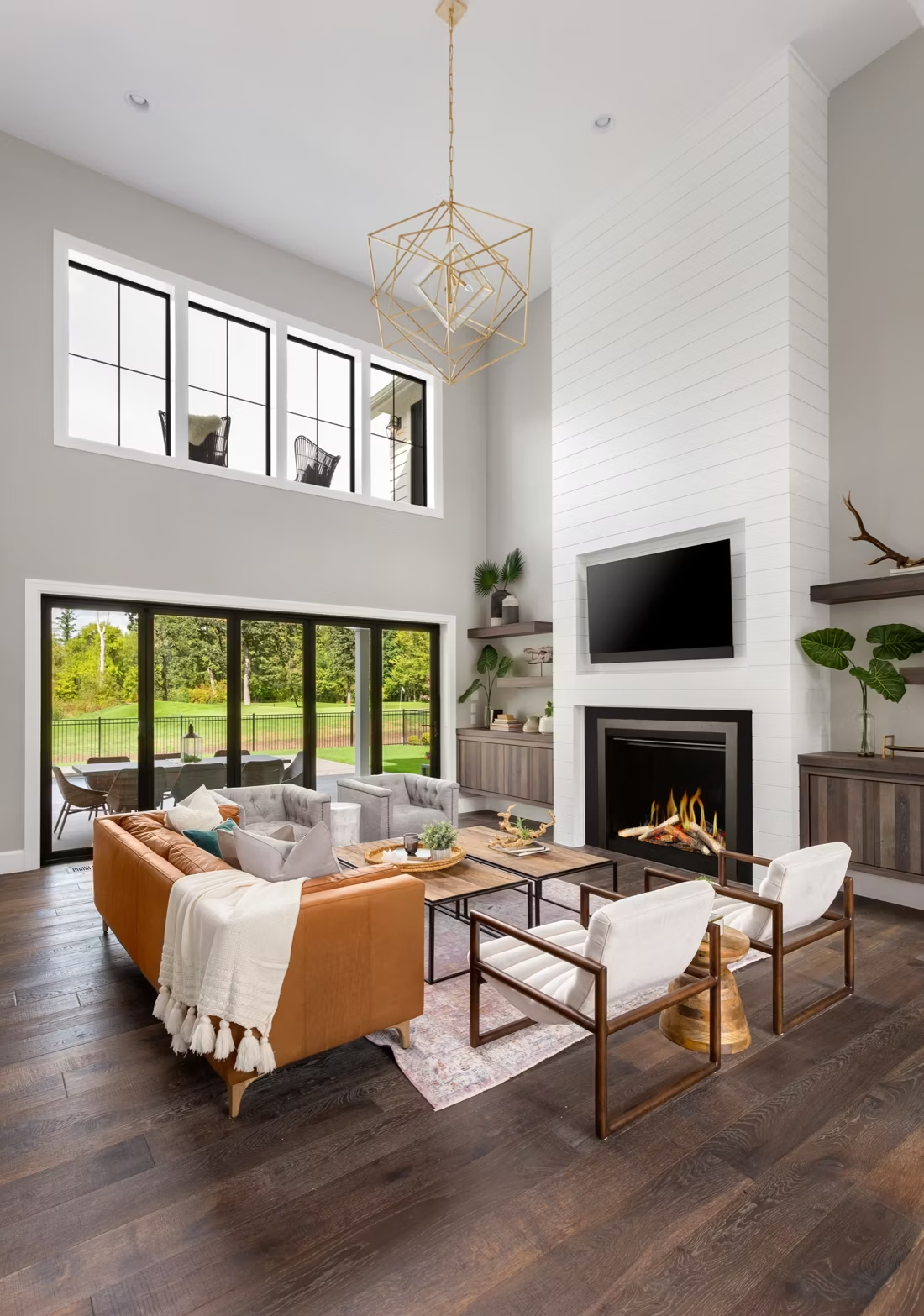
Yes—with an asterisk. Fireplaces are hot and TVs don't like heat. Either put a mantel between them to deflect rising warmth, or choose a fireplace with heat-management technology that creates a cool zone on the wall above—the wall stays around 125 degrees, barely warm, while the room still gets full heat. If you like clean lines and don't want a mantel, heat management is the answer.
Do electric fireplaces actually produce heat?
Yes—most put out around 4,800–5,000 BTUs from a standard outlet, which comfortably warms a bedroom, office, or den as a comfort-zone heater. What they won't do is carry a whole house the way wood, gas, or pellet can. Think of electric as ambiance-first with honest supplemental heat: flames on with no heat in July, flames plus warmth in January.
How much should I budget for a fireplace?
For an average home—covering the fireplace, the vent pipe, and basic installation—a budget between $3,900 and $5,500 gives you a lot of options across wood, gas, and pellet. By the time you add finish work, gas line, and electrical, the average complete installation lands between $5,000 and $12,000 all-in. In a remodel or new build, a good rule is to put about 2.5% of the total project cost toward the fireplace.
Can I install a fireplace myself?
If you're putting a fire in your house on purpose, it's best to work with an expert. Unless you're genuinely experienced in framing, gas line, vent pipe, and the national code on clearances to combustibles, have a professional do it—and ideally the same company that sells you the fireplace, so warranty, service, and liability all live under one roof.
Stove and Fireplace Dealers in Wilson County
Listings include WhyFire partner dealers, dealers we have verified as authorized for the brands we recommend, and established local businesses that carry hearth products. Every listing shows which one it is. The ones marked Preferred run on WhyFire's software, so they can show you real pricing and book your appointment right here. No manufacturer pays for placement. How we verify dealers →
Ashbusters Chimney Service
Countryside Fireplaces & More
Allegiance Chimney Solutions
A/c Plus Heating & Cooling, Inc.
31-W
Find your electric fireplace in Wilson County.
Tell us a bit about your home and we'll match you with the right electric fireplace, insert, or stove—plus a free Project Guide & Parts List and a trusted local Wilson County dealer to install it.
Find Your Fireplace →