
No chimney, no gas line, no problem.
For homes and cabins across White County—from Sparta to the ridges near Fall Creek Falls—electric heat means real ambiance and zone warmth without venting, wood storage, or a gas hookup. Find the right unit and connect with a trusted local dealer.
Every Project Starts From One of These Five Situations
Reliable warmth without venting or fuel storage.
White County sits where the Eastern Highland Rim meets the Cumberland Plateau, with Sparta as the county seat and a population under 6,000 spread across mostly rural land. Climate zone 4A puts winters here well short of the deep cold of a place like Duluth, MN—average lows sit around 28°F and the county sees a moderate winter heating season, meaning central heat pumps do the heavy lifting in most homes while wood (oak, hickory, and maple are all abundant, with cutting permits available through Cherokee National Forest at $20 a cord) handles supplemental and backup heat in many rural households.
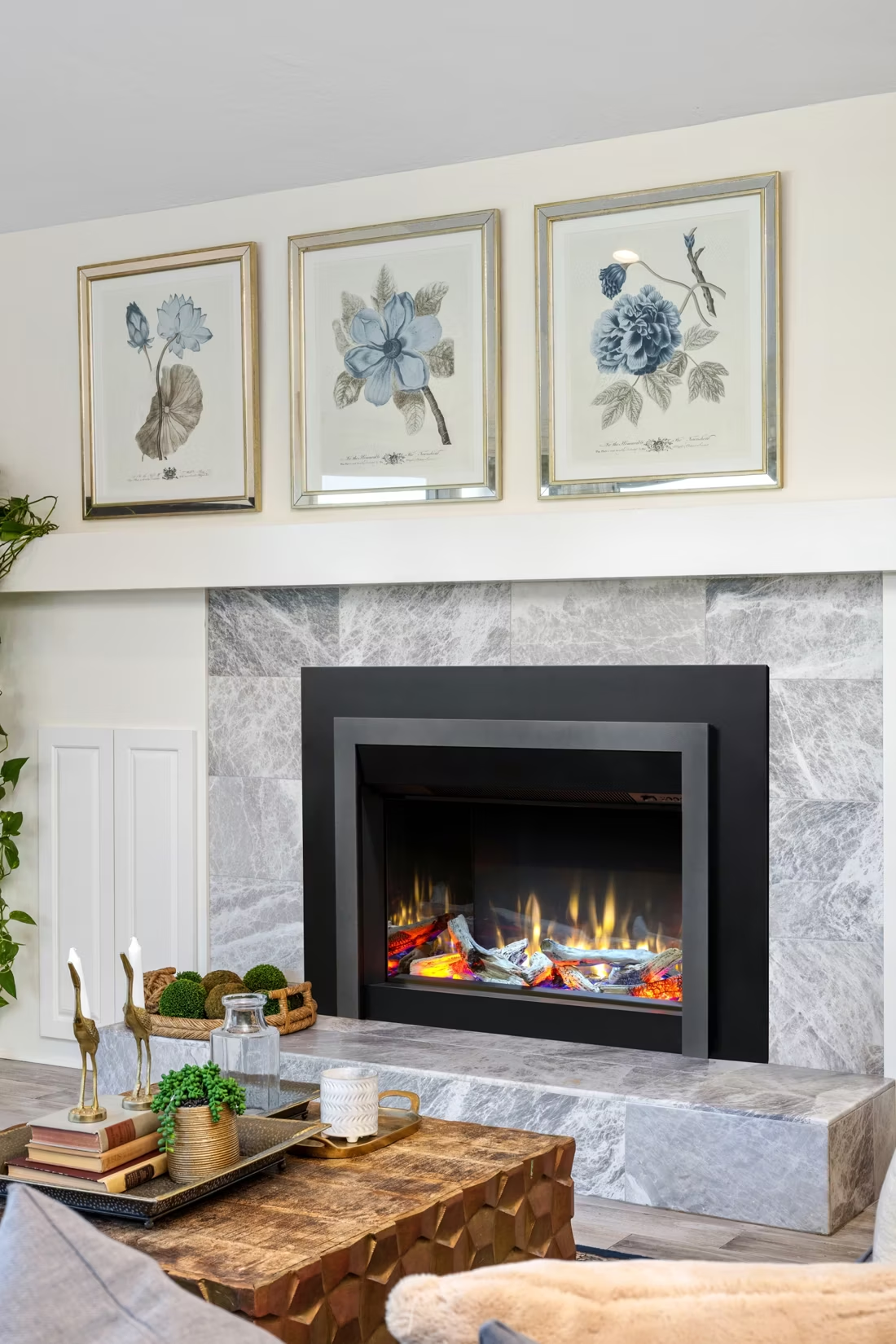
Against that backdrop, electric fireplaces fill a specific and growing niche: additions, finished basements, mobile homes, rental units, and cabins near Fall Creek Falls where owners want the look and feel of a fire without running a flue or a gas line. Caney Fork Electric Cooperative serves most of the county outside Sparta's city limits, and because electric units plug into existing household power (or a simple dedicated circuit), installation is faster and far less invasive than wood or gas work. The trade-off is heat output—electric fireplaces are built for ambiance and zone comfort, not for replacing your heat pump on a January night.
Three steps. No salesperson until you're ready.
Tell us about your project
Your zip code, your situation, and the fuel you're leaning toward—or let the answers point you to one.
See what's actually available
The brands dealers within 100 miles genuinely carry—real options, never a catalog mirage.
Get your dealer & Project Guide
A trusted local dealer, plus the free Project Guide & Parts List that names every component of the job.
Frequently Asked Questions
How much does an electric fireplace installation cost in White County?
Plug-in electric fireplace inserts and freestanding units typically run $300 to $1,500 installed, since most simply plug into an existing 120V outlet with no electrical work needed. Built-in linear models or custom mantel packages that require a dedicated 20-amp circuit, in-wall wiring, or surround carpentry run higher—often $2,000 to $5,000 by the time an electrician and finish carpentry are factored in. Rural installs out toward Doyle or Rickman may carry a small trip charge from local contractors, but electric remains the least expensive of the four fuel types to install in White County.
Do I need an electrician or a dedicated circuit for an electric fireplace?
Most compact electric fireplace inserts and stoves draw around 1,500 watts and run fine on a standard 15- or 20-amp household outlet—no electrician required. Larger built-in units, especially wide linear models used as a focal wall feature, often call for a dedicated circuit to avoid tripping breakers when the heater element is running alongside other appliances. If you're adding a fireplace to a room on an older circuit, or wiring one into new construction or a basement remodel, a licensed electrician should run that dedicated line—local hearth dealers can tell you which models need it before you buy.
Can an electric fireplace actually heat a room in White County's winters?
An electric fireplace with a 1,500-watt heater puts out roughly 4,600 to 5,200 BTUs, which is enough to comfortably supplement a single room—a den, bonus room, or finished basement—but it isn't sized to replace central heat during White County's coldest stretches. With average winter lows around 28°F and a winter heating season that runs moderate but steady, most homes here still rely on a heat pump or furnace as primary heat, with the electric fireplace adding warmth and comfort to the room you're actually using. For anyone hoping to offset whole-home heating costs, wood or a gas insert will do more work per dollar.
Do I need a permit to install an electric fireplace in White County?
A simple plug-in electric fireplace or insert generally doesn't require a permit since no gas line, venting, or new wiring is involved. If your installation includes a dedicated circuit, new outlet, or in-wall wiring—common with larger built-in units—an electrical permit through the White County Building Department (or the City of Sparta if you're inside city limits) is typically required, and the work should be done or signed off by a licensed electrician. Most local dealers can tell you upfront whether your chosen model triggers a permit.
What's the difference between an electric fireplace, insert, and mantel package?
An electric fireplace insert is designed to slide into an existing masonry firebox or a factory-built zero-clearance opening, giving an old wood-burning fireplace new life without touching the chimney. A standalone electric fireplace is a self-contained unit, often wall-mounted or recessed, used where there's no existing fireplace at all. A mantel package pairs an electric insert with a surrounding mantel and shelf unit—popular for White County homes that want a finished focal-point wall without any masonry or built-in framing. Which one fits depends mostly on whether you're upgrading an existing hearth or starting from a blank wall.
What's the best electric fireplace for a White County home?
For most White County living rooms and basements, a mid-size linear electric insert with a realistic LED flame effect and a separate heater switch works well—you get year-round ambiance with the heat element only running when the room actually needs it. For cabins and rental properties near Fall Creek Falls where units sit empty for stretches, look for models with a remote or app control and an auto shut-off timer. Local dealers carrying brands like Dimplex and Napoleon can match wattage and screen size to your room and let you see the flame effect in person before you buy—something that's hard to judge from photos alone.
Electric vs. wood—which makes more sense for my White County home?
Wood remains the workhorse fuel in rural White County—oak, hickory, and maple are all locally abundant, cutting permits through Cherokee National Forest run about $20 a cord, and a wood stove keeps working through a power outage, which matters on the plateau where storms can knock out lines for days. Electric fireplaces can't provide heat without power, but they install in minutes, need no chimney or wood storage, and work anywhere there's an outlet—including mobile homes, apartments, and finished basements where a wood or gas installation isn't practical. Many households end up with both: wood for primary or backup heat, electric for a low-maintenance ambiance piece in a secondary room.
How much does it cost to run an electric fireplace in White County?
A typical 1,500-watt electric fireplace heater costs roughly $0.20 to $0.30 an hour to run at Caney Fork Electric Cooperative's residential rates, or about $1.50 to $2.50 for a five-to-eight-hour evening of use. Running the flame effect alone, without the heater engaged, draws only a few watts and costs pennies a day—a big part of why many owners run the flame for ambiance during White County's milder shoulder seasons and only switch on the heater when temperatures actually drop.
Where do electric fireplaces make the most sense in White County?
Electric fireplaces are a strong fit anywhere a chimney or gas line isn't realistic: finished basements, additions built without a flue, mobile and manufactured homes, apartments and rental units, and vacation cabins near Fall Creek Falls where owners want fireplace ambiance without maintaining venting on a property they don't occupy full-time. They're also popular as a second fireplace—a bedroom or den unit that supplements a home already heated by a wood stove or central heat pump. For a primary-heat installation in a year-round farmhouse, wood or gas will usually do more for the investment.
Can I put a TV above my fireplace?
Yes—with an asterisk. Fireplaces are hot and TVs don't like heat. Either put a mantel between them to deflect rising warmth, or choose a fireplace with heat-management technology that creates a cool zone on the wall above—the wall stays around 125 degrees, barely warm, while the room still gets full heat. If you like clean lines and don't want a mantel, heat management is the answer.
Does an electric fireplace need a vent or chimney?
No—that's its superpower. An electric fireplace needs a wall and an outlet, period. No vent pipe, no gas line, no clearances to design around, which is why it works in bedrooms, offices, apartments, and walls where venting a gas or wood unit would be impractical or impossible. Installation is typically the simplest and least expensive of any fireplace type.
What is an in-home preview and do I need one?
It's a visit where a hearth professional measures your space, confirms the model you picked actually works in your home, and walks the specs—framing, gas line, venting, finish work—before anything is ordered. Some details you just can't know until you see the house. Never make a down payment without one; it's the single most-skipped step that burns buyers.
Does a fireplace add value to my home?
On average, a fireplace adds back to the home about the same amount you spent installing it. Add the monthly savings from heating the rooms you actually use instead of the whole house—often hundreds of dollars a year—and the value case is strong before you even count what a fire does for how your family uses the room.
Stove and Fireplace Dealers in White County
Listings include WhyFire partner dealers, dealers we have verified as authorized for the brands we recommend, and established local businesses that carry hearth products. Every listing shows which one it is. The ones marked Preferred run on WhyFire's software, so they can show you real pricing and book your appointment right here. No manufacturer pays for placement. How we verify dealers →
Spar Gas Inc.
Middle Tn Natural Gas - Sparta
Ap Hearth LLC
Middle Tn Natural Gas - Smithville
Volunteer Hearth & Home
Middle Tn Natural Gas - Crossville
Find your electric fireplace in White County.
Tell us a bit about your home and we'll match you with the right electric fireplace or insert, plus a free Project Guide & Parts List—the exact parts, any electrical work needed, and a trusted local dealer serving White County.
Find Your Fireplace →