
Modern warmth for Unicoi County's Appalachian winters.
No chimney, no gas line, no wood to split—just zone heat that works in a bonus room in Erwin, a rental cabin near the Appalachian Trail, or a sunroom above the Nolichucky. Find the right unit and connect with a trusted local dealer.
Every Project Starts From One of These Five Situations
Instant, safe heat without the venting or permits.
Unicoi County sits in the Unaka Mountains of upper East Tennessee, with Erwin down along the Nolichucky River and terrain climbing toward Roan Mountain and the Appalachian Trail corridor. At 4,390 heating degree days and a winter low averaging 24°F, the county's zone 4A climate is real winter—cold enough to need heat most nights from November through March—but nowhere near the sustained sub-zero stretches of a place like Buffalo, NY or Duluth, MN. That's exactly the kind of climate where electric fireplaces earn their place: reliable warmth for the hours you're actually in a room, without committing to a full wood-burning or gas system.
With no air quality restrictions or burn bans in the county, homeowners here have real flexibility, and a lot of them still choose electric for practical reasons—older homes near Erwin with a masonry fireplace that's expensive to reline for gas, manufactured and modular homes scattered through Flag Pond and the outlying hollows, rental cabins that need reliable ambiance without wood delivery logistics, and finished basements or bonus rooms that just need supplemental heat. Most Unicoi County homes run on electric heat pumps already, so adding an electric fireplace or insert is often just plugging into infrastructure that's already in place—no new wiring for smaller units, a single dedicated circuit for larger built-ins.
Three steps. No salesperson until you're ready.
Tell us about your project
Your zip code, your situation, and the fuel you're leaning toward—or let the answers point you to one.
See what's actually available
The brands dealers within 100 miles genuinely carry—real options, never a catalog mirage.
Get your dealer & Project Guide
A trusted local dealer, plus the free Project Guide & Parts List that names every component of the job.
Frequently Asked Questions
How much does an electric fireplace installation cost in Unicoi County?
A plug-in electric insert or freestanding stove that uses a standard household outlet typically runs $300 to $1,500 installed, since there's no wiring work involved beyond setting the unit and finishing any surround. A built-in, wall-mounted, or recessed electric fireplace that needs a dedicated 20-amp circuit run by a licensed electrician runs higher, often $1,500 to $3,500, depending on how far the unit sits from the electrical panel and whether trim carpentry or a mantel surround is part of the job. Homes in the more remote parts of the county—up toward Flag Pond or the higher hollows off Highway 19W—may see a modest travel charge added by the installing electrician or dealer.
Do I need a permit to install an electric fireplace in Unicoi County?
In most cases, no—a plug-in electric fireplace or insert that doesn't require new wiring is treated like any other appliance and doesn't need a permit. If your installation involves running a new dedicated circuit or altering existing wiring for a built-in unit, that electrical work does require a permit through the Unicoi County Building and Codes Department, and it needs to be pulled by a licensed electrician. Most local dealers either employ a licensed electrician directly or work with one regularly, so this step is usually handled for you rather than something you coordinate yourself.
Can an electric fireplace heat my whole house?
Generally no, and it's worth being upfront about that. Most electric fireplaces and inserts are rated to comfortably heat somewhere between 400 and 1,000 square feet as supplemental zone heat—not a whole home. In a zone 4A climate like Unicoi County's, with 4,390 heating degree days of real winter demand, electric fireplaces work best paired with the heat pump or central system most homes already have, warming the room you're actually using while the main system carries the rest of the house. If you're trying to heat an entire cabin or a large open floor plan primarily with electric, a wood stove or gas system will get you there more efficiently.
Will my electric fireplace work if the power goes out?
No—this is the honest tradeoff with electric heat. Unlike a gas fireplace with battery-backed ignition, an electric fireplace or insert simply won't run without utility power. Winter ice storms in the Unaka Mountains and along the ridges above Erwin can knock out power for hours at a time, so if backup heat during an outage matters to your household, an electric fireplace should be a comfort and convenience choice, not your only heat source. Many Unicoi County homeowners pair an electric unit for daily use with a wood stove or fireplace as the outage-proof backup.
Electric vs. wood—which is right for my Unicoi County home?
Wood heat has deep roots here—oak, hickory, maple, and pine are all common locally, and cutting permits through the Nantahala-Pisgah National Forests run about $20 per cord during the May-to-October season, which keeps fuel costs low for homeowners willing to cut and split their own. Wood also keeps working when the power doesn't. Electric wins on convenience: no ash, no chimney maintenance, no hauling wood, and it's the more practical choice for a rental property, a condo in Erwin, or a room where installing a chimney simply isn't realistic. Many local households run both—wood for backup heat and ambiance, electric for the rooms where a fire needs to be as easy as flipping a switch.
What's the difference between an electric insert and a freestanding electric stove?
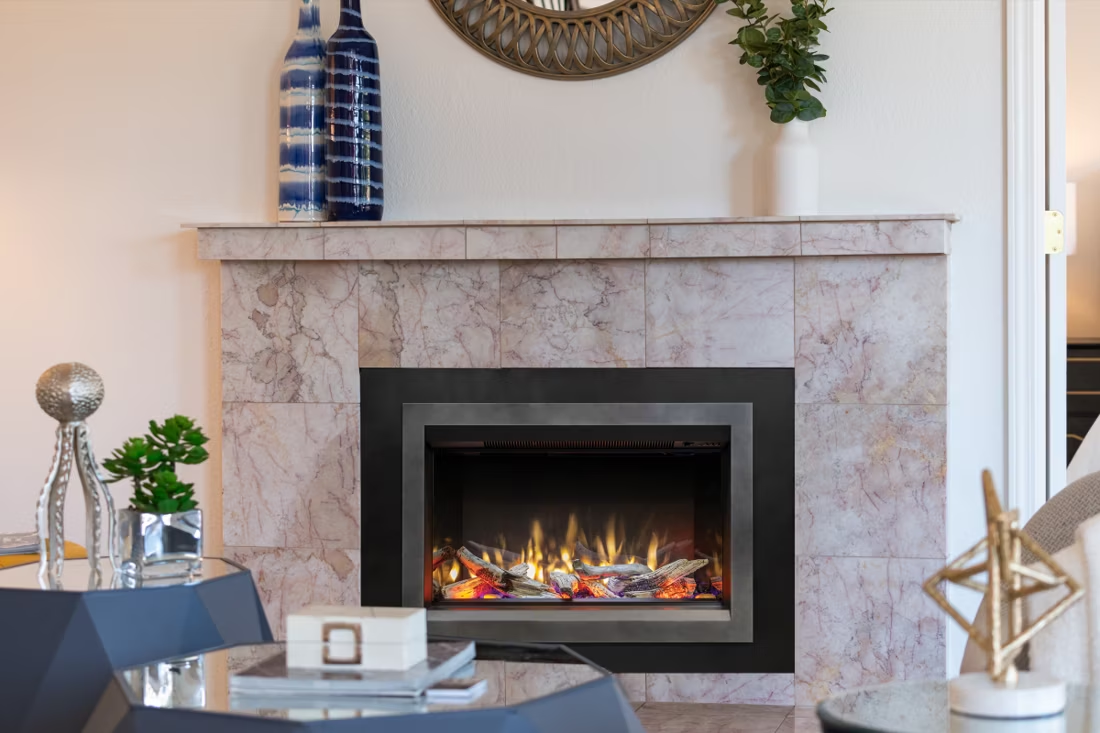
An electric insert is built to slide into an existing masonry fireplace opening, which makes it a common upgrade for older homes in and around Erwin that have a fireplace but rarely use it for actual heat. A freestanding electric stove or built-in wall unit works anywhere there's an outlet or circuit, which makes it more flexible for a basement, bonus room, or a house with no existing fireplace at all. Both use the same resistive-heat or infrared technology; the choice mostly comes down to whether you're working with an existing opening or starting from scratch.
How much does it cost to run an electric fireplace?
Electric fireplaces convert essentially 100% of the electricity they draw into heat at the point of use, so running cost comes down to your local electric rate and how many hours a day you run the unit. A typical 1,500-watt unit run several hours a night during the winter adds a modest amount to a monthly bill from Erwin Utilities or your local electric cooperative—nowhere near what running central heat for the same square footage would cost, since you're only heating the room you're in rather than the whole house.
Electric vs. pellet stove—which makes more sense here?
It's worth knowing that pellet stoves also depend on electricity to run their auger and blower, so neither option keeps working in an extended outage without a generator. Where they differ: a pellet stove burns bagged fuel from suppliers like Lignetics, Hamer Pellet Fuel, or Greenway Renewable Energy and can put out real whole-room or whole-home heat, while an electric fireplace is simpler to install, needs no fuel storage or hopper loading, and produces no ash. For a primary heat source in a drafty older home, pellet often wins on output. For a clean, low-maintenance ambiance unit in a room that already has heat, electric is usually the simpler call.
What size electric fireplace do I need for my room?
Sizing an electric fireplace is mostly about width and heat output rather than the elevation and drafty-home considerations that matter more for wood or gas. A 30-to-40-inch insert or wall unit suits a standard bedroom or den, while a 50-to-60-inch unit fits a great room or open-concept living area better, both visually and for heat coverage. Since most electric units are rated for 400 to 1,000 square feet regardless of size, the bigger factor for a large or open Unicoi County floor plan is usually placement—putting the unit where the family actually spends time rather than trying to make one unit cover the whole house. A local dealer can walk your specific room and make that call for you.
Can I put a TV above my fireplace?
Yes—with an asterisk. Fireplaces are hot and TVs don't like heat. Either put a mantel between them to deflect rising warmth, or choose a fireplace with heat-management technology that creates a cool zone on the wall above—the wall stays around 125 degrees, barely warm, while the room still gets full heat. If you like clean lines and don't want a mantel, heat management is the answer.
Does an electric fireplace need a vent or chimney?
No—that's its superpower. An electric fireplace needs a wall and an outlet, period. No vent pipe, no gas line, no clearances to design around, which is why it works in bedrooms, offices, apartments, and walls where venting a gas or wood unit would be impractical or impossible. Installation is typically the simplest and least expensive of any fireplace type.
How much should I budget for a fireplace?
For an average home—covering the fireplace, the vent pipe, and basic installation—a budget between $3,900 and $5,500 gives you a lot of options across wood, gas, and pellet. By the time you add finish work, gas line, and electrical, the average complete installation lands between $5,000 and $12,000 all-in. In a remodel or new build, a good rule is to put about 2.5% of the total project cost toward the fireplace.
Can a fireplace actually lower my heating bill?
Yes—by creating a comfort zone. A furnace heats every square foot of the house just to warm the one room you're in; a gas fireplace on low burns roughly a sixth of the gas a typical furnace does. Set the furnace around 55–60 degrees as a baseline, then heat the rooms your family actually uses. Families who heat this way commonly save $20–$60 a month.
Stove and Fireplace Dealers in Unicoi County
Listings include WhyFire partner dealers, dealers we have verified as authorized for the brands we recommend, and established local businesses that carry hearth products. Every listing shows which one it is. The ones marked Preferred run on WhyFire's software, so they can show you real pricing and book your appointment right here. No manufacturer pays for placement. How we verify dealers →
Blossman Gas And Appliance
Youngs Fuel Service
Builders First Source- Gray
Roan Mountain Lawn & Garden
Blossman Gas
Admiral Propane LLC
Gas House Inc
Marsh Lp Gas
Shaw Lp Gas Inc.
Burleson Plumbing & Heating
L & L Furniture
Superior Installation Inc.
Cornerstone Hearth & Home
Find your electric fireplace in Unicoi County.
Tell us a bit about your home and we'll put together a free Project Guide & Parts List—the right electric fireplace or insert for your space, matched with a trusted local dealer who can install it correctly.
Find Your Fireplace →