
Warmth without the woodpile, right here in Trousdale County.
With winter lows averaging around 26°F and a moderate winter heating season overall, Trousdale County's mixed-humid climate doesn't demand a wood-fired furnace to stay comfortable. Find the right electric fireplace or insert for your home and get matched with a trusted local dealer.
Every Project Starts From One of These Five Situations
Modest winters, maximum flexibility for Trousdale County homes.
Trousdale County is small—about 11,600 people spread across Hartsville and the farmland and river bottoms that surround it along the Cumberland River. Climate zone 4A means a mixed-humid winter that's real but not brutal: an average low near 26°F and a moderate winter heating season overall, a fraction of what a place like Fargo, North Dakota logs in a typical winter. That matters for fireplace choice. Homes here don't need a wood furnace running around the clock to survive January—they need targeted, reliable heat in the rooms people actually use, and an electric fireplace or insert delivers exactly that without a flue, a woodpile, or a gas line.
Local hardwood—oak, hickory, maple, and pine—is plentiful here and plenty of Trousdale County homes still burn it, but electric units have become a common second heat source or a full replacement in additions, sunrooms, converted garages, and rental properties where running new gas or building a chimney isn't practical. Power in the county comes through Middle Tennessee Electric, a TVA power distributor, and rates are generally stable enough that running a 1,500-watt electric fireplace heater as supplemental heat is inexpensive relative to central HVAC. Plug-in units need nothing more than an outlet; built-in models may call for a dedicated circuit and a look from the Hartsville/Trousdale County Metropolitan Government building department, which handles permitting for the consolidated city-county.
Three steps. No salesperson until you're ready.
Tell us about your project
Your zip code, your situation, and the fuel you're leaning toward—or let the answers point you to one.
See what's actually available
The brands dealers within 100 miles genuinely carry—real options, never a catalog mirage.
Get your dealer & Project Guide
A trusted local dealer, plus the free Project Guide & Parts List that names every component of the job.
Frequently Asked Questions
How much does an electric fireplace installation cost in Trousdale County?
A freestanding or wall-mounted plug-in electric fireplace typically costs $300 to $1,200 for the unit itself, with no installation cost beyond plugging it into an existing outlet. Built-in electric fireplaces or inserts that require a dedicated circuit, minor framing, or wall recessing run closer to $800 to $2,500 installed once a licensed electrician's work is included. Converting an old masonry fireplace with an electric insert tends to land in the middle of that range since no venting or chimney work is needed—just a properly sized insert and, in some cases, a new outlet inside the firebox.
Do I need a permit for an electric fireplace in Trousdale County?
A plug-in unit that runs off an existing outlet doesn't require a permit. If your project involves adding a dedicated circuit, running new wiring, or building a wall recess for a built-in unit, that electrical work generally needs a permit through the Hartsville/Trousdale County Metropolitan Government building department, since Hartsville and Trousdale County operate under one consolidated government. Most local electricians and hearth dealers handle that paperwork as part of the installation, so it's rarely something you have to manage yourself.
Will an electric fireplace actually heat my room in Trousdale County's climate?
For most Trousdale County homes, yes—as supplemental or zone heat. With winters averaging around 26°F and a moderate winter heating season overall, this isn't a climate that demands a whole-home wood furnace the way a northern winter in Fargo, North Dakota or Duluth, Minnesota would. A standard 1,500-watt electric fireplace heater can comfortably take the edge off a bedroom, den, or sunroom in the 300–1,000 square foot range on its own circuit. For whole-home heat, central HVAC still does the heavy lifting here; the electric fireplace's job is targeted comfort and ambiance in the room you're actually sitting in.
What's the difference between an electric fireplace, insert, and stove?
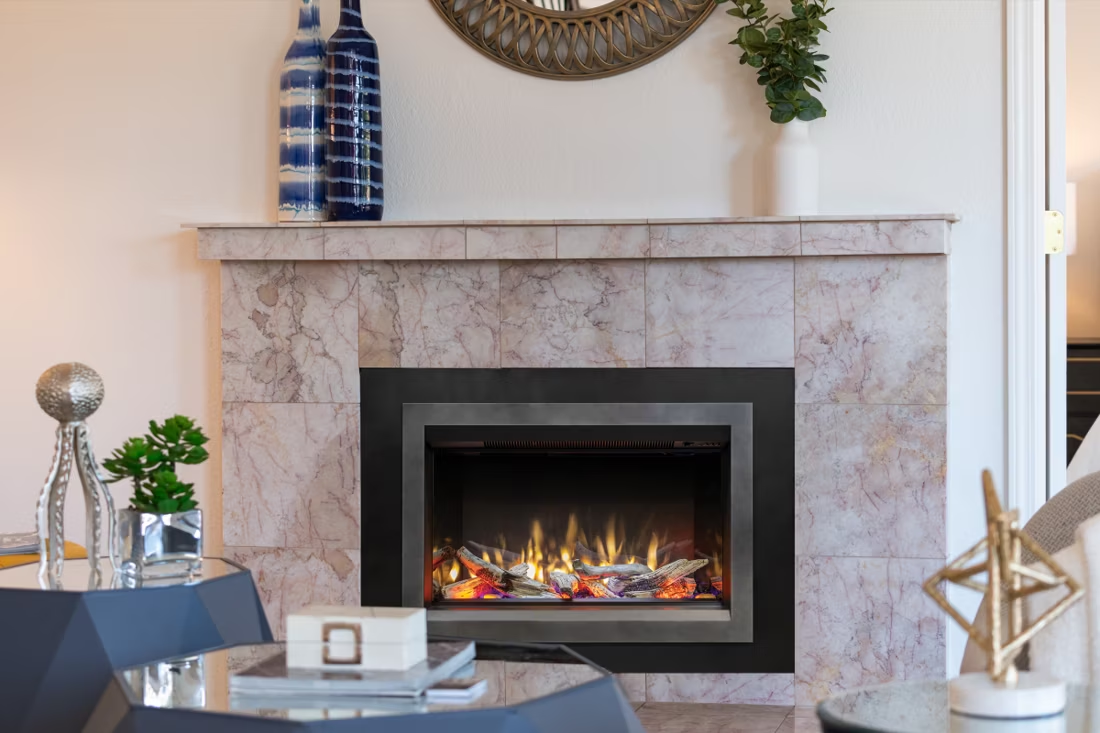
An electric fireplace is typically a built-in or wall-mounted unit designed to look like a framed fireplace, often with a mantel. An electric insert is sized to slide into an existing masonry firebox, which makes it a popular option for older Trousdale County homes that already have a wood fireplace they want to retire without losing the look. An electric stove is a freestanding cabinet-style unit that mimics a wood stove's footprint and can sit almost anywhere near an outlet. All three use the same basic heating element and flame-effect technology—the difference is really about form factor and where it fits in your home.
Can I put an electric insert into my existing wood fireplace?
Yes, and it's one of the more common projects local dealers handle in Trousdale County. Many older homes here still have a masonry fireplace originally built for oak or hickory cordwood, and swapping in a zero-clearance electric insert keeps the look of the firebox while eliminating ash, creosote, and the need for a chimney sweep. No venting is required since there's no combustion, so the job is usually just fitting the insert and, if needed, adding an outlet inside the firebox. It's a common choice for landlords and homeowners who want the visual warmth of a fireplace without the upkeep of burning wood.
How does electric heat compare to wood heat in Trousdale County?
Wood remains genuinely practical here—oak, hickory, maple, and pine are all locally abundant, there are no air quality restrictions or burn-ban concerns in the county, and a wood stove keeps working during a power outage, which matters when Middle Tennessee ice storms occasionally take down lines. Electric fireplaces can't offer that same off-grid backup, since they need power to run. What electric does offer is zero ash, zero chimney maintenance, and instant on-off convenience for a room you use daily. Plenty of Trousdale County homes end up with both: wood or a wood insert for real backup heat, electric for the low-maintenance everyday room.
Will my electric fireplace work during a power outage?
No—electric fireplaces require power to run the heating element and flame effect, so they go dark along with everything else if the grid goes down. Middle Tennessee Electric's service in Trousdale County is generally reliable, but winter ice storms can still knock out power for stretches. If backup heat during outages matters to you, pair your electric fireplace with a small generator, or consider keeping a wood-burning option in the house as well—many local homes do exactly that, using wood as the storm backup and electric for daily convenience.
What size electric fireplace do I need for my Trousdale County home?
Sizing an electric fireplace is mostly about the room, not the whole house, since these units are built for zone heating rather than central heat. A compact 26–40 inch wall-mount or insert suits a bedroom or den up to around 400 square feet. A 50–60 inch built-in unit can take the edge off a living room in the 800–1,200 square foot range. Beyond that, the flame effect and mantel size become more of a design decision than a heating one—you're choosing based on the wall and the look, not because a bigger unit heats meaningfully more space. A local dealer can walk through your room dimensions and recommend a specific model.
Electric vs. pellet—which is right for my home?
Pellet stoves burning bags from regional suppliers like Lignetics, Hamer Pellet Fuel, or Greenway Renewable Energy produce more usable heat output than a typical electric fireplace and can serve as genuine primary or supplemental heat for a whole room or small home. But pellet stoves still need electricity to run the auger and blower, so they're not truly off-grid either, and they require venting, fuel storage, and regular hopper loading and ash removal. Electric fireplaces skip all of that—no venting, no fuel to store, no maintenance beyond dusting—but they top out at lower heat output, generally enough for a single room rather than a whole living area. If low-maintenance ambiance in one room is the goal, electric wins; if you want meaningful heat output without a chimney, pellet is worth a look.
Do electric fireplaces actually produce heat?
Yes—most put out around 4,800–5,000 BTUs from a standard outlet, which comfortably warms a bedroom, office, or den as a comfort-zone heater. What they won't do is carry a whole house the way wood, gas, or pellet can. Think of electric as ambiance-first with honest supplemental heat: flames on with no heat in July, flames plus warmth in January.
Can I put a TV above my fireplace?
Yes—with an asterisk. Fireplaces are hot and TVs don't like heat. Either put a mantel between them to deflect rising warmth, or choose a fireplace with heat-management technology that creates a cool zone on the wall above—the wall stays around 125 degrees, barely warm, while the room still gets full heat. If you like clean lines and don't want a mantel, heat management is the answer.
Can I install a fireplace myself?
If you're putting a fire in your house on purpose, it's best to work with an expert. Unless you're genuinely experienced in framing, gas line, vent pipe, and the national code on clearances to combustibles, have a professional do it—and ideally the same company that sells you the fireplace, so warranty, service, and liability all live under one roof.
Can a fireplace actually lower my heating bill?
Yes—by creating a comfort zone. A furnace heats every square foot of the house just to warm the one room you're in; a gas fireplace on low burns roughly a sixth of the gas a typical furnace does. Set the furnace around 55–60 degrees as a baseline, then heat the rooms your family actually uses. Families who heat this way commonly save $20–$60 a month.
Stove and Fireplace Dealers in Trousdale County
Listings include WhyFire partner dealers, dealers we have verified as authorized for the brands we recommend, and established local businesses that carry hearth products. Every listing shows which one it is. The ones marked Preferred run on WhyFire's software, so they can show you real pricing and book your appointment right here. No manufacturer pays for placement. How we verify dealers →
Webbtown Propane Company
Spar-Gas
Countryside Fireplaces & More
Middle Tn Natural Gas - Gordonsville
Colligan Group Dba Frugal Mick
Find your electric fireplace in Trousdale County.
Tell us a bit about your home and we'll match you with a trusted local dealer serving Trousdale County, plus a free Project Guide & Parts List with the exact components—including any wiring or insert parts—for your electric fireplace project.
Find Your Fireplace →