
Electric fireplace warmth for Stewart County, without the chimney work.
From Dover to the lake cabins along Land Between the Lakes, an electric fireplace plugs into your existing wiring or a simple dedicated circuit—no gas line, no flue, no wood to split. Find the right unit and connect with a trusted local dealer.
Every Project Starts From One of These Five Situations
No venting, no gas line, no fuss.
Stewart County is small—about 2,600 people spread across a rural stretch of northwest Tennessee bordered by the Cumberland River and the Land Between the Lakes National Recreation Area. Winters here are mild by national standards (climate zone 4A, average winter lows around 27°F, roughly 3,845 heating degree days), which means most homes need supplemental zone heat rather than a full-time primary heat source. That's exactly the niche an electric fireplace fills—whether it's a lake cabin near LBL that only gets used part of the year, a historic home near the Fort Donelson area where altering a chimney isn't practical, or a manufactured home outside Dover where running gas line or a wood chimney isn't an option.
Cumberland Electric Membership Corporation (CEMC), the TVA distributor serving most of Stewart County, keeps residential electric rates competitive, which makes electric fireplaces an inexpensive way to add real, visible-flame ambiance and localized heat to a bedroom, den, or lake-house living room. Unlike wood or gas, there's no cutting permit, no flue inspection, and no fuel delivery to plan around—you're looking at an electrician setting a dedicated circuit (if needed) and a local dealer handling the fit and finish.
Three steps. No salesperson until you're ready.
Tell us about your project
Your zip code, your situation, and the fuel you're leaning toward—or let the answers point you to one.
See what's actually available
The brands dealers within 100 miles genuinely carry—real options, never a catalog mirage.
Get your dealer & Project Guide
A trusted local dealer, plus the free Project Guide & Parts List that names every component of the job.
Frequently Asked Questions
How much does an electric fireplace installation cost in Stewart County?
Most electric fireplace projects in Stewart County run $400 to $1,800 all-in. A plug-in insert or mantel package that uses an existing outlet sits at the low end—often just delivery and placement. A built-in linear unit set into a wall or existing masonry opening, which usually calls for a licensed electrician to run a dedicated 20-amp circuit, runs higher once framing and trim work are included. Lake cabins around Land Between the Lakes sometimes add a modest travel charge for installers coming from Dover or Clarksville, but the work itself is straightforward compared to a gas line or chimney project.
What size electric fireplace do I need for my home?
Because electric units are zone heaters rather than whole-house furnaces, sizing is more about the room than the square footage of the house. A 1,500-watt insert or mantel unit comfortably takes the chill off a bedroom or den up to about 400 square feet—plenty for most Stewart County homes given the mild 4A climate and average winter lows in the upper 20s. Larger open-concept living rooms, common in newer construction near Dover, often do better with a wider linear unit or two smaller units placed strategically. A local dealer will walk the room with you before recommending wattage and width.
Where can I find electric fireplace installers near me in Stewart County?
Look for a hearth dealer who works with a licensed electrician, since anything beyond a plug-in unit means running or upgrading a circuit to code. Dealers serving Stewart County typically cover Dover and the surrounding rural routes, including the cabin communities near Land Between the Lakes, and most will quote a small trip charge for properties farther from town. Because CEMC is the utility across most of the county, installers here are used to working within co-op service specs for dedicated circuits—worth mentioning when you call for a quote.
What's the difference between an electric fireplace, insert, and heater?
An electric fireplace is typically a stand-alone or wall-mounted unit built around a flame-effect display, often housed in a mantel surround—it's furniture as much as heat source. An electric insert is sized to slide into an existing masonry or wood-stove opening, which makes it a popular retrofit for older Stewart County homes with a fireplace that's no longer used for wood. A plug-in space heater has no flame effect and is purely functional. For homes near Fort Donelson with an existing but unused fireplace opening, an insert is usually the cleanest upgrade; for a bare wall in a den or lake house, a mantel-style fireplace or built-in linear unit works better.
Do I need a permit to install an electric fireplace in Stewart County?
A simple plug-in unit that uses an existing outlet generally doesn't require a permit. If your installation calls for a new dedicated circuit or any electrical panel work, that portion needs to be done by a licensed electrician and typically requires an electrical permit—in Stewart County's unincorporated areas, inspections for that kind of work are often handled through the Tennessee State Fire Marshal's Office rather than a local building department, since the county doesn't run its own full-time codes office. Your dealer or electrician can confirm what's required for your specific address, including within Dover city limits.
What's the best electric fireplace for Stewart County's climate?
Given Stewart County's mild winters—average lows around 27°F and roughly 3,845 heating degree days—most homeowners are looking for supplemental warmth and ambiance rather than a primary heat source, so a 1,500-watt unit with a good LED flame display covers most needs. For lake cabins near Land Between the Lakes that sit empty for stretches, models with app or thermostat control let you bring the cabin up to temperature before you arrive. For a den or living room used daily, a linear built-in with a real ember-bed effect tends to get the most use—local dealers can show you the difference in person rather than off a spec sheet.
How much does it cost to run an electric fireplace day to day?
A standard 1,500-watt electric fireplace run on high draws about 1.5 kWh per hour. At CEMC's typical residential rate, that works out to roughly 15 to 20 cents an hour of heat—considerably cheaper than most people expect, and with none of the fuel handling that comes with wood or propane. Many units let you run the flame effect without the heater engaged, which drops the draw to just a few watts—useful for lake houses where someone wants ambiance without running up the bill while the place sits mostly vacant.
Will an electric fireplace actually heat my home the same as a wood or gas unit?
No, and it's worth being upfront about that. Electric fireplaces are zone heaters—excellent for warming a single room, but they won't replace a furnace or carry a whole Stewart County home through a cold snap the way a wood stove burning local oak or hickory can, or the way a gas insert with a real BTU output will. What they do well is add fast, no-mess supplemental heat to the room you're actually in, which is exactly why they're popular in secondary living spaces, guest rooms, and lake cabins around here rather than as the sole heat source for a full-time residence.
Electric vs. wood or gas—which is right for my Stewart County home?
Wood remains a strong option here—oak, hickory, maple, and pine are all common locally and there's no air quality restriction in the county to worry about—but it means chimney maintenance and fuel handling. Gas offers strong heat output with instant on-off control if you have propane or are near a natural gas line. Electric wins on simplicity: no venting, no permits beyond basic electrical work, and a low bar for installation, which is why it's such a common choice for lake cabins, rental properties, and rooms where running a flue or gas line just isn't worth it. Plenty of Stewart County homes end up with a primary wood or gas setup in the main living space and an electric unit in a bedroom or den for quick, no-fuss warmth.
Can I put a TV above my fireplace?
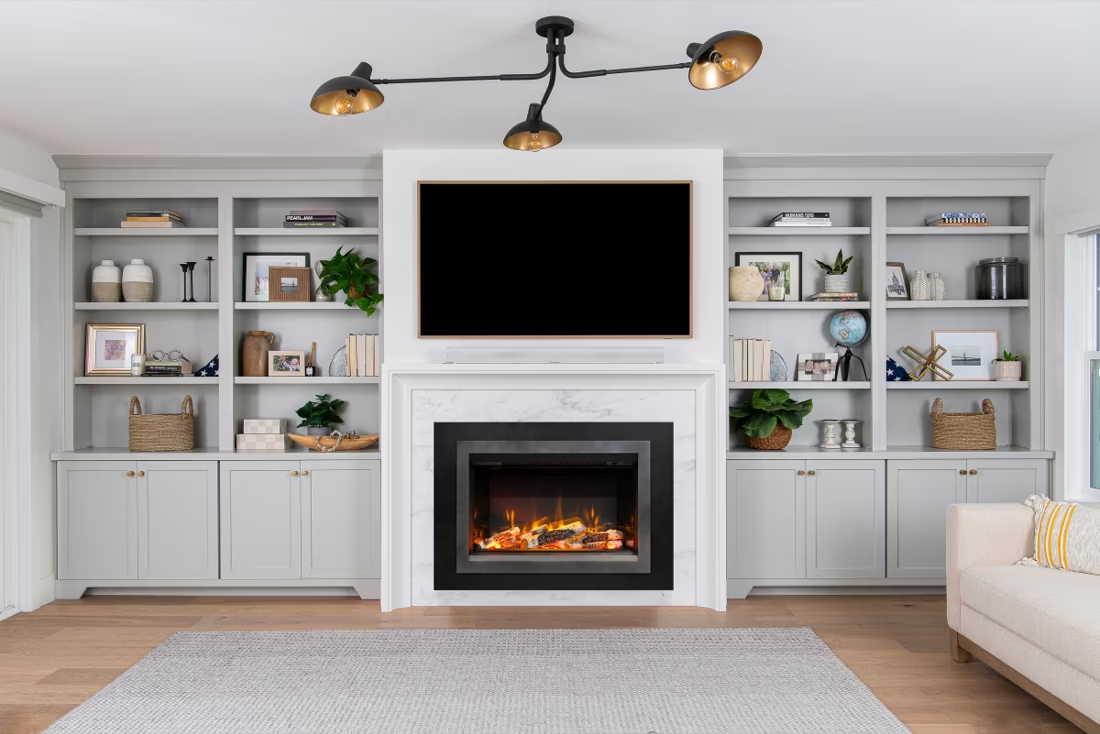
Yes—with an asterisk. Fireplaces are hot and TVs don't like heat. Either put a mantel between them to deflect rising warmth, or choose a fireplace with heat-management technology that creates a cool zone on the wall above—the wall stays around 125 degrees, barely warm, while the room still gets full heat. If you like clean lines and don't want a mantel, heat management is the answer.
Does an electric fireplace need a vent or chimney?
No—that's its superpower. An electric fireplace needs a wall and an outlet, period. No vent pipe, no gas line, no clearances to design around, which is why it works in bedrooms, offices, apartments, and walls where venting a gas or wood unit would be impractical or impossible. Installation is typically the simplest and least expensive of any fireplace type.
How much should I budget for a fireplace?
For an average home—covering the fireplace, the vent pipe, and basic installation—a budget between $3,900 and $5,500 gives you a lot of options across wood, gas, and pellet. By the time you add finish work, gas line, and electrical, the average complete installation lands between $5,000 and $12,000 all-in. In a remodel or new build, a good rule is to put about 2.5% of the total project cost toward the fireplace.
Should the dealer who sells my fireplace also install it?
Ideally, yes. A fireplace project involves vent pipe, gas line, electrical, and often tile or stone. Hire three or four separate trades and you own the liability and the game of telephone between them. One company selling and installing means one accountable party, start to finish—ask about factory training, on-time completion records, and what happens if an inspection fails.
Stove and Fireplace Dealers in Stewart County
Listings include WhyFire partner dealers, dealers we have verified as authorized for the brands we recommend, and established local businesses that carry hearth products. Every listing shows which one it is. The ones marked Preferred run on WhyFire's software, so they can show you real pricing and book your appointment right here. No manufacturer pays for placement. How we verify dealers →
Bluegrass Supply
54 Lawn & Garden
31W-Guthrie
Greater Dickson Gas Authority
Find your electric fireplace in Stewart County.
Tell us about your home or cabin and we'll match you with the right electric fireplace or insert, plus a free Project Guide & Parts List and a trusted local dealer to handle the install.
Find Your Fireplace →