
Instant gas heat for South Cleveland's mild Tennessee winters.
With average winter lows near 29°F and a short heating season, gas is the go-to choice for warmth without wood handling. Find the right unit and get matched with a trusted local dealer.
Every Project Starts From One of These Five Situations
Reliable warmth without the wood pile—built for Bradley County's short winters.
South Cleveland sits in Bradley County at just under 900 feet in elevation, in a climate zone (4A) with a fairly short, mild heating season—mild compared to places like Fargo, ND or Duluth, MN, where wood is often a household's primary defense against deep cold. Here, winters are shorter and gentler, and most homeowners want heat that comes on instantly for a chilly evening or a rare cold snap, not a fire that has to be built and tended.
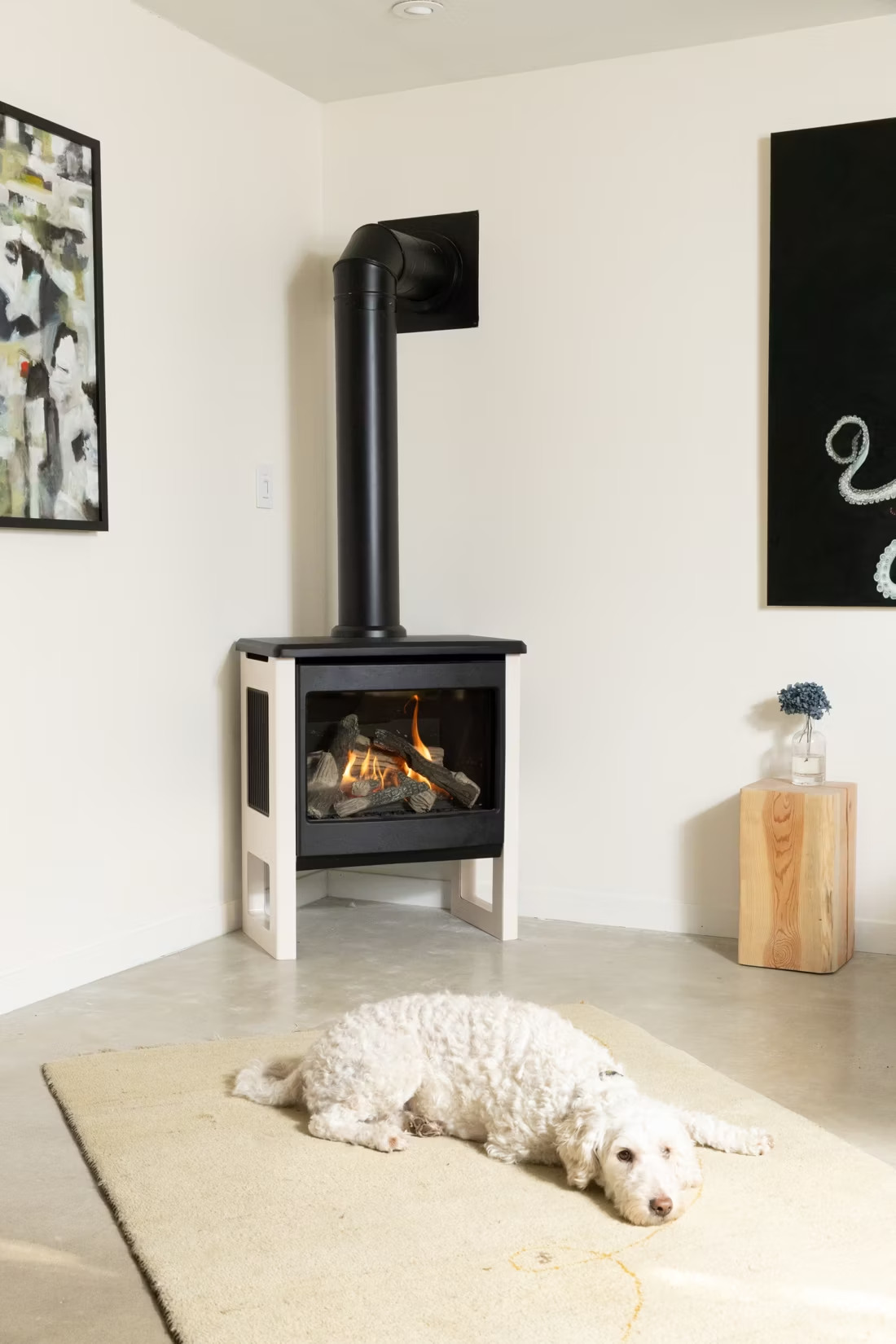
That's part of why gas fireplaces and inserts are the standard choice in this part of Bradley County. Whether you're on natural gas through the local utility or propane out toward the more rural stretches near the Cherokee National Forest boundary, a direct-vent gas fireplace delivers real heat at the flip of a switch or the press of a remote, without the smoke, ash, or firewood storage that comes with a wood-burning setup. For homes with an existing masonry fireplace that rarely gets used because building a fire is a hassle, a gas insert is often the single highest-impact upgrade a homeowner can make.
Three steps. No salesperson until you're ready.
Tell us about your project
Your zip code, your situation, and the fuel you're leaning toward—or let the answers point you to one.
See what's actually available
The brands dealers within 100 miles genuinely carry—real options, never a catalog mirage.
Get your dealer & Project Guide
A trusted local dealer, plus the free Project Guide & Parts List that names every component of the job.
Frequently Asked Questions
How much does a gas fireplace installation cost in South Cleveland?
Most gas fireplace and insert installations in South Cleveland run somewhere between $3,500 and $9,000, depending on the unit, whether you're converting an existing masonry fireplace or building new, and how much gas line work is involved. A gas insert going into an existing chimney with a gas line already nearby sits toward the lower end. A new direct-vent fireplace in a remodel—with fresh venting and a gas line run from the meter or a propane tank—lands in the middle to upper range. A local dealer will walk your home and give you a firm number after seeing the venting path and gas access.
Can I convert my existing wood fireplace to gas?
Yes, and it's a common project in this part of Bradley County, where many older brick ranch homes still have their original wood-burning masonry fireplace sitting unused. A gas insert with a stainless liner run up the existing flue is usually the most cost-effective path, typically landing in the $4,000 to $8,500 range depending on the insert and whether new gas piping is needed. It keeps the look of your existing hearth while giving you heat you'll actually use on a regular basis instead of a fireplace that only gets lit twice a winter.
Do I need natural gas, or can I run a fireplace on propane?
Either works, and which one makes sense depends on where in Bradley County you're located. Homes closer into Cleveland with natural gas service already run to the house are the easiest conversions—if you've got a gas water heater or range, adding a fireplace line is usually straightforward. Homes farther out toward the county's more rural areas, where natural gas mains don't reach, typically run on propane from a local supplier, either with an existing tank or a new one set for the project. Nearly every gas fireplace and insert on the market can be configured for either fuel; your installer sets the correct orifice and regulator for whichever you have.
Will my gas fireplace still work if the power goes out?
In most cases, yes. Southeast Tennessee gets its share of thunderstorm and ice-related outages, and most modern gas fireplaces with IPI (intermittent pilot ignition) include a battery backup that kicks in automatically when power drops, so the unit still lights and runs on demand. Valor fireplaces handle this a different way—their pilot's thermocouple generates the small amount of electricity the unit needs, so there's no battery to remember or replace at all. If keeping heat during an outage matters to you, ask your local dealer which ignition system a given model uses before you buy.
What's the difference between a gas fireplace, gas insert, and gas stove?
A gas fireplace is a fully built-in unit framed into a wall, typically chosen for new construction or a full remodel. A gas insert is sized to slide into an existing masonry fireplace opening, sealing it up and venting through the existing chimney with a liner—the common choice for South Cleveland's older homes with an unused wood fireplace. A gas stove is a freestanding cast-iron or steel unit that sits on the floor like a wood stove but runs on gas, which works well in a room without any existing fireplace opening at all. Most homeowners here with an existing hearth go with an insert; those building new or adding heat to a room without a chimney usually go with a built-in fireplace or freestanding stove.
Do I need a permit to install a gas fireplace in South Cleveland?
Yes. Because South Cleveland is unincorporated, permitting for a gas fireplace or insert typically runs through the Bradley County Building & Codes Department rather than a city office, and the gas line portion of the work needs to be done by a licensed gas-fitter. Most established hearth dealers coordinate the building permit, the gas line, and the final inspection as one package, so you're not left tracking down separate trades and separate sign-offs yourself.
What's the difference between vented and vent-free gas fireplaces?
Vented (direct-vent) gas fireplaces pull combustion air from outside and exhaust the byproducts back outside through a sealed pipe—they're the cleanest option and the one most local dealers recommend as a primary heat source. Vent-free fireplaces burn gas directly into the room with no outside venting at all; they're legal in Tennessee and can be a reasonable option for a room where running vent pipe isn't practical, but they come with strict room-size and ventilation requirements and put water vapor and combustion byproducts into your living space. For most South Cleveland homes, a direct-vent unit is the better long-term choice, but ask your dealer about both if venting is a constraint in your space.
How often should a gas fireplace be serviced?
Plan on an annual inspection, ideally before the first cold snap each fall. A technician checks the burner, pilot assembly, venting, and gas connections, and cleans the glass and firebox interior. It's a lighter lift than sweeping a wood chimney, but it matters just as much for safe operation—a dirty pilot or a degraded gasket is the kind of thing that goes unnoticed until it causes a problem. Expect to pay somewhere in the $125 to $225 range for a standard annual service call in the Bradley County area.
Should I even consider a wood-burning option instead of gas?
For most South Cleveland homes, no—and it's worth saying plainly. With only a fairly short, mild heating season and average winter lows around 29°F, this area doesn't have the sustained, deep-cold heating season that makes wood a practical primary fuel the way it is in places like Bozeman, MT or Burlington, VT. Oak, hickory, and maple are all locally available, and cutting permits through the Cherokee National Forest run about $20 per cord in season, but hauling, splitting, and stacking wood for a climate this mild is more effort than most homeowners want for the return. Gas gives you comparable ambiance and real supplemental heat with none of that labor, which is why it's the standard choice here.
Why is a fireplace insert so efficient?
An insert does two things: it seals the chimney completely, so you stop losing air you already paid to heat, and it radiates warmth into the room through the firebox and glass. Most add a heat-exchange fan that pulls cool room air underneath, wraps it around the hot firebox, and pushes it back out warm. Your home is more efficient before you've even lit the first fire.
Why is my open fireplace making my house colder?
Open fireplaces suck—literally. As the fire burns, it consumes air your furnace already paid to heat and pulls it out through the chimney, so the house is actually colder after the fire goes out than before you lit it. An insert fixes this: it seals the chimney, puts fixed glass across the front, and turns that hole in your house into a real heat source.
Can a fireplace actually lower my heating bill?
Yes—by creating a comfort zone. A furnace heats every square foot of the house just to warm the one room you're in; a gas fireplace on low burns roughly a sixth of the gas a typical furnace does. Set the furnace around 55–60 degrees as a baseline, then heat the rooms your family actually uses. Families who heat this way commonly save $20–$60 a month.
Can I install a fireplace myself?
If you're putting a fire in your house on purpose, it's best to work with an expert. Unless you're genuinely experienced in framing, gas line, vent pipe, and the national code on clearances to combustibles, have a professional do it—and ideally the same company that sells you the fireplace, so warranty, service, and liability all live under one roof.
Nearby Dealers
Hearth shops serving South Cleveland and the surrounding area. Every listing shows whether it is a WhyFire partner, a dealer we have verified as authorized for the brands we recommend, or a local business carrying hearth products. No manufacturer pays for placement. How we verify dealers →
Hearthside Fireplace Patio & Barbeque Center
Therm-Con, Llc
America's Hearth & Patio Warehouse
Find your gas fireplace in South Cleveland.
Tell us a bit about your home and we'll put together a free Project Guide & Parts List—the right gas fireplace or insert, the vent kit it needs, and a trusted local dealer in Bradley County to install it.
Find Your Fireplace →