
Instant warmth for Smith County homes—no chimney required.
From Carthage to Gordonsville to the lake homes around Cordell Hull, electric fireplaces bring zone heat and real ambiance to Smith County's mild Middle Tennessee winters—no venting, no wood, no gas line. Find the right unit and connect with a trusted local dealer.
Every Project Starts From One of These Five Situations
A mild climate that plays to electric's advantages.
Smith County sits along the Cumberland River in Middle Tennessee, with Carthage as the county seat and smaller communities like South Carthage, Gordonsville, and the lake communities around Cordell Hull spread across rolling farmland. Winters here are mild by national standards—the average low sits around 27°F and the county logs roughly 3,807 heating degree days a year, putting it in Climate Zone 4A, well short of the punishing cold of places like Bozeman, MT or Duluth, MN. That moderate heating load is exactly the kind of climate where electric fireplaces earn their keep as supplemental, zone-specific heat rather than a home's only heat source.
Many homes in Smith County are older farmhouses without an existing masonry chimney, or newer ranch and manufactured homes built with central HVAC and no fireplace at all. Electric fireplaces and inserts solve that problem cleanly—no flue, no gas line, no cutting or hauling oak, hickory, or maple for a woodpile. A plug-in unit can go in a bedroom or sunroom in an afternoon; a built-in model tied to a dedicated circuit takes a licensed electrician a day, with a straightforward inspection through the county. For lake cabins around Cordell Hull that see occasional weekend use, electric is often the simplest way to add real warmth and ambiance without worrying about venting or fuel storage.
Three steps. No salesperson until you're ready.
Tell us about your project
Your zip code, your situation, and the fuel you're leaning toward—or let the answers point you to one.
See what's actually available
The brands dealers within 100 miles genuinely carry—real options, never a catalog mirage.
Get your dealer & Project Guide
A trusted local dealer, plus the free Project Guide & Parts List that names every component of the job.
Frequently Asked Questions
How much does an electric fireplace installation cost in Smith County?
Plug-in electric fireplace inserts and freestanding units are the least expensive option, often installed for $300 to $800 including the unit itself since they run on a standard household outlet. Built-in wall units or mantel-integrated electric fireplaces that require a dedicated 120V or 240V circuit run higher—typically $1,200 to $2,500 once you factor in the unit, a licensed electrician to run the new circuit, and any trim or surround work. Because there's no venting, chimney, or gas line involved, electric installs are consistently the most affordable fireplace option available to Smith County homeowners, and most projects wrap up in a single day.
Will an electric fireplace actually heat my room, or is it just for looks?
Most electric fireplaces include a real heating element—typically a 1,500-watt unit capable of warming 400 to 1,000 square feet, depending on insulation and ceiling height. That's genuine supplemental heat, not just a light show behind glass. Given Smith County's moderate heating load—about 3,807 heating degree days a year, mild compared to the mountain climates further east in Tennessee—an electric unit can comfortably take the edge off a bedroom, home office, or sunroom on a cold Middle Tennessee night without asking your central HVAC to do all the work. It's not meant to replace whole-home heat, but as zone heating for the rooms you actually spend time in, it performs well.
Do I need a permit to install an electric fireplace in Smith County?
It depends on the unit. A portable, plug-in electric fireplace that uses a standard outlet doesn't require a permit—you're simply plugging in an appliance. A built-in unit that needs a new dedicated circuit does require an electrical permit, and the work should be done by a licensed electrician who will coordinate the inspection with the county. Because there's no combustion, no flue, and no gas line, electric fireplace installs are the simplest fuel type to permit and inspect in Smith County—most built-in projects clear inspection on the first visit.
Electric vs. wood—which makes more sense for a Smith County home?
Wood remains common in Smith County given the local supply of oak, hickory, and maple, and it keeps working when the power goes out—a real consideration on the county's rural roads where outages can stretch longer after ice storms. Electric, on the other hand, requires no wood handling, no chimney, no cutting permits, and no ash cleanup, and it can be added to almost any room in an afternoon. For a primary heat source in an older farmhouse, wood or a wood insert often wins. For a den, bonus room, or lake home around Cordell Hull where you want clean, instant warmth without hauling firewood, electric is usually the better fit—and plenty of homes in the county run both.
Can I add an electric fireplace to a manufactured home or a house without a chimney?
Yes—this is one of electric's biggest advantages for Smith County, where a good number of homes are manufactured or modular and were never built with a masonry chimney or flue. Because electric fireplaces don't produce combustion byproducts, they don't need any venting at all, which means no roof penetration, no clearance-to-combustibles calculations for a chimney, and no structural changes. A recessed wall unit or a freestanding electric stove can go into a manufactured home living room with far less disruption than a wood or gas retrofit would require.
Will my electric fireplace still work if the power goes out?
No—electric fireplaces require power to run, so during an outage they won't provide heat. For most Smith County homes on the grid, that's a minor tradeoff since outages tend to be short. For rural properties and lake cabins around Cordell Hull that see longer outages after winter storms, homeowners who want backup heat during power loss typically pair an electric fireplace for everyday convenience with a wood stove or a small propane heater as a true off-grid backup. Worth discussing with a local dealer if outage resilience matters for your property.
What size electric fireplace do I need for my Smith County home?
For a bedroom or home office (up to roughly 400 square feet), a compact 1,500-watt insert or wall-mount unit is usually enough. For a larger den or open living area (up to 1,000 square feet), look at wider units or ones rated for higher heat output, though remember the heating capacity of most electric fireplaces tops out around 1,500 watts regardless of the unit's width—larger units add more flame-effect viewing area more than actual heat. Given Smith County's mild 4A climate and moderate heating degree day count, most homeowners are using electric fireplaces for zone comfort rather than whole-room primary heat, so sizing errs toward the room's use and layout rather than worst-case cold.
Where can I find a local dealer to install an electric fireplace in Smith County?
I match Smith County homeowners with a trusted local dealer rather than pointing you toward a big-box shelf model with no installation support. A local pro will confirm whether your circuit can handle a built-in unit, size the fireplace to your room, and—for built-ins—coordinate the electrical permit and inspection with the county. That local relationship matters even for a fuel as simple as electric: a dealer who knows Smith County's older farmhouse wiring versus newer construction will steer you away from a unit that overloads an existing circuit.
Electric vs. pellet stove—which is right for my home?
Pellet stoves, using bagged pellets from regional suppliers like Lignetics, Hamer Pellet Fuel, or Greenway Renewable Energy, produce real primary heat output and burn cleanly, but they still require a vent, a hopper to load, and electricity to run the auger and blower—so they're not a true power-outage backup either. Electric fireplaces skip the venting and pellet storage entirely, install faster, and cost less upfront, but produce less total heat output and are better suited to supplemental zone heat than whole-home warmth. For a Smith County home that wants low-maintenance ambiance and warmth in one or two rooms, electric is simpler. For a home wanting a real primary heat source with lower fuel cost, pellet is worth a look.
Can I put a TV above my fireplace?
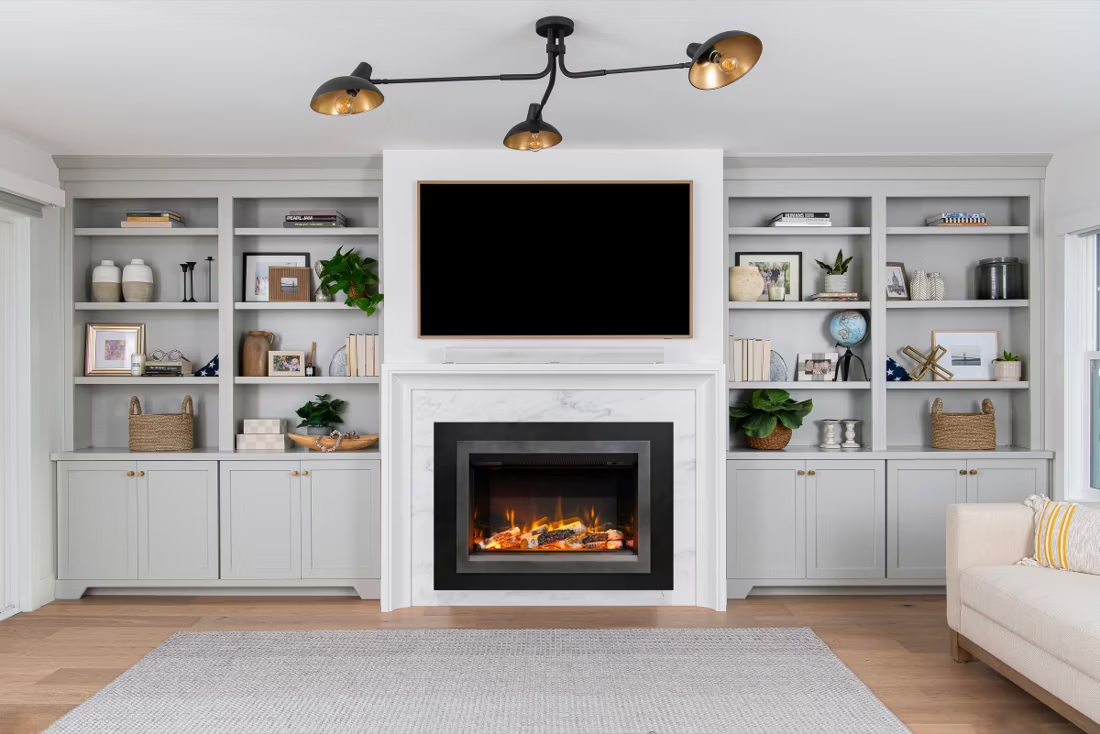
Yes—with an asterisk. Fireplaces are hot and TVs don't like heat. Either put a mantel between them to deflect rising warmth, or choose a fireplace with heat-management technology that creates a cool zone on the wall above—the wall stays around 125 degrees, barely warm, while the room still gets full heat. If you like clean lines and don't want a mantel, heat management is the answer.
Does an electric fireplace need a vent or chimney?
No—that's its superpower. An electric fireplace needs a wall and an outlet, period. No vent pipe, no gas line, no clearances to design around, which is why it works in bedrooms, offices, apartments, and walls where venting a gas or wood unit would be impractical or impossible. Installation is typically the simplest and least expensive of any fireplace type.
How much should I budget for a fireplace?
For an average home—covering the fireplace, the vent pipe, and basic installation—a budget between $3,900 and $5,500 gives you a lot of options across wood, gas, and pellet. By the time you add finish work, gas line, and electrical, the average complete installation lands between $5,000 and $12,000 all-in. In a remodel or new build, a good rule is to put about 2.5% of the total project cost toward the fireplace.
Can I install a fireplace myself?
If you're putting a fire in your house on purpose, it's best to work with an expert. Unless you're genuinely experienced in framing, gas line, vent pipe, and the national code on clearances to combustibles, have a professional do it—and ideally the same company that sells you the fireplace, so warranty, service, and liability all live under one roof.
Stove and Fireplace Dealers in Smith County
Listings include WhyFire partner dealers, dealers we have verified as authorized for the brands we recommend, and established local businesses that carry hearth products. Every listing shows which one it is. The ones marked Preferred run on WhyFire's software, so they can show you real pricing and book your appointment right here. No manufacturer pays for placement. How we verify dealers →
Spar-Gas
Middle Tn Natural Gas - Gordonsville
Colligan Group Dba Frugal Mick
Middle Tn Natural Gas - Smithville
Webbtown Propane Company
Countryside Fireplaces & More
Ap Hearth LLC
Find your electric fireplace in Smith County.
Tell us a bit about your home and I'll match you with a trusted local dealer and send over your free Project Guide & Parts List—sized to your room, wired correctly, and ready to install.
Find Your Fireplace →