
Instant Gas Heat for Shelbyville's Mild Winters.
Bedford County winters rarely stay brutal for long, but when a cold snap moves through, a gas fireplace gives you heat at the flip of a switch. Find the right unit and connect with a trusted local dealer.
Every Project Starts From One of These Five Situations
Convenience wins in a mild Tennessee winter.
At 775 feet in Bedford County, Shelbyville sits in climate zone 4A with a modest winter heating season and an average winter low around 29°F—a fraction of what a place like International Falls, Minnesota logs in a single hard month. That means gas fireplaces here rarely have to work as a family's sole survival heat source the way they might in the upper Midwest. Instead, they're chosen for zone heating on the handful of genuinely cold nights each winter, for the look of a real flame during Celebration season and holiday gatherings, and for supplementing a central HVAC system that otherwise idles most of the year.
Bedford County doesn't have a widely available piped natural gas network in the areas we track, so most gas fireplace and insert installations here run on propane, supplied from a tank set on the property by a local propane provider. In-town Shelbyville addresses should confirm with their installer whether natural gas service reaches the home; everywhere else, propane is the default and every major gas fireplace line can be configured for it. On the electric side, Duck River Electric Membership Corporation and the City of Shelbyville's municipal electric utility keep residential rates in the 11 to 12.5 cents per kWh range—worth knowing if you're weighing a gas unit against an electric fireplace for a secondary room.
Three steps. No salesperson until you're ready.
Tell us about your project
Your zip code, your situation, and the fuel you're leaning toward—or let the answers point you to one.
See what's actually available
The brands dealers within 100 miles genuinely carry—real options, never a catalog mirage.
Get your dealer & Project Guide
A trusted local dealer, plus the free Project Guide & Parts List that names every component of the job.
Frequently Asked Questions
How much does a gas fireplace installation cost in Shelbyville?
Most gas fireplace and insert installations in the Shelbyville area run somewhere between $3,500 and $9,000. A direct-vent gas insert dropped into an existing masonry fireplace—common in older homes near the downtown square—sits toward the lower end, especially if a propane line already runs to the house. A new built-in gas fireplace for a remodel or new construction, including framing, venting, and a fresh propane line and regulator, lands in the middle to upper range. Homes that also need a new propane tank set will pay more on top of the installation itself. A local dealer can give you a firm number after seeing the space.
Can I convert my existing wood fireplace to gas?
Yes, and it's a common project on the older brick homes around Shelbyville that still have a masonry firebox built for burning oak or hickory. A gas insert or vented log set can typically be installed into that existing chimney with a stainless liner, which keeps the look of the original fireplace while adding on-demand heat and cutting out the wood handling and ash cleanup. Since new wood-burning installations aren't the direction most Bedford County homeowners are heading these days, converting the fireplace you already have to gas is often the more practical upgrade than starting from scratch with a wood stove.
Do I need natural gas, or will propane work for my fireplace?
Propane is the more realistic option for most homes in and around Shelbyville, since piped natural gas isn't broadly available across Bedford County. If you already have a propane tank on the property for a water heater, range, or furnace, adding a fireplace usually just means tapping into that existing line. If not, your installer coordinates with a local propane supplier to size and place a tank. Nearly every major gas fireplace, insert, and log set can be ordered configured for propane rather than natural gas—it's a standard option, not a special order.
Will my gas fireplace still work if the power goes out?
Most gas fireplaces with an IPI (intermittent pilot ignition) system run on a small battery backup that kicks in the moment the power drops, so the fireplace lights and operates normally off batteries until service is restored. That matters in Bedford County—Duck River Electric Membership Corporation serves a lot of rural line miles, and ice storms occasionally knock out power for hours at a time even though the winters here are generally mild. Valor fireplaces take a different approach: their pilot's thermocouple generates the small amount of electricity the unit needs, so there's no battery to remember at all. Ask your local dealer about the ignition system on any model you're considering.
What's the difference between a gas fireplace, gas insert, and gas stove?
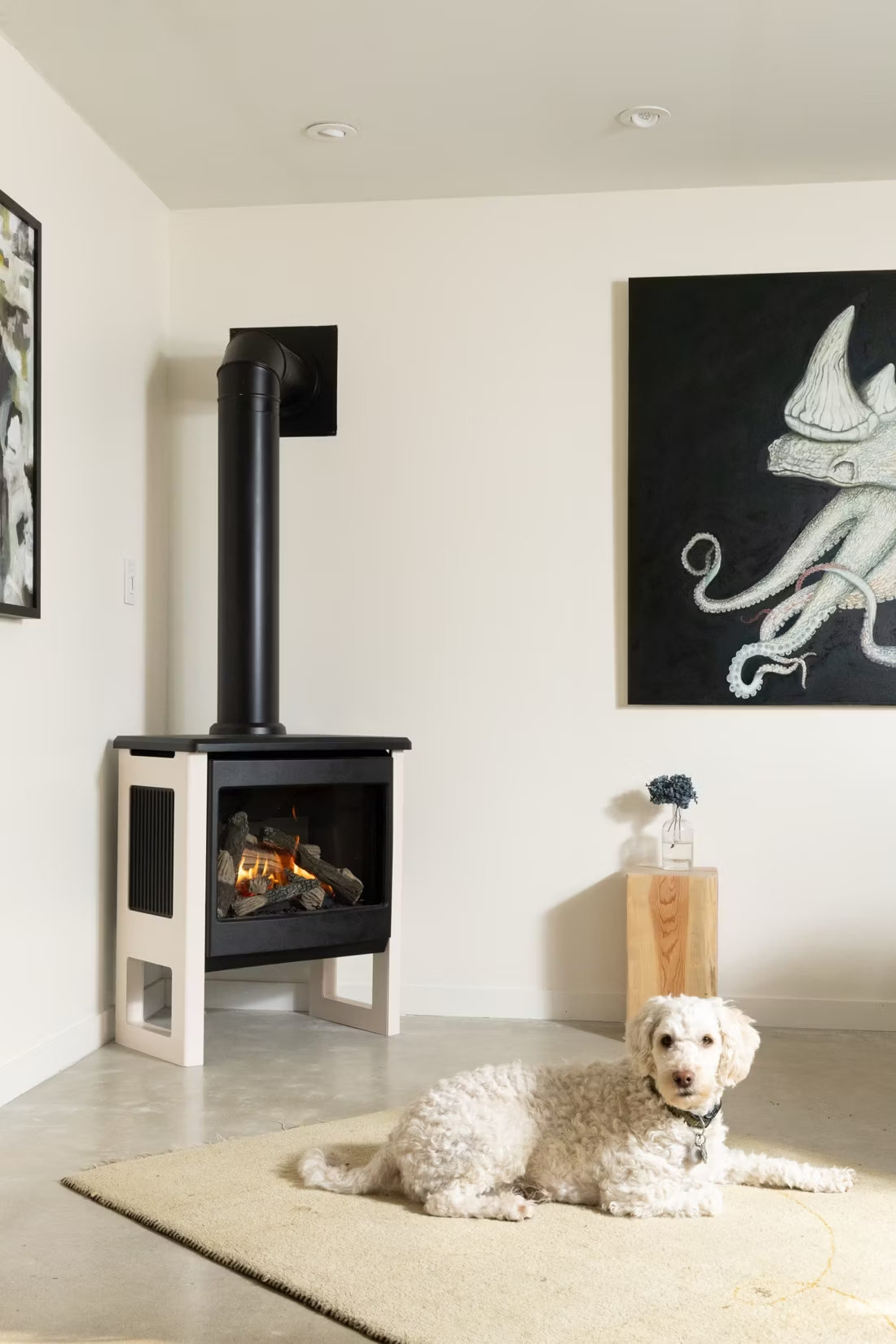
A gas fireplace is a fully built-in unit framed into a wall, typically chosen for new construction or a full remodel. A gas insert is sized to slide into an existing masonry firebox and uses the chimney you already have as its vent path—the right call for the older brick homes common around Shelbyville's downtown square and surrounding neighborhoods. A gas stove is a freestanding, cast-iron-look unit that sits on the floor rather than inside a fireplace opening, which works well in a room that never had a fireplace to begin with. Your existing layout usually makes the choice for you.
Do I need a permit to install a gas fireplace in Shelbyville?
Generally yes—new gas fireplace installations typically require a building permit through the City of Shelbyville Building Department or the Bedford County Codes Department depending on the property's location, plus a gas line permit for any propane line work. The gas connection itself needs to be run by a licensed gas-fitter, which is one of the practical reasons to work with an established local hearth dealer: they coordinate the propane line, venting, and inspection sign-off as one job instead of leaving you to manage separate contractors.
Should I get a vented or vent-free gas fireplace?
Vented (direct-vent) gas fireplaces draw combustion air from outside and exhaust it back outside through a sealed vent—they're the safest, most universally recommended option and the standard choice for full-time heating. Vent-free gas fireplaces burn without any outside venting at all, and Tennessee permits them as long as the unit is properly sized to the room and equipped with an oxygen depletion sensor. With no regional air quality restrictions on the books for Bedford County, vent-free units are a legitimate option for a room without existing venting, such as a finished basement—but for a primary living space, most local dealers will still steer you toward a direct-vent model for the cleaner indoor air and stronger heat output.
How often does a gas fireplace need to be serviced?
Plan on an annual inspection, ideally before the first cool snap each fall. A technician checks the burner, pilot assembly, propane connections, and any battery or electronic ignition components, and cleans the glass and interior. It's a lighter lift than chimney sweeping for a wood-burning unit, but skipping it is how homeowners end up with a fireplace that won't light on the coldest night of the year. Local service techs in the Shelbyville area typically charge somewhere in the $125 to $200 range for a standard annual visit.
Gas vs. electric fireplace—which makes more sense for my home?
Gas delivers real heat output, a genuine flame, and the ability to keep running through a power outage on IPI battery backup—worth having in a Duck River Electric Membership Corporation service area where ice storms can take down rural lines. Electric fireplaces install for a fraction of the cost, typically $400 to $1,500 with no propane line or venting required at all, and with local residential electric rates around 11 to 12.5 cents per kWh, they're inexpensive to run for occasional ambiance. For a primary living area or a room you want genuinely warm on a cold night, gas is usually the better investment. For a bedroom, office, or secondary space where the visual matters more than the BTUs, electric is often the simpler, cheaper fit.
Why is my open fireplace making my house colder?
Open fireplaces suck—literally. As the fire burns, it consumes air your furnace already paid to heat and pulls it out through the chimney, so the house is actually colder after the fire goes out than before you lit it. An insert fixes this: it seals the chimney, puts fixed glass across the front, and turns that hole in your house into a real heat source.
Does a gas fireplace work when the power is out?
Yes—modern gas fireplaces have a battery backup for the ignition system that lasts for weeks, so no power equals no problem. Your furnace can't say that: no electricity, no blower, no heat. It's one of the most common reasons families add a fireplace, and worth confirming on any model you're considering.
Can I install a fireplace myself?
If you're putting a fire in your house on purpose, it's best to work with an expert. Unless you're genuinely experienced in framing, gas line, vent pipe, and the national code on clearances to combustibles, have a professional do it—and ideally the same company that sells you the fireplace, so warranty, service, and liability all live under one roof.
Should the dealer who sells my fireplace also install it?
Ideally, yes. A fireplace project involves vent pipe, gas line, electrical, and often tile or stone. Hire three or four separate trades and you own the liability and the game of telephone between them. One company selling and installing means one accountable party, start to finish—ask about factory training, on-time completion records, and what happens if an inspection fails.
Nearby Dealers
Hearth shops serving Shelbyville and the surrounding area.
Find the right gas fireplace for your Shelbyville home.
Tell us about your home and your project, and we'll match you with a trusted local Bedford County dealer and send over a free Project Guide & Parts List—a plan for your gas fireplace project with the exact parts, including the vent kit, and our recommended local dealer.
Find Your Fireplace →