
Gas Heat That Turns On the Moment You Need It.
Powell winters rarely turn brutal, but when a cold snap rolls off the Cumberland Plateau, a gas fireplace gives instant, reliable warmth. Find the right unit and connect with a trusted local dealer.
Every Project Starts From One of These Five Situations
A mild climate that still wants a real heat source.
Powell sits in Knox County at just over 1,000 feet elevation, in the mixed-humid foothills west of Knoxville. Climate zone 4A here means winters are moderate compared to places like Madison, WI or Minneapolis, MN—average winter lows hover around 26°F rather than sub-zero—but with a solid five-month heating season each year, Powell homes still need a dependable heat source for the stretch between November and March. Cold snaps off the Cumberland Plateau and the occasional ice storm are enough to make a wood-burning ritual less appealing than a fireplace that lights with the flip of a switch.
Most Powell homes run central HVAC as their primary system, and gas fireplaces and inserts have become the go-to way to add zone heat and ambiance without the upkeep of firewood. Knoxville Utilities Board (KUB) serves natural gas along most of the established corridors near Emory Road and Clinton Highway, while homes further out in unincorporated Knox County more often run on propane. Either way, a properly sized direct-vent gas fireplace gives instant heat, a lower utility bill in the rooms you actually use, and—with the right ignition system—a backup heat source when winter storms knock out power.
Three steps. No salesperson until you're ready.
Tell us about your project
Your zip code, your situation, and the fuel you're leaning toward—or let the answers point you to one.
See what's actually available
The brands dealers within 100 miles genuinely carry—real options, never a catalog mirage.
Get your dealer & Project Guide
A trusted local dealer, plus the free Project Guide & Parts List that names every component of the job.
Frequently Asked Questions
How much does a gas fireplace installation cost in Powell?
In the Knoxville metro area, a direct-vent gas fireplace or insert installation typically runs $3,500 to $9,000, depending on the unit, the venting path, and whether new gas line work is required. Converting an existing masonry fireplace to a gas insert—common in Powell's older ranch and split-level homes along Emory Road—tends to land on the lower end if a gas line is already nearby. New construction or a fireplace added to a room that never had one, requiring fresh gas line runs and framing, sits toward the higher end. A local hearth retailer will give you a firm number after an in-home visit.
Can I convert my existing wood fireplace to gas?
Yes, and it's one of the more common upgrades local dealers handle in Powell. A gas insert slides into your existing masonry firebox and vents through the same chimney using a stainless liner, so you keep the look of your fireplace while gaining real heat output and losing the ash and creosote upkeep. Cost usually falls between $3,500 and $7,000 depending on whether you're on KUB natural gas or need to route to an existing or new propane tank. Homes closer to the Emory Road and Clinton Highway gas corridors typically see lower costs than homes relying on propane delivery.
Do I need natural gas, or is propane an option in Powell?
Both work well here. Knoxville Utilities Board runs natural gas service through much of Powell's more developed areas, and if your home already has a gas water heater or range, adding a fireplace is usually straightforward. Homes in the more rural stretches of unincorporated Knox County—where KUB gas lines haven't been extended—typically run on propane instead, supplied by a regional propane company with either an owned or leased tank. Most fireplace models can be set up for either fuel; your installer just changes the orifice and regulator to match.
Will my gas fireplace still work if the power goes out?
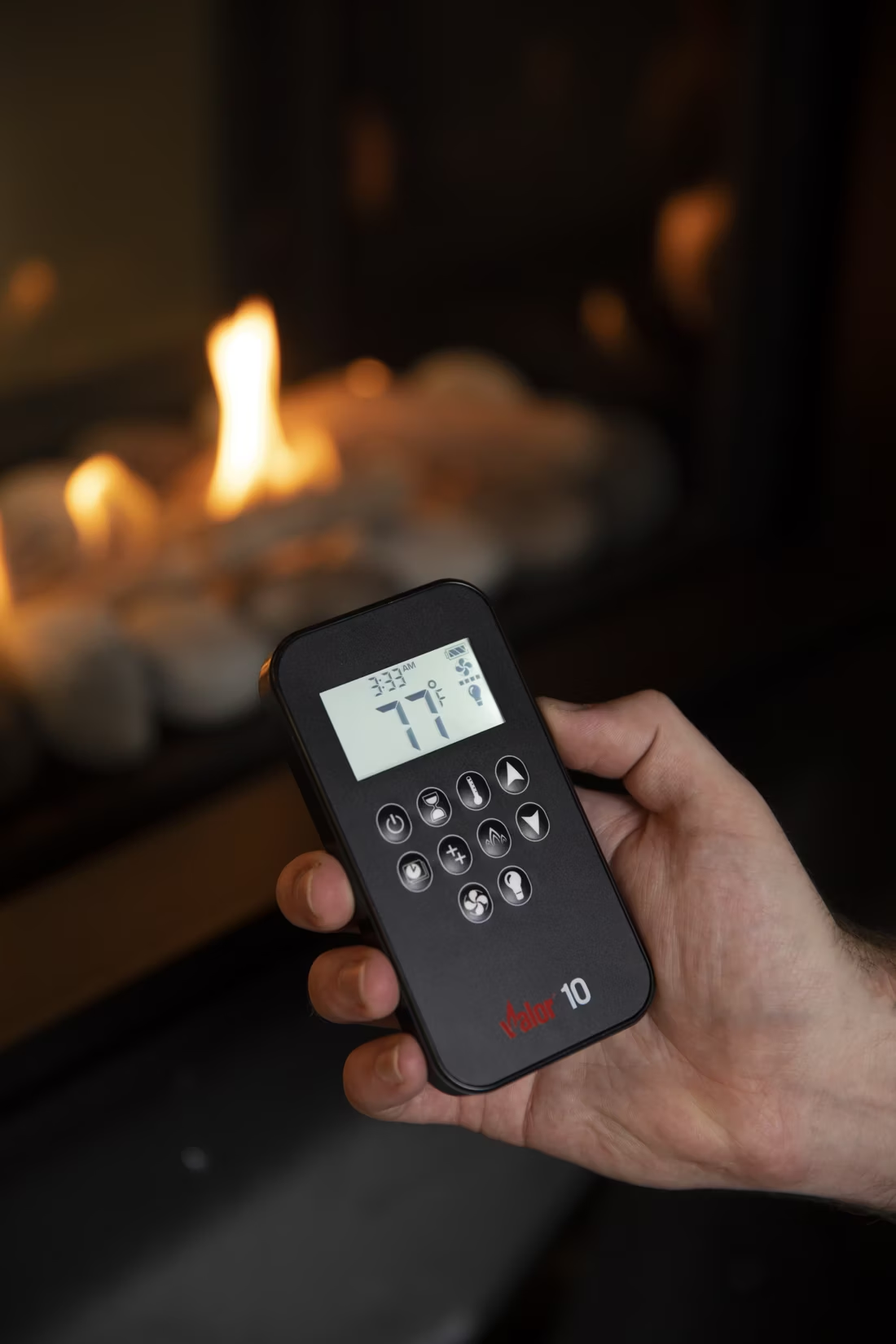
Most will, with the right ignition system. Units with intermittent pilot ignition (IPI) run on a small battery backup that kicks in the moment the power drops, so the fireplace still lights on demand. East Tennessee sees its share of winter ice storms that can knock out power for a day or more, so it's worth keeping fresh batteries in the unit. Valor fireplaces take a different approach: the pilot's thermocouple generates its own electricity, so there's no battery to remember at all. Ask your local retailer which ignition system is in the model you're considering.
What's the difference between a gas fireplace, insert, and stove?
A gas fireplace is a built-in unit framed into a wall—the right choice for new construction or a room that's never had a fireplace. A gas insert is built to slide into an existing masonry firebox, which is the common route for Powell's older homes with a wood fireplace they no longer want to tend. A gas stove is a freestanding, cabinet-style unit that sits on the floor like a wood stove but runs on gas—a good option when you want supplemental heat without an existing fireplace opening. A local dealer can walk you through which fits your specific room.
Do I need a permit to install a gas fireplace in Powell?
Yes. Powell is unincorporated, so building and gas permits go through Knox County Codes Administration rather than a city office. New gas fireplace installations need both a building permit and a gas line permit, and the gas work has to be done by a licensed gas fitter. Most hearth retailers coordinate all of this as part of the installation, which is one advantage of going through a certified dealer instead of piecing the project together yourself.
Are vent-free gas fireplaces allowed in Tennessee?
Yes, Tennessee permits vent-free (unvented) gas fireplaces, but they come with strict room-size and ventilation requirements since they release combustion byproducts directly into the room. Vented, direct-vent units—which pull outside air in and push exhaust outside through a sealed pipe—are the more common and more universally recommended choice for Powell homes, since they don't come with any indoor air quality tradeoffs. If you're weighing the two, ask a local retailer to walk through both options for your specific room.
How often does a gas fireplace need to be serviced?
Plan on an annual inspection, similar to any other gas appliance. A technician checks the burner, pilot assembly, venting, and gas connections, and cleans the glass and interior—usually $125 to $200 for the visit. It's a much smaller job than chimney sweeping for a wood stove, but skipping it is still the main way small problems (a dirty flame sensor, a failing thermocouple) turn into no-heat calls in January.
Should I consider wood instead of gas for my Powell home?
For most Powell homeowners, gas is the more practical fit. Wood heat is genuinely rare here—Powell's suburban lots, mild 4A climate, and proximity to Knoxville mean most homes are set up for central HVAC plus a zone-heat fireplace rather than firewood handling, and there are relatively few wood stove installers working this corner of Knox County compared to the more rural counties further east. A handful of older farmhouses on Powell's outskirts still burn oak and hickory for backup heat, but if you're starting from scratch, gas gives you the same cozy fire without sourcing, stacking, or cleaning up cordwood.
Why is my open fireplace making my house colder?
Open fireplaces suck—literally. As the fire burns, it consumes air your furnace already paid to heat and pulls it out through the chimney, so the house is actually colder after the fire goes out than before you lit it. An insert fixes this: it seals the chimney, puts fixed glass across the front, and turns that hole in your house into a real heat source.
Why is a fireplace insert so efficient?
An insert does two things: it seals the chimney completely, so you stop losing air you already paid to heat, and it radiates warmth into the room through the firebox and glass. Most add a heat-exchange fan that pulls cool room air underneath, wraps it around the hot firebox, and pushes it back out warm. Your home is more efficient before you've even lit the first fire.
Does a fireplace add value to my home?
On average, a fireplace adds back to the home about the same amount you spent installing it. Add the monthly savings from heating the rooms you actually use instead of the whole house—often hundreds of dollars a year—and the value case is strong before you even count what a fire does for how your family uses the room.
Can I install a fireplace myself?
If you're putting a fire in your house on purpose, it's best to work with an expert. Unless you're genuinely experienced in framing, gas line, vent pipe, and the national code on clearances to combustibles, have a professional do it—and ideally the same company that sells you the fireplace, so warranty, service, and liability all live under one roof.
Nearby Dealers
Hearth shops serving Powell and the surrounding area. Every listing shows whether it is a WhyFire partner, a dealer we have verified as authorized for the brands we recommend, or a local business carrying hearth products. No manufacturer pays for placement. How we verify dealers →
Archies Stone And Fireplaces
Pool Warehouse
Southern Flame
Tn Gas Company
Englands Woodstove Store
Carl Pierce Furniture And Appliance
Find your gas fireplace in Powell.
Tell us about your home and we'll match you with a trusted local dealer and send over a free Project Guide & Parts List—the exact parts, including the vent kit, for your gas fireplace project in Powell.
Find Your Fireplace →