
Dependable propane heat for Pickett County's Cumberland Plateau winters.
There's no natural gas line running through Pickett County, so propane does the work—from Byrdstown to the lake homes around Dale Hollow. Find the right unit and get matched with a trusted local dealer.
Every Project Starts From One of These Five Situations
Instant heat, built for Tennessee's smallest county.
Pickett County is the smallest county in Tennessee by population—about 1,275 people spread across the ridges and hollows of the Cumberland Plateau along the Kentucky border. Byrdstown, the county seat, and the cabins and full-time homes around Dale Hollow Lake sit in climate zone 4A, which means real winter here: damp cold that settles into the teens and single digits on more nights than most of Middle Tennessee sees, thanks to the added elevation off the plateau.
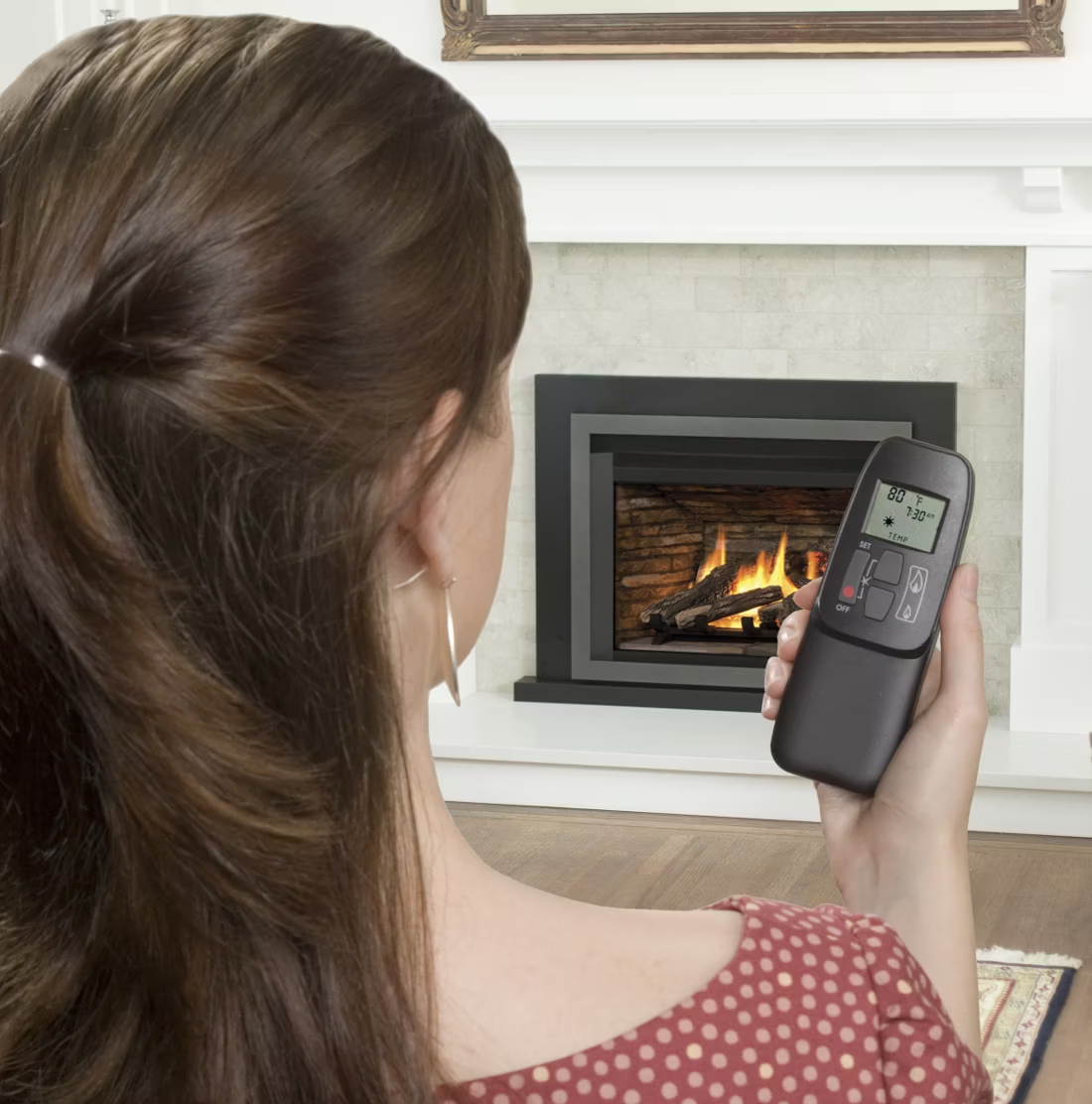
No municipal natural gas line runs through Pickett County, so propane is what actually heats homes here—delivered by tank truck to farmhouses, lake cabins, and year-round residences alike, often by suppliers based out of Livingston or Cookeville. A direct-vent propane fireplace or insert gives you heat at the flip of a switch, keeps working through the ice-related power outages that occasionally hit rural lines out here (with the right ignition system), and skips the splitting and hauling that comes with wood. With no air quality restrictions on burning in the county, plenty of households run a wood stove for backup or ambiance right alongside the propane unit that handles the day-to-day heat.
Three steps. No salesperson until you're ready.
Tell us about your project
Your zip code, your situation, and the fuel you're leaning toward—or let the answers point you to one.
See what's actually available
The brands dealers within 100 miles genuinely carry—real options, never a catalog mirage.
Get your dealer & Project Guide
A trusted local dealer, plus the free Project Guide & Parts List that names every component of the job.
Frequently Asked Questions
How much does a gas fireplace installation cost in Pickett County?
Most propane fireplace or insert installations in Pickett County run roughly $3,500 to $9,000, depending on the unit, whether you're converting an existing masonry fireplace or starting from scratch, and whether a new propane tank needs to be set. Homes that already have a propane tank and gas lines run for a furnace or water heater tend to land on the lower end, since the dealer is just tapping into existing infrastructure. New construction or cabins with no propane service at all—which is common around Dale Hollow Lake—run higher once tank placement and line runs are factored in. Because Pickett County is small and rural, expect your installer to be based out of Byrdstown, Livingston, or Cookeville, with a modest travel charge built into the quote.
Can I convert my existing wood fireplace to gas?
Yes—a propane insert set into your existing masonry fireplace, venting through the existing chimney with a stainless liner, is one of the more common upgrades local dealers handle in Pickett County. It preserves the look of an older stone or brick fireplace that's common in farmhouses and lake homes here while giving you real heat output at the flip of a switch instead of an open, mostly decorative fire. Expect the conversion to run somewhat less than a full new-construction install, since you're using the chimney you already have—final cost still depends on whether the home is already plumbed for propane or needs a new tank set.
Do I need natural gas, or is propane the only option in Pickett County?
Propane is the standard fuel for gas fireplaces in Pickett County—there's no natural gas utility line serving Byrdstown or the surrounding rural areas, so essentially every gas fireplace, insert, or stove installed here runs on propane from a tank rather than piped natural gas. This is normal for this part of the Cumberland Plateau; propane suppliers based in Livingston and Cookeville regularly service tanks throughout the county. Your local dealer will set the unit's orifices for propane and can coordinate tank placement if you don't already have one on the property.
Will my gas fireplace work during a power outage?
Most modern propane fireplaces will, which matters here—rural power lines on the plateau are prone to outages during winter ice storms. Units with intermittent pilot ignition (IPI) run on a small battery backup that kicks in automatically when the power drops, so the fireplace lights on demand just like normal. Valor's gas fireplaces take a different approach: the pilot's thermocouple generates its own electricity, so there are no batteries to remember or replace at all. For a Dale Hollow cabin that sits empty for stretches at a time, that kind of self-powered ignition is worth asking about specifically.
What's the difference between a gas fireplace, gas insert, and gas stove?
A gas fireplace is a fully built-in unit framed into a wall—the right call for new construction or a remodel. A gas insert slides into an existing masonry fireplace opening and uses the existing chimney as its vent, which suits the older stone fireplaces common in Pickett County farmhouses. A gas stove is a freestanding cabinet-style unit that sits on the floor, similar to a wood stove but running on propane—a good fit for a cabin or addition with no existing fireplace or chimney at all. Most Pickett County homeowners upgrading an existing fireplace go with an insert; new builds and additions usually go built-in or freestanding.
Do I need a permit to install a propane fireplace in Pickett County?
Building permit requirements for gas appliance installations in Pickett County are handled through the county government offices in Byrdstown, and any new propane line work should be done by a licensed gas-fitter or your propane supplier's certified technician regardless of whether a formal permit applies to your specific project. Given the county's small size, it's worth having your dealer confirm current permitting requirements directly with the county rather than assuming—this is one area where a local installer who's done the work before saves you a phone call.
What's the difference between vented and vent-free gas fireplaces?
Vented propane fireplaces—direct-vent or B-vent—pull combustion air from outside and exhaust it back outside through a sealed vent, keeping combustion byproducts entirely out of the room. Vent-free units burn propane directly into the living space without external venting; they're legal in Tennessee but come with strict room-sizing rules and require an oxygen depletion sensor. For a cabin or lake house around Dale Hollow that only gets used seasonally, a vent-free unit can be tempting for its simple installation, but a direct-vent model is the safer, more universally recommended choice for full-time living space. Ask your local dealer to walk through both options for your specific room.
How often should my propane fireplace be serviced?
Plan on an annual inspection, ideally before the coldest stretch of winter sets in. A technician will check the burner, pilot assembly, venting, and gas connections, and clean the glass and interior—a much lighter job than sweeping a wood chimney, but just as important for safety, especially on units that sit dormant for months at a lake cabin between visits. Expect to pay somewhere in the $150–$250 range for a standard annual service call from a propane technician serving the county.
Gas vs. wood—which is right for my Pickett County home?
Wood is deeply practical here—the Cumberland Plateau forests around Pickett County are full of oak, hickory, maple, and pine, and plenty of households heat primarily or partially with a wood stove they feed themselves. Wood also keeps working with zero electricity, which matters when ice storms take down rural lines. Propane, on the other hand, gives you instant, consistent heat with no wood handling, no ash, and no chimney sweeping—a better fit for a room you want heated the moment you walk in, or for a lake house that sits unattended for weeks. Many homes in the county run both: a propane insert or stove for daily convenience in the main living space, and a wood stove for backup and for the nights when the power's out longest.
Why is my open fireplace making my house colder?
Open fireplaces suck—literally. As the fire burns, it consumes air your furnace already paid to heat and pulls it out through the chimney, so the house is actually colder after the fire goes out than before you lit it. An insert fixes this: it seals the chimney, puts fixed glass across the front, and turns that hole in your house into a real heat source.
Is my gas fireplace wasting gas?
If it was installed more than 15 years ago, probably. Older gas fireplaces keep a standing pilot light burning all the time, and that little flame can cost a couple hundred dollars a year. Newer models use pilot-on-demand ignition—the pilot lights only when you use the fireplace and goes out when you turn it off.
Can a fireplace actually lower my heating bill?
Yes—by creating a comfort zone. A furnace heats every square foot of the house just to warm the one room you're in; a gas fireplace on low burns roughly a sixth of the gas a typical furnace does. Set the furnace around 55–60 degrees as a baseline, then heat the rooms your family actually uses. Families who heat this way commonly save $20–$60 a month.
Does a fireplace add value to my home?
On average, a fireplace adds back to the home about the same amount you spent installing it. Add the monthly savings from heating the rooms you actually use instead of the whole house—often hundreds of dollars a year—and the value case is strong before you even count what a fire does for how your family uses the room.
Stove and Fireplace Dealers in Pickett County
Listings include WhyFire partner dealers, dealers we have verified as authorized for the brands we recommend, and established local businesses that carry hearth products. Every listing shows which one it is. The ones marked Preferred run on WhyFire's software, so they can show you real pricing and book your appointment right here. No manufacturer pays for placement. How we verify dealers →
Ap Hearth LLC
Middle Tennessee Natural Gas
Find your gas fireplace in Pickett County.
Tell us about your home near Byrdstown or Dale Hollow Lake and we'll match you with a trusted local dealer, plus a free Project Guide & Parts List—the propane fireplace or insert that fits your space, the exact parts including the vent kit, and the installer who can actually get it done.
Find Your Fireplace →