
Zone heat for Perry County homes, without the venting.
From Linden to the farms and river bottoms along the Tennessee, Perry County homeowners are adding electric fireplaces and inserts for supplemental warmth and ambiance—no chimney, no gas line, no masonry work. Find the right unit and connect with a trusted local dealer.
Every Project Starts From One of These Five Situations
Instant heat, zero venting, and simple permitting.
Perry County is a small, rural county of about 2,400 people tucked along the Tennessee River in climate zone 4A, with a moderate winter heating season and winter lows averaging 26°F. That's a moderate cold-climate load—not the deep-freeze conditions of the Cumberland Plateau, but cold enough on January and February nights that a room without central heat gets uncomfortable fast. Plenty of Perry County homes, especially older farmhouses near Linden and the manufactured and modular homes common throughout the county, rely on a mix of central heat and one or two supplemental sources for the rooms that never quite stay warm.
That's where electric fireplaces and inserts fit in. Perry County has no natural gas distribution system, so homeowners choosing a clean, low-maintenance heat source are typically weighing electric against propane or wood—and electric wins out for a lot of households simply because of the install. A plug-in insert needs nothing more than a standard outlet; a built-in unit needs a dedicated circuit, which an electrician can usually run in an afternoon. There's no chimney to build, no venting to size, and no annual sweep. For homes served by Duck River Electric Membership Corporation, an electric fireplace also means predictable, metered heat with none of the fuel-delivery logistics that come with propane tanks or firewood stacked against the woodshed.
Three steps. No salesperson until you're ready.
Tell us about your project
Your zip code, your situation, and the fuel you're leaning toward—or let the answers point you to one.
See what's actually available
The brands dealers within 100 miles genuinely carry—real options, never a catalog mirage.
Get your dealer & Project Guide
A trusted local dealer, plus the free Project Guide & Parts List that names every component of the job.
Frequently Asked Questions
How much does an electric fireplace installation cost in Perry County?
A plug-in electric insert or freestanding stove runs on the low end, often $400 to $900 installed, since it just needs a standard 120V outlet and a local dealer to size the unit to your fireplace opening or room. A built-in wall unit or a linear electric fireplace set into new framing costs more—typically $1,200 to $2,500—because it usually requires a licensed electrician to run a dedicated circuit, plus any framing or trim work. Homes outside Linden with older wiring sometimes need a panel upgrade first, which adds to the total. Local dealers will quote a firm number after seeing your electrical setup.
What size electric fireplace or insert do I need for my home?
Most electric units are sized by room, not whole-house square footage, since they're built for zone heating rather than primary heat. A compact insert (750–1,000 sq ft heating capacity) works for a bedroom or den; a larger 1,500 sq ft-rated unit can carry a living room or open kitchen-living area typical of many Perry County floor plans. Because winter lows here average 26°F rather than deep single digits, most homeowners find a mid-size unit more than adequate as a supplement to central heat or a wood stove. A local dealer can measure your fireplace opening or wall space and match the right model.
Do I need a permit to install an electric fireplace in Perry County?
A simple plug-in insert or stove generally doesn't require a permit since there's no new wiring or venting involved. If your installation calls for a new dedicated circuit—common with built-in wall units and larger linear fireplaces—an electrical permit is typically required, and the work should be done by a licensed electrician. Unlike wood or gas installations, there's no chimney inspection or gas line permit to coordinate, which is part of why electric is often the fastest option to get installed in Perry County homes. Check with the Perry County Building Department if you're unsure whether your specific project needs a permit.
What's the difference between an electric fireplace, insert, and stove?
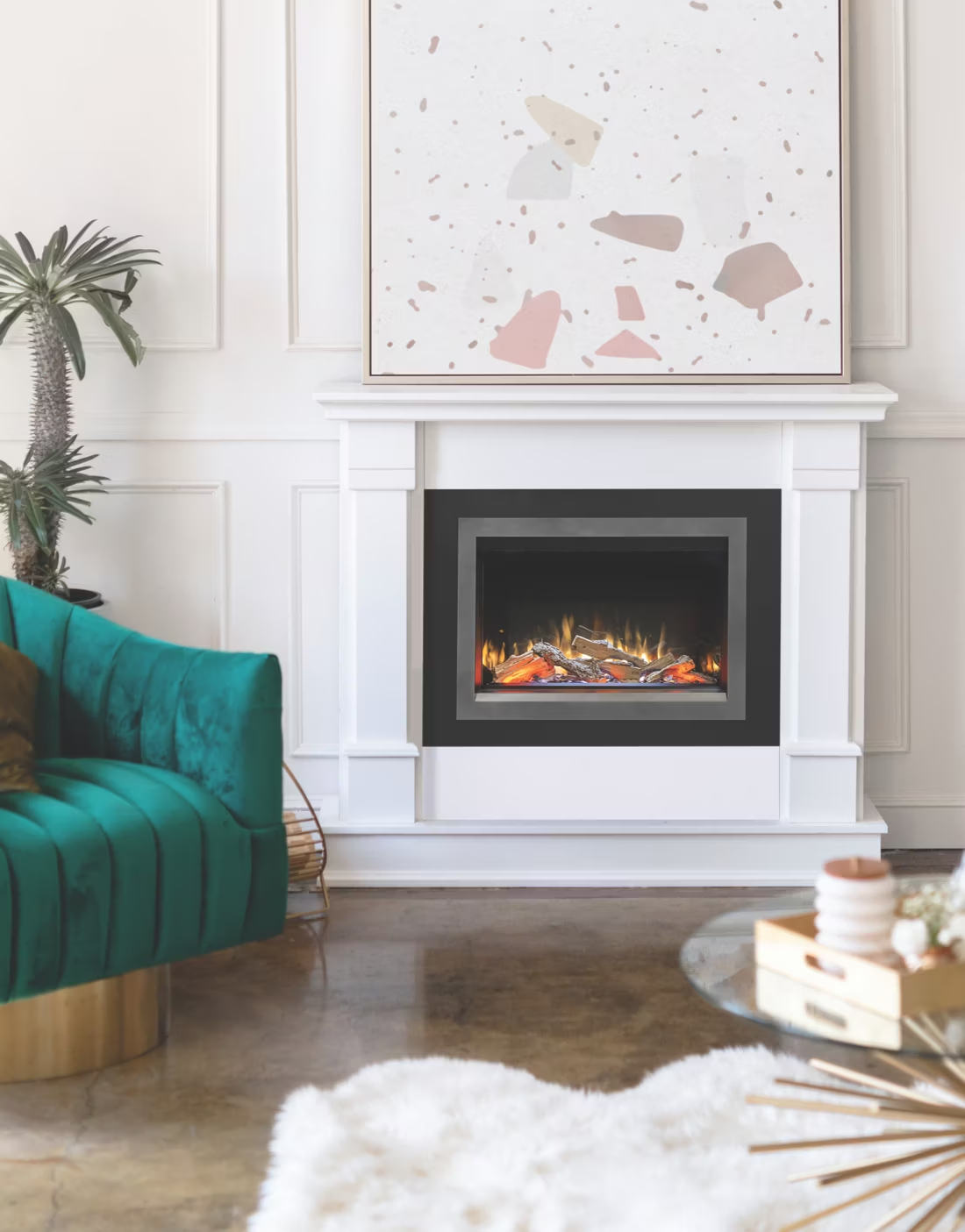
An electric fireplace is typically a built-in unit—set into a wall, mantel surround, or media console—designed to look like a traditional fireplace with a flame-effect display. An electric insert is sized to slide into an existing masonry or wood-burning fireplace opening, letting you convert an old firebox into supplemental electric heat without touching the chimney. An electric stove is a freestanding cabinet-style unit that sits on the floor, styled after a traditional wood stove but plugged into an outlet. For Perry County homes with an existing fireplace opening that's no longer used for wood, an insert is usually the simplest upgrade. Homes without an existing fireplace often go with a built-in unit or a freestanding stove instead.
Electric vs. propane—which makes more sense in Perry County?
Since Perry County has no natural gas service, propane is the main combustion-fuel alternative to electric. Propane fireplaces put out more heat and can be configured to run during a power outage with the right ignition system, but they require a tank, periodic fuel deliveries, and gas line work by a licensed installer. Electric fireplaces skip all of that—plug in or wire to a circuit and you're done—but they only work as long as the power is on, and they generally produce less raw heat than a propane unit of comparable size. For a supplemental heat source in a den, bedroom, or sunroom where convenience and low maintenance matter more than backup capability, electric is usually the easier call.
What's the best electric fireplace for a Perry County home?
Because electric units aren't dealing with combustion or venting, climate matters less here than it would for a wood stove—the bigger factor is matching the unit to how you'll use it. For a living room that needs real supplemental heat on the coldest nights, look at models with a rated heater output around 1,500 watts and a thermostat, from brands like Dimplex or Napoleon. For a fireplace that's mostly for ambiance in a room already covered by central heat, a lower-wattage unit with a strong flame display is plenty. A local dealer can walk you through the tradeoffs based on your room size and how much you're relying on it for actual warmth.
Can I install an electric fireplace in a manufactured or mobile home?
Yes, and it's one of the more common installs in Perry County given how many manufactured and modular homes are in the county. Electric fireplaces and inserts are UL-listed for use in manufactured housing far more often than wood stoves, which face additional clearance and floor-protection requirements in mobile homes. Most electric units just need a wall stud or cabinet space to sit in and a nearby outlet or dedicated circuit—no floor reinforcement, no roof penetration. It's worth confirming your specific unit's listing with the dealer before purchase, since not every model carries a manufactured-home rating.
Will my electric fireplace still work if the power goes out?
No—and this is worth planning around in a rural county like Perry, where outages can run longer than in town. An electric fireplace, insert, or stove needs grid power to run its heater and flame display, so it provides zero backup heat during an outage. If you want a heat source that keeps working when the lines are down, that's where a wood stove burning local oak or hickory, or a propane unit with battery-backup ignition, comes in. Many Perry County homeowners pair an electric fireplace for everyday convenience with a wood stove or fireplace as their outage backup—the two aren't mutually exclusive.
Electric vs. wood—which is right for my Perry County home?
Wood has deep roots here—oak, hickory, maple, and pine are all common locally, and a wood stove keeps working with zero electricity, which matters when winter storms take down power lines in rural parts of the county. Electric fireplaces trade that off-grid resilience for convenience: no wood to split and stack, no chimney to sweep, no ash to clean up, and heat you can turn on with a remote. For a primary heat source in a home without reliable backup, or for anyone who already burns wood and just wants supplemental warmth in one more room, electric is a low-hassle addition. For households leaning on a single heat source through winter, wood or a wood-electric combination tends to be the more resilient choice in Perry County.
Can I put a TV above my fireplace?
Yes—with an asterisk. Fireplaces are hot and TVs don't like heat. Either put a mantel between them to deflect rising warmth, or choose a fireplace with heat-management technology that creates a cool zone on the wall above—the wall stays around 125 degrees, barely warm, while the room still gets full heat. If you like clean lines and don't want a mantel, heat management is the answer.
Does an electric fireplace need a vent or chimney?
No—that's its superpower. An electric fireplace needs a wall and an outlet, period. No vent pipe, no gas line, no clearances to design around, which is why it works in bedrooms, offices, apartments, and walls where venting a gas or wood unit would be impractical or impossible. Installation is typically the simplest and least expensive of any fireplace type.
Can I install a fireplace myself?
If you're putting a fire in your house on purpose, it's best to work with an expert. Unless you're genuinely experienced in framing, gas line, vent pipe, and the national code on clearances to combustibles, have a professional do it—and ideally the same company that sells you the fireplace, so warranty, service, and liability all live under one roof.
Does a fireplace add value to my home?
On average, a fireplace adds back to the home about the same amount you spent installing it. Add the monthly savings from heating the rooms you actually use instead of the whole house—often hundreds of dollars a year—and the value case is strong before you even count what a fire does for how your family uses the room.
Stove and Fireplace Dealers in Perry County
Listings include WhyFire partner dealers, dealers we have verified as authorized for the brands we recommend, and established local businesses that carry hearth products. Every listing shows which one it is. The ones marked Preferred run on WhyFire's software, so they can show you real pricing and book your appointment right here. No manufacturer pays for placement. How we verify dealers →
Greater Dickson Gas Authority
Consolidated Trade Services
Phoenix Sales
Walt Mestan Dba The Fireplace Center
54 Lawn & Garden
Acme Brick Company
Rogers Lp Gas LLC
Find your electric fireplace in Perry County.
Tell us a bit about your home and we'll match you with the right electric fireplace, insert, or stove—and send you a free Project Guide & Parts List with your recommended local dealer.
Find Your Fireplace →