
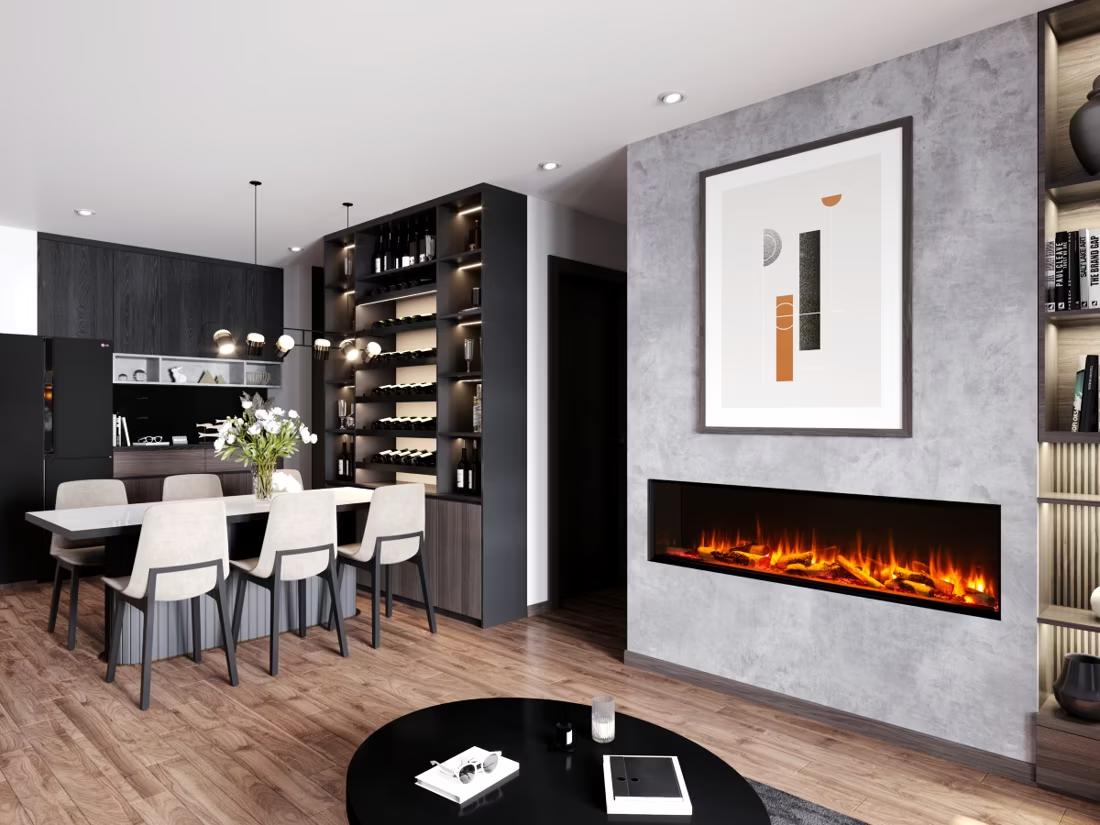
Zero-clearance warmth for Park City's mild winters.
No chimney, no gas line, no permit headaches—just plug-in or hardwired heat that fits Lincoln County's moderate winters. Find the right unit and connect with a trusted local dealer.
Every Project Starts From One of These Five Situations
A mild-climate town where electric heat just makes sense.
Park City sits at just under 1,000 feet in Lincoln County, where winter lows average around 30°F and heating degree days run about 3,362 a year—nowhere near the sub-zero stretches you'd see in a place like Duluth or Fargo. That moderate climate changes the math on home heating. Instead of needing a whole-home wood-burning setup to survive January, most Park City homeowners are looking for supplemental zone heat: something that takes the chill off a bedroom, sunroom, or basement without firing up central HVAC for the whole house.
Electric fireplaces fit that need well. There's no chimney to build, no gas line to run, and in most cases no venting at all—which matters in a small town like Park City where natural gas service isn't widely available and propane tank installation adds cost and lead time. City of Fayetteville provides electric service to the area at a residential rate around $0.1193 per kWh, which is below the national average and makes running a 1,500-watt electric insert for a few hours a night genuinely inexpensive. Plenty of Lincoln County homes still burn oak, hickory, and maple for primary heat in an existing wood stove, but electric units are increasingly the pick for a second room, a rental property, or anyone who wants real-looking flame without maintenance.
Three steps. No salesperson until you're ready.
Tell us about your project
Your zip code, your situation, and the fuel you're leaning toward—or let the answers point you to one.
See what's actually available
The brands dealers within 100 miles genuinely carry—real options, never a catalog mirage.
Get your dealer & Project Guide
A trusted local dealer, plus the free Project Guide & Parts List that names every component of the job.
Frequently Asked Questions
How much does an electric fireplace installation cost in Park City?
A plug-in electric insert or mantel package—the kind that drops into an existing opening or a simple wood-framed surround—typically runs $300 to $1,500 installed, since most units just need a standard 120V outlet. Built-in wall units that require an electrician to run a dedicated 240V circuit or recess the unit into drywall run higher, usually $1,500 to $4,000 depending on the model and how much wiring work is involved. Local dealers can size this correctly after seeing your room and existing electrical panel capacity.
Do I need a permit to install an electric fireplace in Park City?
Plug-in units generally don't require a permit since there's no venting, gas line, or structural chimney work involved—you're essentially installing a large appliance. Hardwired units that need new electrical circuits do typically require an electrical permit through the Lincoln County Building Department, since that work has to be inspected regardless of the appliance. A licensed electrician handling the circuit work will usually pull that permit as part of the job.
Is an electric fireplace enough heat for a Park City winter?
For the room it's installed in, generally yes. Most electric fireplaces put out around 4,700–5,200 BTU (roughly 1,500 watts), which is enough to comfortably heat a single room in the 300–400 square foot range, even on a 20-degree night. Given Park City's average winter low of 30°F and total heating degree days around 3,362 a year, that's a realistic ask—this isn't Anchorage or International Falls, where you'd need a whole-house heating strategy. Electric fireplaces here work best as zone heat for a specific room rather than a replacement for central heat on the coldest stretches of the year.
What's the difference between an electric insert, mantel package, and built-in wall unit?
An electric insert is a self-contained unit designed to drop into an existing fireplace opening—a common upgrade for older Lincoln County homes with a masonry firebox that no longer gets used for wood. A mantel package pairs an insert-style unit with a surrounding cabinet or mantel, giving you a complete fireplace look with no existing opening required. A built-in wall unit is recessed into the wall itself, framed in like a window, and usually needs an electrician for a dedicated circuit. For most Park City homes without an existing fireplace, a mantel package is the simplest path; homes with an old wood-burning fireplace often go with an insert instead.
Will an electric fireplace work during a power outage?
No—and this is the one real tradeoff compared to wood heat. Electric fireplaces need power to run the heating element, blower, and flame effect, so during an outage they go dark along with everything else. In Lincoln County, where ice storms occasionally knock out power for a day or more, homeowners who want backup heat capability alongside an electric fireplace often keep a wood stove or a battery/generator setup in the mix. If reliable emergency heat is a priority, that's worth discussing with your local dealer before you settle on electric only.
How much does it cost to run an electric fireplace in Park City?
At City of Fayetteville's residential rate of roughly $0.1193 per kWh, a typical 1,500-watt electric fireplace running on high costs about 18 cents an hour—call it $1.25 to $2 for a full evening of use. Most units also let you run the flame effect alone without the heater, which draws only a fraction of that. Compared to running central heat to warm a whole house, it's a cheap way to take the edge off a single room.
What's the difference between an electric fireplace and a wood stove for a Park City home?
Wood stoves burning local oak, hickory, or maple put out serious heat—often enough for a whole small home—and they keep working when the power doesn't. But they need a chimney or approved venting, regular chimney sweeping, and a supply of split, seasoned firewood. Electric fireplaces need none of that: no venting, no ash, no annual sweep, and installation that a homeowner can sometimes do themselves for a plug-in model. For a mild-winter town like Park City, electric is usually the right call for supplemental warmth and ambiance in a specific room; wood still makes sense for anyone wanting a primary heat source that survives an outage.
Can I put an electric fireplace in a bedroom or rental property?
Yes—this is actually one of the most common uses for electric units in a town this size. Because there's no combustion, no venting, and no clearance-to-combustibles requirements like a wood or gas unit, electric fireplaces are approved for bedrooms and are a popular low-maintenance amenity in rental properties and short-term rentals around Lincoln County. Just confirm the outlet or circuit can handle the unit's wattage, especially in older homes with older electrical panels.
Electric vs. propane—which makes more sense for a Park City home without natural gas?
Since natural gas isn't widely run through Park City, the real choice for most homeowners is electric versus propane. Propane fireplaces put out more heat and can be sized to warm a larger area, but they require a tank installation, a gas line, and periodic refills from a regional supplier. Electric fireplaces skip all of that—no tank, no delivery schedule, and lower upfront cost—in exchange for less total heat output and reliance on the power grid. For a single supplemental room, electric is usually the simpler and cheaper route; for a home that wants a gas-fireplace-style primary heat source, propane is worth a look from a local dealer.
Can I put a TV above my fireplace?
Yes—with an asterisk. Fireplaces are hot and TVs don't like heat. Either put a mantel between them to deflect rising warmth, or choose a fireplace with heat-management technology that creates a cool zone on the wall above—the wall stays around 125 degrees, barely warm, while the room still gets full heat. If you like clean lines and don't want a mantel, heat management is the answer.
Does an electric fireplace need a vent or chimney?
No—that's its superpower. An electric fireplace needs a wall and an outlet, period. No vent pipe, no gas line, no clearances to design around, which is why it works in bedrooms, offices, apartments, and walls where venting a gas or wood unit would be impractical or impossible. Installation is typically the simplest and least expensive of any fireplace type.
Does a fireplace add value to my home?
On average, a fireplace adds back to the home about the same amount you spent installing it. Add the monthly savings from heating the rooms you actually use instead of the whole house—often hundreds of dollars a year—and the value case is strong before you even count what a fire does for how your family uses the room.
Can I install a fireplace myself?
If you're putting a fire in your house on purpose, it's best to work with an expert. Unless you're genuinely experienced in framing, gas line, vent pipe, and the national code on clearances to combustibles, have a professional do it—and ideally the same company that sells you the fireplace, so warranty, service, and liability all live under one roof.
Nearby Dealers
Hearth shops serving Park City and the surrounding area. Every listing shows whether it is a WhyFire partner, a dealer we have verified as authorized for the brands we recommend, or a local business carrying hearth products. No manufacturer pays for placement. How we verify dealers →
Allgas, Inc. Of Tn - Fayetteville
Atnip Design & Supply Center
Allgas, Inc.
Electric Service in Park City
An electric fireplace's heater draws about 1,500 watts—pennies per hour at local rates.
City Of Fayetteville
Find your electric fireplace in Park City.
Tell us a bit about your home and we'll put together a free Project Guide & Parts List—the right electric fireplace or insert for your space, plus a trusted local dealer who can get it installed correctly.
Find Your Fireplace →