
Real fire, no wood pile, right here in Paris.
Instant, clean heat for Henry County homes and lake houses around Kentucky Lake—find the right gas fireplace and connect with a trusted local dealer.
Every Project Starts From One of These Five Situations
Mild winters, but homeowners still want a real flame.
Paris sits at just 436 feet in the rolling hills of West Tennessee, where winters are mild by national standards—average lows hover around 27°F and the city has a fairly short, light heating season, a fraction of what a place like Duluth, Minnesota sees. That's not cold enough to make wood heat a daily necessity the way it is farther north, which is part of why wood and pellet stoves are rare here. Gas, on the other hand, fits Henry County's climate well: enough chill on winter mornings and around Kentucky Lake's waterfront homes to want real heat, but not enough to justify tending a fire all season.
Many Paris homes—especially those built before natural gas infrastructure reached this part of Henry County, and the seasonal cabins scattered around Paris Landing and Kentucky Lake—run on propane rather than piped natural gas. Either fuel works in a modern direct-vent gas fireplace or insert, and a local dealer will know which is already plumbed to your address. The appeal is simple: flip a switch, get heat, no ash, no wood stacked on the porch, and a fireplace that still looks and feels like the real thing once the World's Biggest Fish Fry crowds have gone home and the lake house goes quiet for winter.
Three steps. No salesperson until you're ready.
Tell us about your project
Your zip code, your situation, and the fuel you're leaning toward—or let the answers point you to one.
See what's actually available
The brands dealers within 100 miles genuinely carry—real options, never a catalog mirage.
Get your dealer & Project Guide
A trusted local dealer, plus the free Project Guide & Parts List that names every component of the job.
Frequently Asked Questions
How much does a gas fireplace installation cost in Paris?
In Henry County, a direct-vent gas insert installed into an existing masonry fireplace typically runs $3,500 to $6,500, assuming a propane or gas line already reaches the hearth. A new built-in gas fireplace for a room without an existing chimney—common in newer construction around the Paris city limits and out toward Kentucky Lake—runs higher, often $6,000 to $9,500, once framing, venting, and a fresh gas or propane line are added. Because a good number of Henry County homes run on propane rather than piped gas, tank placement and line length can move the number in either direction. A local dealer will walk your house and give you a firm number.
Does my house need natural gas, or can I run a gas fireplace on propane?
Either works, and in Paris it usually comes down to what's already at your address. Piped natural gas doesn't reach every part of Henry County, so a lot of homes—especially outside the city core and around Paris Landing and Kentucky Lake—already heat and cook with propane, either from a buried tank or an above-ground tank near the house. If you're on propane for your water heater or range, adding a propane gas fireplace is straightforward. If you're inside city limits with gas service, your installer simply ties into the existing line. Either fuel runs the same fireplace models with a different orifice and regulator setup.
Can I convert an old wood-burning fireplace to gas?
Yes, and it's a common project in Paris's older homes, many of which were built with a masonry fireplace originally meant to burn local oak or hickory. A gas insert slides into that existing firebox and uses a stainless liner run up the same chimney, so you keep the mantel and surround you already have. Because true cold-climate wood heat isn't much of a draw here—Paris has well under half the winter heating load of a place like Bismarck, North Dakota—most homeowners doing this conversion are after convenience and a cleaner look, not backup heat. Expect $4,000 to $7,500 for the conversion depending on chimney condition and whether you're on natural gas or propane.
Will my gas fireplace still work if the power goes out?
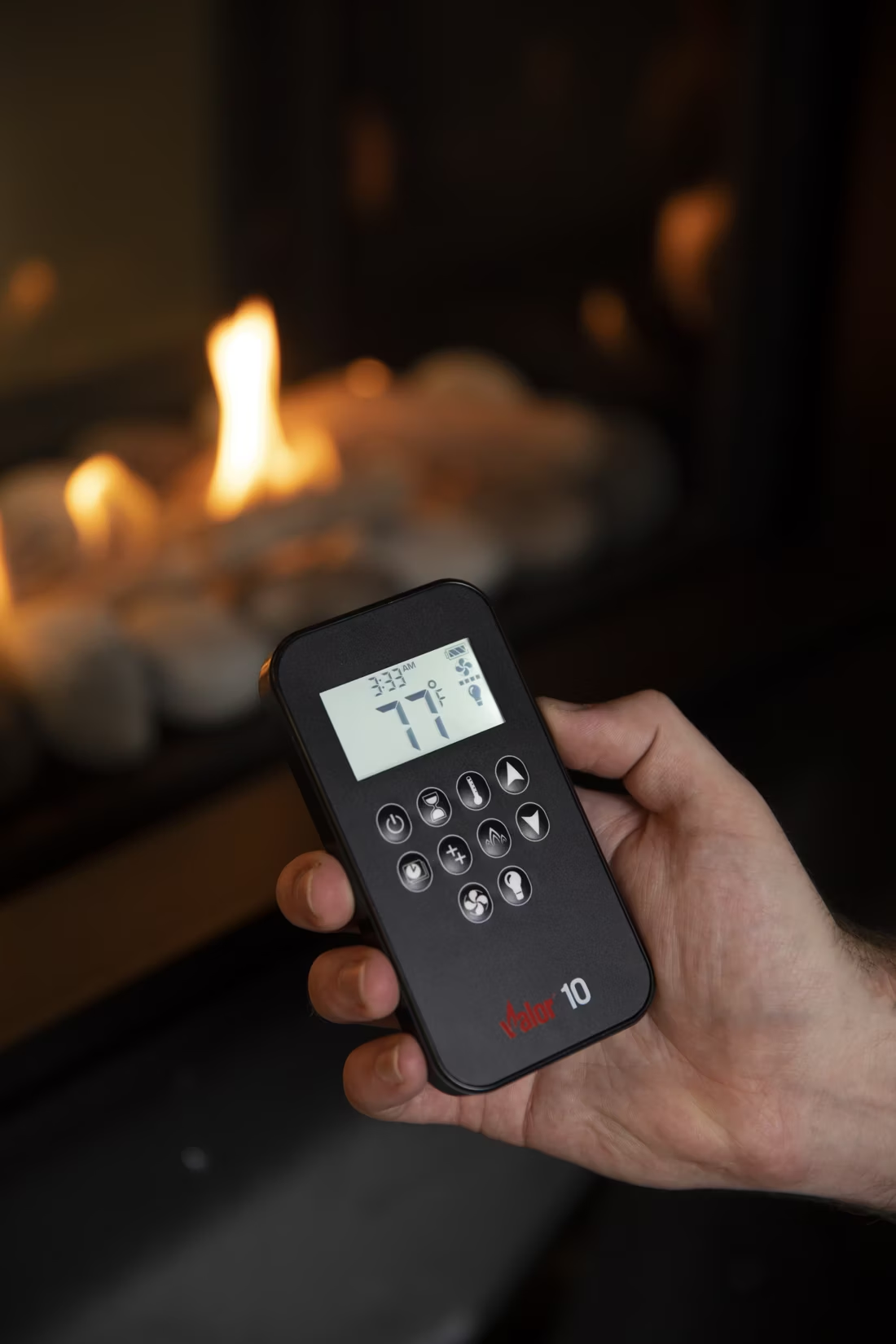
Most direct-vent gas fireplaces with intermittent pilot ignition (IPI) run on a small battery backup, so they'll light and heat the room even if City of Paris Electric power is down—which matters during the ice and wind events that occasionally knock out lines in Henry County. Some brands, like Valor, skip batteries entirely and generate their own current off the pilot's thermocouple. Worth asking your local dealer which ignition system is in the model you're considering, especially if you're outfitting a lake house you don't visit every week to swap batteries.
What's the difference between a gas fireplace, insert, and stove?
A gas fireplace is a fully built-in unit framed into a wall—the right call for new construction or a remodel without an existing hearth. A gas insert drops into an existing masonry fireplace opening and uses the current chimney as its vent chase, which is the more common project in Paris's older neighborhoods. A gas stove is a freestanding cast-iron or steel unit that sits on a hearth pad, similar in footprint to a wood stove but running on gas or propane—a good fit for a cabin or camp house around Kentucky Lake where a full fireplace isn't practical.
Do I need a permit to install a gas fireplace in Paris?
Yes. New gas fireplace and insert installations require a building permit, and any new gas or propane line work needs to be pulled and inspected as well—typically through the Paris Building & Codes Department inside city limits, or the Henry County Building Department for properties outside city limits, including much of the Kentucky Lake shoreline. Most hearth dealers handle the permit paperwork and schedule the inspection as part of the installation, so it's rarely something the homeowner has to manage directly.
Should I get a vented or vent-free gas fireplace?
Vented (direct-vent) units draw combustion air from outside and exhaust it back outside through sealed pipe—they're the standard recommendation almost everywhere, including Paris, because they don't affect indoor air quality. Vent-free units are legal in Tennessee with proper room-sizing and an oxygen depletion sensor, and they show up occasionally in small camp houses or additions around Kentucky Lake where running vent pipe isn't practical. For a primary living space, though, a direct-vent unit is almost always the better call—you get real heat output without any tradeoff on air quality.
How often does a gas fireplace need to be serviced?
Plan on an annual inspection, ideally before the first cold snap in November. A technician checks the burner, pilot assembly, venting, and any gas connections, and cleans the glass—usually a $150 to $250 visit. It's a lighter lift than chimney sweeping on a wood stove, but skipping it is still the most common reason a fireplace won't light reliably on the first cold night of the year.
Gas vs. electric fireplace—which makes more sense for my home?
Gas gives you real flame, real heat output, and independence from the power grid thanks to a battery-backed pilot—worth it for a primary living space. Electric fireplaces plug into a standard outlet, need no venting or gas line at all, and cost far less to install—often under $1,000—which makes them a popular choice for lake cabins around Kentucky Lake that only get used part of the year, or for a bedroom or bonus room where running gas line isn't worth it. With City of Paris Electric's residential rate sitting around 11.5 cents per kWh, running an electric unit for supplemental warmth is inexpensive, though it won't put out the sustained heat a gas fireplace can on a genuinely cold Henry County morning.
Can I put a TV above my fireplace?
Yes—with an asterisk. Fireplaces are hot and TVs don't like heat. Either put a mantel between them to deflect rising warmth, or choose a fireplace with heat-management technology that creates a cool zone on the wall above—the wall stays around 125 degrees, barely warm, while the room still gets full heat. If you like clean lines and don't want a mantel, heat management is the answer.
Why is a fireplace insert so efficient?
An insert does two things: it seals the chimney completely, so you stop losing air you already paid to heat, and it radiates warmth into the room through the firebox and glass. Most add a heat-exchange fan that pulls cool room air underneath, wraps it around the hot firebox, and pushes it back out warm. Your home is more efficient before you've even lit the first fire.
How much should I budget for a fireplace?
For an average home—covering the fireplace, the vent pipe, and basic installation—a budget between $3,900 and $5,500 gives you a lot of options across wood, gas, and pellet. By the time you add finish work, gas line, and electrical, the average complete installation lands between $5,000 and $12,000 all-in. In a remodel or new build, a good rule is to put about 2.5% of the total project cost toward the fireplace.
Can a fireplace actually lower my heating bill?
Yes—by creating a comfort zone. A furnace heats every square foot of the house just to warm the one room you're in; a gas fireplace on low burns roughly a sixth of the gas a typical furnace does. Set the furnace around 55–60 degrees as a baseline, then heat the rooms your family actually uses. Families who heat this way commonly save $20–$60 a month.
Nearby Dealers
Hearth shops serving Paris and the surrounding area. Every listing shows whether it is a WhyFire partner, a dealer we have verified as authorized for the brands we recommend, or a local business carrying hearth products. No manufacturer pays for placement. How we verify dealers →
54 Lawn & Garden
Jones Mobile Home Service Inc
Greater Dickson Gas Authority
Master Sweeps
Hank Bros. True Value
Acme Brick Company
Walt Mestan Dba The Fireplace Center
Bluegrass Supply
Akridge Farm Supply
Hlc Cullipher LLC
Find your gas fireplace in Paris.
Tell us about your home and we'll put together a free Project Guide & Parts List—the right unit, the vent kit, and a trusted local Henry County dealer to install it.
Find Your Fireplace →