
Add supplemental heat anywhere in Obion County.
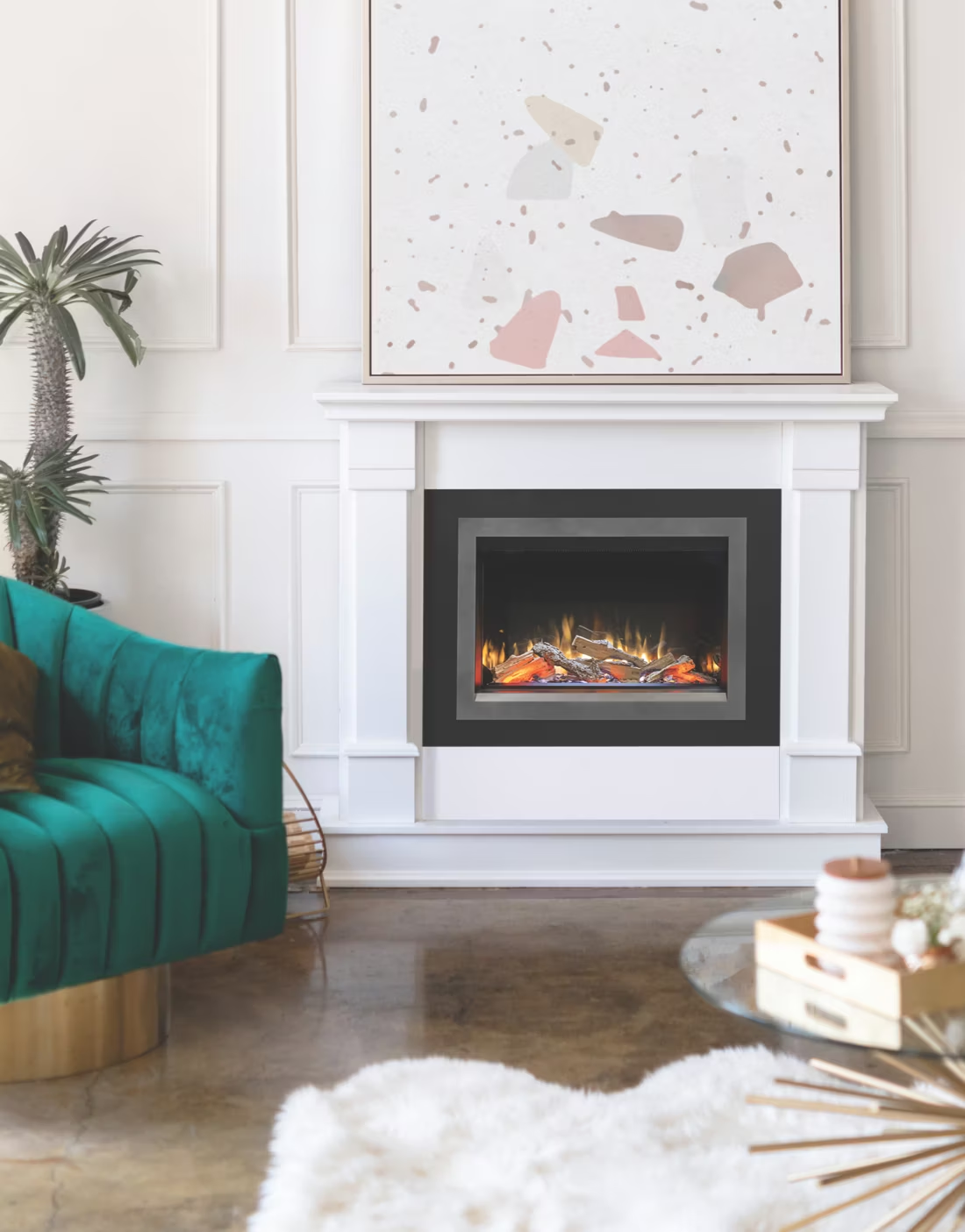
No chimney, no gas line, no venting—just flip-a-switch warmth for any room from Union City to Troy to South Fulton. Find the right electric fireplace or insert, and connect with a trusted local dealer.
Every Project Starts From One of These Five Situations
Simple, safe heat for Obion County's mild winters.
Obion County sits in Tennessee's northwest corner along the Mississippi River bluffs near Reelfoot Lake, home to Union City, Troy, South Fulton, Rives, and Kenton. It's climate zone 4A with an average winter low around 27°F and roughly 4,060 heating degree days a year—a fraction of what a place like Fargo, ND or Duluth, MN sees in a season. That's a mild heating load by national standards, and it's exactly the kind of climate where electric fireplaces make sense: most homes here don't need a full-time primary heat source in any one room, they need targeted, on-demand warmth in a sunroom, bonus room, or primary bedroom on the coldest nights.
Because Obion County's older farmhouses and historic Union City homes often have a masonry firebox that's no longer used for wood, an electric insert is a common retrofit—no chimney relining, no gas line, no venting through the roof. It slides into the existing opening and runs on standard household power, or a dedicated circuit for higher-output built-ins. That same simplicity makes electric a strong fit for the manufactured and rental housing common throughout the county's smaller towns, where structural changes for a gas or wood installation aren't practical or allowed.
Three steps. No salesperson until you're ready.
Tell us about your project
Your zip code, your situation, and the fuel you're leaning toward—or let the answers point you to one.
See what's actually available
The brands dealers within 100 miles genuinely carry—real options, never a catalog mirage.
Get your dealer & Project Guide
A trusted local dealer, plus the free Project Guide & Parts List that names every component of the job.
Frequently Asked Questions
How much does an electric fireplace installation cost in Obion County?
Plug-in freestanding units and electric log inserts that slide into an existing masonry firebox run about $150 to $600 for the appliance itself, with no installation cost beyond an existing outlet. Wall-mounted or built-in electric fireplaces that require a dedicated 20-amp circuit typically run $800 to $2,500 installed, including an electrician's time to run new wiring from the panel. Custom built-ins with a surrounding mantel or media console conversion can reach $3,000 to $4,000. Because there's no chimney, no venting, and no gas line involved, electric is consistently the least expensive fireplace fuel to install in Obion County homes.
What size electric fireplace do I need for my room?
Most electric fireplaces are rated around 1,500 watts, which comfortably supplements heat for a room up to about 400 square feet with average ceiling height. Given Obion County's mild 4A climate and average winter low near 27°F, electric units here are almost always used as zone or supplemental heat rather than a home's sole heat source—which fits the wattage well. Older farmhouses with high ceilings or open floor plans, and newer bonus rooms in Union City subdivisions, sometimes need a higher-output unit or a second zone to feel the difference. A local dealer can walk your room and recommend wattage and placement for free.
Do I need a licensed electrician to install an electric fireplace?
A plug-in unit needs nothing more than a standard outlet. But a wall-mounted or built-in electric fireplace that requires a new dedicated circuit needs a licensed electrician, and that work is permitted through the Obion County Building & Codes Department. Most hearth dealers serving the county coordinate directly with a local electrician as part of the install, so the wiring, the mounting, and the final inspection are handled together rather than left for the homeowner to piece together.
What's the difference between an electric fireplace, insert, and stove?
An electric fireplace is typically a wall-mounted or recessed unit built into new framing—common in remodels and new construction. An electric insert is sized to slide into an existing masonry firebox, which is the more common retrofit for Obion County's older farmhouses and historic Union City homes that already have an unused wood fireplace opening. An electric stove is a freestanding unit styled to look like a traditional wood stove but plugs into a standard outlet. For most homeowners here with an existing fireplace opening, an insert is the simplest upgrade; for a room with no existing masonry, a built-in or stove-style unit works just as well.
Do I need a permit to install an electric fireplace in Obion County?
A plug-in electric fireplace or insert that uses an existing outlet doesn't require a permit. If your unit needs a new dedicated circuit, that electrical work does require a permit through the Obion County Building & Codes Department, and it needs to be pulled by the licensed electrician doing the work. Most local dealers who sell built-in electric fireplaces handle this coordination as part of the installation quote, so it's rarely something a homeowner has to manage themselves.
Will my electric fireplace work during a power outage?
No—unlike a wood stove, an electric fireplace has no heat output without power. Ice storms and downed lines do happen in rural parts of Obion County, and Gibson Electric Membership Corporation, which serves much of the area, can see outages stretch for hours during winter weather events. If backup heat during outages matters to you, electric shouldn't be your only heat source in that room; pairing it with a battery or generator setup for essential circuits, or keeping a vented gas option elsewhere in the home, is worth discussing with a local dealer.
How much does it cost to run an electric fireplace in Obion County?
A typical 1,500-watt electric fireplace run a few hours an evening costs a few dollars a month on a Gibson Electric Membership Corporation bill—far less than raising the whole-house thermostat to warm one room. That's the real value case for electric heat in a mild 4A climate like Obion County's: instead of heating an entire house to keep one sunroom or bonus room comfortable on a 27-degree night, you heat just that space and leave the rest of the HVAC system alone.
Electric vs. gas—which is right for my home?
Gas fireplaces put out more heat and give you a real flame, but they require a gas line or propane tank, venting in most cases, and a higher installed cost. Electric fireplaces cost less to install, can go on almost any interior wall without venting, and work in homes where running gas isn't practical—including many of the manufactured and rental homes found throughout the county's smaller towns like Rives and Kenton. For Obion County's mild winter load, electric is usually the simpler, cheaper answer for supplemental warmth; gas makes more sense where you want stronger heat output or a more traditional flame in a primary living space.
Should I consider a wood fireplace instead of electric?
Given Obion County's mild 4A climate and modest 4,060 heating degree days, wood carries little practical relevance here compared to genuinely cold-climate counties. Plenty of older farmhouses around the county still have decorative masonry fireplaces surrounded by oak, hickory, maple, and pine woodlots, but new wood-burning installations are uncommon—the winters simply don't create the demand for wood as a primary heat source that you'd see farther north. Most homeowners upgrading an old, unused fireplace opening in Obion County choose an electric or gas insert instead, for the convenience of heat without the wood handling, ash cleanup, or chimney maintenance.
Can I put a TV above my fireplace?
Yes—with an asterisk. Fireplaces are hot and TVs don't like heat. Either put a mantel between them to deflect rising warmth, or choose a fireplace with heat-management technology that creates a cool zone on the wall above—the wall stays around 125 degrees, barely warm, while the room still gets full heat. If you like clean lines and don't want a mantel, heat management is the answer.
How much does an electric fireplace cost to run?
With the heater on, a typical unit draws about 1,500 watts—at average electric rates that's roughly 20 cents an hour. Run the flame effect alone and it costs pennies; the flames are LED-driven and use about as much power as a light bulb. There's no pilot light, no fuel delivery, and essentially no maintenance.
Can a fireplace actually lower my heating bill?
Yes—by creating a comfort zone. A furnace heats every square foot of the house just to warm the one room you're in; a gas fireplace on low burns roughly a sixth of the gas a typical furnace does. Set the furnace around 55–60 degrees as a baseline, then heat the rooms your family actually uses. Families who heat this way commonly save $20–$60 a month.
Can I install a fireplace myself?
If you're putting a fire in your house on purpose, it's best to work with an expert. Unless you're genuinely experienced in framing, gas line, vent pipe, and the national code on clearances to combustibles, have a professional do it—and ideally the same company that sells you the fireplace, so warranty, service, and liability all live under one roof.
Stove and Fireplace Dealers in Obion County
Listings include WhyFire partner dealers, dealers we have verified as authorized for the brands we recommend, and established local businesses that carry hearth products. Every listing shows which one it is. The ones marked Preferred run on WhyFire's software, so they can show you real pricing and book your appointment right here. No manufacturer pays for placement. How we verify dealers →
54 Lawn & Garden
Jones Mobile Home Service Inc
Hlc Cullipher LLC
Hank Bros. True Value
Acme Brick Company
Walt Mestan Dba The Fireplace Center
Russell Electric
Find your electric fireplace in Obion County.
Tell us about your home and we'll match you with a trusted local dealer, plus a free Project Guide & Parts List—the right electric fireplace or insert, the wiring it needs, and a plan built for your Obion County home.
Find Your Fireplace →