
Mild Tennessee winters, matched with the right gas fireplace.
Moore County's winters rarely stay brutal for long, but a good gas fireplace still earns its keep on the cold mornings around Lynchburg and the farms surrounding it. We'll match you with a trusted local dealer who knows propane setups and direct-vent installs in this part of the state.
Every Project Starts From One of These Five Situations
Steady heat for a county built around one small town.
Moore County is the smallest county in Tennessee by land area, and Lynchburg—best known as home to the Jack Daniel Distillery—is essentially the only incorporated town in it. Winters here sit in climate zone 4A, with an average winter low around 27°F and roughly 3,889 heating degree days a year. That's a real but moderate heating load—less than half of what a place like Minneapolis logs in a typical winter—which is exactly the profile where a gas fireplace shines: enough cold to want reliable zone heat, not so much that you need a wood stove running around the clock.
Moore County doesn't have its own municipal natural gas utility, so most gas fireplace installs here run on propane, delivered and tanked by regional suppliers that also serve the neighboring Lincoln, Franklin, and Bedford County lines. That's not a downside—modern direct-vent propane fireplaces perform identically to natural gas units, and a local installer will size the tank, regulator, and venting to your home. For the farmhouses and older homes scattered around Lynchburg, a gas insert dropped into an existing masonry fireplace is one of the most requested upgrades: instant heat, no ash, and none of the wood-splitting that dominates life in the surrounding hardwood country.
Three steps. No salesperson until you're ready.
Tell us about your project
Your zip code, your situation, and the fuel you're leaning toward—or let the answers point you to one.
See what's actually available
The brands dealers within 100 miles genuinely carry—real options, never a catalog mirage.
Get your dealer & Project Guide
A trusted local dealer, plus the free Project Guide & Parts List that names every component of the job.
Frequently Asked Questions
How much does a gas fireplace installation cost in Moore County?
Most gas fireplace and insert installations in Moore County land in the $3,500 to $9,000 range, depending on the unit, the venting path, and whether a new propane tank or line run is needed. A direct-vent insert going into an existing fireplace with propane already on-site tends to run toward the lower end. New construction, or a home that needs a fresh propane tank set and buried line out to the house, pushes toward the higher end. Since natural gas service isn't available across most of the county, factor in propane tank costs when you're budgeting—your local dealer can walk you through lease-vs-purchase tank options during the in-home estimate.
Can I convert my existing wood fireplace to gas?
Yes, and it's a common project in Moore County's older farmhouses and homes around the Lynchburg square. A gas insert slides into your existing masonry fireplace opening, using a stainless liner run up the original chimney for venting, and connects to a propane line and tank set nearby. The look of the original hearth stays intact, but you get instant on-off heat instead of tending a wood fire. Homes with an existing propane system for a water heater or range typically see lower conversion costs since the fuel infrastructure is already in place.
Do I need natural gas, or does propane work fine?
Propane is the standard fuel for gas fireplaces throughout Moore County, since there's no municipal natural gas utility serving Lynchburg or the surrounding rural areas. This isn't a compromise—nearly every gas fireplace and insert on the market today is available in a propane configuration, and a properly sized tank and regulator deliver the same performance as a natural gas hookup. If you're near a county line and happen to have natural gas access through a neighboring utility, either fuel works; your local dealer will confirm what's actually running to your home before recommending a unit.
Will my gas fireplace work during a power outage?
Most direct-vent gas fireplaces with intermittent pilot ignition (IPI) include a small battery backup that keeps the unit operable when the power drops—a real consideration in a rural county like Moore, where ice or wind can knock out power for a while. Some manufacturers, including Valor, generate their own electricity through the pilot's thermocouple, so there's no battery to remember at all. If backup heat during outages matters to you, mention it to your local dealer up front—it narrows the unit selection quickly.
What's the difference between a gas fireplace, gas insert, and gas stove?
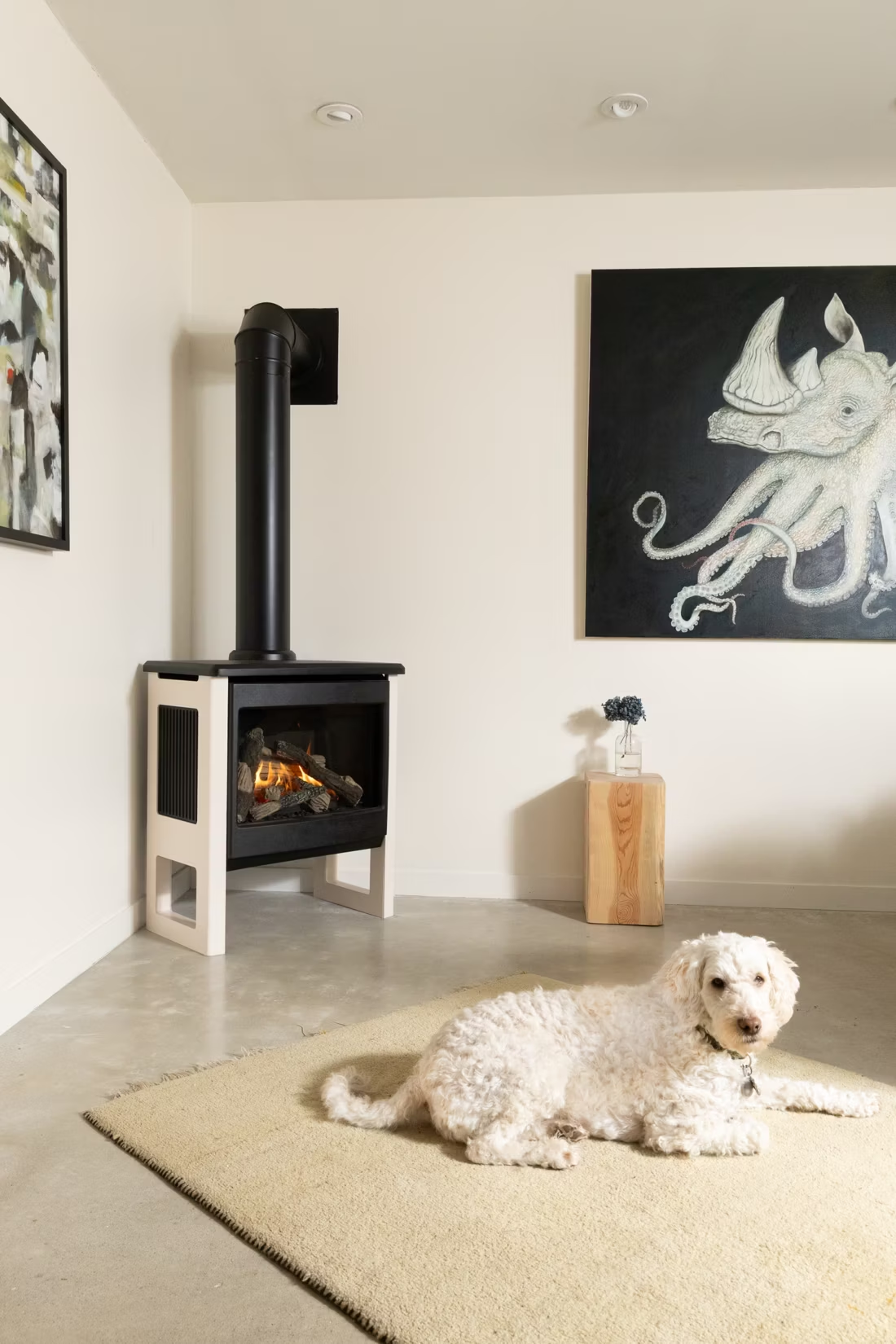
A gas fireplace is a fully built-in unit framed into a wall—the right call for new construction or a remodel without an existing hearth. A gas insert is built to slide into an existing masonry fireplace opening and uses the original chimney as its venting path, which makes it the natural fit for Moore County's many older homes with a working fireplace already in place. A gas stove is a freestanding cabinet-style unit that sits out on the floor, similar in footprint to a wood stove but running on propane. For most homeowners around Lynchburg with an existing hearth to upgrade, the insert is the simplest and most cost-effective path.
Do I need a permit to install a gas fireplace in Moore County?
Yes—new gas fireplace and insert installations require a building permit, and any new or extended propane line needs sign-off from a licensed gas installer. Most reputable local dealers handle the permitting and inspection scheduling as part of the install, so you're not left coordinating separate trades for the hearth work and the fuel line. It's worth confirming this is included before you sign a quote, since it's easy for a low bid to leave permitting off the table.
What's the difference between vented and vent-free gas fireplaces?
Vented, direct-vent units draw combustion air from outside and exhaust it back outside through sealed pipe—they're the cleanest and most universally recommended option, and what most Moore County installers default to. Vent-free (ventless) units burn fuel directly into the room without external venting; they're legal in Tennessee but come with strict room-size and ventilation requirements, and they release some combustion byproducts into your living space. For a farmhouse insert project or a new-construction fireplace, a direct-vent unit is almost always the better long-term choice—ask your local dealer to walk you through both if you're weighing the decision.
How often should my gas fireplace be serviced?
Plan on an annual inspection, ideally before the first cold snap each fall. A technician checks the burner, pilot assembly, gas connections, and venting, and cleans the glass and interior—a much lighter job than sweeping a wood chimney, but not one to skip, especially on propane systems where a technician will also check the tank, regulator, and line for leaks. Expect to pay somewhere in the $125–$225 range for a standard annual service call from a local hearth or propane technician.
Gas vs. wood—which is right for my home?
Moore County sits in oak and hickory country—the same white oak forests that feed the barrel-making side of the local whiskey industry—so wood is genuinely abundant and cheap to source here if you want it. Wood offers higher heat output, no fuel bill if you're cutting your own, and it works without power. Gas offers instant on-off convenience, no ash or creosote, and steady output without tending a fire—a better match for the county's moderate 27°F average winter lows, where you want quick comfort more often than an all-night burn. Plenty of local homes end up with both: a wood stove or fireplace for cool-weather ambiance and backup heat, and a gas insert in the main living space for everyday convenience.
Can I put a TV above my fireplace?
Yes—with an asterisk. Fireplaces are hot and TVs don't like heat. Either put a mantel between them to deflect rising warmth, or choose a fireplace with heat-management technology that creates a cool zone on the wall above—the wall stays around 125 degrees, barely warm, while the room still gets full heat. If you like clean lines and don't want a mantel, heat management is the answer.
Why is my open fireplace making my house colder?
Open fireplaces suck—literally. As the fire burns, it consumes air your furnace already paid to heat and pulls it out through the chimney, so the house is actually colder after the fire goes out than before you lit it. An insert fixes this: it seals the chimney, puts fixed glass across the front, and turns that hole in your house into a real heat source.
Can a fireplace actually lower my heating bill?
Yes—by creating a comfort zone. A furnace heats every square foot of the house just to warm the one room you're in; a gas fireplace on low burns roughly a sixth of the gas a typical furnace does. Set the furnace around 55–60 degrees as a baseline, then heat the rooms your family actually uses. Families who heat this way commonly save $20–$60 a month.
What is an in-home preview and do I need one?
It's a visit where a hearth professional measures your space, confirms the model you picked actually works in your home, and walks the specs—framing, gas line, venting, finish work—before anything is ordered. Some details you just can't know until you see the house. Never make a down payment without one; it's the single most-skipped step that burns buyers.
Stove and Fireplace Dealers in Moore County
Listings include WhyFire partner dealers, dealers we have verified as authorized for the brands we recommend, and established local businesses that carry hearth products. Every listing shows which one it is. The ones marked Preferred run on WhyFire's software, so they can show you real pricing and book your appointment right here. No manufacturer pays for placement. How we verify dealers →
Factory Furniture
Spar-Gas
A-1 Chimney Specialist
Allgas, Inc. Of Tn - Fayetteville
Allgas, Inc. Of Tn - Winchester
Find your gas fireplace in Moore County.
Tell us about your home in Lynchburg or the surrounding county, and we'll send over a free Project Guide & Parts List—the right unit, the vent kit, and a trusted local dealer who can install it correctly.#
Find Your Fireplace →