
Add real heat to one room—no chimney, no gas line.
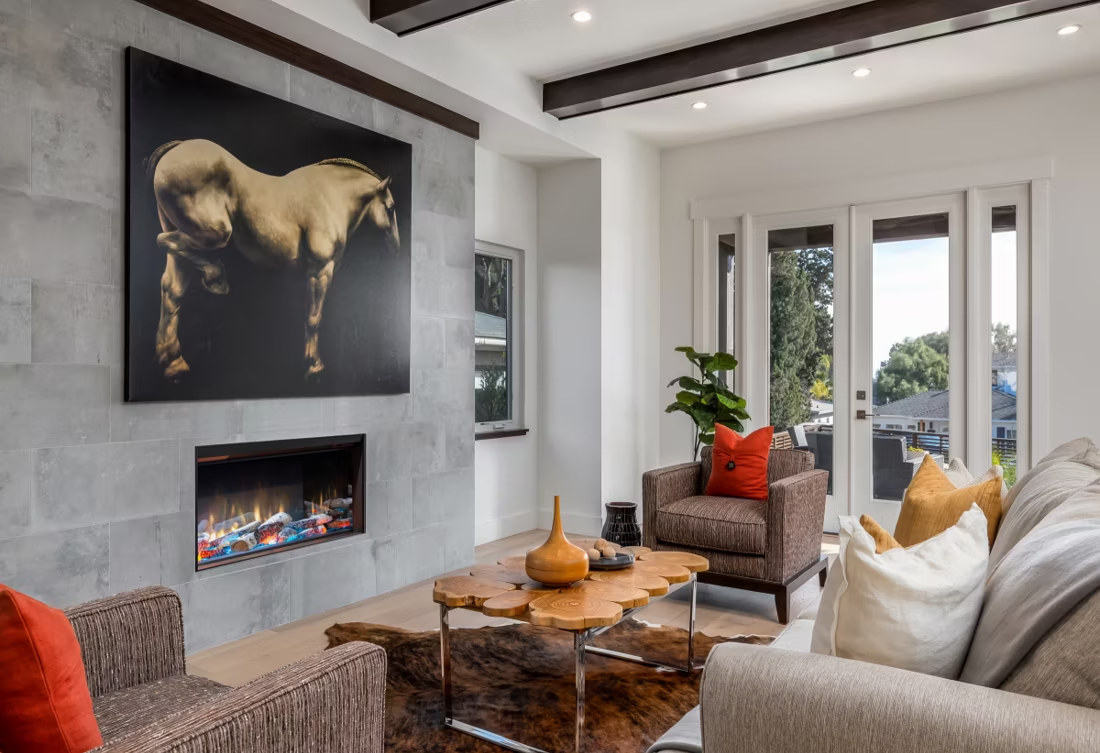
Electric fireplaces and inserts for Meigs County homes along the Hiwassee and Tennessee Rivers—plug-in heat for the room your heat pump doesn't quite reach, matched with a trusted local dealer who handles the wiring and the install right.
Every Project Starts From One of These Five Situations
The simplest way to add heat to one room.
Meigs County sits along the Hiwassee and Tennessee Rivers in southeast Tennessee, home to about 1,840 residents and the small county seat of Decatur. In climate zone 4A, with winter lows averaging around 28°F and a moderate winter heating load, the cold here is real but not relentless—colder than the Deep South, milder than the Appalachian high country to the east. That's exactly the kind of winter where a full-house heating overhaul is overkill but a room that stays chilly every evening still needs an answer.
Much of Meigs County runs on Volunteer Energy Cooperative-distributed power rather than piped natural gas, and a lot of the housing stock is manufactured or older construction without an existing chimney. Electric fireplaces fit that reality well: no venting, no gas line, no roof penetration, just a circuit that VEC power already reaches. That makes them a practical option for lake cabins near Chickamauga access points, bonus rooms, and manufactured homes where adding wood or gas heat would mean real construction work.
Three steps. No salesperson until you're ready.
Tell us about your project
Your zip code, your situation, and the fuel you're leaning toward—or let the answers point you to one.
See what's actually available
The brands dealers within 100 miles genuinely carry—real options, never a catalog mirage.
Get your dealer & Project Guide
A trusted local dealer, plus the free Project Guide & Parts List that names every component of the job.
Frequently Asked Questions
How much does an electric fireplace installation cost in Meigs County?
Because electric units skip chimney work, gas lines, and masonry, installed cost is almost entirely about the unit itself and whether your home's panel can support a new dedicated circuit. A simple plug-in insert or mantel package needs no wiring at all—you're just buying the unit. A built-in wall unit or hardwired insert usually calls for a licensed electrician to run a 20-amp circuit, especially in older homes around Decatur where panels haven't been upgraded in decades. Exact pricing depends on the model and your electrical setup, which is why your local dealer's free Project Guide & Parts List includes an itemized quote before you commit to anything.
Do I need a permit to install an electric fireplace in Meigs County?
In most cases, no separate permit is required for the fireplace itself since there's no combustion, chimney, or gas line involved—the things Meigs County's building rules are built around. If your installer adds a new dedicated electrical circuit, that work falls under standard electrical code and should be pulled by whoever does the wiring, not because of the fireplace but because any new circuit needs to meet code. For manufactured homes, which make up a meaningful share of the county's rural housing stock, check with your electrician about load capacity on the home's existing panel.
Insert, mantel package, or wall-mounted unit—which is right for my home?
An electric insert drops into an existing wood or gas fireplace opening and is the natural choice if you already have a firebox you want to convert to low-maintenance heat. A mantel package pairs a freestanding or built-in unit with surrounding cabinetry and works well in a living room without an existing fireplace. A slim wall-mounted unit is the go-to for smaller rooms, bonus rooms over a garage, or manufactured homes where wall depth is tight. For the Hiwassee River cabins common in this part of the county, wall-mounted units are popular in sunrooms and bunk rooms that see only occasional use.
How much room can an electric fireplace actually heat?
Most electric fireplace heaters top out around 1,500 watts on high, which noticeably warms a single room—typically 300 to 400 square feet in a reasonably insulated space—but not a whole house. With Meigs County's moderate winter heating load and winter lows near 28°F, that's usually plenty for supplemental heat in the room where you spend evenings, paired with central heat or a heat pump for the rest of the house. Homes trying to use one unit to heat an entire open floor plan are usually better served by a gas or wood system instead.
What does an electric fireplace cost to run day to day?
Running cost comes down to wattage and your electric rate through Volunteer Energy Cooperative, which distributes TVA power throughout Meigs County. A unit running on its 1,500-watt high setting for several hours an evening adds up over a winter, but most owners run it on a lower setting or just for the flame effect once the room is warm, which cuts the draw substantially. Because there's no fuel to buy, deliver, or store—no propane tank, no cordwood—many rural Meigs County homeowners find the simplicity worth a modestly higher power bill during the coldest stretches.
Electric vs. wood—which makes more sense for a Meigs County home?
Wood has deep roots here—oak, hickory, maple, and pine are all common locally, and Cherokee National Forest cutting permits run about $20 per cord during the May-to-October season, which keeps self-sufficient wood heat affordable for households with the time and equipment to process it. Electric skips all of that: no splitting, no stacking, no chimney to sweep, and no smoke. For a primary heat source in a drafty older farmhouse, wood still wins on raw output. For a den, guest bedroom, or lake cabin that just needs to feel warm without the upkeep, electric is usually the simpler answer.
Will my electric fireplace work if the power goes out?
No—electric fireplaces are entirely dependent on power, so during an outage they go dark along with everything else in the house. Volunteer Energy Cooperative's rural lines through Meigs County's wooded, hilly terrain can be slower to restore after ice storms or high winds than lines in denser areas, which is worth factoring in if you're relying on an electric unit as your only backup heat. Many households pair an electric fireplace for everyday convenience with a wood stove or propane heater elsewhere in the house for the rare multi-day outage.
Are electric fireplaces a good fit for manufactured or mobile homes?
Yes, and it's one of the more common uses in a county like Meigs, where manufactured housing makes up a real share of the rural housing stock. Electric units avoid the roof or wall penetrations that wood and gas venting require, which is a meaningful advantage on manufactured home construction, and most models are light enough to mount without structural reinforcement. A licensed electrician can confirm whether your home's panel has room for a dedicated circuit, or whether a simpler plug-in model that runs on a standard outlet makes more sense.
Electric vs. propane—which should I install?
Most of Meigs County doesn't have piped natural gas, so propane is the usual gas alternative for homeowners who want a live flame. Propane offers a more traditional fireplace look and real heat output, but it means a tank, a delivery schedule, and periodic gas line inspections. Electric skips the tank entirely, runs on power you're already paying for through Volunteer Energy Cooperative, and needs essentially no maintenance beyond occasional dusting. If flame appearance matters more than raw heat output, electric units with LED flame effects have closed much of that gap in recent years—worth seeing in person at a local dealer before deciding.
Do electric fireplaces actually produce heat?
Yes—most put out around 4,800–5,000 BTUs from a standard outlet, which comfortably warms a bedroom, office, or den as a comfort-zone heater. What they won't do is carry a whole house the way wood, gas, or pellet can. Think of electric as ambiance-first with honest supplemental heat: flames on with no heat in July, flames plus warmth in January.
Does an electric fireplace need a vent or chimney?
No—that's its superpower. An electric fireplace needs a wall and an outlet, period. No vent pipe, no gas line, no clearances to design around, which is why it works in bedrooms, offices, apartments, and walls where venting a gas or wood unit would be impractical or impossible. Installation is typically the simplest and least expensive of any fireplace type.
Can I install a fireplace myself?
If you're putting a fire in your house on purpose, it's best to work with an expert. Unless you're genuinely experienced in framing, gas line, vent pipe, and the national code on clearances to combustibles, have a professional do it—and ideally the same company that sells you the fireplace, so warranty, service, and liability all live under one roof.
How much should I budget for a fireplace?
For an average home—covering the fireplace, the vent pipe, and basic installation—a budget between $3,900 and $5,500 gives you a lot of options across wood, gas, and pellet. By the time you add finish work, gas line, and electrical, the average complete installation lands between $5,000 and $12,000 all-in. In a remodel or new build, a good rule is to put about 2.5% of the total project cost toward the fireplace.
Stove and Fireplace Dealers in Meigs County
Listings include WhyFire partner dealers, dealers we have verified as authorized for the brands we recommend, and established local businesses that carry hearth products. Every listing shows which one it is. The ones marked Preferred run on WhyFire's software, so they can show you real pricing and book your appointment right here. No manufacturer pays for placement. How we verify dealers →
Middle Tn Natural Gas - Dayton
Spar-Gas
Volunteer Hearth & Home
Middle Tn Natural Gas - Crossville
Middle Tennessee Natural Gas
Hearthside Fireplace Patio & Barbeque Center
Find your electric fireplace in Meigs County.
Tell us about your room and your home's wiring, and we'll match you with a trusted local dealer serving Meigs County—plus a free Project Guide & Parts List with the exact unit, mounting hardware, and any electrical work your project needs.
Find Your Fireplace →