
Real ambiance, zero venting—built for Maury County homes.
From the historic districts of Columbia to the new subdivisions rising around Spring Hill's GM plant, electric fireplaces install without a chimney, a gas line, or a permit headache. Find the right unit and connect with a trusted local dealer.
Every Project Starts From One of These Five Situations
Heat without a chimney, in a county built on history and growth.
Maury County covers about 613 square miles of Middle Tennessee, anchored by Columbia—a city of pre-1900 homes in districts like West 7th Street, where masonry chimneys are protected by historic preservation guidelines and running new gas lines or venting can mean a fight with the codes office. A few miles north, Spring Hill has exploded in growth thanks to the General Motors manufacturing plant, adding subdivisions, apartment complexes, and finished basements by the hundreds each year. Winters here are mild by national standards—average lows around 28°F and roughly 3,642 heating degree days puts Maury County in climate zone 4A, well short of the bitter cold that drives whole-home wood-heat culture farther north or west. That combination—historic housing stock plus fast, modern growth, plus a climate that rarely demands a serious primary heat source—is exactly where electric fireplaces earn their keep.
Electric service in the city of Columbia runs through Columbia Power & Water Systems, while most of unincorporated Maury County and the outer edges of Spring Hill and Mount Pleasant are served by Duck River Electric Membership Corporation (DREMC). Both deliver reliable grid power, which matters because an electric fireplace is only as good as the outlet it's plugged into. There's no air quality restriction in Maury County limiting any fuel type, so the appeal of electric here isn't regulatory—it's practical. A plug-in insert or built-in linear unit adds real ambiance and supplemental zone heat to a historic Columbia parlor without touching the original masonry, a Spring Hill apartment where a homeowner has no chimney option, or a finished basement where running a flue through two stories of new construction just isn't worth it.
Three steps. No salesperson until you're ready.
Tell us about your project
Your zip code, your situation, and the fuel you're leaning toward—or let the answers point you to one.
See what's actually available
The brands dealers within 100 miles genuinely carry—real options, never a catalog mirage.
Get your dealer & Project Guide
A trusted local dealer, plus the free Project Guide & Parts List that names every component of the job.
Frequently Asked Questions
How much does an electric fireplace installation cost in Maury County?
Plug-in electric inserts and freestanding stoves that run on a standard 120V outlet are the least expensive option, often installed same-day for a few hundred dollars including the unit. Built-in wall units or linear fireplaces that require a dedicated 240V circuit run higher—typically $800 to $2,500 once a licensed electrician runs new wiring and a local installer handles the surround or mantel finish work. Homes in Columbia's historic districts sometimes carry additional cost if the surround needs custom millwork to match existing trim, while new-construction installs in Spring Hill subdivisions are usually straightforward since wiring can be roughed in during the build.
Do I need a permit to install an electric fireplace in Maury County?
A freestanding, plug-in electric fireplace generally doesn't require a permit since it involves no new wiring or venting. If your installation requires a new dedicated circuit—common with larger built-in linear units—an electrical permit is typically required. Inside city limits that means the City of Columbia or City of Spring Hill codes office, depending on address; in unincorporated Maury County, permits go through the Maury County Building & Codes Department. Most licensed electricians handling the circuit work will pull the permit as part of the job.
Can I install an electric fireplace in a historic Columbia home without altering the original chimney?
Yes—this is one of the most common reasons homeowners in Columbia's historic districts, including the homes along West 7th Street and the areas near the Athenaeum, choose electric. Because there's no venting requirement, an electric insert can go into an existing masonry firebox without disturbing the original brickwork, flue, or mantel, and a built-in wall unit can be added to a room that never had a fireplace at all. That matters where local preservation guidelines restrict changes to exterior masonry or rooflines.
How much does it cost to run an electric fireplace in Maury County?
Most electric fireplaces draw around 1,500 watts on the heat setting, which at typical DREMC or Columbia Power & Water Systems residential rates works out to roughly 15-20 cents per hour of heater use. Given Maury County's relatively mild winters—average lows near 28°F and about 3,642 heating degree days—an electric fireplace is realistic as supplemental zone heat for a den, bedroom, or finished basement, letting you turn down the central thermostat in the room you're actually using rather than heating the whole house.
What's the difference between an electric fireplace insert and an electric stove?
An electric insert is designed to slide into an existing fireplace opening or a built-in wall cavity, giving you a flush, built-in look—a popular choice for the older masonry fireplaces found throughout Columbia's historic housing stock. An electric stove is a freestanding cabinet-style unit that sits on the floor, mimicking a wood stove, and can go anywhere near an outlet without any existing fireplace opening. For newer Spring Hill homes without an existing hearth, a stove or a built-in linear unit is usually the better fit; for older Columbia homes with a masonry firebox, an insert is the more natural upgrade.
What's the best electric fireplace for Maury County's climate?
Because Maury County winters rarely produce extended deep-freeze stretches, most homeowners don't need maximum-output heating—they want realistic flame presentation with dependable supplemental warmth. Mid-range linear units from brands like Dimplex and Napoleon are common choices for the great rooms in newer Spring Hill construction, offering wide viewing areas and adjustable heat independent of the flame effect. For historic Columbia homes, a smaller insert sized to the existing firebox opening keeps the look proportional to the room. A local dealer can walk through flame technology, heat output, and finish options based on your specific space.
Will my electric fireplace work during a power outage?
No—electric fireplaces require grid power and won't operate during an outage, which is worth knowing given that Middle Tennessee does see occasional severe thunderstorms and tornado activity that can knock out power for hours or days. If backup heat during outages is a priority, homeowners in Maury County often pair an electric fireplace for everyday ambiance and zone heat with a portable generator, or consider a wood-burning option for at least one room as a true off-grid backup.
Electric vs. gas—which is right for my Maury County home?
Gas fireplaces produce more real heat output and can run on propane in areas outside natural gas service, but they require venting or a certified vent-free installation and periodic servicing. Electric fireplaces install almost anywhere with no venting, cost less upfront for a basic unit, and produce zero emissions—a real advantage in a tightly sealed historic Columbia home or a rented Spring Hill apartment where venting isn't an option at all. For a primary heat source in a cold snap, gas has the edge; for ambiance, flexibility, and simple installation, electric is usually the practical choice.
Electric vs. wood—which makes more sense here?
Maury County has no shortage of local firewood—oak, hickory, maple, and pine are all common regionally—and a wood stove or insert remains a legitimate choice for homeowners who want real off-grid heat during storm-related outages. But wood requires a chimney, clearances, and annual sweeping, which isn't practical in every setting. Electric wins for renters, historic homes with preservation restrictions, finished basements without existing flues, and anyone who wants fireplace ambiance without the maintenance or the wood supply.
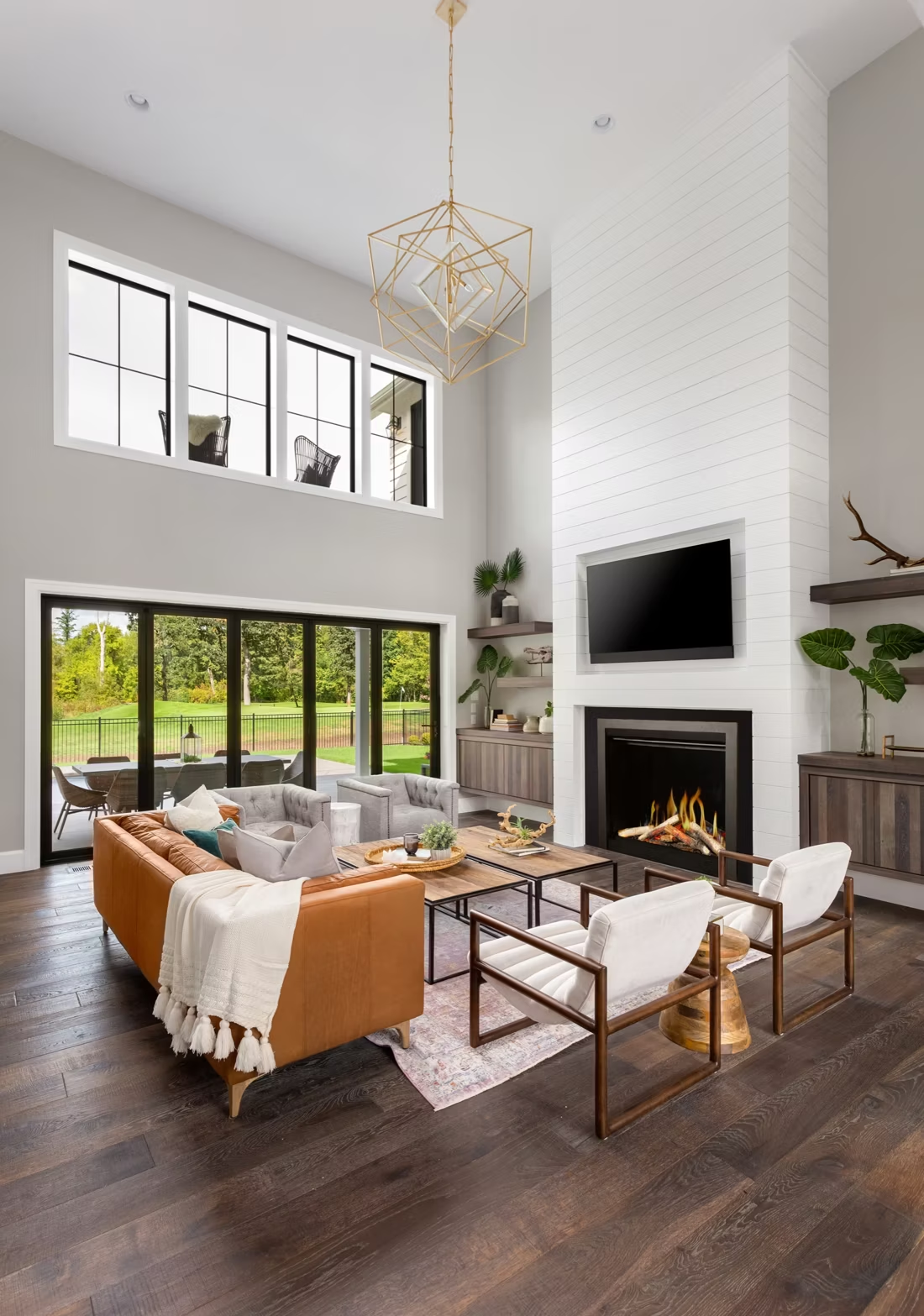
Can I put a TV above my fireplace?
Yes—with an asterisk. Fireplaces are hot and TVs don't like heat. Either put a mantel between them to deflect rising warmth, or choose a fireplace with heat-management technology that creates a cool zone on the wall above—the wall stays around 125 degrees, barely warm, while the room still gets full heat. If you like clean lines and don't want a mantel, heat management is the answer.
Does an electric fireplace need a vent or chimney?
No—that's its superpower. An electric fireplace needs a wall and an outlet, period. No vent pipe, no gas line, no clearances to design around, which is why it works in bedrooms, offices, apartments, and walls where venting a gas or wood unit would be impractical or impossible. Installation is typically the simplest and least expensive of any fireplace type.
Can a fireplace actually lower my heating bill?
Yes—by creating a comfort zone. A furnace heats every square foot of the house just to warm the one room you're in; a gas fireplace on low burns roughly a sixth of the gas a typical furnace does. Set the furnace around 55–60 degrees as a baseline, then heat the rooms your family actually uses. Families who heat this way commonly save $20–$60 a month.
Does a fireplace add value to my home?
On average, a fireplace adds back to the home about the same amount you spent installing it. Add the monthly savings from heating the rooms you actually use instead of the whole house—often hundreds of dollars a year—and the value case is strong before you even count what a fire does for how your family uses the room.
Stove and Fireplace Dealers in Maury County
Listings include WhyFire partner dealers, dealers we have verified as authorized for the brands we recommend, and established local businesses that carry hearth products. Every listing shows which one it is. The ones marked Preferred run on WhyFire's software, so they can show you real pricing and book your appointment right here. No manufacturer pays for placement. How we verify dealers →
Consolidated Trade Services
Nashville Fireplace Dist.
Find your electric fireplace in Maury County.
Tell us a bit about your home—whether it's a historic Columbia parlor or a new build in Spring Hill—and we'll put together a free Project Guide & Parts List with the right electric fireplace, the parts you need, and a trusted local dealer to install it.
Find Your Fireplace →