
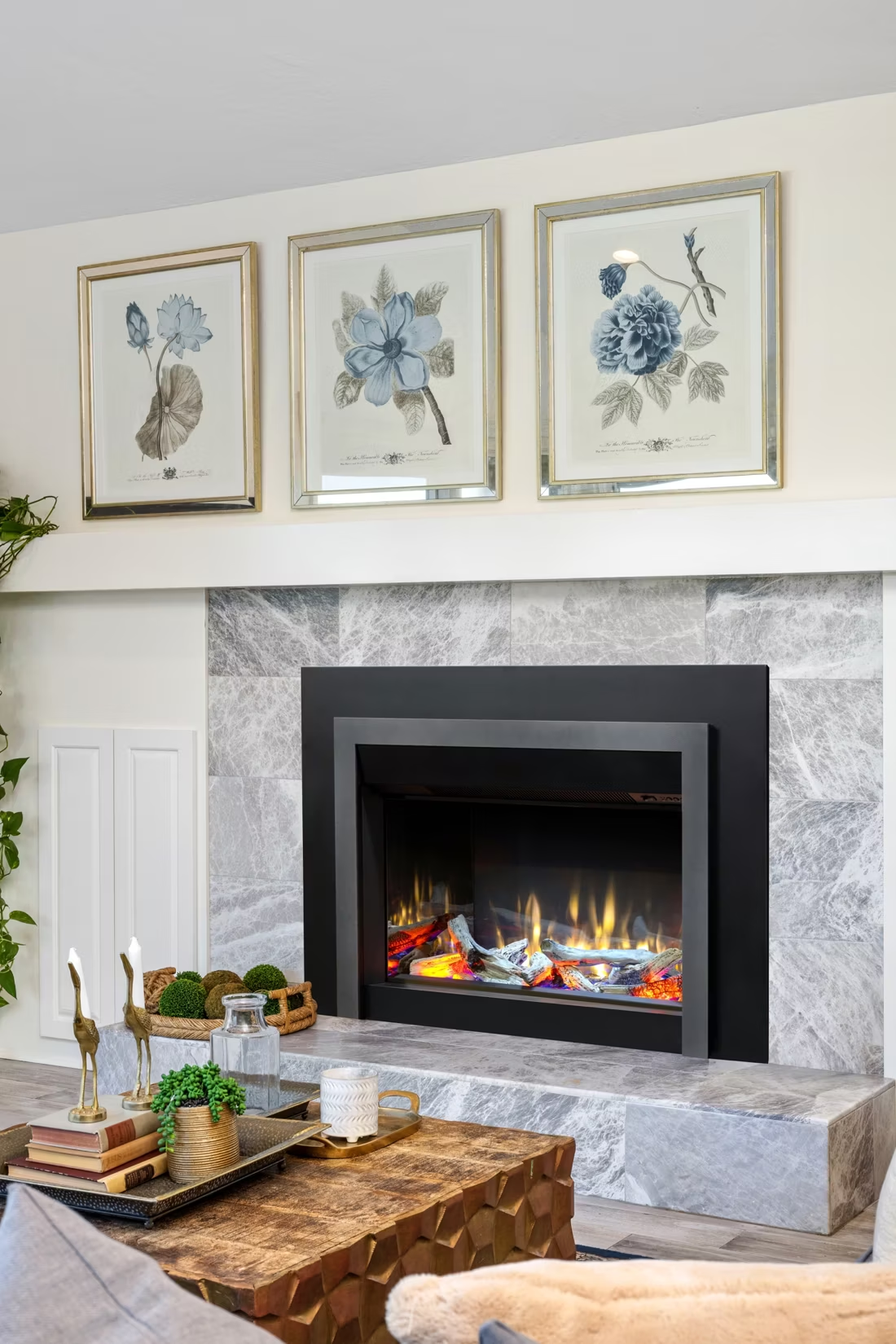
Real ambiance, no chimney required.
Martin's mild West Tennessee winters and low municipal electric rate make plug-in comfort an easy call. Get matched with a local dealer who'll size the right unit for your room.
Every Project Starts From One of These Five Situations
Mild winters, low rates, and zero venting hassle.
Martin sits at just 402 feet in the flat farmland of Weakley County, where winters are noticeably milder than the upper Midwest—average lows hover around 26°F and the area logs roughly 3,900 heating degree days a year, a fraction of what a place like Duluth, MN sees. That's a climate where a wood-burning setup or pellet stove is rarely worth the investment, which is exactly why wood and pellet appliances are uncommon here. Electric fireplaces fill the gap well: they supplement the furnace on the occasional cold snap around UT Martin and the surrounding county without demanding a chimney, a flue, or a woodpile.
Weakley County Municipal Electric System serves most of the city, and at roughly $0.1129 per kWh, Martin's residential electric rate runs well below the national average—which makes running an electric fireplace for supplemental heat or ambiance genuinely inexpensive here. Whether you're adding a fireplace insert to a den, a wall-mount unit in a bedroom, or a built-in for a remodel, the appeal in Martin is less about primary heat and more about instant, mess-free comfort that plugs into an outlet you probably already have.
Three steps. No salesperson until you're ready.
Tell us about your project
Your zip code, your situation, and the fuel you're leaning toward—or let the answers point you to one.
See what's actually available
The brands dealers within 100 miles genuinely carry—real options, never a catalog mirage.
Get your dealer & Project Guide
A trusted local dealer, plus the free Project Guide & Parts List that names every component of the job.
Frequently Asked Questions
How much does it cost to install an electric fireplace in Martin?
Electric fireplaces are the least expensive hearth product to get running, and Martin homeowners typically fall in the $300 to $1,500 range depending on the unit. A basic plug-in insert or wall-mount that uses an existing standard outlet is on the low end—often just the cost of the unit itself with no installer needed. Built-in units set into a wall or mantel surround, or models that require a dedicated 240-volt circuit for higher heat output, run higher and call for a licensed electrician. A local dealer can tell you within minutes which category your project falls into.
Will an electric fireplace actually lower my heating bill?
In Martin's climate, an electric fireplace is best thought of as smart zone heating rather than a whole-home cost cutter. With Weakley County Municipal Electric System's residential rate around 11 cents per kWh—below the national average—running a 1,500-watt unit for a few hours a night in the room you're actually using costs pennies, and can let you turn the thermostat down elsewhere in the house. It won't replace your furnace on a hard freeze, but for the mild, short winters typical here, it's an efficient way to take the chill off a den or bedroom without heating rooms nobody's in.
Do I need a permit or an electrician to install one?
Most plug-in electric fireplaces—inserts, wall-mounts, and freestanding units rated for a standard 120-volt outlet—need no permit and no electrician; you plug it in like any appliance. The exception is a built-in unit wired into a dedicated circuit, or any installation involving new wiring behind a wall or mantel, which does require a licensed electrician and typically a permit through the City of Martin or Weakley County depending on your address. A local dealer will flag which category your chosen unit falls into before you buy.
What's the difference between an electric insert, wall-mount, and built-in?
An electric insert drops into an existing masonry fireplace opening, giving old brick fireplaces a working flame effect and heat without any chimney work—a popular option in Martin's older homes near downtown. A wall-mount hangs flat against a wall like a large TV and works well in bedrooms or additions with no existing fireplace. A built-in is framed into new construction or a remodel for a seamless, flush look. For most Martin homeowners with an existing hearth opening, the insert is the simplest upgrade; new construction or rooms without a fireplace usually call for a wall-mount or built-in.
Can an electric fireplace actually heat a room, or is it just for looks?
Most electric fireplaces include a real 1,500-watt heater capable of warming a 400 to 500 square foot room, in addition to the flame-effect display, which can also run independently for ambiance without heat—useful on Martin's many mild evenings when you want the look of a fire but not the extra warmth. For anything larger than a single room, or as a home's only heat source, electric isn't the right tool; it's built for zone comfort, not whole-house heating.
Will my electric fireplace work during a power outage?
No—unlike a battery-backed gas fireplace, an electric unit is entirely dependent on grid power and will not run during an outage. Weakley County Municipal Electric System outages in this area are typically weather-related and short, but if backup heat during storms is a priority for your household, a gas fireplace or insert is worth considering alongside an electric one. Many Martin homeowners choose electric for daily convenience in one room and keep a separate backup heat plan for outages.
Why don't more people in Martin use wood or pellet stoves?
Martin's winters are simply too mild to justify the investment most of the time—with average lows around 26°F and roughly 3,900 heating degree days a year, the region doesn't see the sustained cold that makes a wood stove or pellet appliance pay for itself, the way it might in Wisconsin or Minnesota. Local oak, hickory, and maple are certainly available if someone wants a wood-burning setup for a cabin or hunting property, but for in-town homes, electric and gas dominate because they match how little heating this climate actually demands.
Electric vs. gas—which is the better fit for my home?
Gas fireplaces put out real, substantial heat and can serve as backup warmth during a power outage (especially battery-backed IPI models), but they require venting and gas line work, which adds cost and complexity. Electric fireplaces install almost anywhere with no venting, cost far less upfront, and are cheap to run on Weakley County's electric rate—but they contribute nothing during an outage and won't seriously heat a large space. For a supplemental unit in a bedroom, den, or basement in Martin, electric is usually the simpler and cheaper choice. For a primary heat source in a main living area, gas is worth the extra investment.
Where can I see electric fireplace options in person near Martin?
Rather than guessing between big-box store models, a trusted local hearth dealer near Martin can show you which inserts, wall-mounts, and built-ins actually fit your fireplace opening or wall space, and which brands hold up over years of daily use versus looking good in a showroom photo. I match Martin homeowners with a dealer who carries what's genuinely available in West Tennessee and can walk you through the difference in person before you spend a dollar.
Can I put a TV above my fireplace?
Yes—with an asterisk. Fireplaces are hot and TVs don't like heat. Either put a mantel between them to deflect rising warmth, or choose a fireplace with heat-management technology that creates a cool zone on the wall above—the wall stays around 125 degrees, barely warm, while the room still gets full heat. If you like clean lines and don't want a mantel, heat management is the answer.
How much does an electric fireplace cost to run?
With the heater on, a typical unit draws about 1,500 watts—at average electric rates that's roughly 20 cents an hour. Run the flame effect alone and it costs pennies; the flames are LED-driven and use about as much power as a light bulb. There's no pilot light, no fuel delivery, and essentially no maintenance.
How much should I budget for a fireplace?
For an average home—covering the fireplace, the vent pipe, and basic installation—a budget between $3,900 and $5,500 gives you a lot of options across wood, gas, and pellet. By the time you add finish work, gas line, and electrical, the average complete installation lands between $5,000 and $12,000 all-in. In a remodel or new build, a good rule is to put about 2.5% of the total project cost toward the fireplace.
Can I install a fireplace myself?
If you're putting a fire in your house on purpose, it's best to work with an expert. Unless you're genuinely experienced in framing, gas line, vent pipe, and the national code on clearances to combustibles, have a professional do it—and ideally the same company that sells you the fireplace, so warranty, service, and liability all live under one roof.
Nearby Dealers
Hearth shops serving Martin and the surrounding area. Every listing shows whether it is a WhyFire partner, a dealer we have verified as authorized for the brands we recommend, or a local business carrying hearth products. No manufacturer pays for placement. How we verify dealers →
54 Lawn & Garden
Jones Mobile Home Service Inc
Hlc Cullipher LLC
Acme Brick Company
Walt Mestan Dba The Fireplace Center
Hank Bros. True Value
Russell Electric
Electric Service in Martin
An electric fireplace's heater draws about 1,500 watts—pennies per hour at local rates.
Weakley County Mun Elec Sys
Find your electric fireplace in Martin.
Tell us a bit about your home and we'll match you with a trusted local dealer and send over a free Project Guide & Parts List—sized for your room, with the right unit and everything needed to install it.
Find Your Fireplace →